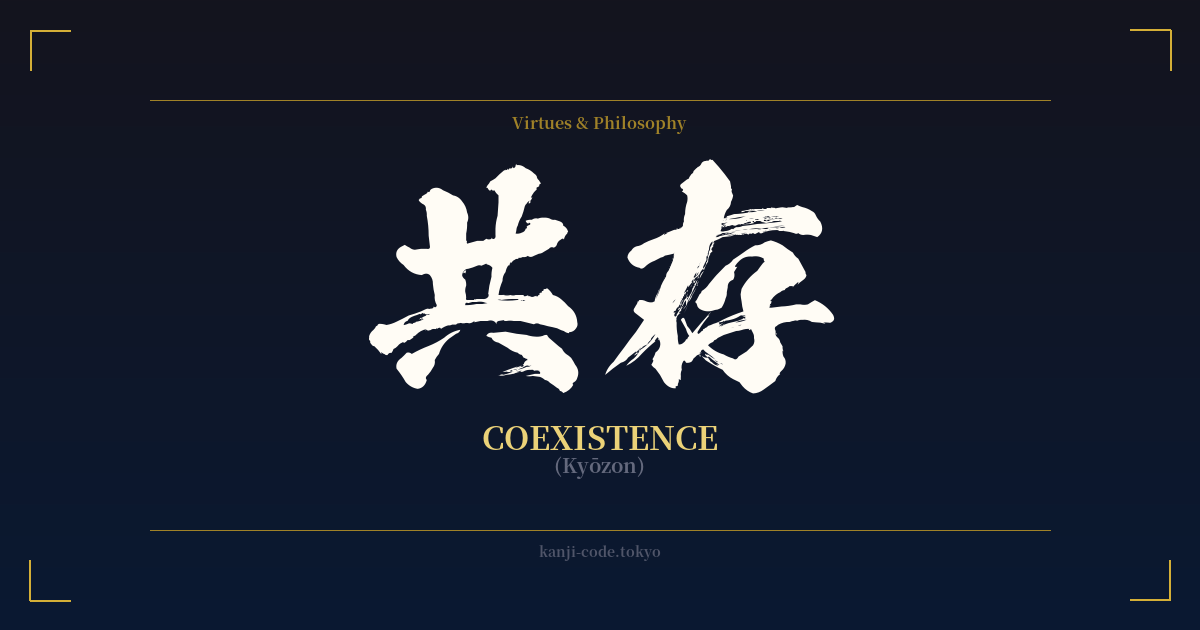
✍️ 共存 (Kyōzon) — Cultural Context
共存 (Kyōzon) is a Japanese word that translates to "coexistence." It's a concept that feels both ancient and strikingly modern, capturing the delicate art of different entities existing together in a shared space. The word is formed by two simple yet powerful kanji: 共 (kyō), meaning "together" or "with," and 存 (zon), meaning "to exist" or "to be." Together, they literally mean "to exist together."
This isn't just about passive tolerance; it's about active, often symbiotic, relationships. In Japan, this idea is deeply woven into the cultural and philosophical fabric. One of the most powerful examples is found in the relationship with nature. Concepts like Satoyama—the border zone between mountains and villages—are living embodiments of Kyōzon, where human life and the natural world are managed in a way that allows both to thrive. It’s a vision of humanity not as a conqueror of nature, but as a part of it.
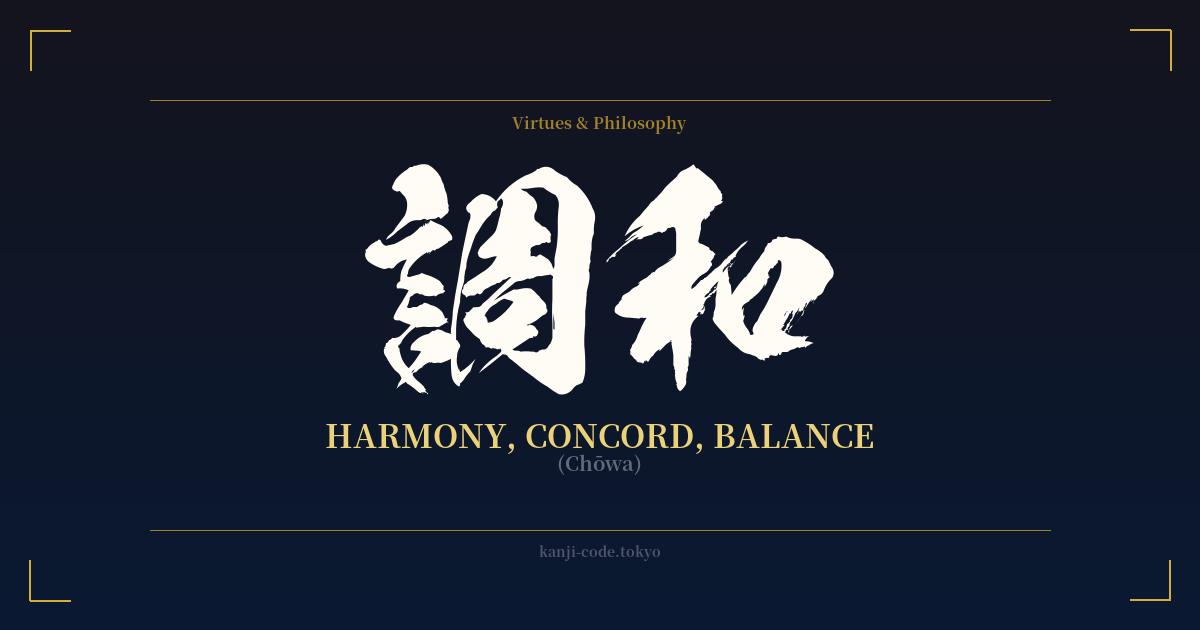
The idea of coexistence extends into the social and spiritual realms. In a society that traditionally values harmony (和, wa), Kyōzon represents the ideal for how different people, ideas, and even cultures can live side-by-side. While Japan has historically been seen as a homogenous nation, the concept of Kyōzon is increasingly relevant as it navigates a more multicultural and globalized world. It speaks to the challenge and the beauty of finding balance without demanding assimilation.
From a philosophical perspective, Kyōzon resonates with Buddhist teachings on interdependence (縁起, engi). This doctrine posits that nothing has an independent, self-contained existence; everything comes into being through its relationship with other things. Your existence is inextricably linked to the existence of the world around you, from the air you breathe to the people you interact with. Kyōzon is the practical application of this profound truth—the conscious act of living in a way that honors this interconnectedness.
Ultimately, 共存 is a word of balance. It can describe the harmony within an ecosystem, the peace between nations, or even the internal balance we seek within ourselves—the coexistence of our strengths and weaknesses, our joys and sorrows. It's a quiet but firm declaration that we are not alone, and that our survival and prosperity are tied to the survival and prosperity of others.
🖌️ Font Styles for 共存
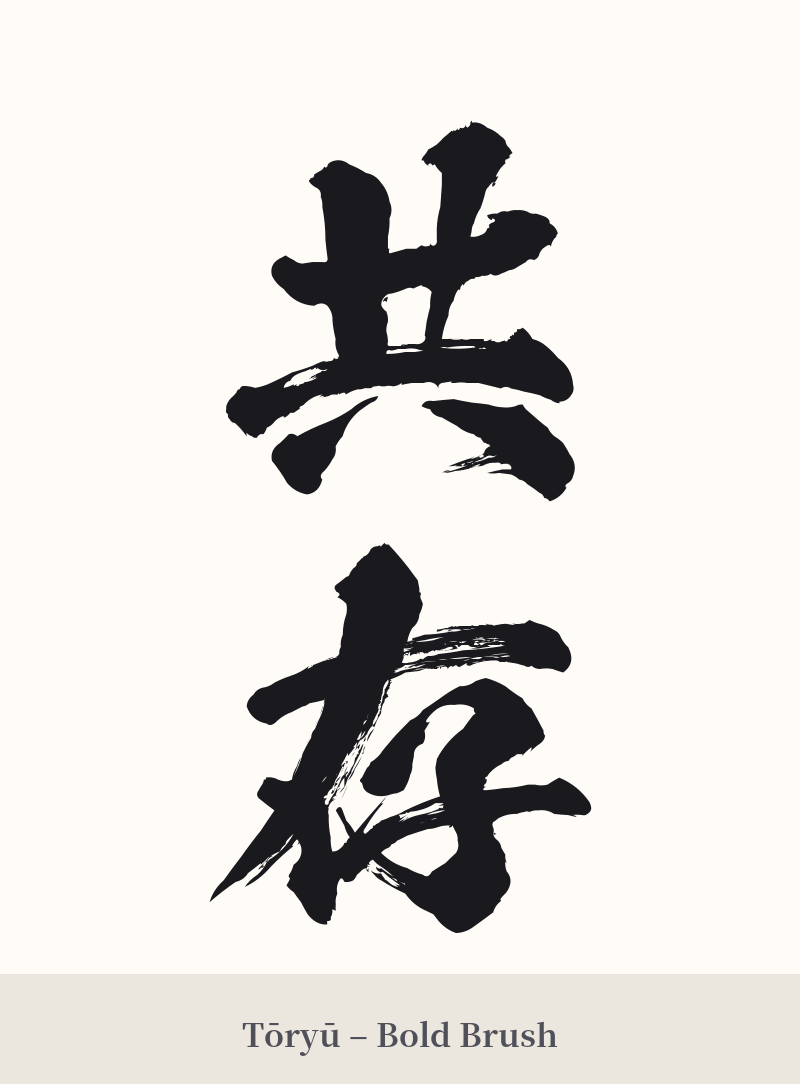
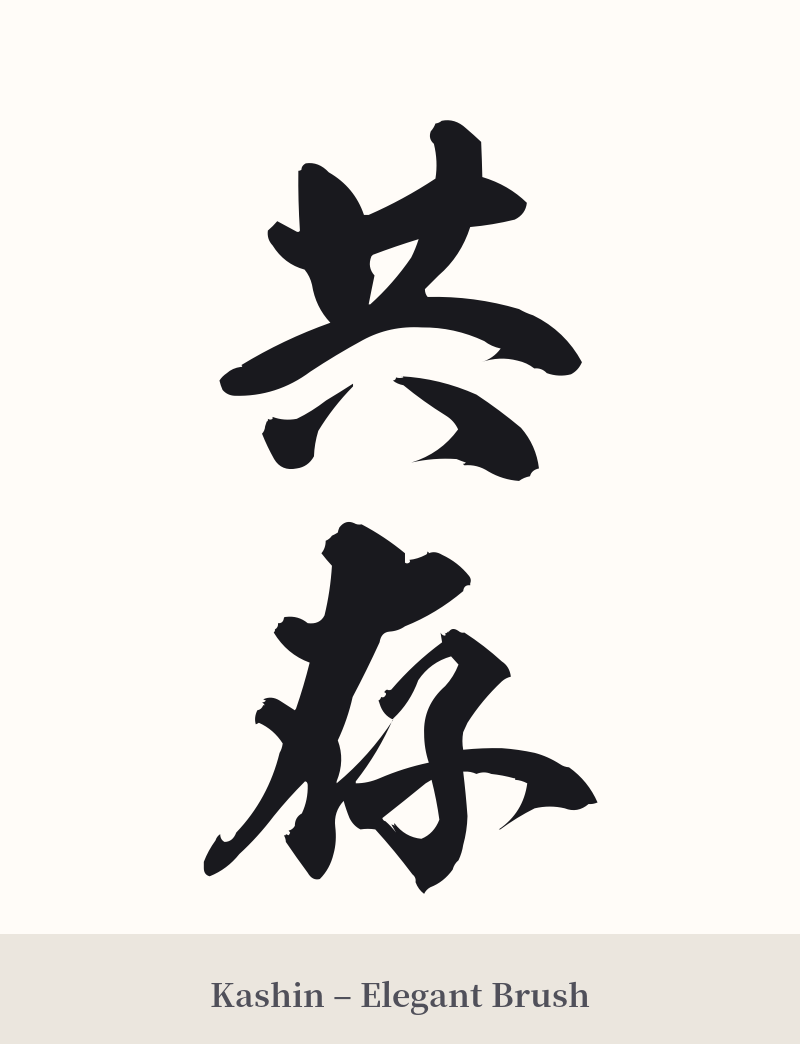
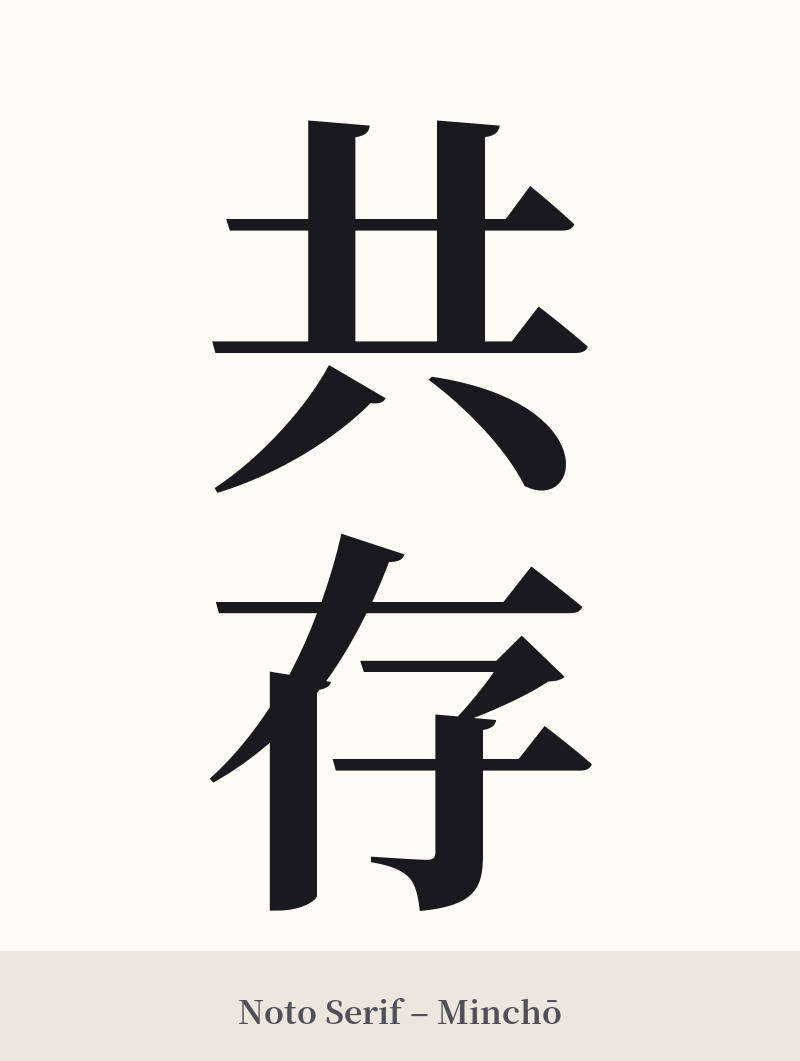
The same kanji can look dramatically different depending on the calligraphy style. Choose a font that matches the mood you want for your tattoo or design.
🎨 Tattoo Suitability
📐 Tattoo Design Guide
The balanced and meaningful nature of 共存 (Kyōzon) makes it a versatile choice for a tattoo. Its message of harmony can be reflected in both the placement and the artistic style.
For placement, a vertical orientation is classic and elegant. It works well along the forearm, the spine, the side of the ribcage, or down the calf. A horizontal layout is also strong, fitting perfectly across the chest, upper back just below the neck, or on the inner bicep.
When considering font style, you have several compelling options: – Kaisho (block script): This is the standard, print-style font. A bold Kaisho script will give the tattoo a feeling of strength, clarity, and deliberate intent. It emphasizes the solid foundation of coexistence. – Gyosho (semi-cursive script): A flowing Gyosho script can beautifully capture the organic and harmonious feel of Kyōzon. The slightly connected strokes can visually represent the idea of interconnectedness. – Sosho (cursive script): For a highly artistic and abstract look, Sosho is an excellent choice. It turns the characters into a fluid, expressive piece of art, though it may be less legible to the untrained eye.
To enhance the theme, consider incorporating 共存 into a larger design. It could be written within an Enso circle to symbolize enlightenment and the universe, or paired with imagery of two different but complementary elements, like a flower and a bee, a mountain and a river, or even abstract yin-yang motifs.
Comments