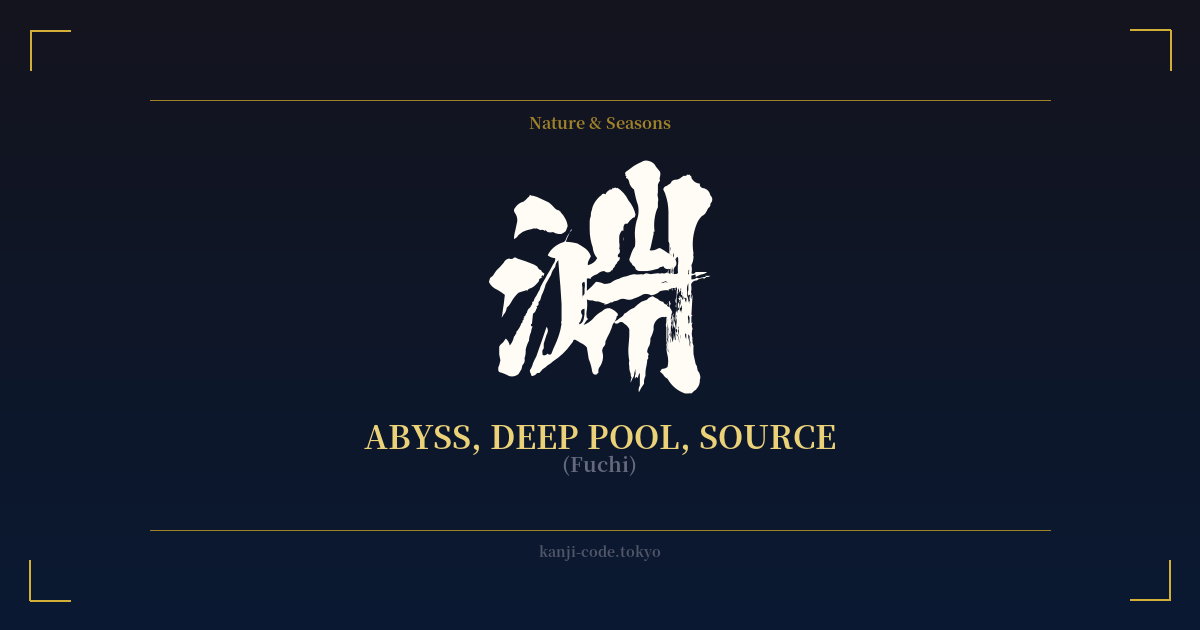
✍️ 淵 (Fuchi) — Cultural Context
The kanji 淵 (fuchi) paints a powerful picture with just a few strokes. At its most literal, it refers to a deep pool of water, often found in a river or gorge. Imagine a place where the current slows, the water becomes still and dark, and the bottom is lost to sight. This is the physical essence of a 'fuchi'. These places in nature are often serene yet intimidating, holding a quiet power.
This character is composed of two main parts. On the left is the radical 氵(sanzui), which is derived from 水 (mizu) and signifies water. This immediately grounds the kanji in the natural world of rivers, lakes, and oceans. The right side provides the phonetic sound and contributes to the sense of depth and enclosure.
In Japanese culture, such deep pools were historically viewed with a mixture of reverence and fear. They were often considered sacred, believed to be the dwelling places of kami (spirits), water deities, or even dragons (龍, ryū). Many folktales and local legends revolve around a specific 'fuchi' in a region, telling stories of its resident spirit or treasures hidden in its depths. This imbues the character with a layer of mystique and a connection to the spiritual landscape of Japan.
Beyond its literal meaning, 淵 is used metaphorically to describe profound depth in various contexts. It can signify the depths of knowledge (学問の淵, gakumon no fuchi), the abyss of despair, or an insurmountable gap between two things or people. The expression 「苦境の淵に立つ」 (kukyō no fuchi ni tatsu) means to be on the brink of disaster, standing at the edge of a precipice. This dual nature—as both a source of life-giving water and a potentially dangerous chasm—is central to its meaning.
Unlike 奈落 (naraku), which is the Buddhist term for a hellish underworld, 淵 is a concept rooted in nature. Its power is primal and elemental, not religious or punitive. It represents the unknown, the profound, and the origin point. Whether seen as the quiet source from which things emerge or the dark void into which they fall, 淵 captures the awe-inspiring and humbling power of nature's great depths.
🖌️ Font Styles for 淵
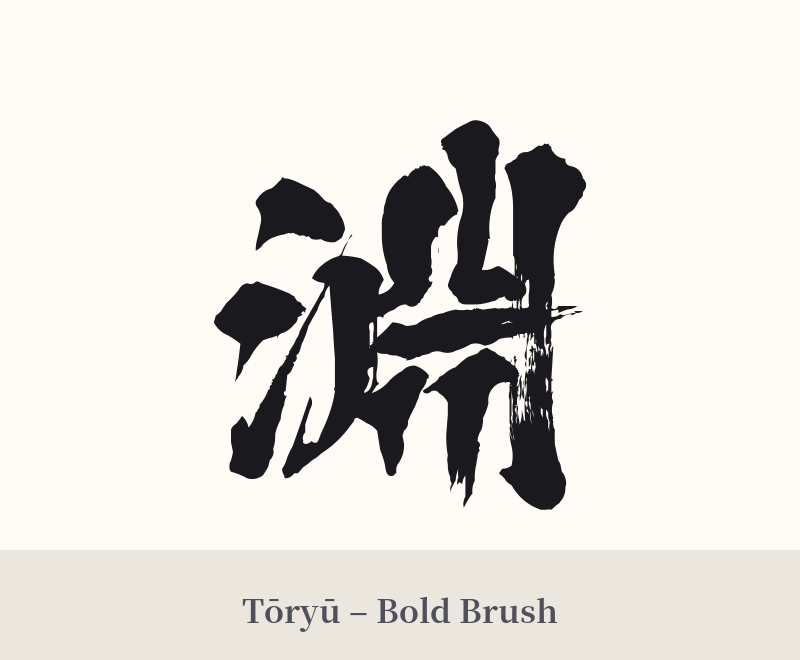
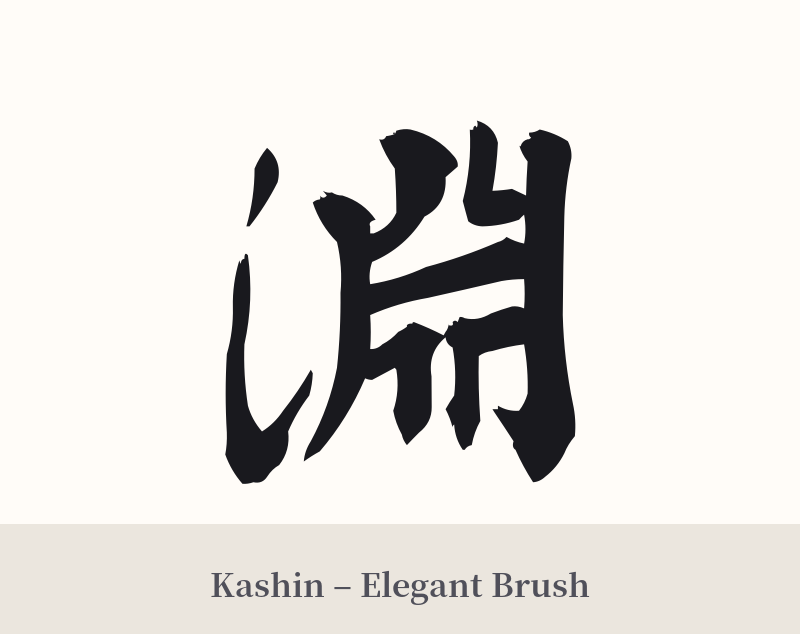
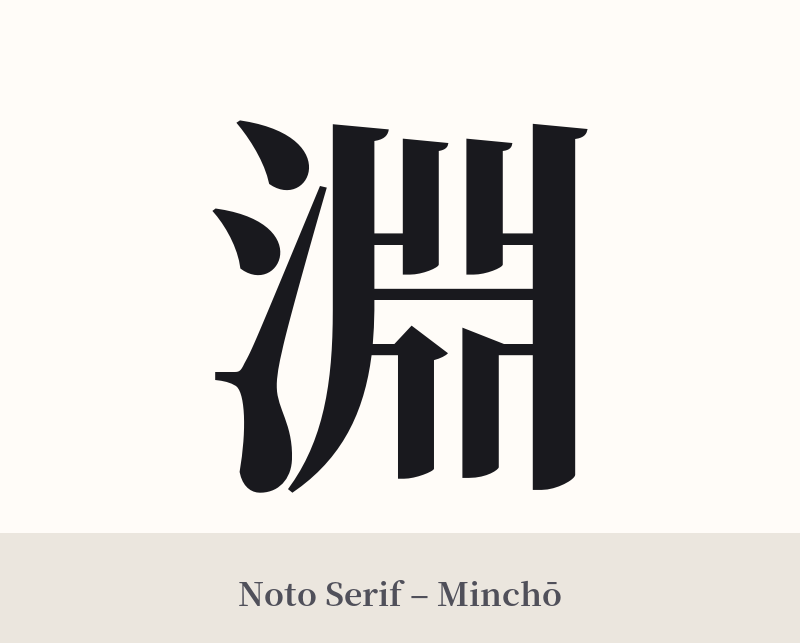
The same kanji can look dramatically different depending on the calligraphy style. Choose a font that matches the mood you want for your tattoo or design.
🎨 Tattoo Suitability
📐 Tattoo Design Guide
The kanji 淵 offers a lot of creative potential for a tattoo due to its deep meaning and balanced form.
– Placement: Its vertical structure is well-suited for the forearm, calf, or along the spine. For a larger, more impactful piece, it works beautifully on the chest or back, where an artist can play with surrounding elements.
– Font Style: A flowing, semi-cursive calligraphy style (gyōsho) can emphasize its connection to water and movement. Conversely, a bold, angular block script (kaisho) can convey the feeling of an imposing, solid chasm or abyss.
– Visual Tips: Consider integrating the character with other imagery. You could have ripples of water emanating from it, or a dragon or koi fish partially emerging from the strokes. Using shading to create a gradient from dark to light can visually represent the idea of depth, making the character itself look like a portal into an abyss.
Comments