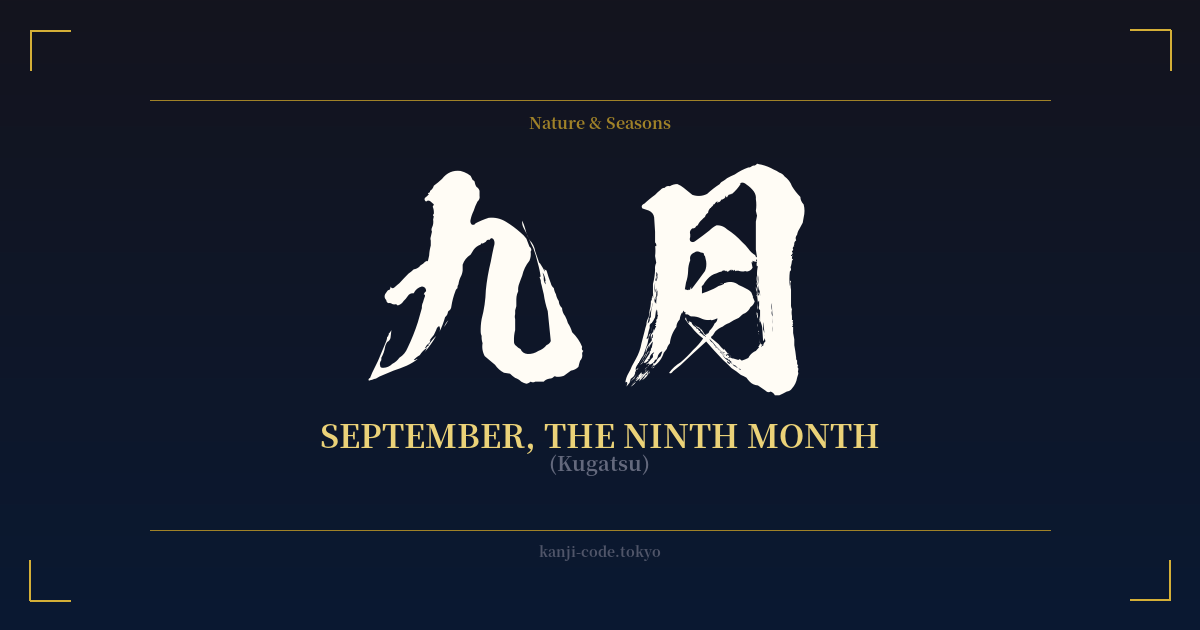
✍️ 九月 (Kugatsu) — Cultural Context
九月 (Kugatsu) is the modern Japanese word for September, literally translating to “the ninth month.” This straightforward naming convention is part of the Gregorian calendar system adopted in Japan during the Meiji Restoration in 1873. Before this, Japan used a lunisolar calendar with more poetic names for each month. The traditional name for the ninth month was 長月 (Nagatsuki), meaning “the long month,” a beautiful reference to the nights growing noticeably longer as autumn begins.
September in Japan is a month of profound transition. It marks the end of the oppressive summer heat and humidity, ushering in the crisp, comfortable air of autumn (秋, aki). While the vibrant colors of autumn foliage (紅葉, kōyō) typically peak in October and November, September is when the first hints of change appear. The intense green of summer begins to soften, and the overall feeling shifts from energetic to contemplative.
One of the most significant cultural events associated with this time is 月見 (Tsukimi), or moon-viewing. Often falling in September or early October, this festival celebrates the harvest moon. Families gather to offer decorations of pampas grass (susuki) and eat rice dumplings called tsukimi dango while admiring the moon's beauty. The presence of the character 月 (tsuki/getsu), meaning both “moon” and “month,” in 九月 creates a lovely connection to this tradition.
September is also the time of the autumnal equinox, known as Higan (彼岸). This is a Buddhist holiday when the veil between the physical and spiritual worlds is thought to be at its thinnest. It is a time for families to visit ancestral graves, clean them, and make offerings, reflecting on the cycle of life and death. However, the month is not without its turmoil; it falls within typhoon season, and powerful storms often make landfall during this time, serving as a reminder of nature's untamable power amidst the encroaching calm of fall.
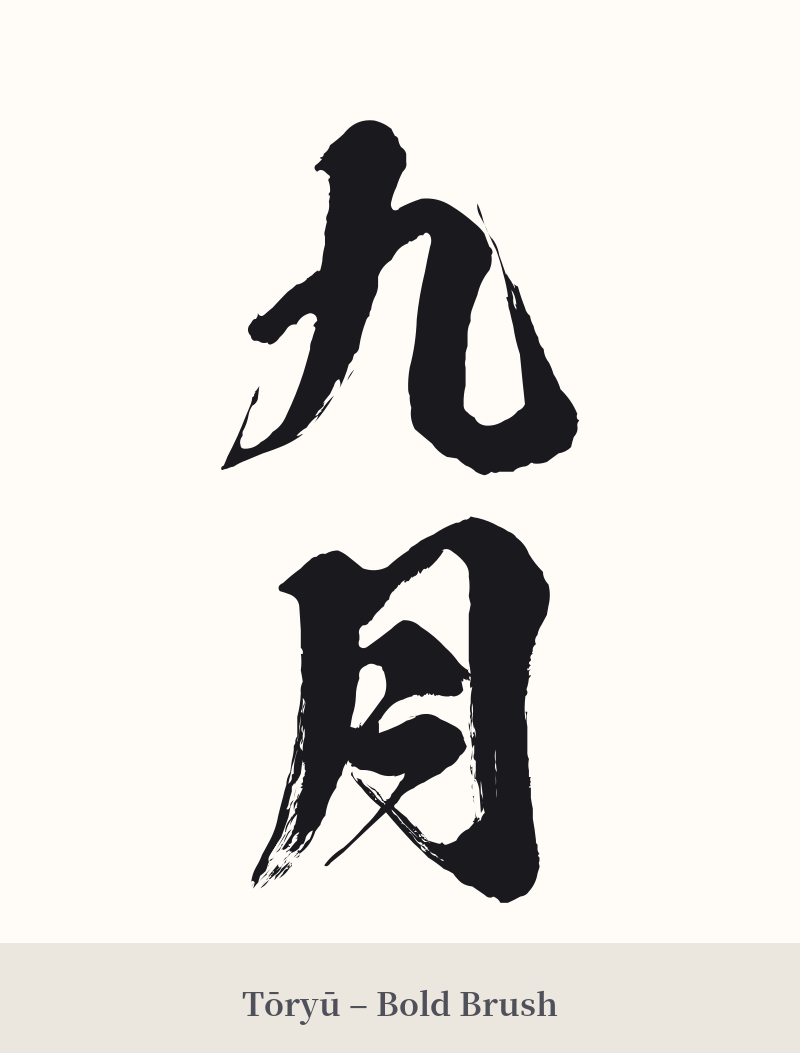
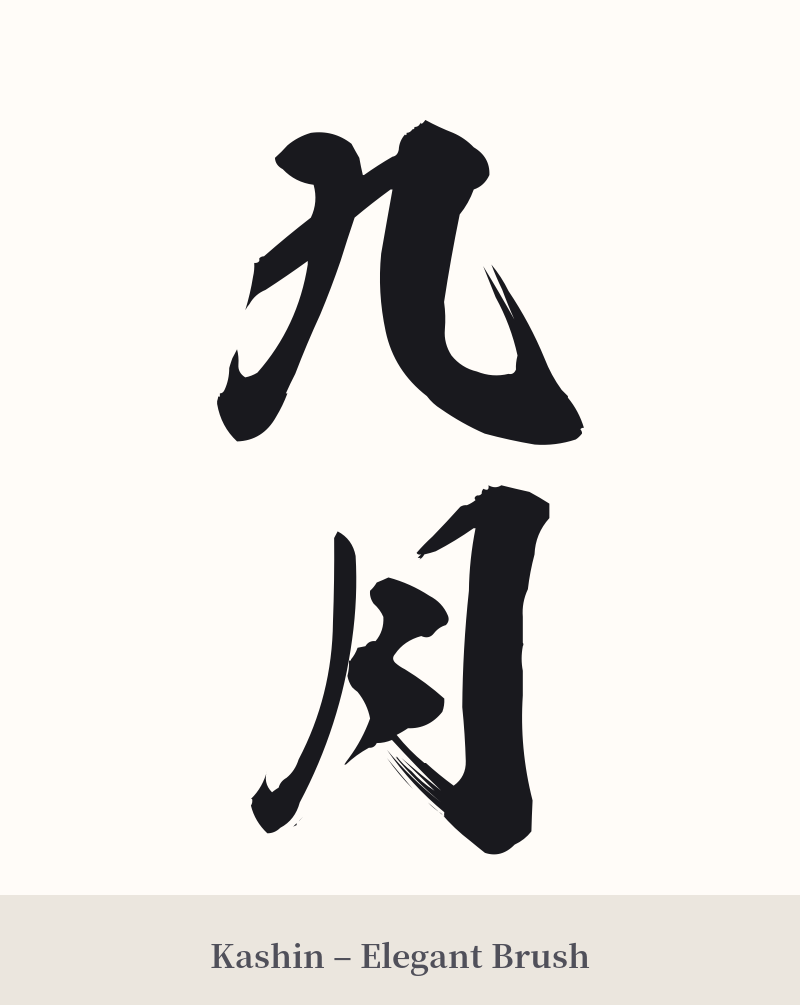
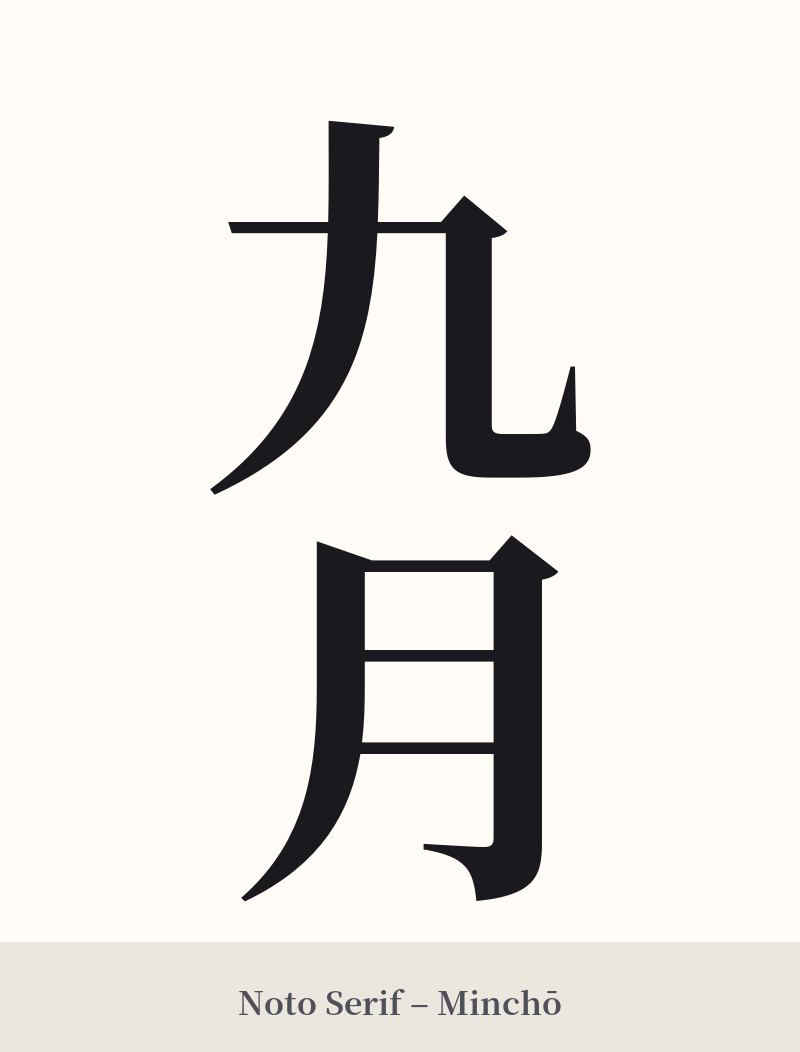
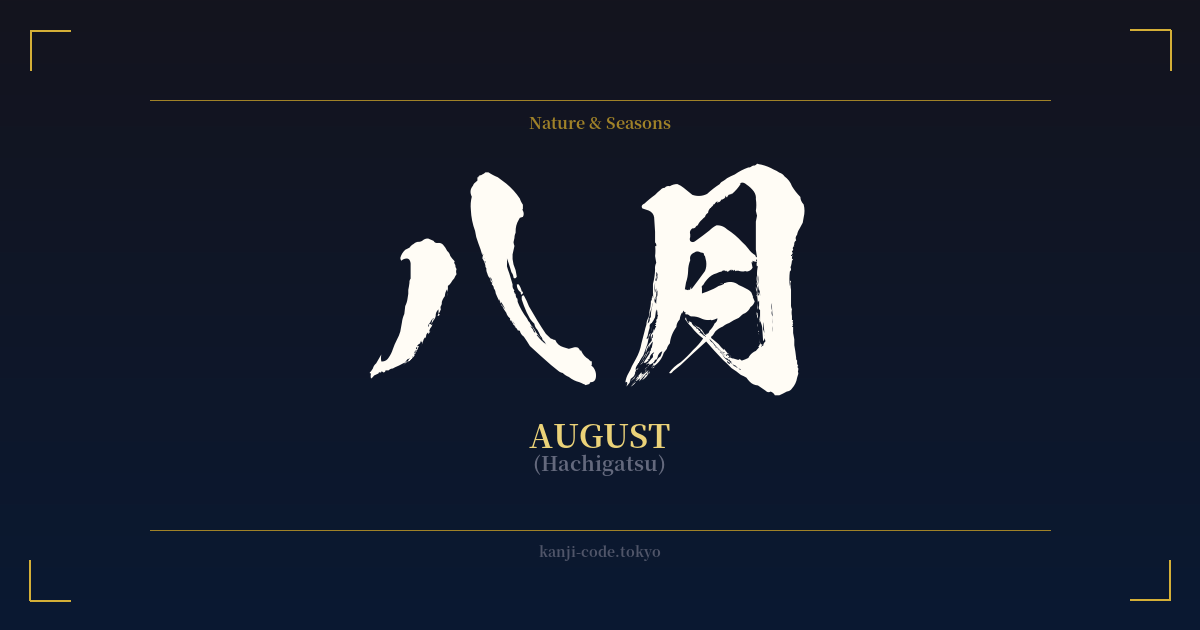
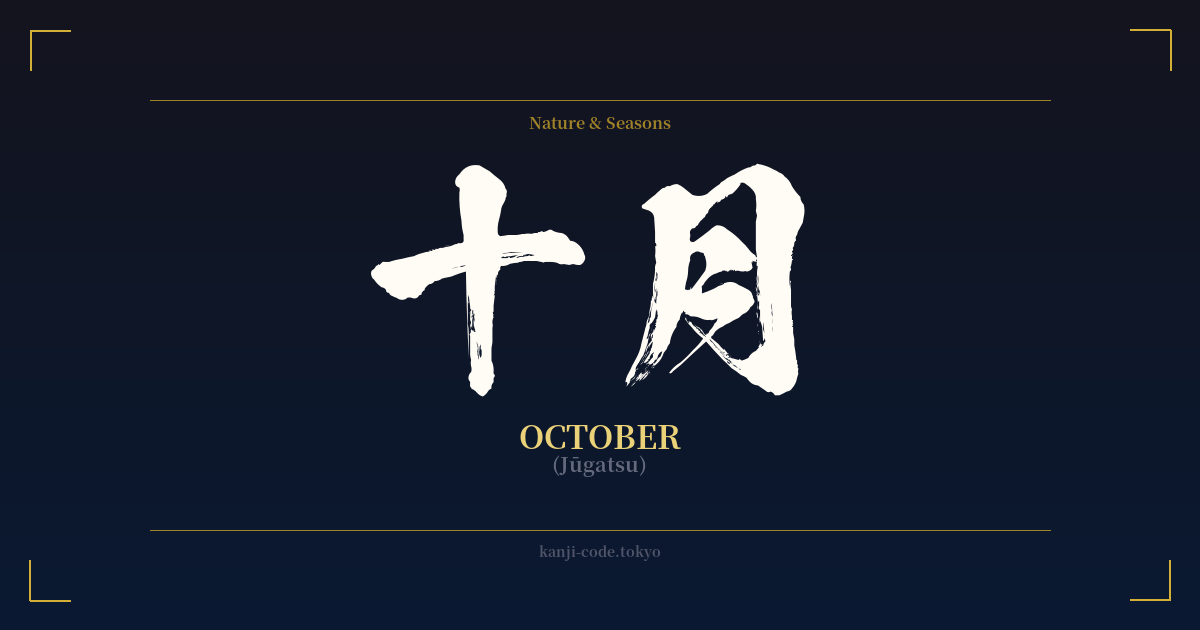
🖌️ Font Styles for 九月
The same kanji can look dramatically different depending on the calligraphy style. Choose a font that matches the mood you want for your tattoo or design.
🎨 Tattoo Suitability
📐 Tattoo Design Guide
Given the simplicity and literal meaning of 九月, the design approach should be thoughtful and intentional.
– Placement: This kanji combination works well in smaller, more personal locations. Consider the wrist, ankle, collarbone, or behind the ear. It can also serve as a component within a larger piece, perhaps alongside a birth year or as a label for a scene depicting an event from that month.
– Font Style: Clean, classic fonts are often best. A standard Mincho (serif) style provides elegance and legibility. A Gothic (sans-serif) style offers a modern, clean look. A highly stylized or aggressive script might overwhelm the simple characters.
– Visual Tips: To add depth, consider pairing 九月 with imagery related to September in Japan. A design could incorporate a full moon for Tsukimi, stalks of pampas grass (susuki), a chrysanthemum (the flower of September), or the first few leaves beginning to turn color.
Comments