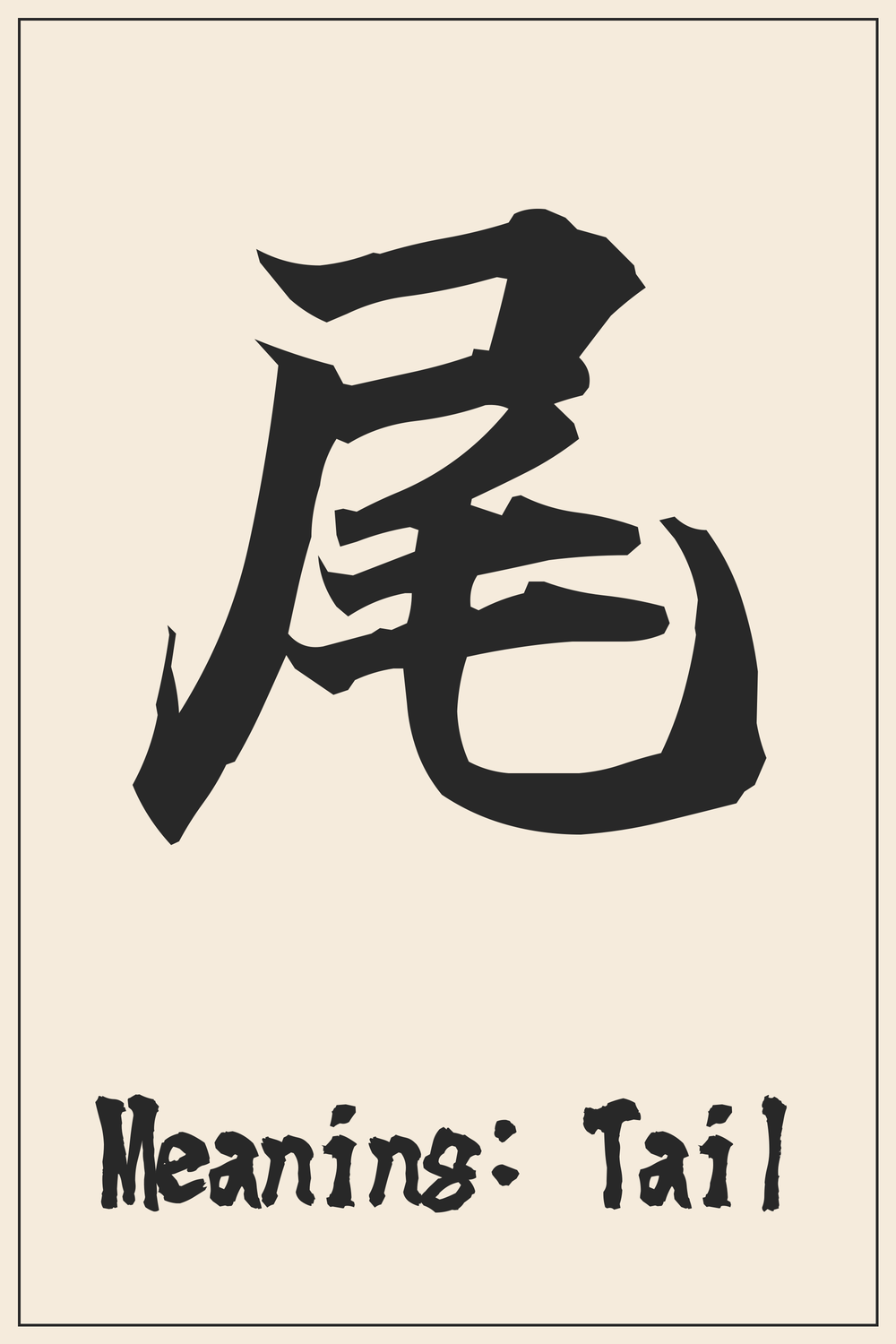
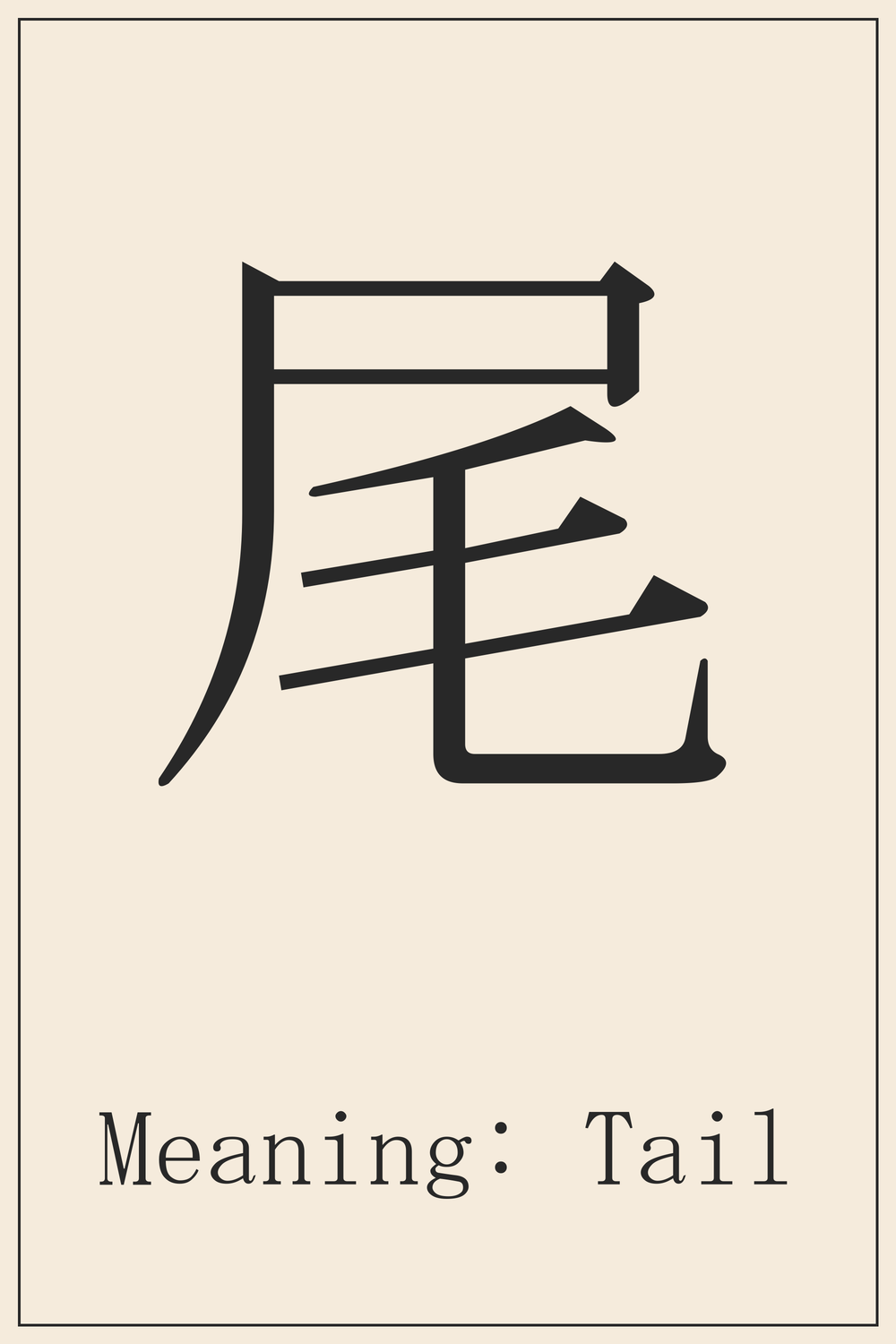
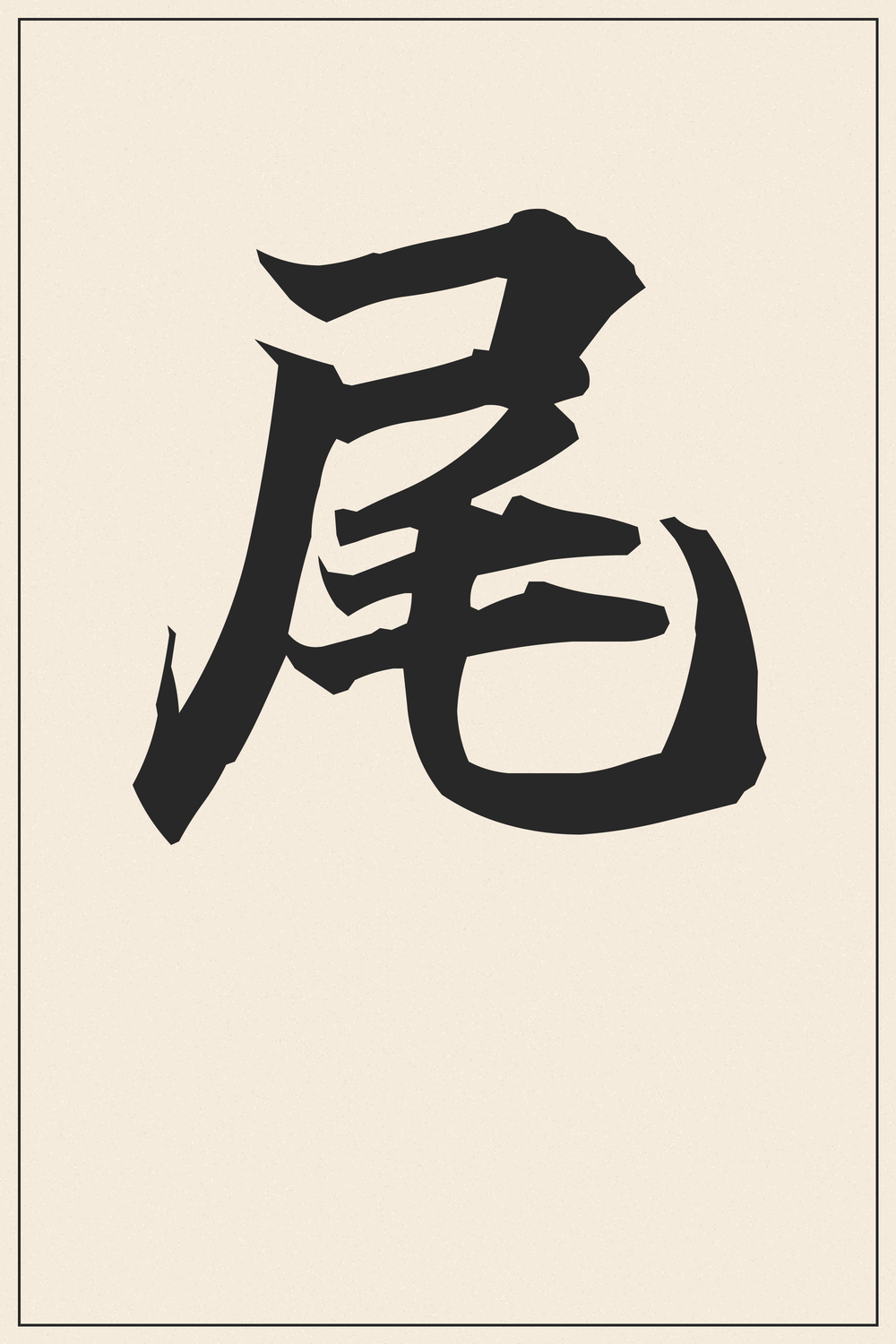
The Kanji 尾 captures the essence of an animal’s natural appendage, symbolizing completion, the rear, or a follow-up. It’s a character that evokes imagery of movement, grace, and the natural world.
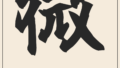
The atmosphere of a Kanji character changes dramatically depending on the font style. A character that looks elegant in a brush style might look bold and modern in a different font.
Recommendation:
Since a tattoo is permanent, we strongly recommend comparing various font styles beyond what is shown here. Use our designs as a trusted reference for the correct structure, but feel free to explore different artistic variations to find the perfect match for your vision.
The Deep Meaning Behind 尾
The character 尾 originally depicted a creature’s prominent tail, often emphasizing the hair or feathers associated with it. Historically, it combines the radical 尸 (shikabane), which often represented a person or body, with 毛 (mō), meaning ‘hair’ or ‘fur’, directly illustrating a hairy appendage at the rear of a body.
In Japanese culture, 尾 is primarily used to denote an animal’s tail, from a cat’s swishing tail (猫の尾 – neko no o) to the grand tail of a dragon. Beyond its literal meaning, it can also refer to the ‘tail’ or end of a procession, the rear part of an object, or a trailing consequence, adding layers of meaning beyond just a physical appendage.
Kanji Breakdown
The Kanji 尾 is an ideogram that visually represents a tail, with its components hinting at its full meaning.
Body/Person: This radical often represents a body or a person in ancient characters, forming the base from which the appendage extends.
Hair/Fur: Clearly depicts strands of hair or fur, indicating the textured nature of an animal’s tail.
Conclusion
The Kanji 尾 is a simple yet profound symbol, embodying the natural grace of an animal’s tail and the concept of an end or follow-up. Its elegant form holds a tangible connection to the physical world and metaphorical conclusions.
For those seeking a tattoo that speaks to nature, completion, or a subtle nod to the animal kingdom, 尾 offers a beautifully concise and meaningful choice, rich with both literal and nuanced interpretations.
Comments