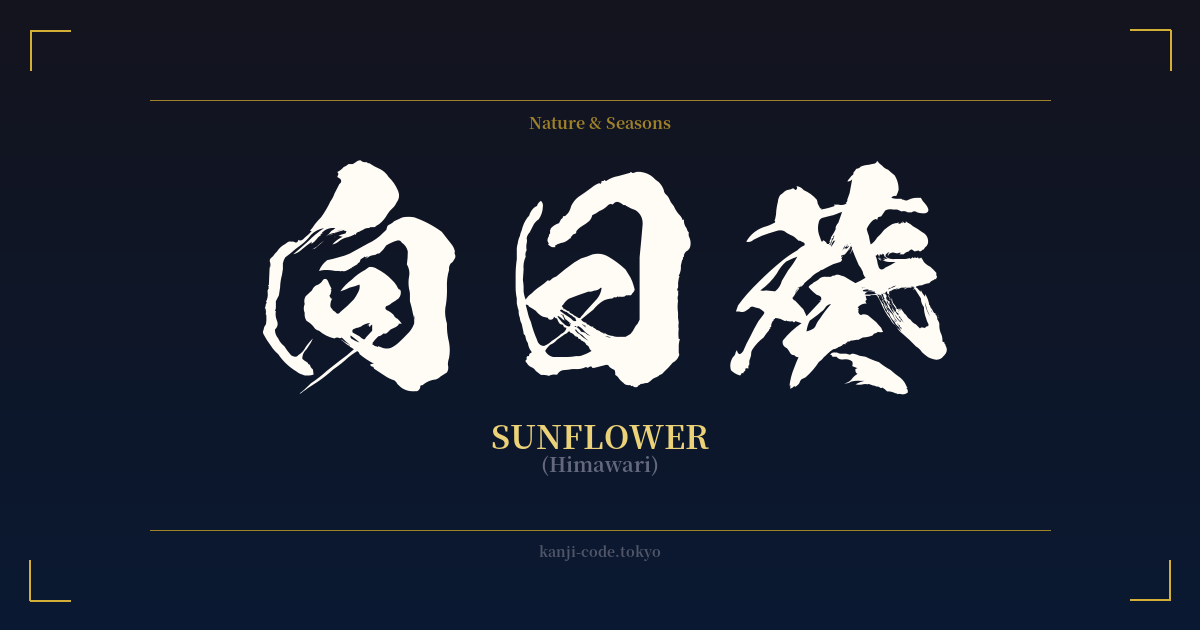
✍️ 向日葵 (Himawari) — Cultural Context
The Japanese word for sunflower, 向日葵 (Himawari), is a beautiful example of how kanji can tell a story. The characters literally translate to 'facing the sun plant,' perfectly describing the flower's heliotropic nature as it turns to follow the sun's journey across the sky. This simple, elegant name encapsulates the essence of the plant and its symbolic connection to light and life.
In Japan, the sunflower is the undisputed symbol of summer. When the vibrant yellow heads of himawari appear, it signals the peak of the season, a time of warmth, energy, and brightness. Vast sunflower fields, known as himawari-batake, become popular destinations for families and couples, offering picturesque landscapes that are a staple of Japanese summer imagery.
Beyond its seasonal association, the sunflower carries rich symbolic weight. It represents adoration, loyalty, and longevity. This stems from the flower's unwavering gaze toward the sun, interpreted as a form of devotion. In the language of flowers (hanakotoba), different shades of sunflowers can convey different messages, but the classic yellow universally stands for optimism, happiness, and radiant energy. It's a flower that embodies positivity and the pursuit of light.
This powerful symbolism has not been lost on popular culture. A famous example is the anime series Samurai Champloo, where the main quest revolves around finding a mysterious 'samurai who smells of sunflowers.' Here, the sunflower represents a faint, almost unattainable hope and a connection to a lost past, giving the flower a nostalgic and poignant dimension. This association has introduced the deep meaning of himawari to a global audience, linking it not just to summer joy but also to themes of searching and memory.
Whether seen in a sprawling field, a single vase, or as a motif in art, the 向日葵 is more than just a flower. It is a cultural icon that embodies the spirit of summer, a symbol of faithful devotion, and a beacon of optimism that always turns toward the light.
🖌️ Font Styles for 向日葵
The same kanji can look dramatically different depending on the calligraphy style. Choose a font that matches the mood you want for your tattoo or design.
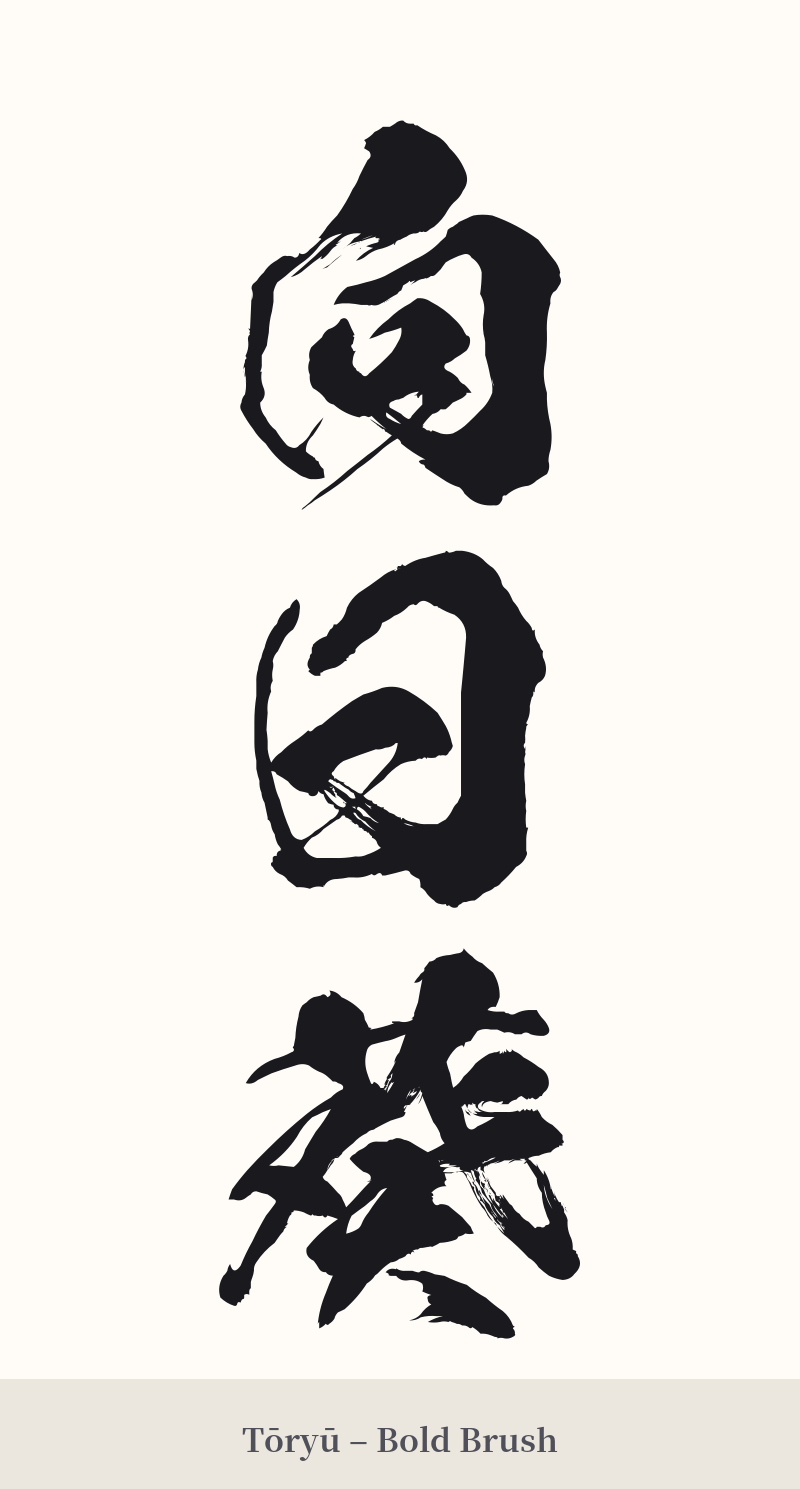
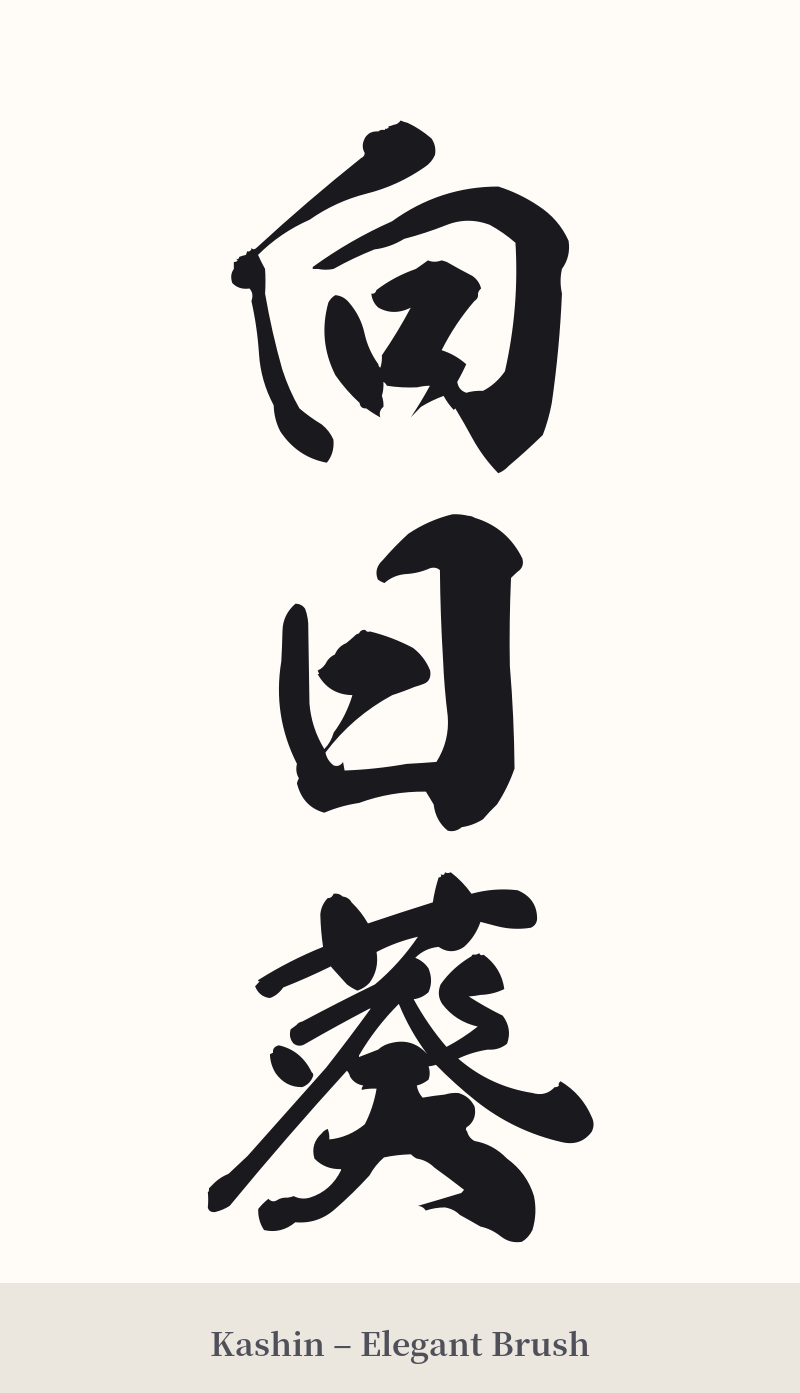
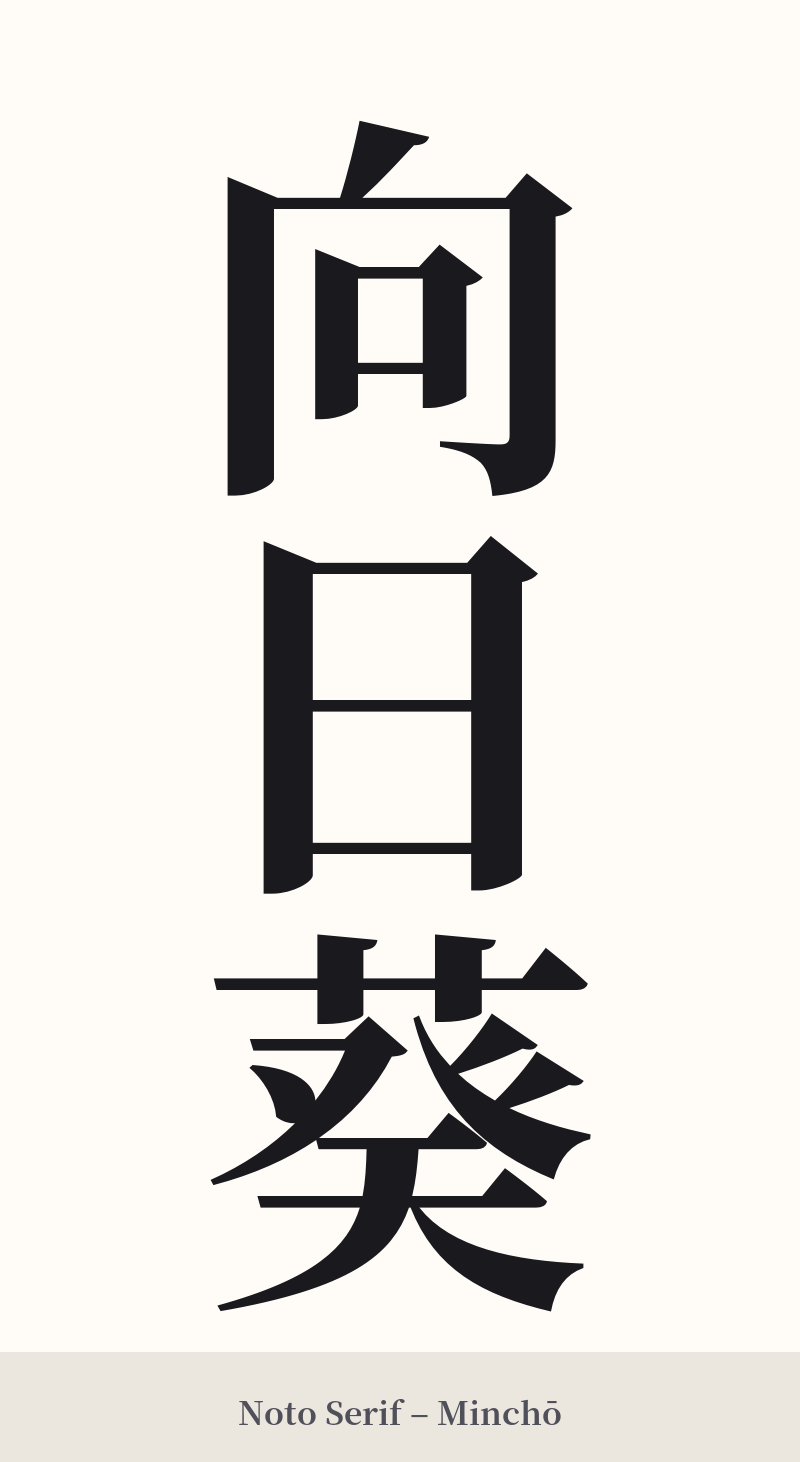
🎨 Tattoo Suitability
📐 Tattoo Design Guide
The three characters of 向日葵 lend themselves beautifully to a vertical tattoo design. This orientation mimics the natural upward growth of a plant and looks elegant on a forearm, calf, or along the spine.
– Placement: For a vertical design, the inner forearm provides a flat, visible canvas. The spine offers a central, powerful placement, while the side of the calf allows for a larger, more detailed piece. – Font Style: A standard Kaishotai (block script) ensures clarity and a timeless look, especially important for the complex 葵 character. For a more artistic feel, a flowing Gyoshotai (semi-cursive script) can evoke the organic shape of the flower and its stem. – Visual Tips: Consider integrating the kanji with a minimalist illustration of a sunflower. The vertical characters could even form the 'stem' of the flower. Using a touch of yellow or gold ink as an accent can highlight the 'sun' character (日) and connect the design to the flower's vibrant color.
Comments