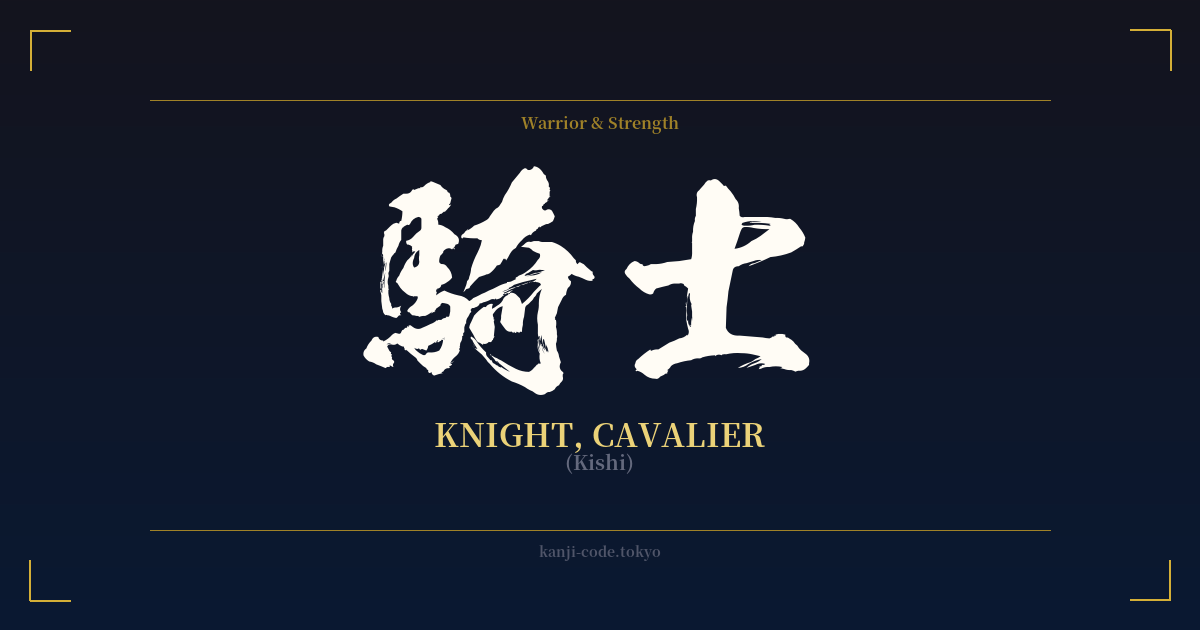
✍️ 騎士 (Kishi) — Cultural Context
The Japanese word 騎士 (Kishi) translates directly to 'Knight' or 'Cavalier' in English. However, understanding its place in Japanese culture requires looking through a lens of translation and historical context. Unlike words like 侍 (Samurai) or 武士 (Bushi), which are native to Japan's feudal history, 騎士 is a term used to describe a non-Japanese concept: the European mounted warrior.
The characters themselves beautifully illustrate this meaning. The first kanji, 騎 (ki), means 'equestrian' or 'to ride a horse.' It’s built from the radical for horse (馬) and another component suggesting a person straddling it. The second kanji, 士 (shi), refers to a gentleman, scholar, or warrior, a person of a certain noble or respected class. Combined, they create the literal image of a 'mounted gentleman-warrior,' a perfect parallel to the European knight.
Historically, Japan did not have knights. Its warrior class was the samurai. Therefore, 騎士 entered the language as a 'translation word' (kango) to describe figures from European history and, later, fantasy. When Japanese people read about King Arthur, the Crusades, or medieval Europe, the word used for the armored warriors is 騎士.
This is where the term finds its modern cultural significance in Japan. It is deeply embedded in fantasy genres, including anime, manga, and video games. Series like 'Final Fantasy,' 'Fire Emblem,' and countless others feature characters who are 騎士. They wield longswords, wear plate armor, and often follow a code of chivalry known as 騎士道 (kishidō)—a term consciously modeled after Japan's own 武士道 (bushidō).
This creates a fascinating cultural feedback loop. The Western concept of the knight, translated into Japanese, has been re-interpreted through a Japanese creative lens and is now consumed globally. For a Japanese person, the distinction is clear: a Samurai is part of their history, while a Knight is part of world history and a staple of beloved fantasy stories. Choosing 騎士 as a tattoo signifies an appreciation for this specific archetype—the chivalrous, armored warrior of Western lore—rather than the Japanese samurai.
🖌️ Font Styles for 騎士
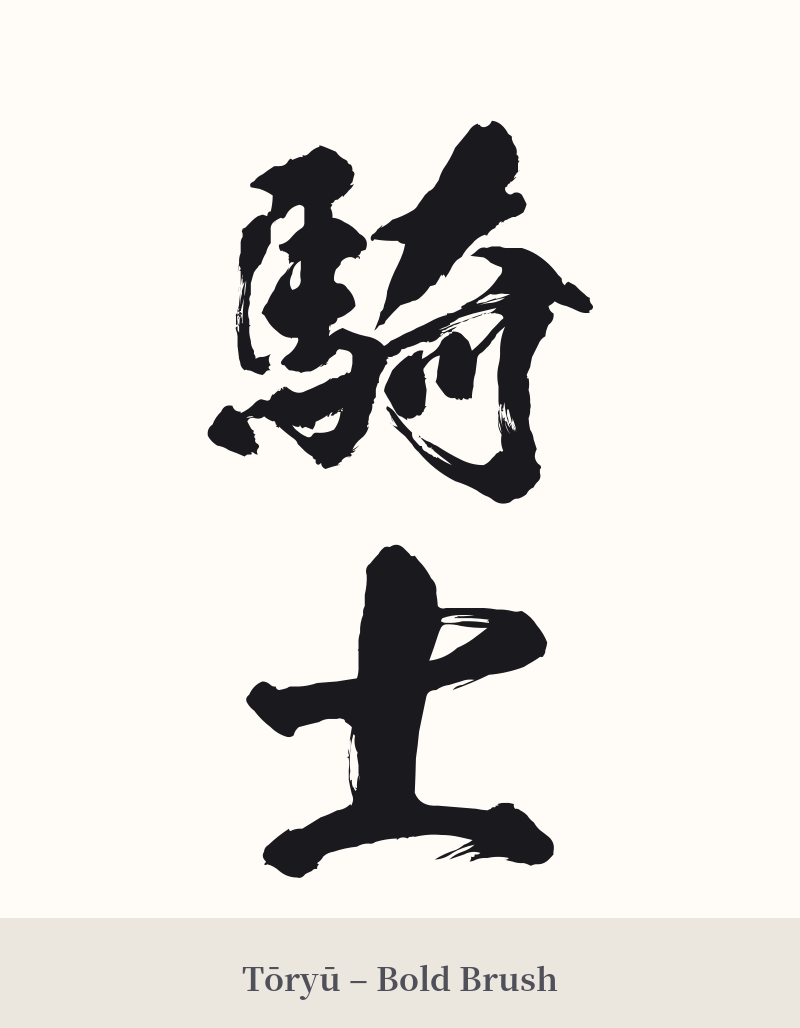
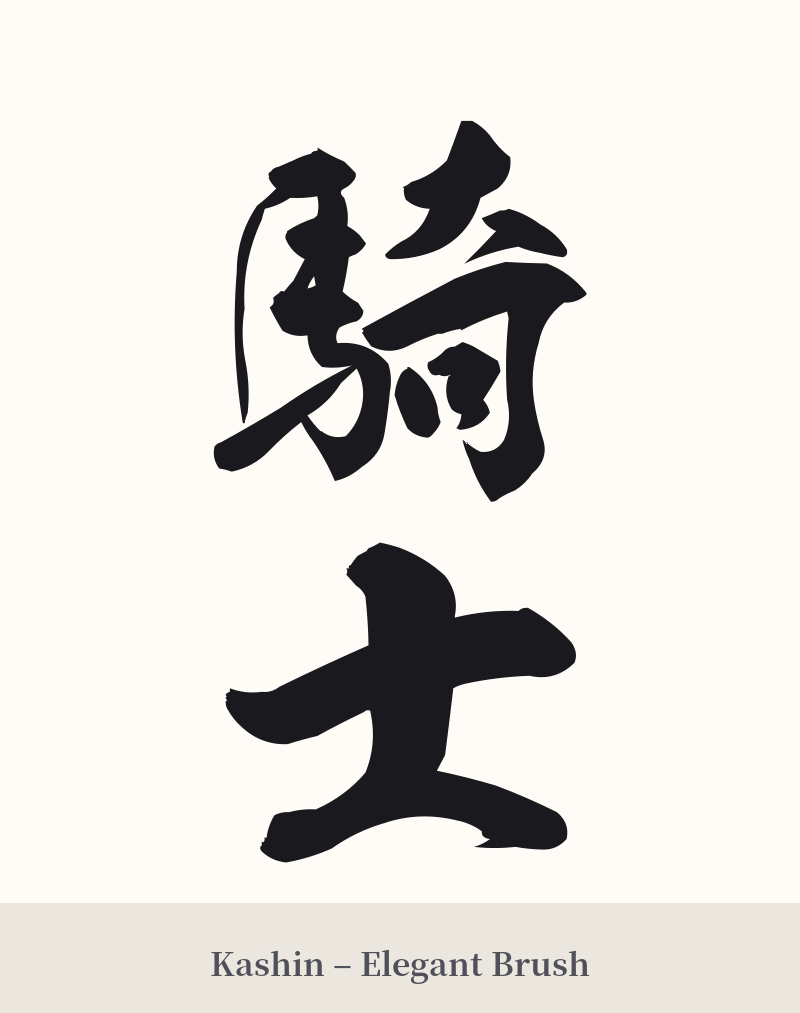
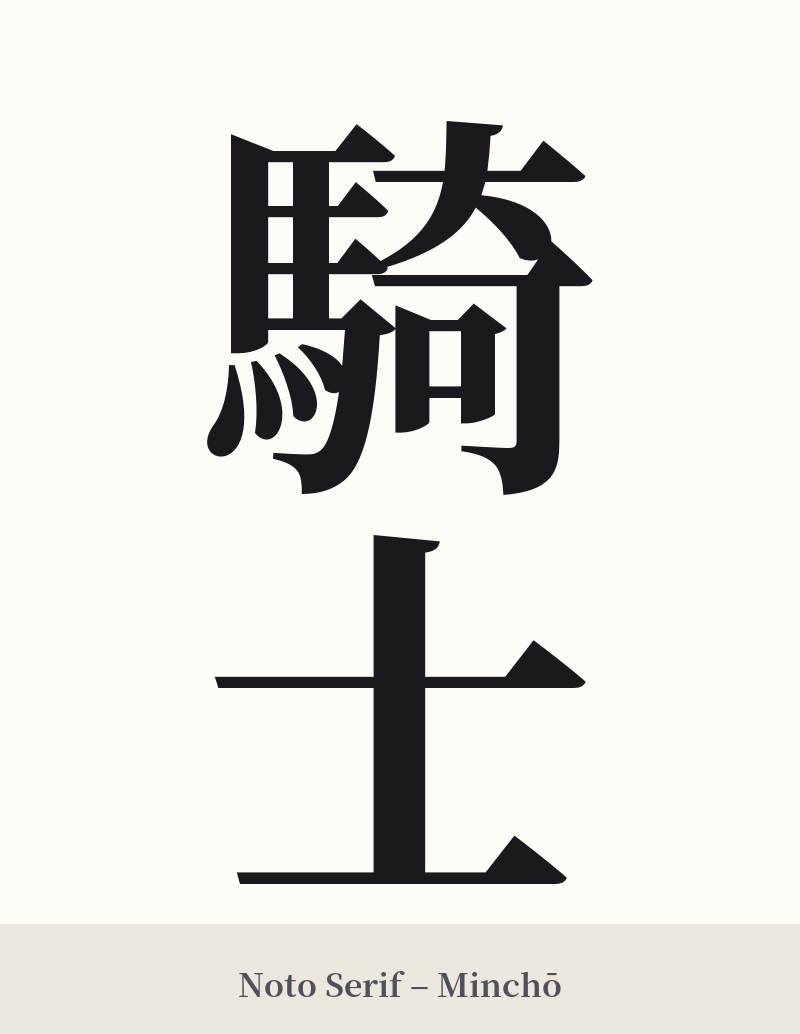
The same kanji can look dramatically different depending on the calligraphy style. Choose a font that matches the mood you want for your tattoo or design.
🎨 Tattoo Suitability
📐 Tattoo Design Guide
For a 騎士 tattoo, the design needs to accommodate the complexity of the first character, 騎, which has 18 strokes.
– Placement: Consider larger, flatter areas of the body. The forearm, calf, upper back, or chest are ideal as they allow the artist enough space to render the details in 騎 clearly, preventing the lines from blurring over time.
– Orientation: A vertical alignment is classic and aesthetically pleasing for Japanese script. It allows the characters to flow downwards naturally and makes a strong statement.
– Font Style: A bold, strong script like Kaisho (block style) or a dynamic Gyosho (semi-cursive) would suit the martial theme well. For those leaning into the fantasy aspect, a more stylized or artistic font can work, but ensure it remains legible. Avoid overly thin or delicate styles which might contradict the powerful meaning.
– Visual Elements: Consider pairing the kanji with imagery associated with European knights, such as a medieval longsword, a shield with a coat of arms, or even the silhouette of a castle. This reinforces the specific meaning of 騎士 and distinguishes it from a samurai theme.
Comments