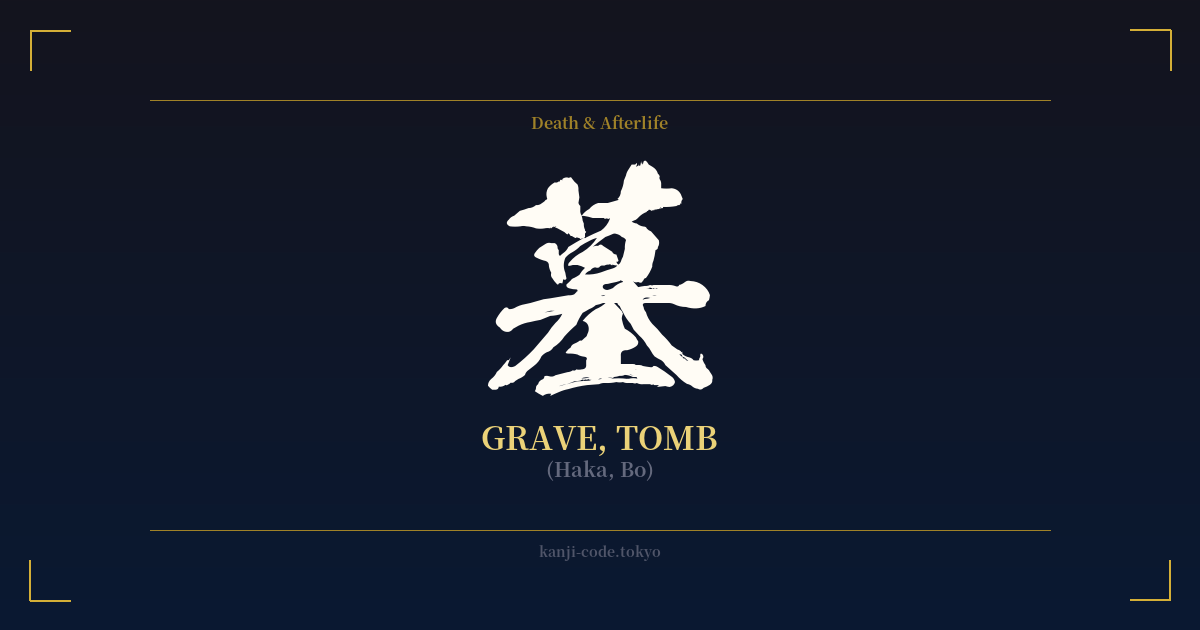
✍️ 墓 (Haka, Bo) — Cultural Context
The kanji 墓 (haka) refers to a grave or tomb, but its cultural significance in Japan extends far beyond a simple burial site. It is a powerful symbol of family lineage, ancestral veneration, and the cyclical nature of life and death, deeply rooted in both Buddhist and Shinto traditions.
The character itself offers a glimpse into its meaning. It is composed of 土 (tsuchi), meaning 'earth' or 'soil', at the bottom, and the component 莫 on top. 莫 originally depicted the sun disappearing into overgrown grass, evoking a sense of vanishing or darkness. Combined, 墓 paints a picture of a place in the earth where one disappears, a final resting place under a mound of soil.
In Japan, the concept of the 'haka' is most vividly expressed through the custom of 'ohaka-mairi' (お墓参り), the act of visiting one's ancestral grave. This is not a morbid or sorrowful obligation but a vital ritual of connection and respect. Families gather during specific times, such as the Obon festival in August or the spring and autumn equinoxes, to clean the tombstone, offer flowers, burn incense, and share news with their ancestors. The grave is seen as a physical link to generations past, a place where the spirits of the deceased can be communed with and honored.
Japanese graves (墓石, hakaishi) are typically tall, polished stone pillars inscribed with the family name, and often a posthumous Buddhist name (戒名, kaimyō) for the deceased. They are places of quiet dignity, representing the continuity of the family line. Unlike the often sprawling, individual-focused cemeteries in the West, Japanese cemeteries are compact and emphasize the collective family unit.
While the character 墓 can appear in horror stories and films to evoke a sense of dread, its primary cultural role is one of solemn remembrance. It embodies the idea that death is not just an end, but a transition, and that the bond with those who have passed remains an active and important part of life. It’s a symbol of filial piety, memory, and the enduring strength of family ties across time.
🖌️ Font Styles for 墓
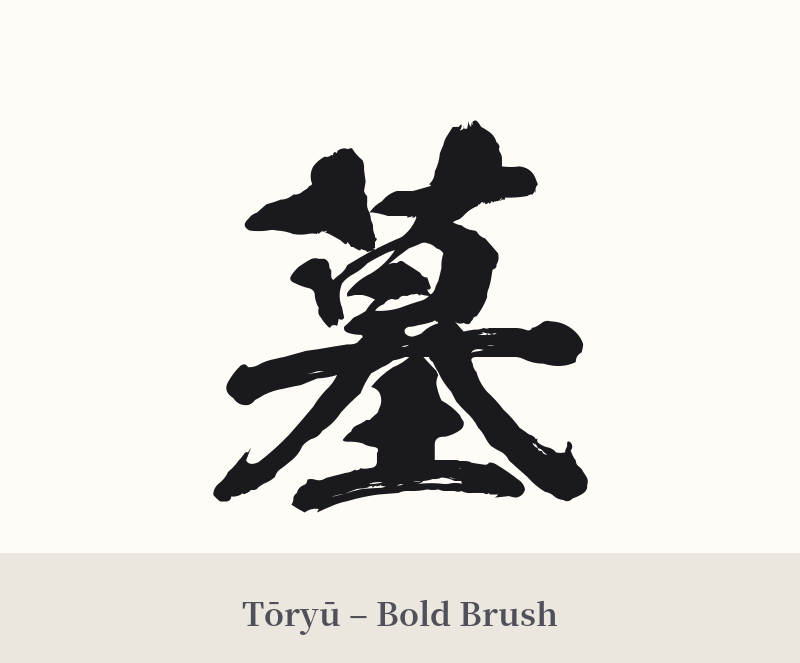
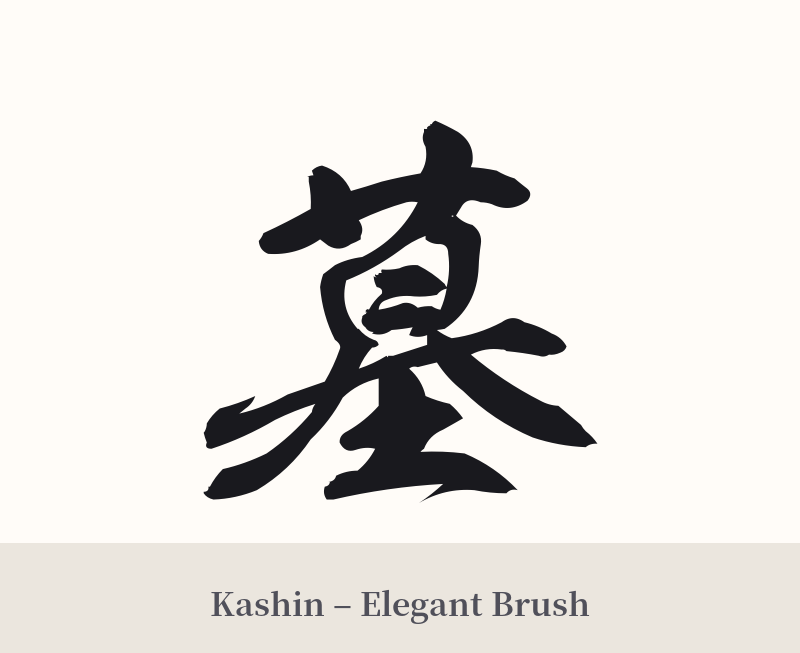
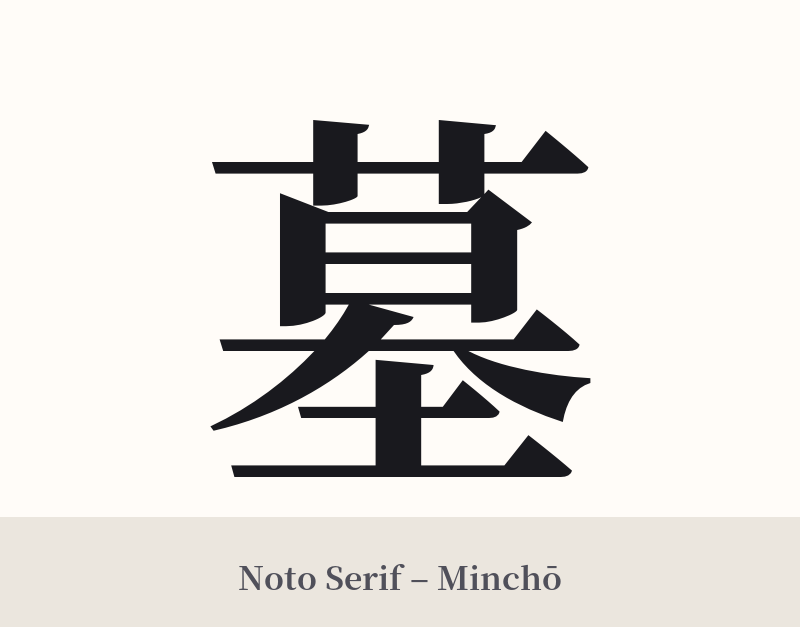
The same kanji can look dramatically different depending on the calligraphy style. Choose a font that matches the mood you want for your tattoo or design.
🎨 Tattoo Suitability
📐 Tattoo Design Guide
Given the solemn and deeply personal nature of this kanji, its design should be approached with thoughtfulness and respect.
– Placement: This is not a kanji for casual display. Consider private, intimate placements like the ribs, the back over the heart, or the inner forearm. These locations suggest a personal memorial rather than a public statement.
– Font Style: Traditional and expressive styles work best. A flowing, semi-cursive shodō (calligraphy) style can capture the emotional weight, while a classic Mincho (serif) font provides a sense of dignity and permanence. Avoid modern, blocky, or playful fonts, as they would clash with the character's inherent solemnity.
– Visual Tips: The character is moderately complex with 13 strokes. Ensure your tattoo artist is skilled in kanji and works at a sufficient size to prevent the lines from blurring over time. It can be paired with symbolic imagery, such as a kiku (chrysanthemum, a flower used in funerals), a lotus (symbolizing purity and rebirth), or a specific date to create a larger memorial piece. Avoid combining it with aggressive or cheerful elements.
Comments