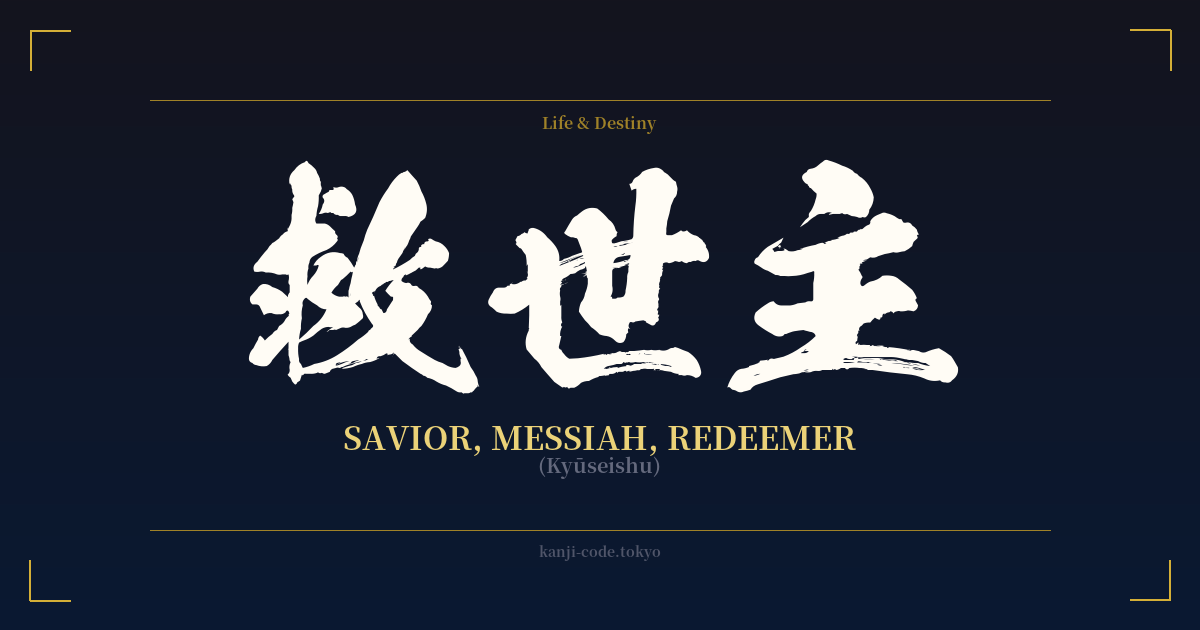
✍️ 救世主 (Kyūseishu) — Cultural Context
救世主 (Kyūseishu) is a Japanese word that translates to 'Savior,' 'Messiah,' or 'Redeemer.' It is a term of immense weight, carrying deep historical and religious significance. A direct, literal breakdown of the characters reveals its powerful scope: 'the lord who saves the world.'
This term is not native to ancient Japanese thought but was largely introduced and popularized through the translation of the Christian Bible into Japanese. Consequently, its primary and most immediate association in Japan is with Jesus Christ, who is referred to as the 救世主. This connection is so strong that using the word in conversation almost invariably brings Christian theology to mind. It speaks of ultimate salvation, redemption from sin, and deliverance for all of humanity.
The scale of 救世主 is cosmic. It does not refer to someone who simply helps out in a crisis, like a firefighter or a doctor. You would never call someone who pulled you from a burning building a 救世主, you would call them a hero (英雄, eiyū) or a benefactor (恩人, onjin). A 救世主 is a figure, often divine or destined, whose actions redeem the entire world or society from a fundamental state of suffering, corruption, or despair.
Outside of its religious context, 救世主 has found a powerful niche in modern pop culture, particularly in anime, manga, and video games. It is frequently used to describe a protagonist with a messianic destiny—the 'Chosen One' foretold by prophecy to save the world from an apocalyptic threat. Characters like Neo from 'The Matrix' or the hero in a fantasy epic would be perfect examples of a 救世主 archetype in fiction. This usage retains the original's sense of grandeur and world-altering importance.
Choosing or using this word implies an understanding of its gravity. It represents not just help, but ultimate hope and deliverance on the grandest scale imaginable. It is a concept of profound spiritual and narrative power, reserved for figures who bear the weight of the world on their shoulders.
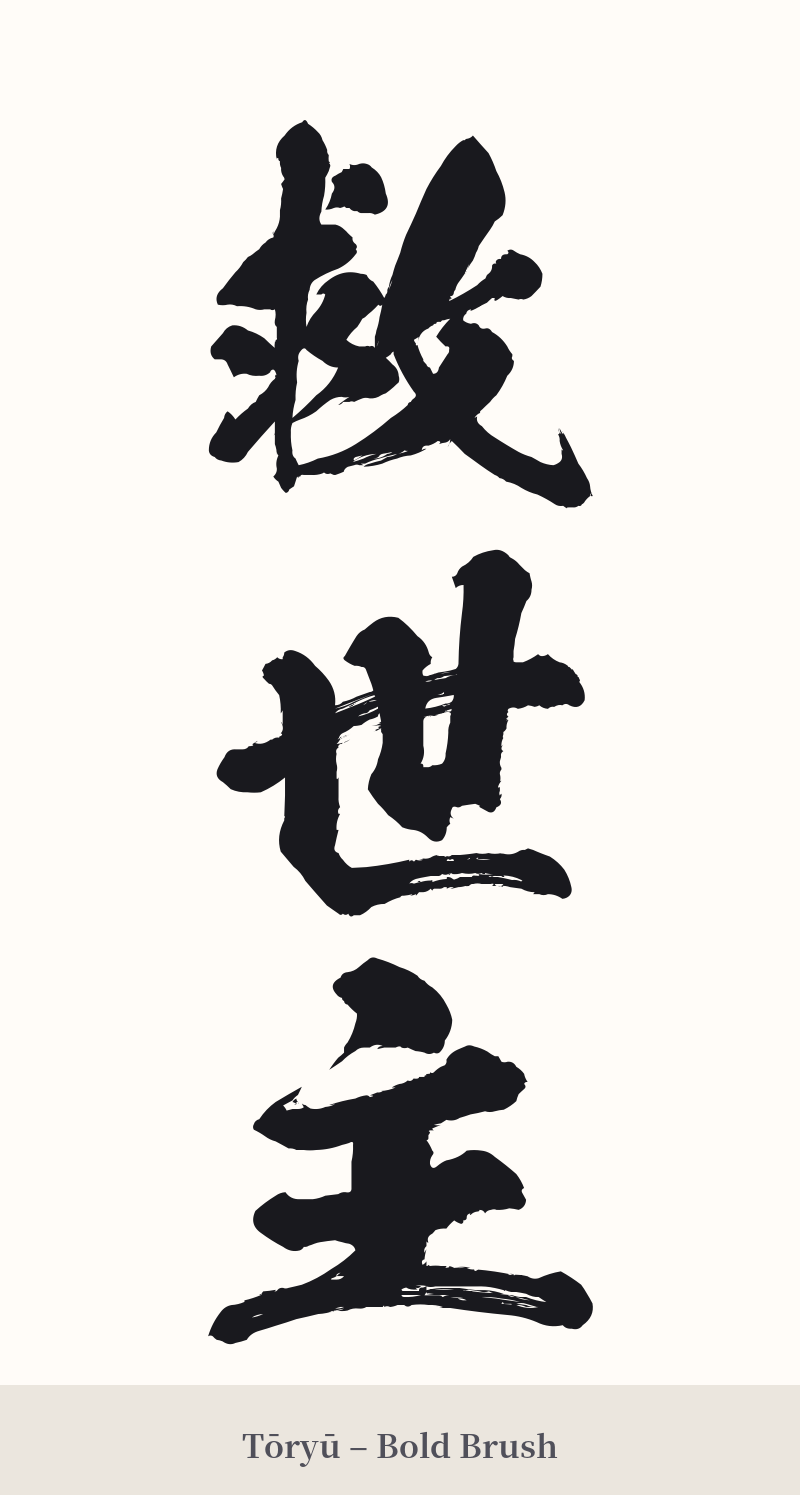
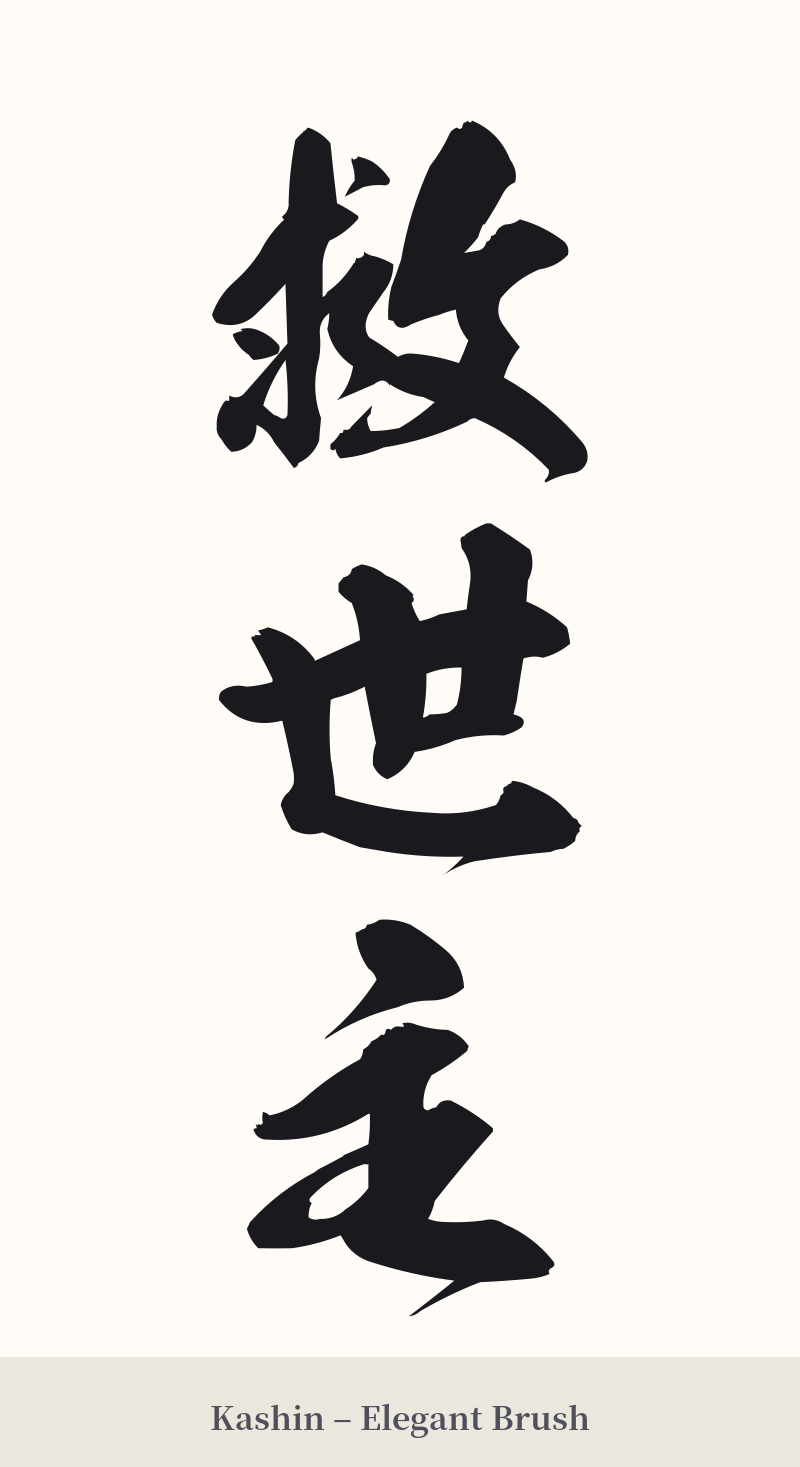
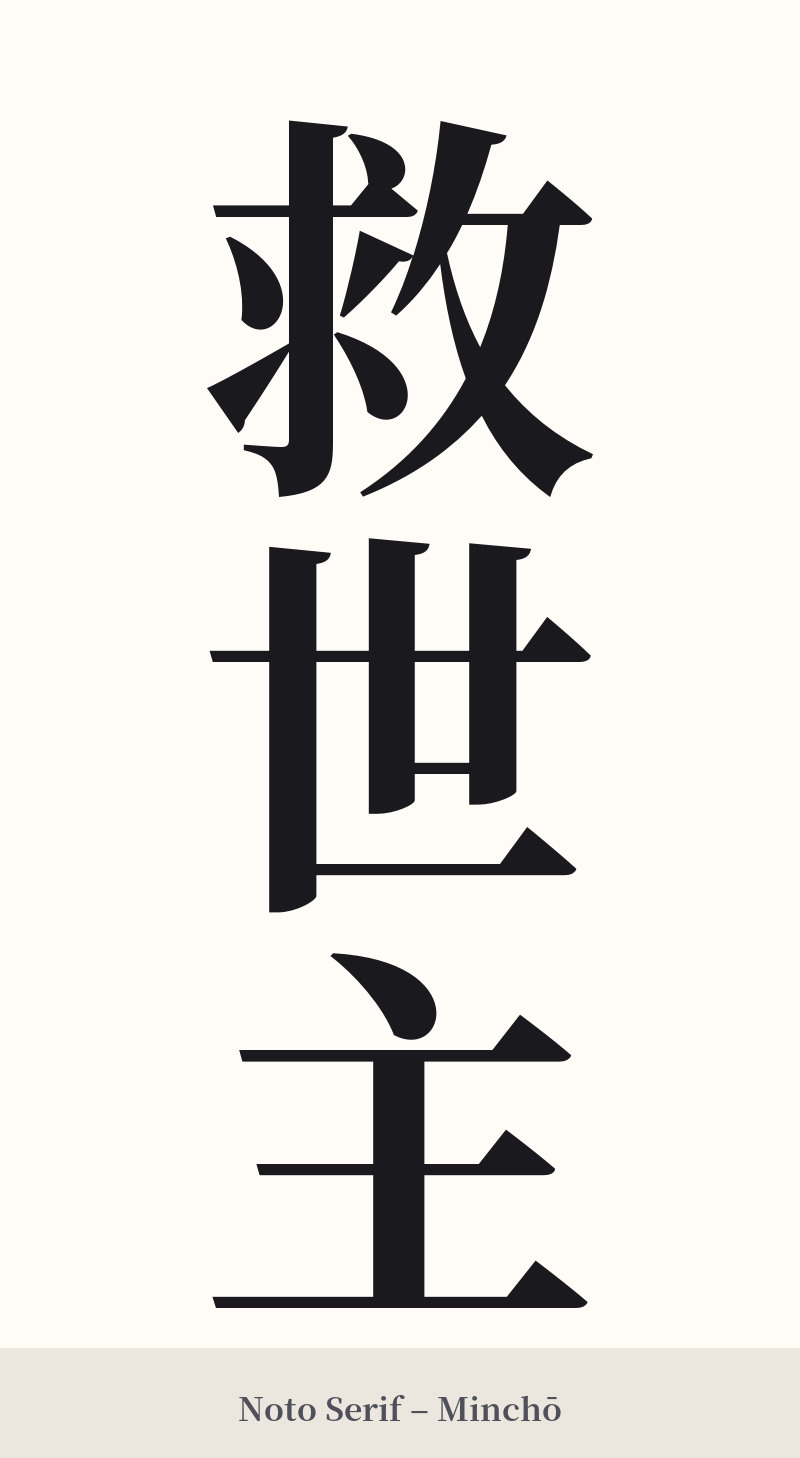
🖌️ Font Styles for 救世主
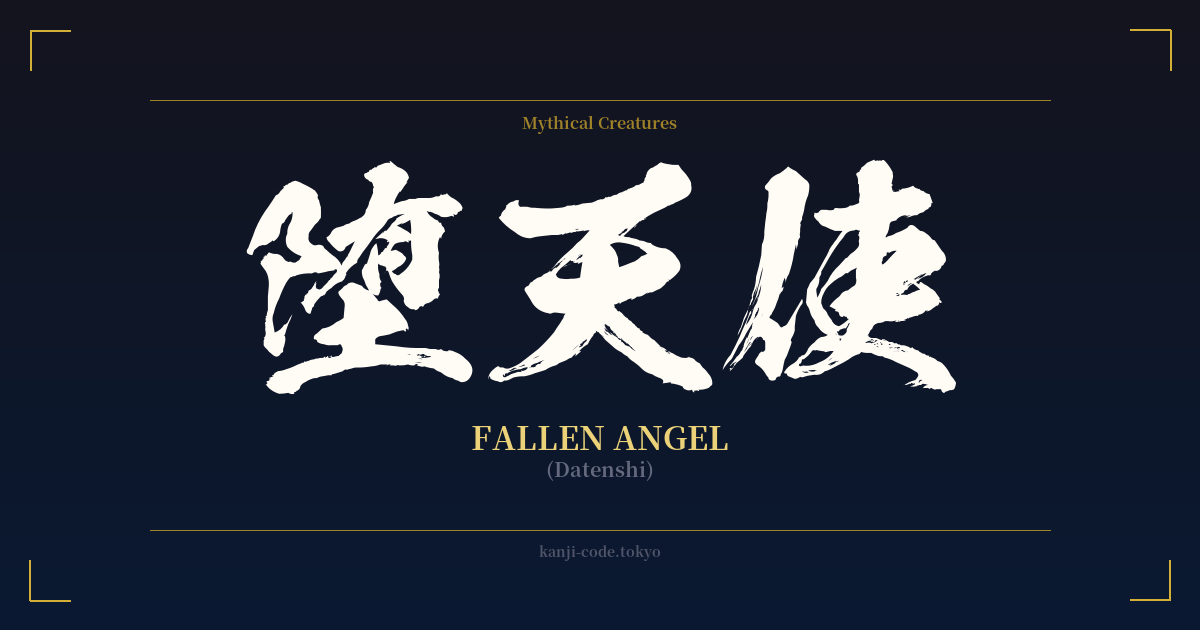
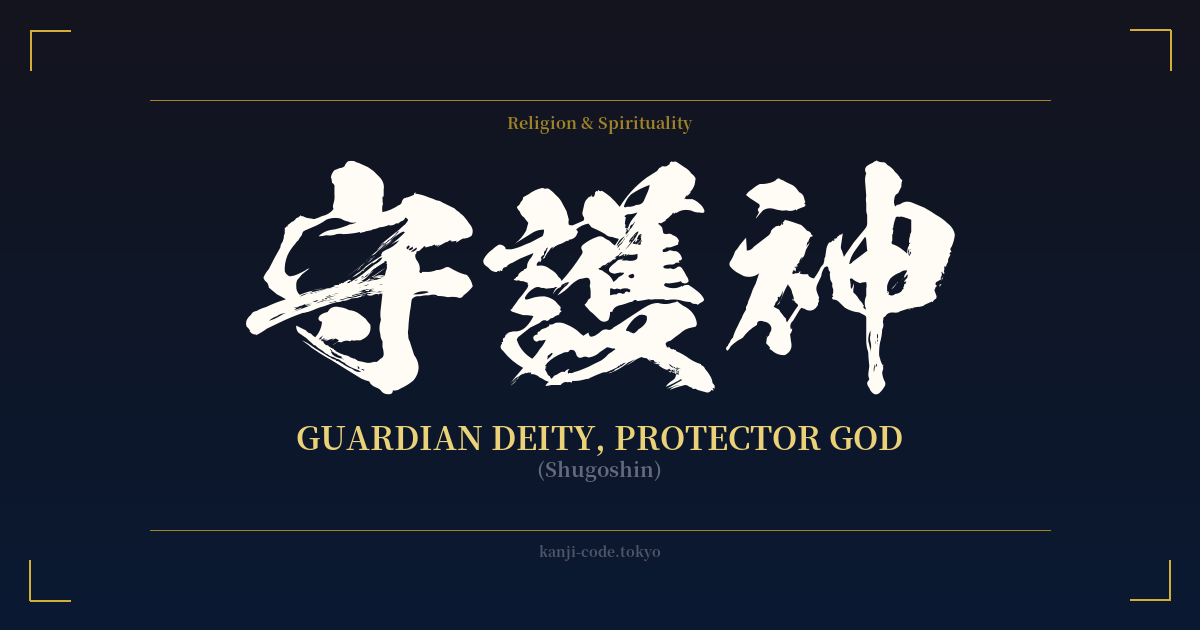
The same kanji can look dramatically different depending on the calligraphy style. Choose a font that matches the mood you want for your tattoo or design.
🎨 Tattoo Suitability
📐 Tattoo Design Guide
A word with this much gravity deserves a design that conveys strength and reverence. A vertical orientation is highly recommended, as is traditional for multi-character kanji phrases. This allows the characters to flow downwards along a spine, forearm, or calf, creating an elegant and powerful line.
– Font Style: Traditional scripts are the best fit. A crisp, formal Kaisho (block) script would emphasize the stability and authority of the 'Savior.' For a more dynamic and flowing feel, a Gyosho (semi-cursive) script could represent the active nature of salvation. Avoid overly stylized or modern fonts that would detract from the word's serious tone.
– Visual Balance: The three characters have a pleasing visual rhythm. The first kanji, 救 (save), is the most complex with 11 strokes, followed by the two simpler characters 世 (world) and 主 (lord), both with 5 strokes. This creates a 'heavy' top that anchors the design, flowing into a stable base.
– Placement: Due to its meaning, this is a very personal tattoo. Consider places that are either highly visible to declare its meaning (forearm) or more private as a personal reminder (chest, back).
Comments