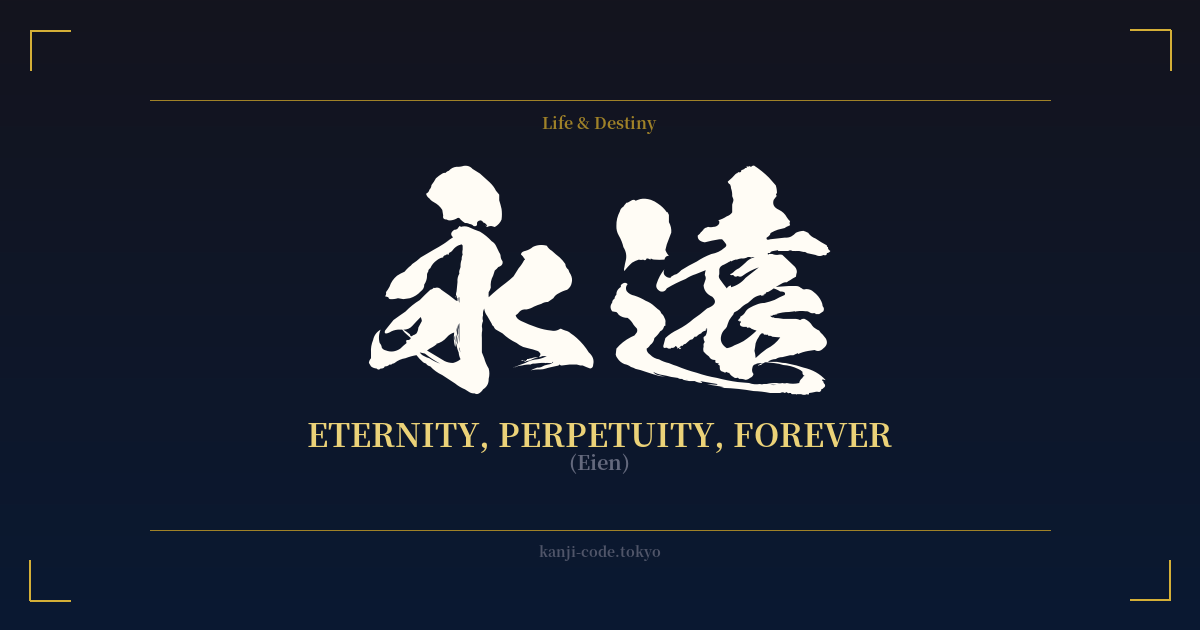
✍️ 永遠 (Eien) — Cultural Context
永遠 (Eien) is one of the most poetic and profound words in the Japanese language, capturing the concept of eternity, perpetuity, and forever. It’s more than just a measure of infinite time; it carries a deep emotional and philosophical weight, expressing a fundamental human longing for things that last—love, memory, spirit, and connection.
The word is a beautiful marriage of two characters. The first, 永 (ei), means ‘long’ or ‘lengthy’ and its pictograph origin is often said to represent a long, meandering river, a perfect metaphor for the flow of time. The second character, 遠 (en), means ‘distant’ or ‘far.’ When combined, they paint a vivid picture: a length of time that stretches out into the far, unseen distance, beyond the horizon of our own lives. This isn’t just ‘a long time’; it’s a time so vast it becomes an abstract, beautiful concept.
In Japanese culture, 永遠 is a cornerstone of artistic and emotional expression. It's a recurring theme in J-pop love ballads, where singers pledge their ‘eien no ai’ (eternal love). It appears in literature and poetry, used to describe the enduring beauty of nature or the unending ache of loss. The word evokes a sense of serene, timeless beauty, often tinged with a hint of melancholy—the recognition of our own fleeting existence against the backdrop of the eternal.
This concept finds a fascinating counterpoint in the Buddhist idea of 無常 (mujō), or impermanence. While Buddhism teaches that all things are transient, the human heart still yearns for 永遠. This tension is central to the Japanese aesthetic. The brief, spectacular life of the cherry blossom is a symbol of mujō, yet the feeling it inspires—the desire to hold onto that perfect moment forever—is a cry for eien. A tattoo of 永遠, therefore, can be seen as an act of defiance against impermanence, a wish to make a feeling, a memory, or a commitment last beyond its natural lifespan.
Unlike more abstract philosophical terms, 永遠 is woven into the fabric of everyday feeling and language. It's used to consecrate vows, to remember loved ones, and to express hope for the future. It’s a word that speaks to the soul, promising that some things—the most important things—can and will endure.
🖌️ Font Styles for 永遠
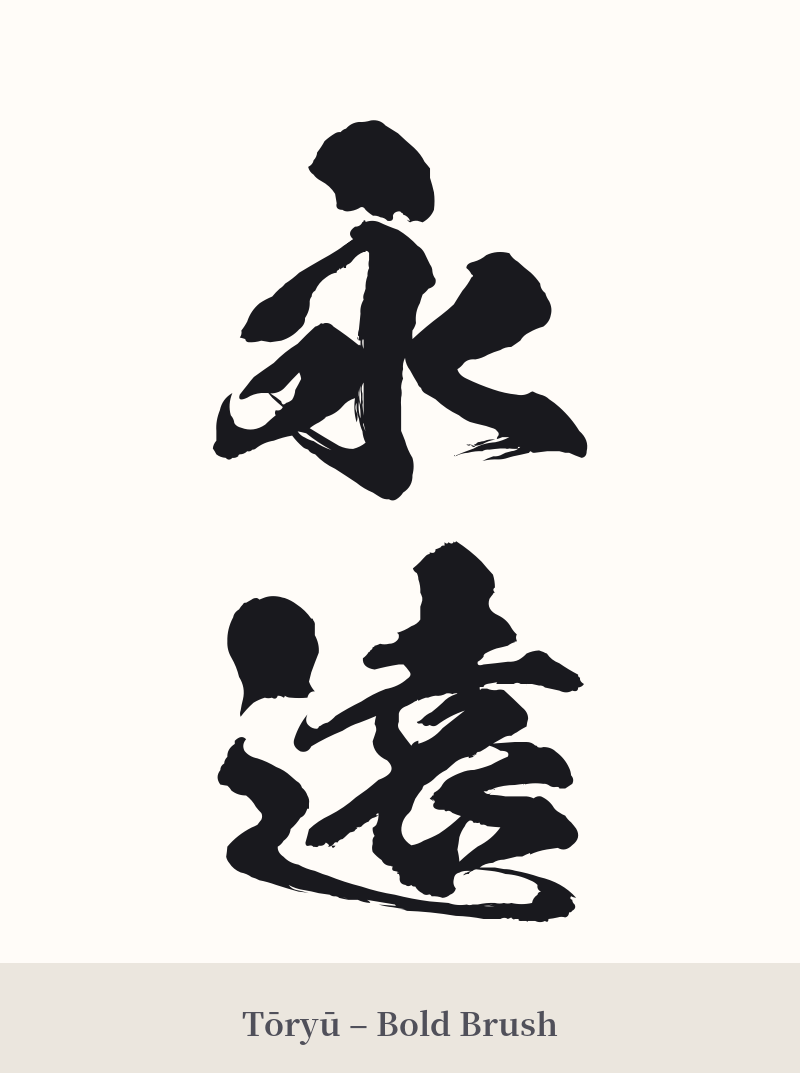
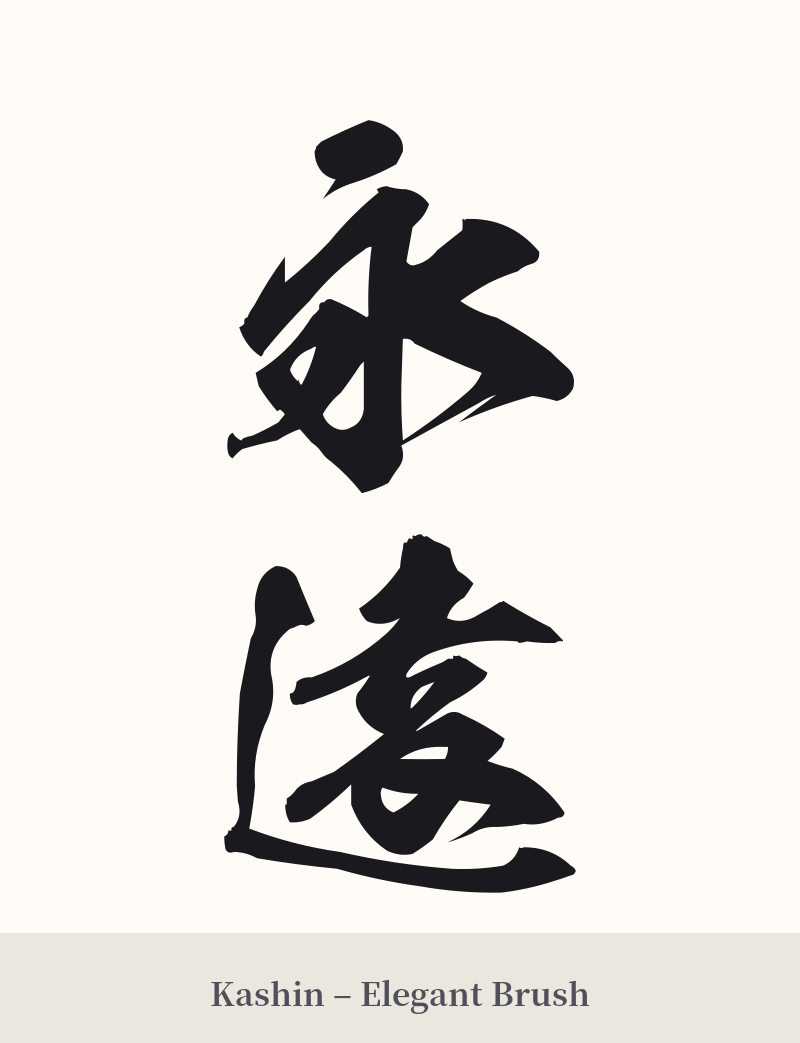
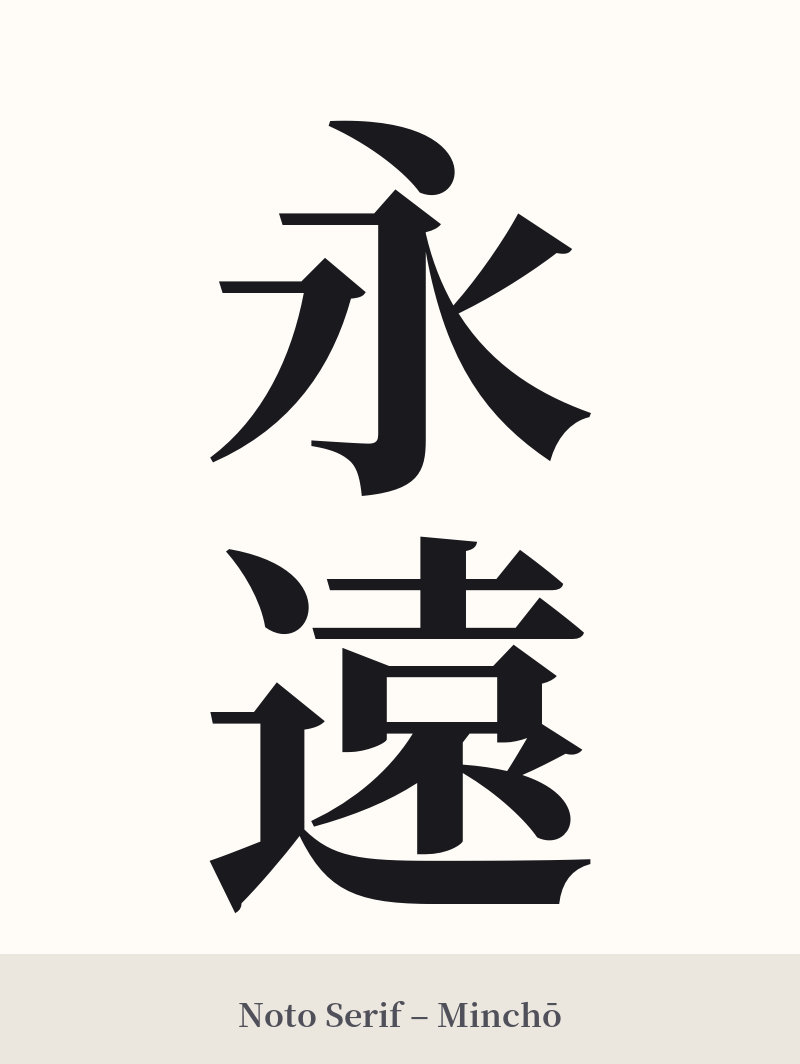
The same kanji can look dramatically different depending on the calligraphy style. Choose a font that matches the mood you want for your tattoo or design.
🎨 Tattoo Suitability
📐 Tattoo Design Guide
For a tattoo of 永遠 (Eien), the design should reflect its profound and timeless nature. Vertical alignment is highly recommended, as it follows the traditional flow of Japanese writing and creates an elegant line on the body.
– Placement: Ideal placements include the forearm, the calf, or along the spine, where the vertical orientation can be emphasized. For a horizontal design, the chest, upper back, or across the ribs are strong options.
– Font Style: The choice of font can dramatically alter the feeling. A dynamic, flowing calligraphy script like Gyosho (semi-cursive) or Sosho (cursive) can evoke the sense of time as a flowing river. Conversely, a crisp, formal Kaisho (block script) will emphasize strength, permanence, and unwavering commitment.
– Visual Elements: While 永遠 is powerful on its own, it can be paired with complementary imagery. Consider incorporating it with symbols of longevity or continuity, such as an Enso circle, a winding stream, or a branch of a pine tree. Keep accompanying visuals subtle to ensure the kanji remains the focal point.
Comments