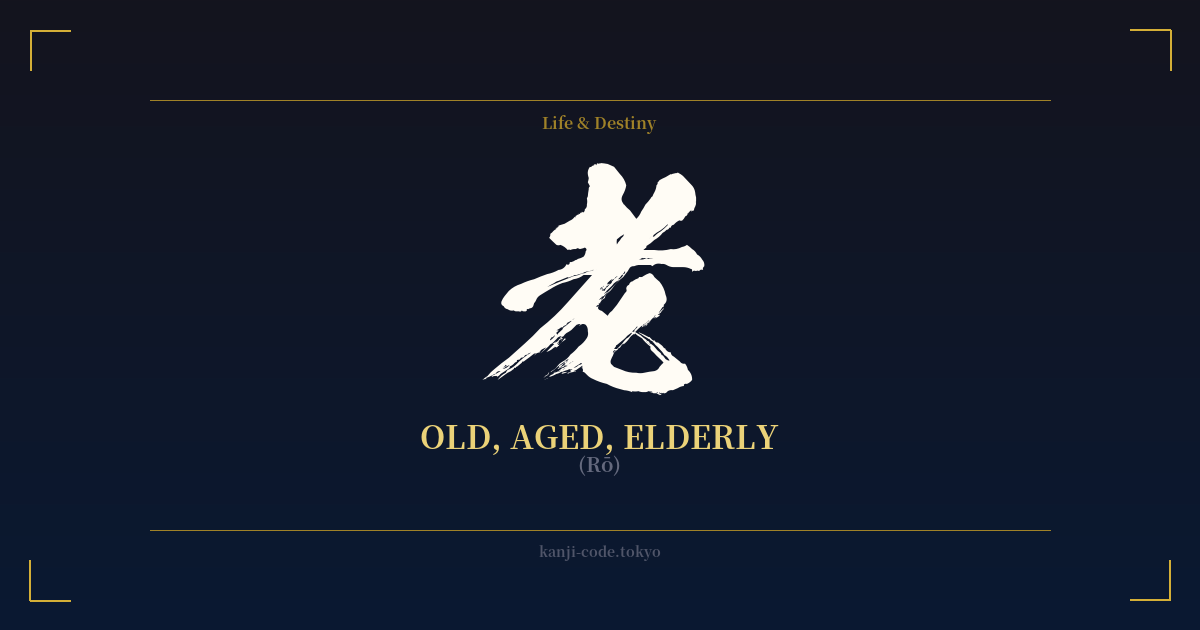
✍️ 老 (Rō) — Cultural Context
The kanji 老 (Rō) carries a weight far beyond its simple definition of 'old.' Its origins trace back to a pictograph of an elderly person with long hair, hunched over and leaning on a walking stick. This image immediately grounds the character in the human experience of aging, embodying not just the physical process but the accumulation of years and the wisdom that comes with it.
In Japanese culture, the concept of old age is deeply dualistic. On one hand, there is immense respect for elders, a cornerstone of Confucian philosophy that heavily influenced Japan. This reverence is institutionalized in a national holiday, 敬老の日 (Keirō no Hi, Respect for the Aged Day). The entire social structure, with its senpai-kōhai (senior-junior) relationships, is built upon valuing the knowledge of those who came before.
The character 老 is a key component in words that reflect this respect, such as 老人 (rōjin, elderly person) and 老師 (rōshi, a venerable teacher or master, particularly in Zen Buddhism). In this context, 老 signifies not decay, but mastery, experience, and a life fully lived.
However, there is another side. Modern Japan grapples with the societal challenges of a rapidly aging population, a phenomenon known as 高齢化社会 (kōreika shakai). Here, the implications of 'old' can be tied to concerns about healthcare, pensions, and economic vitality. This creates a contemporary tension with the traditional veneration of age.
Interestingly, the kanji also appears in unexpected places, like the word for shrimp or lobster, 海老 (ebi). This is said to be because the creature's bent back and long antennae resemble an old person. This usage showcases the visual and metaphorical flexibility of the character.
Ultimately, 老 is a symbol of the natural life cycle. It represents the passage of time, the beauty in things that have endured, and the quiet dignity of experience. It is less about the frailty of being old and more about the richness of having become old.
🖌️ Font Styles for 老
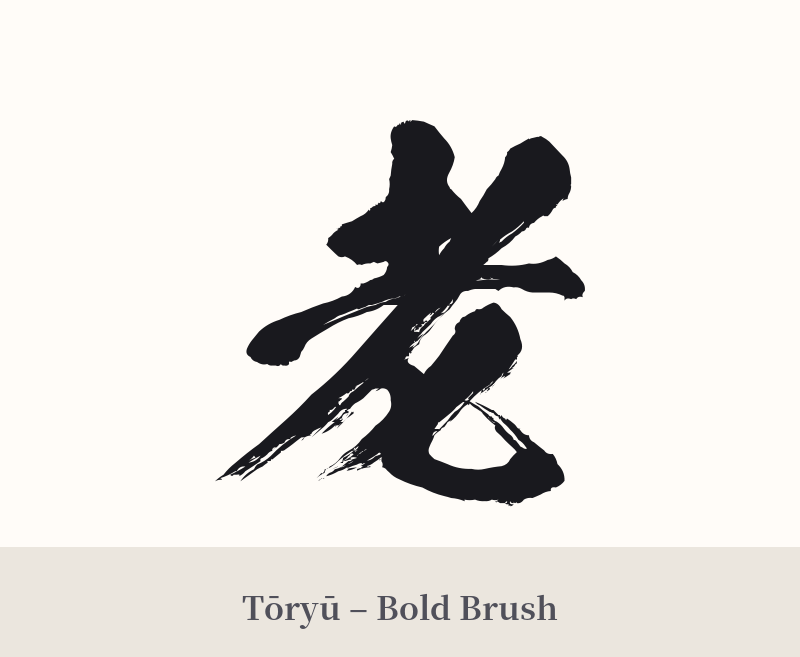
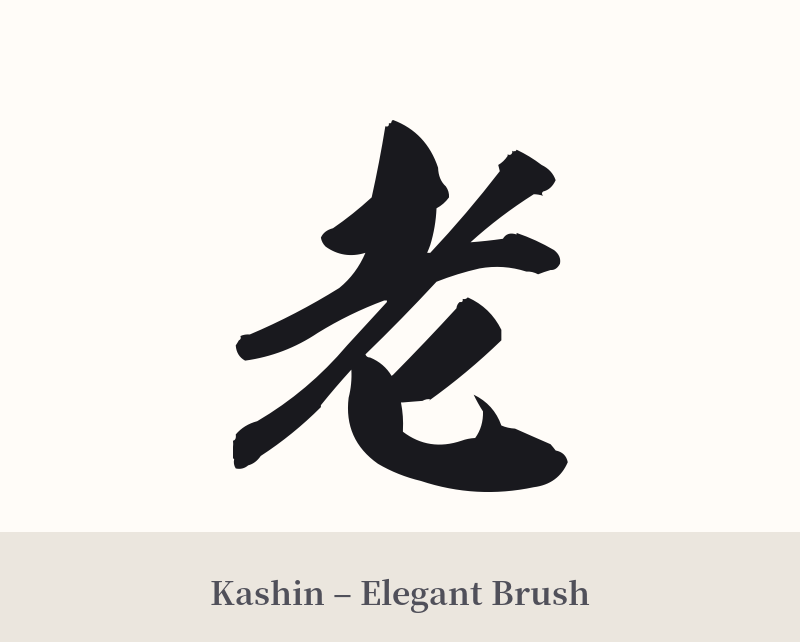
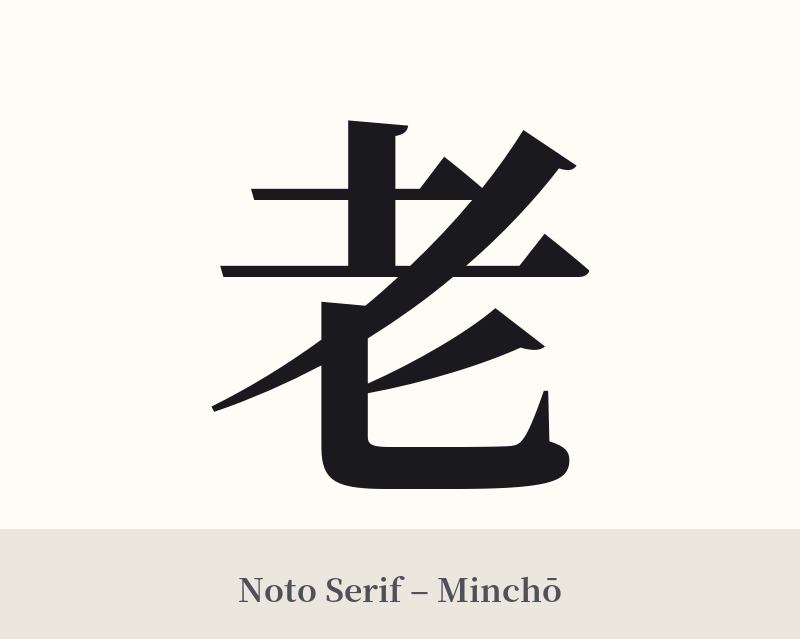
The same kanji can look dramatically different depending on the calligraphy style. Choose a font that matches the mood you want for your tattoo or design.
🎨 Tattoo Suitability
📐 Tattoo Design Guide
Given the nuanced and potentially awkward meaning of 老 as a standalone tattoo, context is everything. If you are set on this character, consider these design approaches:
– Font Style: A traditional calligraphy style (shodō) is highly recommended. A scratchy, weathered, or 'earthy' brushstroke can visually reinforce the meaning of 'aged' and 'experienced.' Avoid clean, modern, or geometric fonts, as they would create a jarring conceptual mismatch.
– Placement: Consider a placement that feels grounded or thoughtful, such as the forearm, the back of the shoulder, or over the heart. These locations allow the character to be part of a larger canvas and feel more intentional.
– Visual Accompaniment: This kanji benefits greatly from being part of a larger design. Pairing 老 with symbols of longevity and wisdom can steer its meaning in a positive direction. Common pairings include an ancient, gnarled pine tree, a crane, a turtle, or a serene mountain landscape. This transforms the meaning from a simple declaration of 'old' to a richer concept like 'enduring wisdom' or 'venerable strength.'
Comments