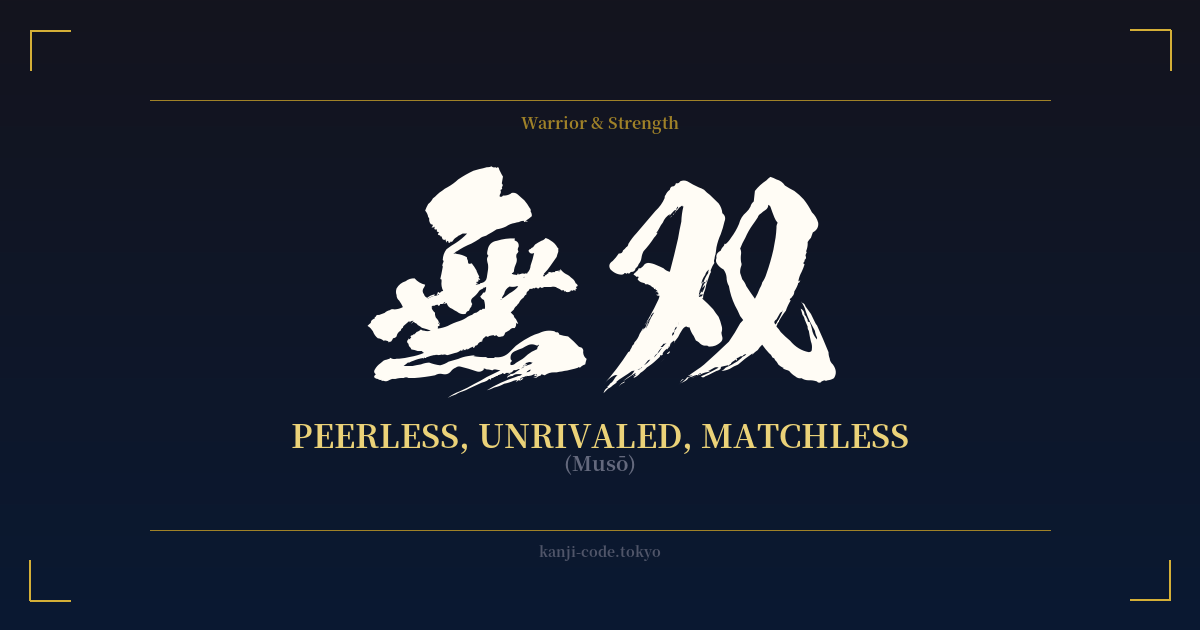
✍️ 無双 (Musō) — Cultural Context
The word 無双 (Musō) resonates with a power that transcends simple translation. While it means 'peerless,' 'unrivaled,' or 'matchless,' its essence is about being in a class of one's own, a force without comparison.
Literally, the kanji break down to 無 (mu – nothing, without) and 双 (sō – pair, set). Together, they form the concept of 'no pair' or 'no equal.' This idea has deep roots in East Asian history and literature, often used to describe legendary heroes and warriors whose prowess was so immense that no one could stand as their rival.
The phrase gained prominence in historical texts like the Chinese 'Records of the Grand Historian' (Shiji), which described the great general Han Xin as '国士無双' (kokushi musō) — 'the one peerless strategist in all the land.' This set the tone for centuries, cementing Musō as the ultimate praise for a warrior, strategist, or master of a craft.
In Japan, the concept of Musō is intrinsically linked to the samurai and the spirit of Bushido. It represents the pinnacle of martial skill, a state achieved through relentless training and dedication where one's ability becomes legendary. Figures like the famed swordsman Miyamoto Musashi, though his name uses different kanji, embody the very spirit of Musō, carving a path of victory that left him without an equal.
In the modern era, 無双 has experienced a massive cultural resurgence thanks to popular culture, most notably the 'Dynasty Warriors' video game franchise, which is titled 'Sangoku Musō' (三国無双) in Japan. The games' core mechanic—a single hero single-handedly defeating thousands of enemies—is a perfect, literal visualization of the word's meaning. This has introduced Musō to a global audience, associating it with overwhelming power and heroic feats.
Beyond the battlefield and video games, Musō is an aspirational term. It can describe anyone who has reached the zenith of their field, whether an artist, a musician, an athlete, or a scholar. It is a declaration of unique, incomparable excellence, a testament to a journey of mastering one's skill to the point where no one else can compare.
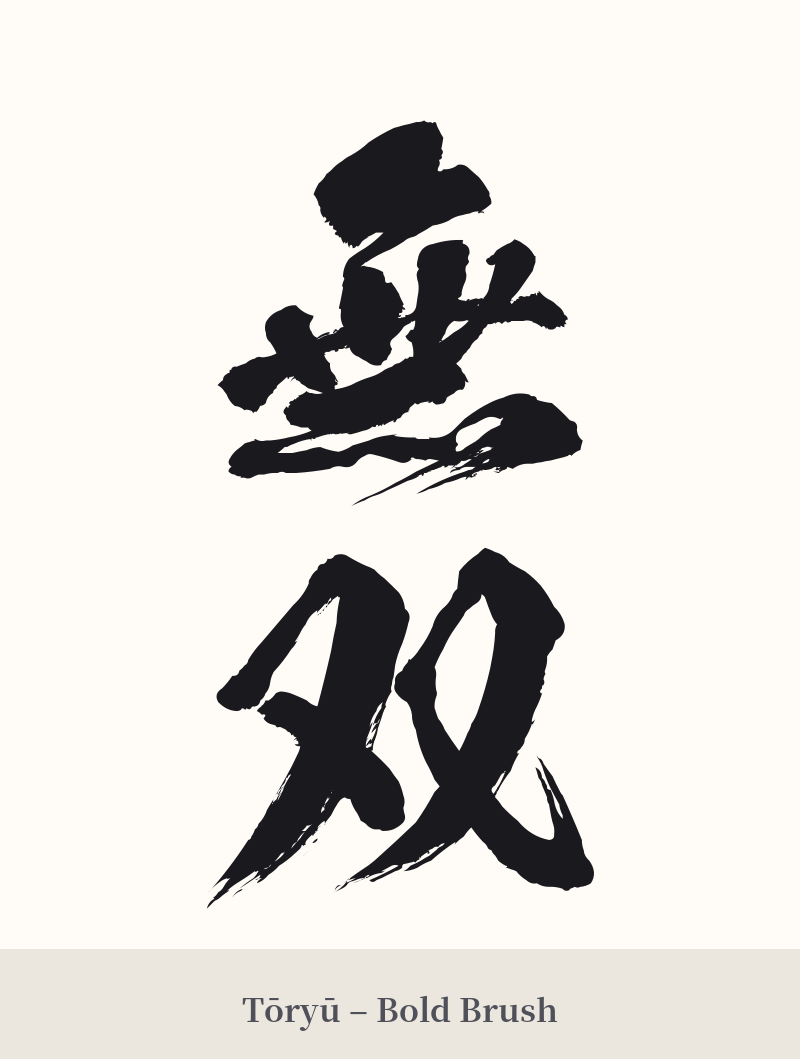
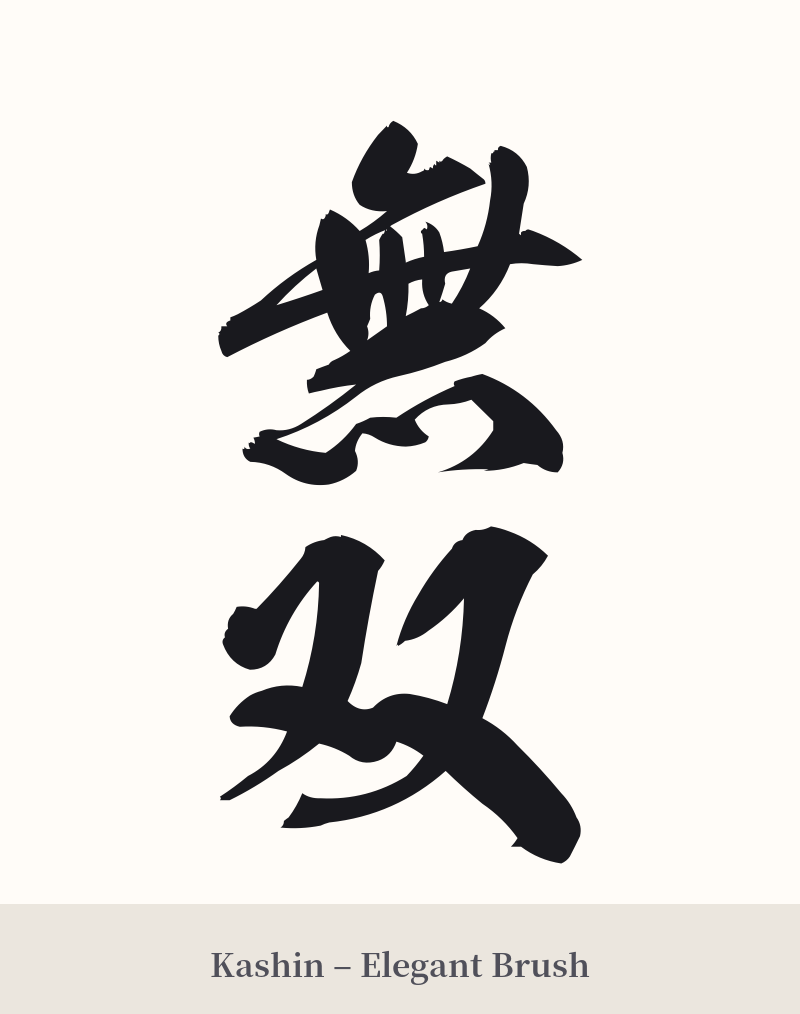
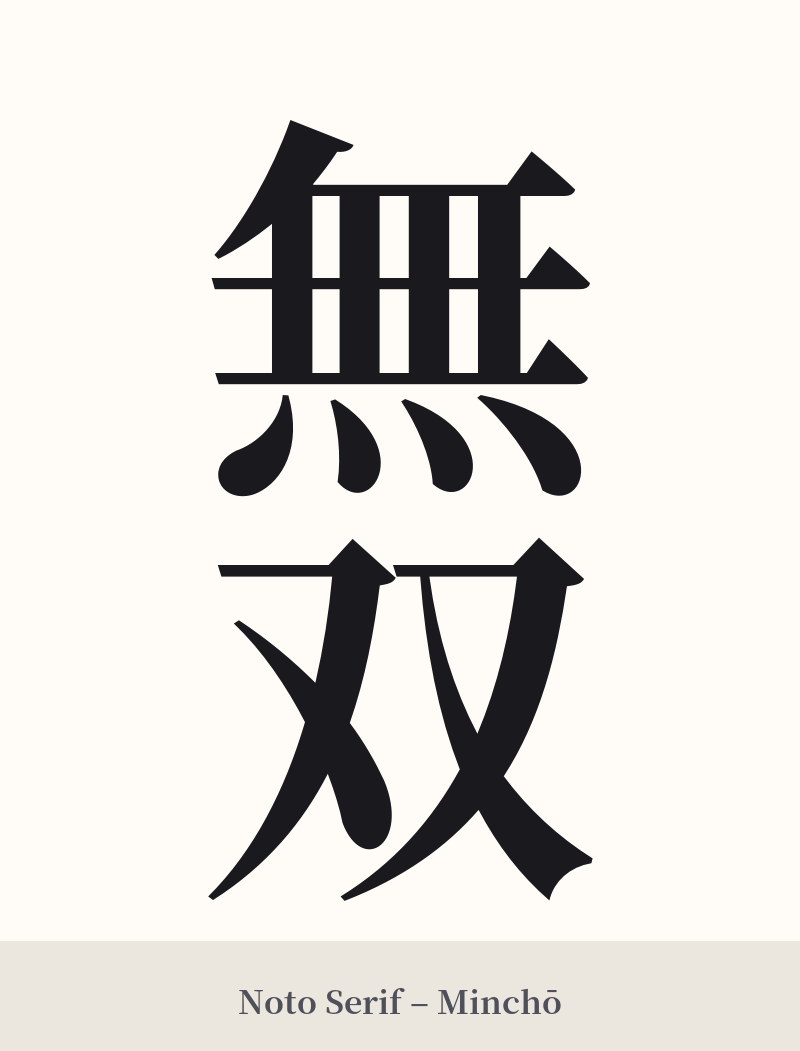
🖌️ Font Styles for 無双
The same kanji can look dramatically different depending on the calligraphy style. Choose a font that matches the mood you want for your tattoo or design.
🎨 Tattoo Suitability
📐 Tattoo Design Guide
The word 無双 (Musō) offers great flexibility for a tattoo design, carrying an aura of strength and singular skill.
– Placement: A vertical orientation is the most traditional and visually striking. It works exceptionally well on the forearm, the calf, or along the spine. For a horizontal design, the chest, upper back, or across the ribs are powerful placements.
– Font Style: The choice of font can dramatically alter the feel. A bold, semi-cursive script like Gyosho or a wild, expressive Sosho style will emphasize its warrior spirit and historical roots. Conversely, a clean, sharp Mincho or modern block-style font can give it a more contemporary, anime- or game-inspired aesthetic.
– Visual Tips: The design benefits from the natural contrast between the two characters. 無 (mu) is complex with 12 strokes, while 双 (sō) is simple and symmetrical with only 4. An artist can play with this balance, perhaps rendering 無 with heavy, textured strokes and 双 with lighter, quicker ones. Incorporating a subtle element like a single enso circle, a splash of red ink, or a stylized weapon can personalize the design and connect it to your personal field of 'peerless' skill.
Comments