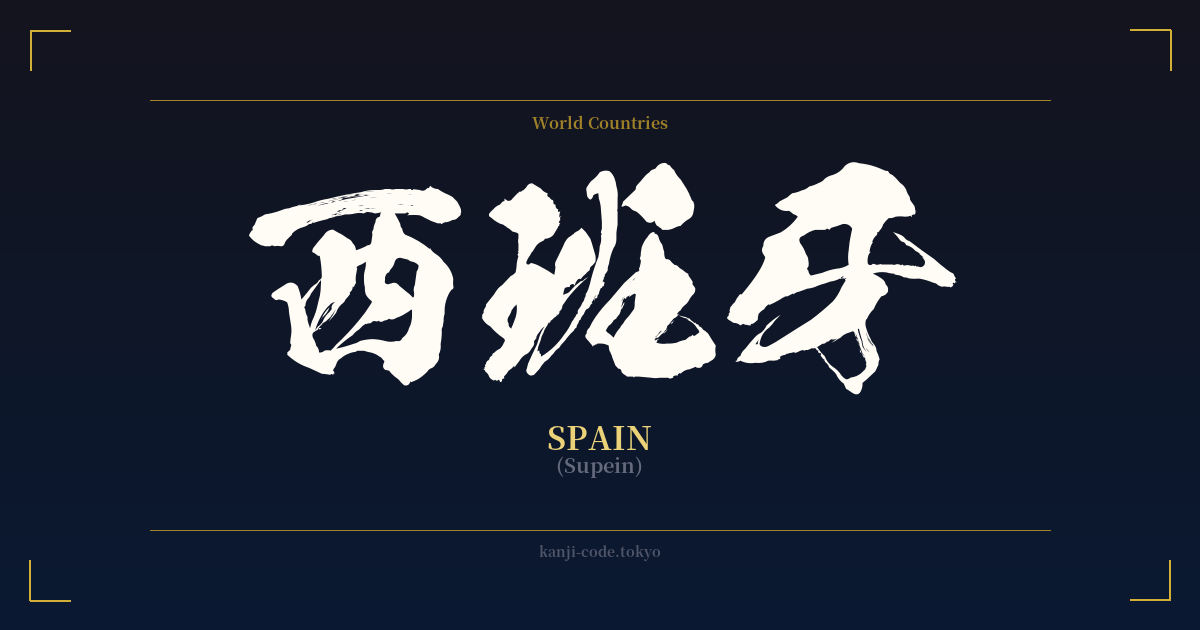
✍️ 西班牙 (Supein) — Cultural Context
The kanji 西班牙 for 'Spain' is a classic example of what is known in Japanese as 'ateji' (当て字), a practice where kanji characters are used for their phonetic values, often disregarding their original meanings. This method was particularly common during the Meiji Restoration (1868-1912) as Japan rapidly incorporated a flood of foreign words, names, and concepts from the West.
In this case, the characters 西 (su), 班 (pan), and 牙 (a) were selected to mimic the sound of 'España'. It’s important to note that these phonetic readings are specific to this word and do not represent the standard pronunciations of the characters. This linguistic creativity allowed Japanese to write foreign names using their own logographic script before the katakana syllabary became the standard for loanwords.
Japan’s relationship with Spain dates back to the 16th century, the 'Age of Discovery.' The Jesuit missionary Francis Xavier arrived in Japan in 1549, initiating a period of cultural and religious exchange. While this early contact was later suppressed during Japan's era of isolation (sakoku), it laid the groundwork for future relations. When Japan reopened its borders centuries later, names for countries like Spain needed to be standardized in writing, leading to the creation of ateji like 西班牙.
Today, the use of 西班牙 is quite formal and somewhat archaic. In everyday news, media, and conversation, the katakana script スぺイン (Supein) is overwhelmingly preferred. You are most likely to encounter the kanji in historical documents, formal diplomatic contexts, or in names of organizations seeking a traditional or established feel, such as the 'Japan-Spain Society' (日本スペイン協会, Nihon Supein Kyōkai).
Interestingly, the first character, 西 (nishi), means 'west.' This has led to its use as a common abbreviation for Spain, similar to how 米 (bei) is used for America (米国) and 英 (ei) for the UK (英国). For example, Japan-Spain relations are often referred to as 日西関係 (Nissei kankei). This shows how even in a phonetic spelling, a sliver of semantic logic can emerge and influence modern usage.
🖌️ Font Styles for 西班牙
The same kanji can look dramatically different depending on the calligraphy style. Choose a font that matches the mood you want for your tattoo or design.
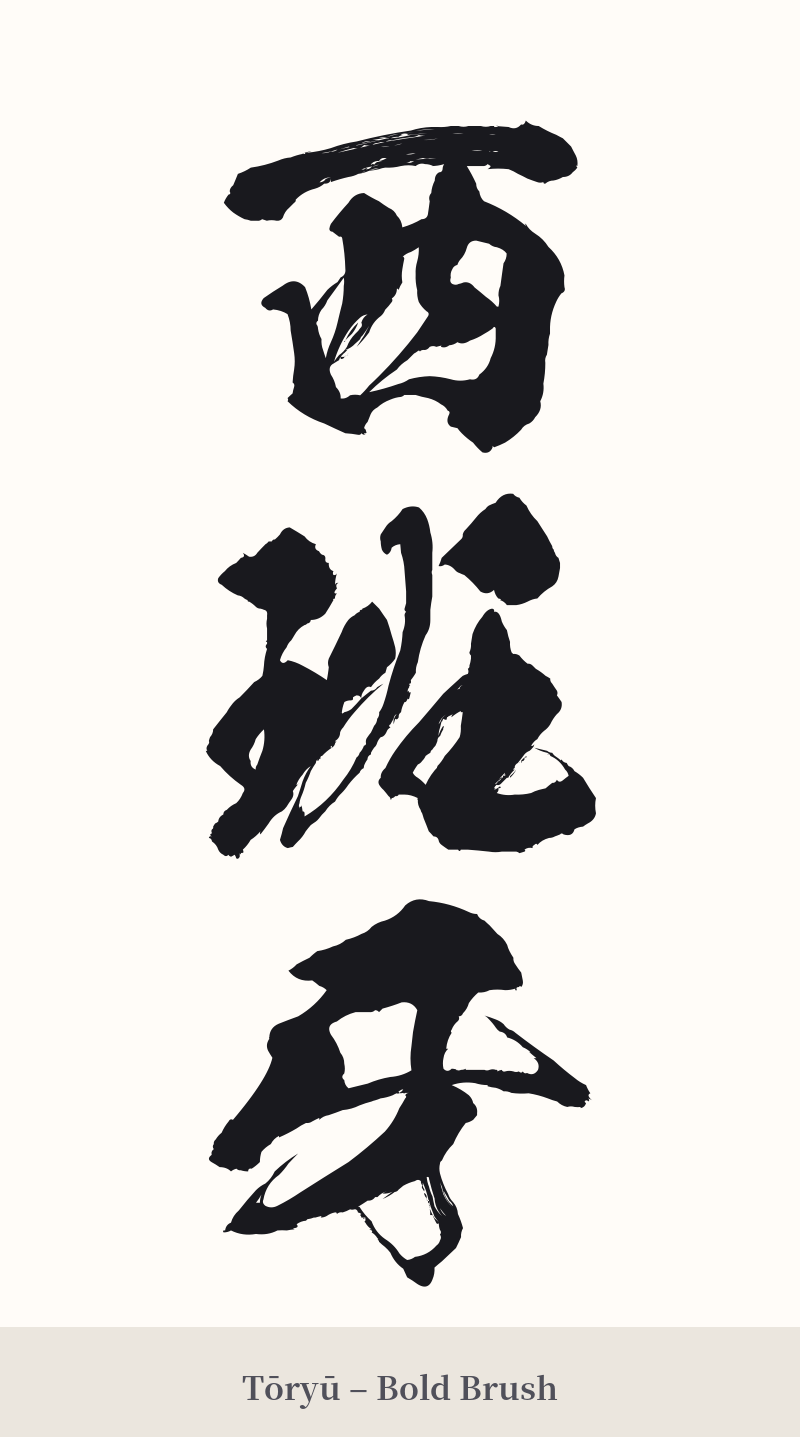
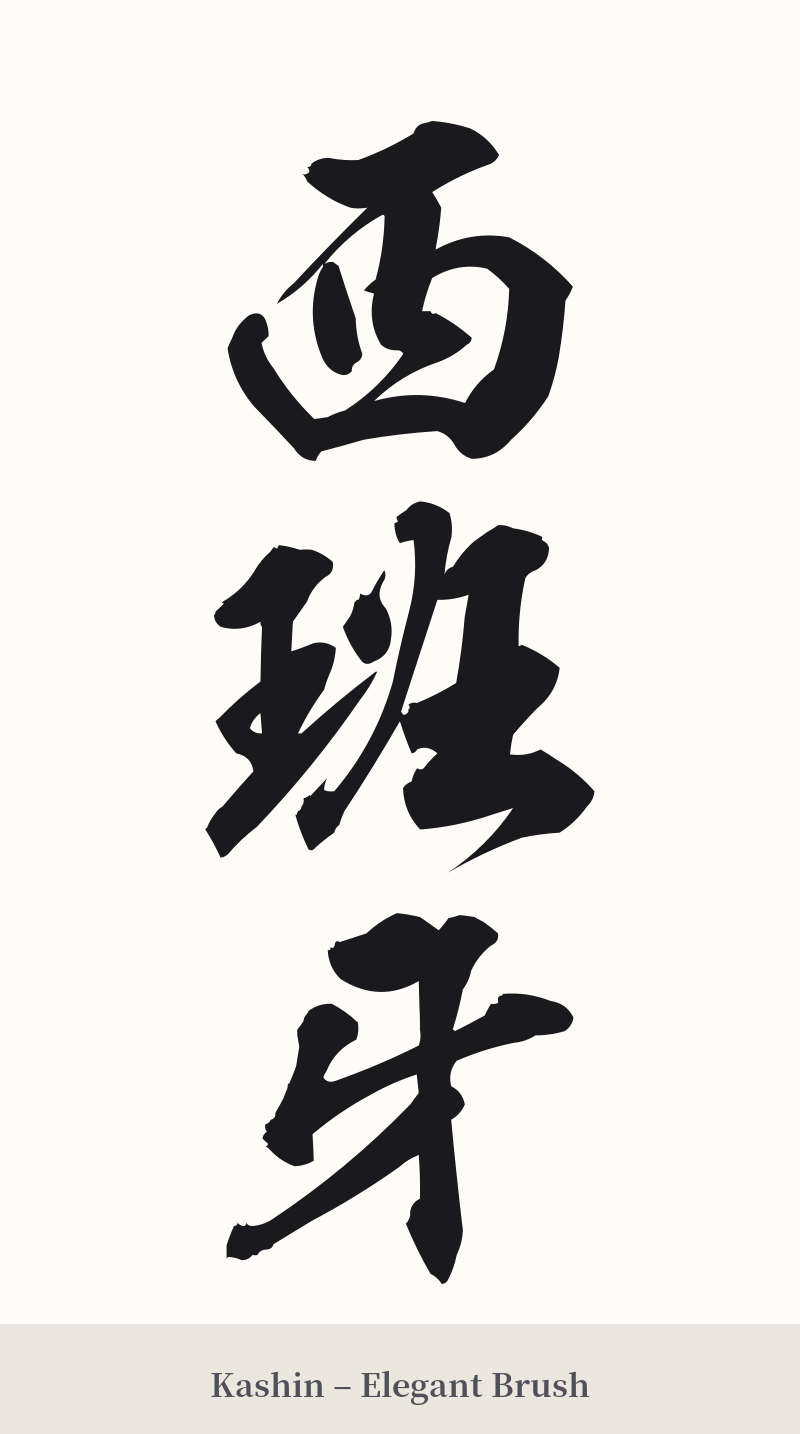
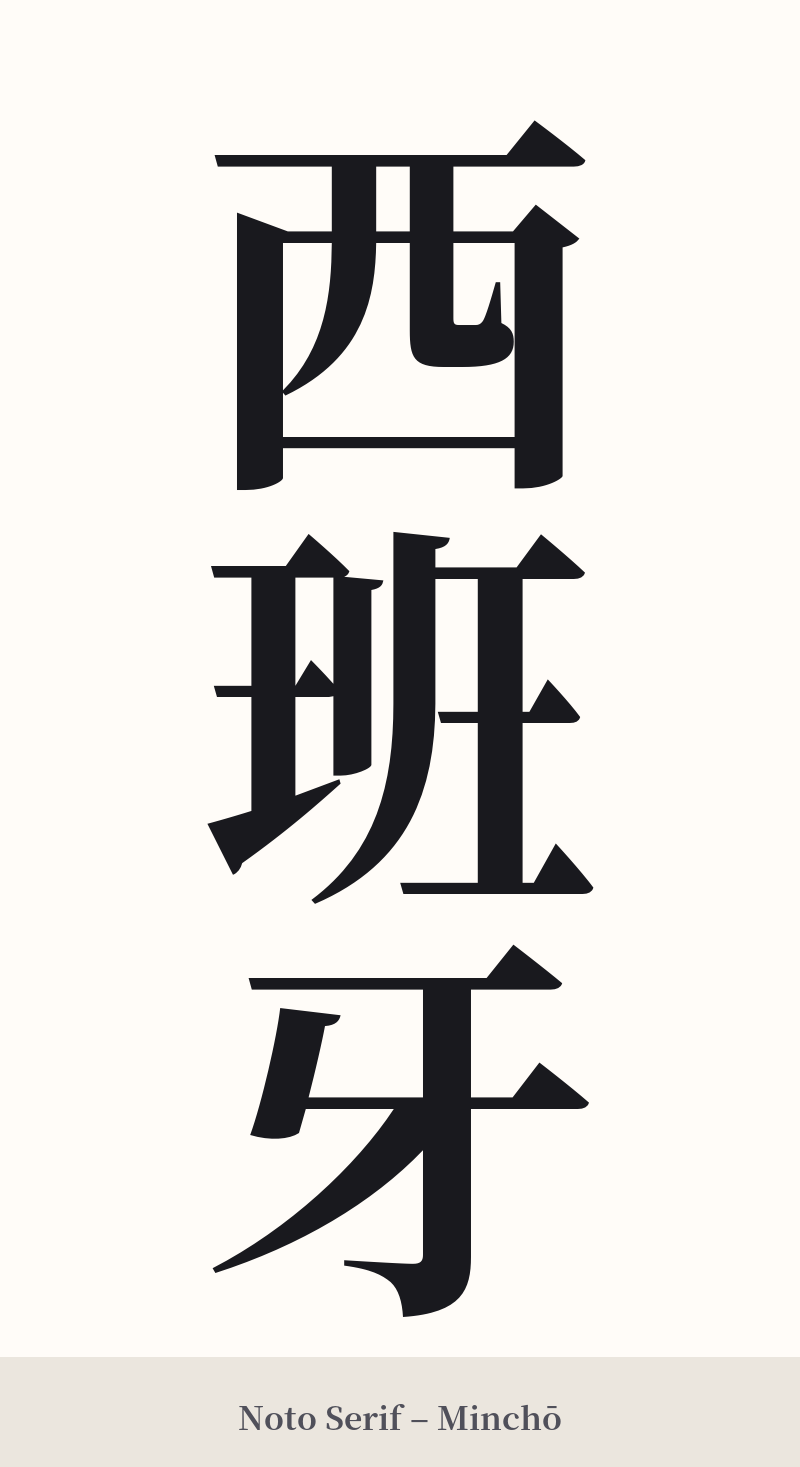
🎨 Tattoo Suitability
📐 Tattoo Design Guide
For a tattoo of 西班牙, the three-character composition offers excellent visual potential, especially in a vertical alignment. This arrangement works beautifully along the spine, forearm, or calf, creating a sense of elegant flow.
Consider these stylistic approaches:
– Gyosho (Semi-Cursive): This style would impart a sense of dynamism and passion, subtly nodding to Spanish cultural elements like flamenco. The flowing, connected strokes can create a very artistic and personal design.
– Kaisho (Block Script): For a more formal, stately, and impactful look, a bold kaisho font is a strong choice. Its clear, precise strokes emphasize the structure of each character, making it highly legible and powerful.
– Sosho (Cursive): If you desire a highly abstract and expressive design, sosho script could be an option. However, be aware that its illegibility to the untrained eye can obscure the word entirely, turning it into pure art.
To add a layer of personal meaning, you could consider subtly incorporating a small, related visual element, such as a carnation (Spain's national flower) or a stylized sun, without overwhelming the kanji themselves.
Comments