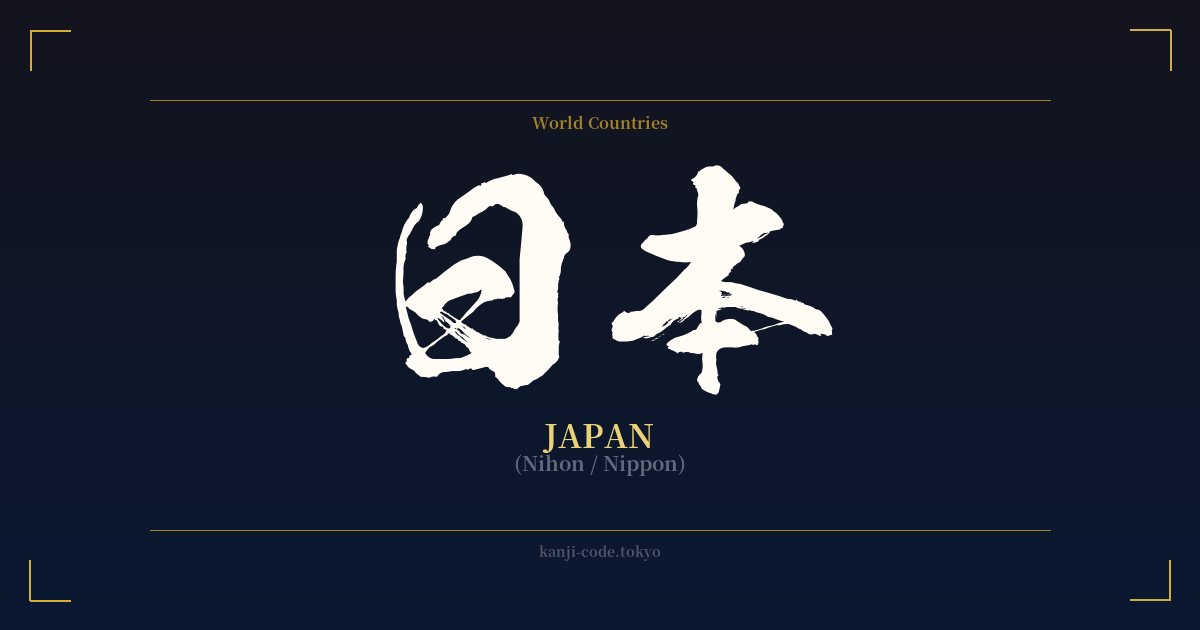
✍️ 日本 (Nihon / Nippon) — Cultural Context
The name 日本 (Nihon or Nippon) is a powerful symbol, encapsulating the nation's identity as the 'Land of the Rising Sun.' This name wasn't always what the country was called. For centuries, Chinese chronicles referred to the people of the archipelago as 'Wa' (倭), a term that Japan eventually sought to replace with a more dignified and self-defined name.
The shift occurred around the 7th century. The most famous story, though debated by historians, involves Prince Shōtoku's correspondence with the Sui Emperor of China. A letter reputedly began, 'From the ruler of the land where the sun rises to the ruler of the land where the sun sets.' This bold declaration established Japan's position east of the continent, where the day begins, and laid the foundation for its new name.
Breaking down the kanji reveals this poetic origin. 日 (ni) means 'sun' or 'day,' and 本 (hon) means 'origin' or 'source.' Together, 日本 literally translates to 'the sun's origin.' This name is not just a geographical descriptor; it's a statement of identity, deeply connected to Shinto beliefs where the sun goddess, Amaterasu Omikami, is the paramount deity and mythical ancestor of the Imperial family.
The existence of two primary readings, 'Nihon' and 'Nippon,' often confuses learners. 'Nihon' is the more common, everyday reading used in general conversation. 'Nippon' has a more formal, official, and sometimes forceful feel. You'll hear 'Nippon!' chanted at international sporting events, see it printed on postage stamps, and find it in the official name of the central bank, 日本銀行 (Nippon Ginkō). While there's no strict rule, the choice between them can convey a subtle difference in tone and context.
This simple two-character word is therefore a universe of meaning. It reflects history, geography, mythology, and a nation's evolving sense of self. It is the name that appears on the world stage, a symbol as potent and recognizable as the red sun on its national flag, the Hinomaru (日の丸), which itself means 'sun circle.'
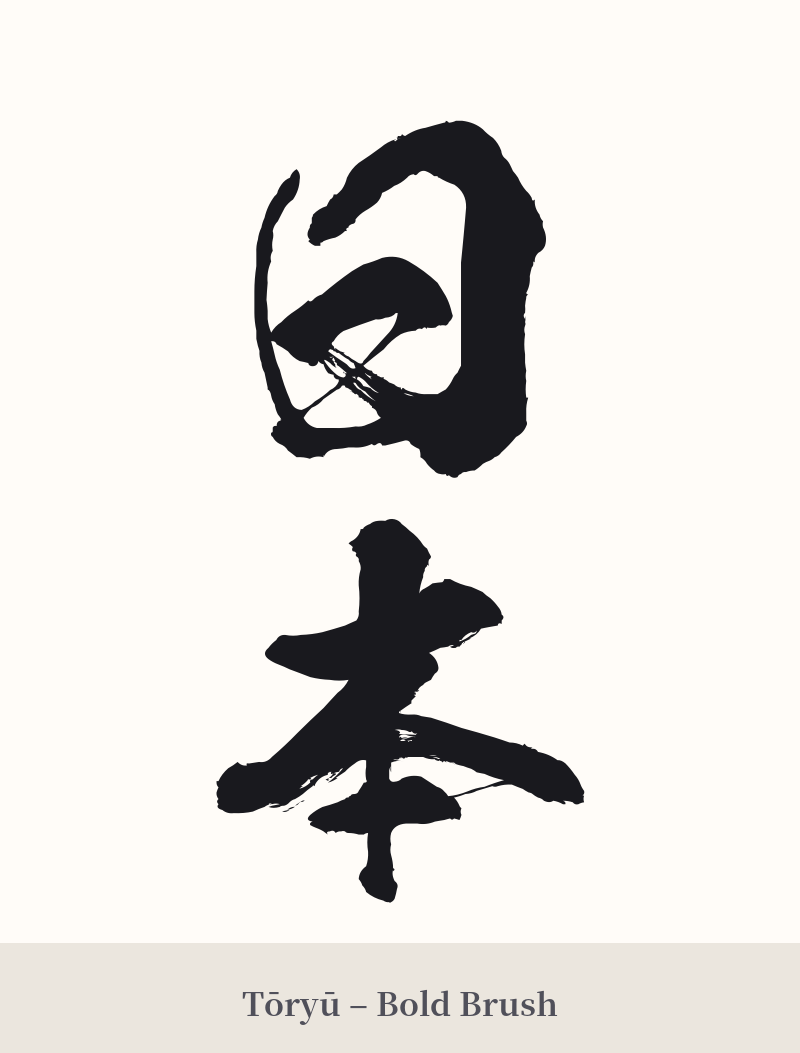
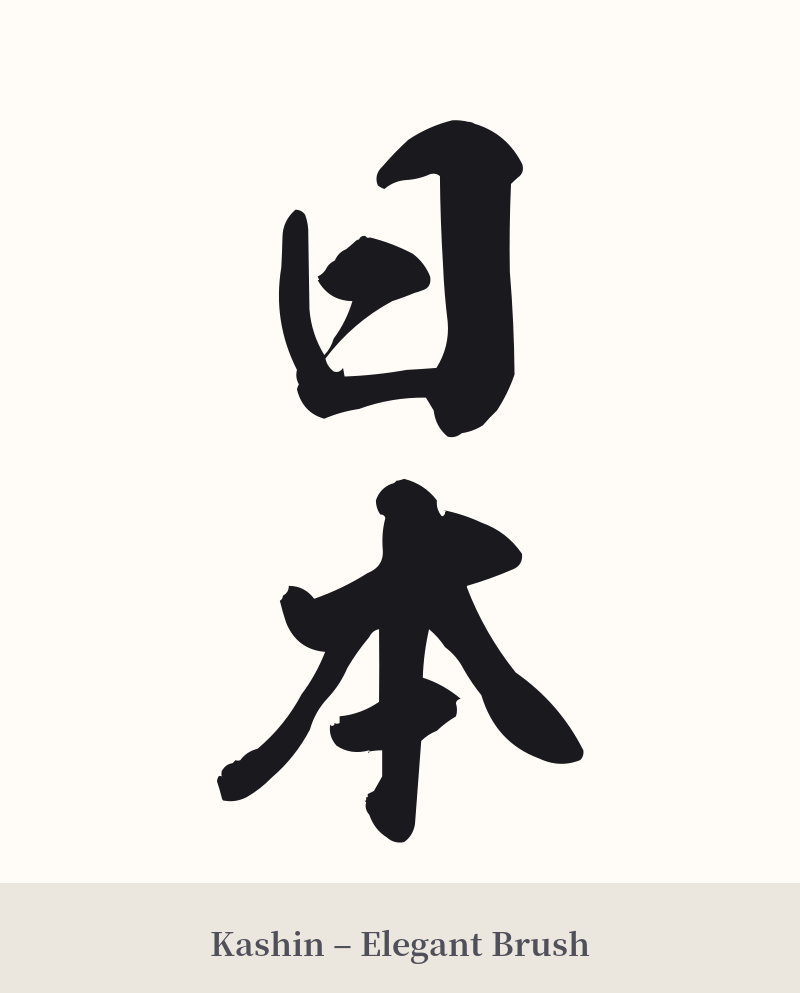
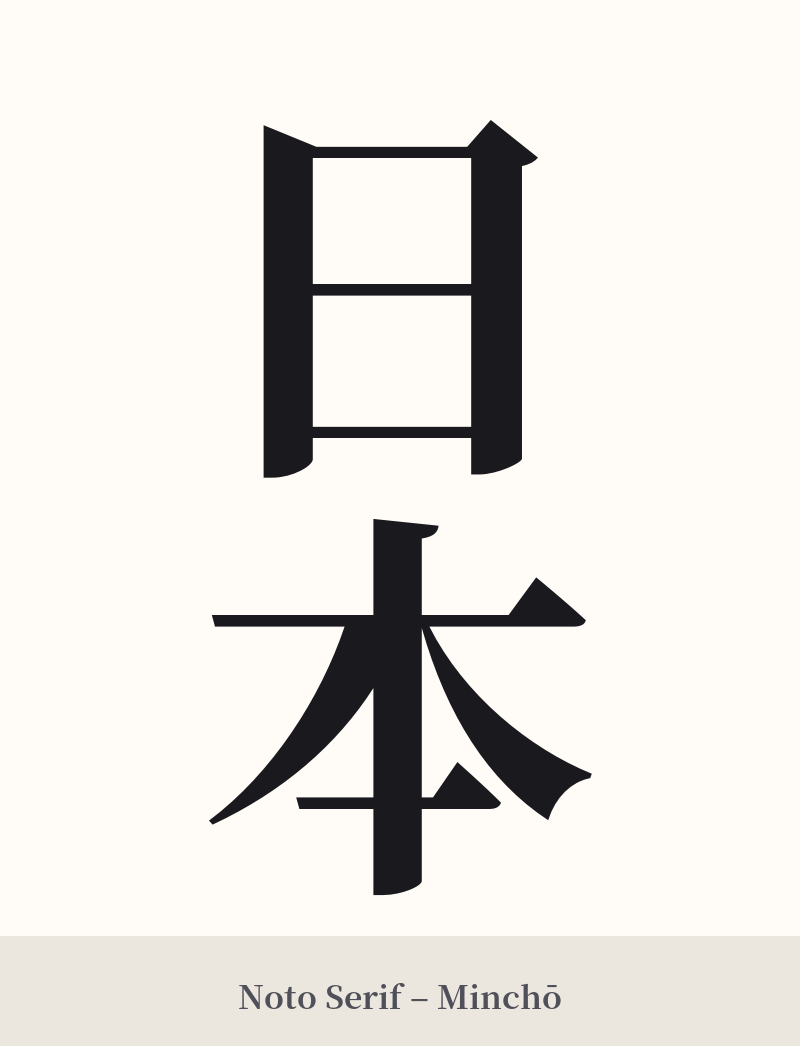
🖌️ Font Styles for 日本
The same kanji can look dramatically different depending on the calligraphy style. Choose a font that matches the mood you want for your tattoo or design.
🎨 Tattoo Suitability
📐 Tattoo Design Guide
For a tattoo of 日本, the design choices can dramatically alter its impact, elevating it from a simple label to a piece of art.
– Placement: Because the characters are simple and balanced, it works well in various sizes. Small versions are suitable for the wrist, ankle, or behind the ear. For a more prominent piece, a vertical orientation on the forearm, calf, or along the spine is a classic and visually appealing choice.
– Style: A traditional calligraphy (書道, shodō) style is highly recommended. A bold Kaisho (block script) offers clarity and strength. A flowing Gyosho (semi-cursive) or expressive Sosho (cursive) script can add a dynamic, personal touch, making it look like a masterful brush stroke.
– Visual Additions: To avoid a generic feel, consider incorporating other Japanese motifs. Placing the kanji within a red circle (the Enso or the Hinomaru sun) is a powerful combination. It can also be integrated with elements like cherry blossoms (sakura), a koi fish swimming upstream, a tranquil bamboo forest, or the silhouette of a torii gate to add layers of meaning and visual interest.
Comments