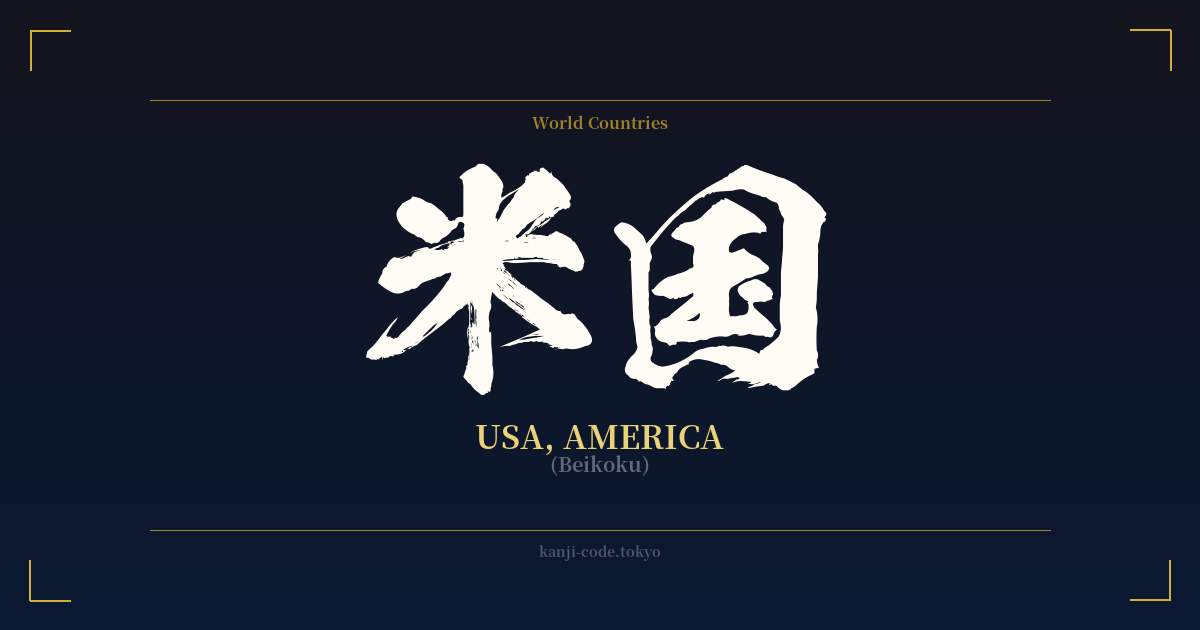
✍️ 米国 (Beikoku) — Cultural Context
The Japanese word 米国 (Beikoku) is a fascinating window into how Japan linguistically absorbed and classified the outside world during the Meiji Restoration. It is the formal name for the United States of America, but its characters literally translate to "Rice Country." This peculiar naming convention often surprises learners of Japanese, but its origin is rooted in a phonetic system called Ateji.
In the 19th century, when Japan opened its borders, it needed to create names for foreign countries. The full phonetic transcription for "America" was 亜米利加 (A-me-ri-ka). This was a mouthful for official documents and headlines. As was common practice, countries were often given two-character abbreviated names (jukugo) for convenience. These abbreviations were typically formed by taking one key character from the full Ateji transcription and adding 国 (koku), the character for "country."
For America, the second character, 米 (Bei, from A-ME-ri-ka), was chosen. Thus, 亜米利加 became 米国 (Beikoku). The character 米 itself means "rice," the foundational staple of Japanese cuisine and a historical symbol of wealth and sustenance. While the selection was purely phonetic, some find a poetic irony in America being dubbed the "Rice Country," perhaps an unintentional nod to its agricultural abundance and global power, echoing the way rice symbolized prosperity in ancient Japan.
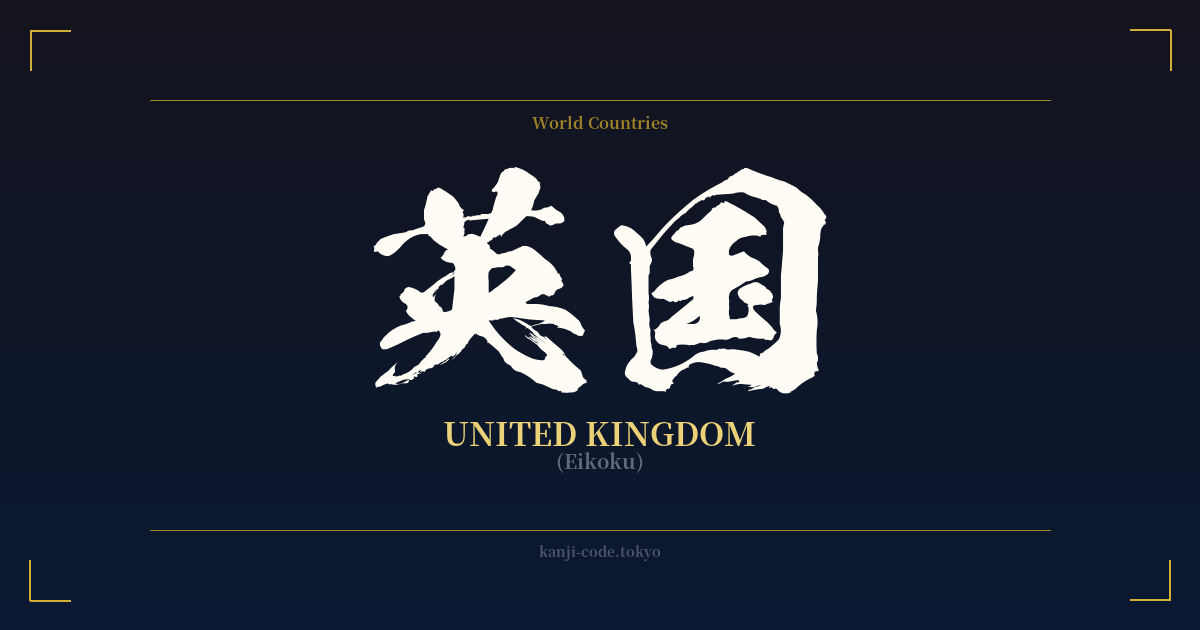
This pattern is not unique to the USA. The United Kingdom, from 英吉利 (Igirisu), became 英国 (Eikoku). France, from 仏蘭西 (Furansu), became 仏国 (Futsukoku). Germany, from 独逸 (Doitsu), became 独国 (Dokukoku). This system created a standardized, formal shorthand for international relations.
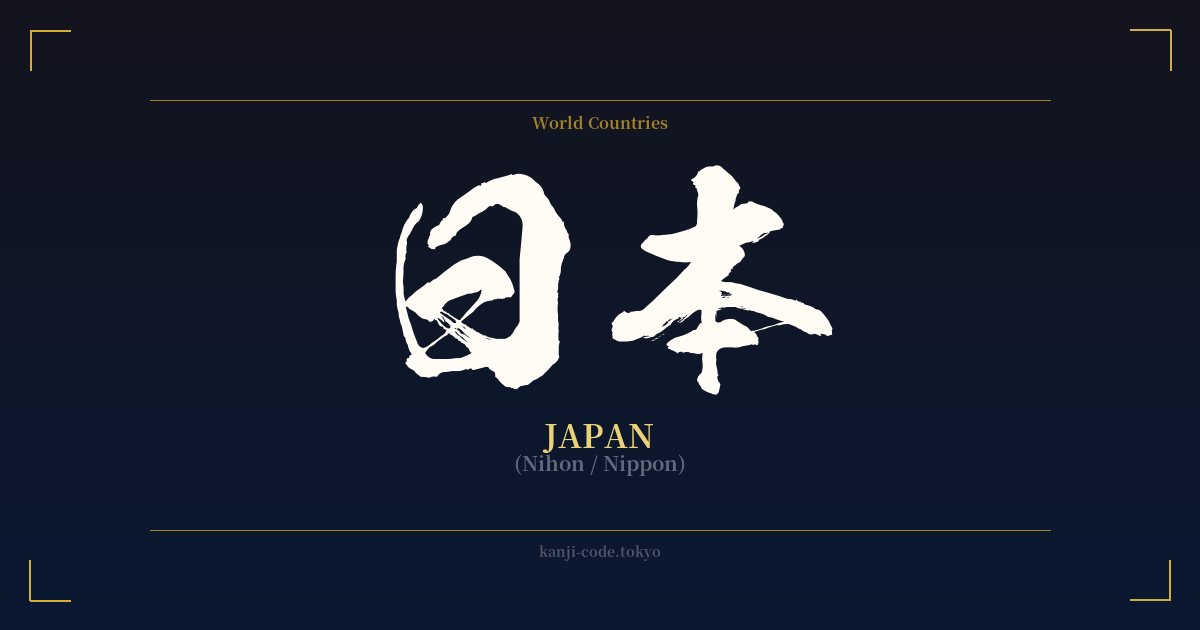
In modern Japan, the use of 米国 is largely confined to formal contexts. You will see it in newspapers, academic papers, legal documents, and news broadcasts, especially when discussing politics or economics, such as in the term 日米関係 (Nichi-Bei kankei), meaning "Japan-US relations." In everyday conversation, however, Japanese people almost exclusively use the katakana loanword アメリカ (Amerika). Using "Beikoku" in a casual chat would sound unnaturally stiff and formal, like saying "The United States of America" every time instead of just "America."
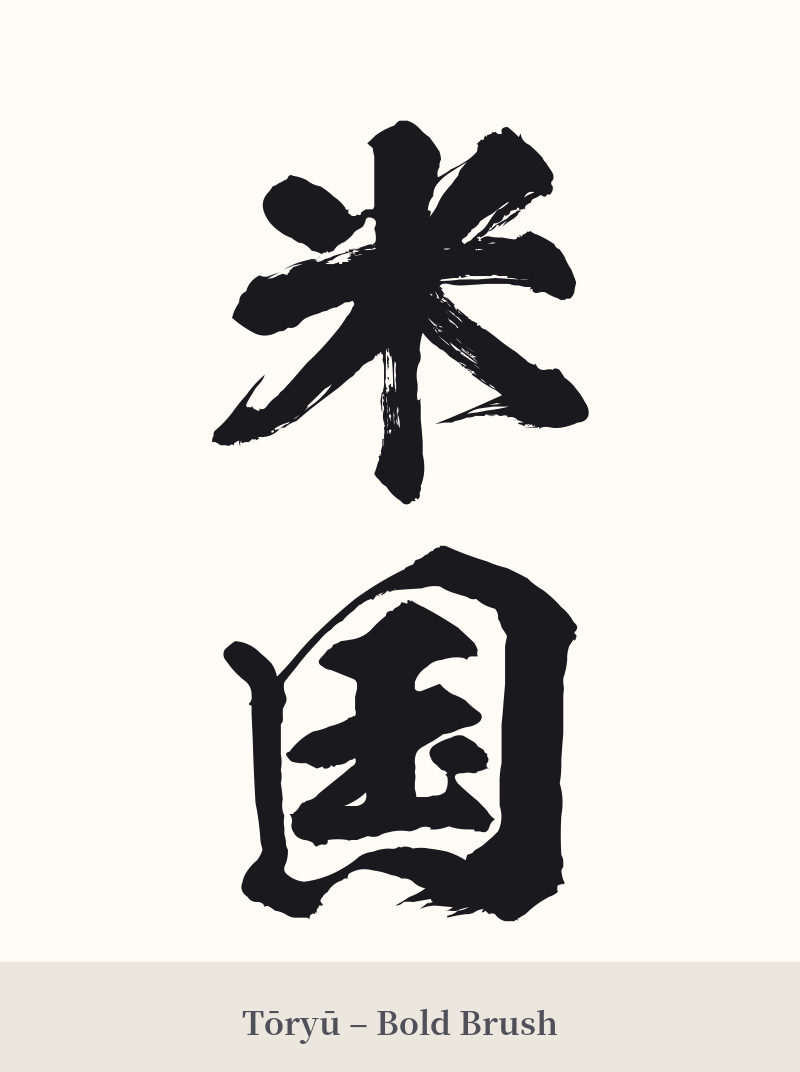
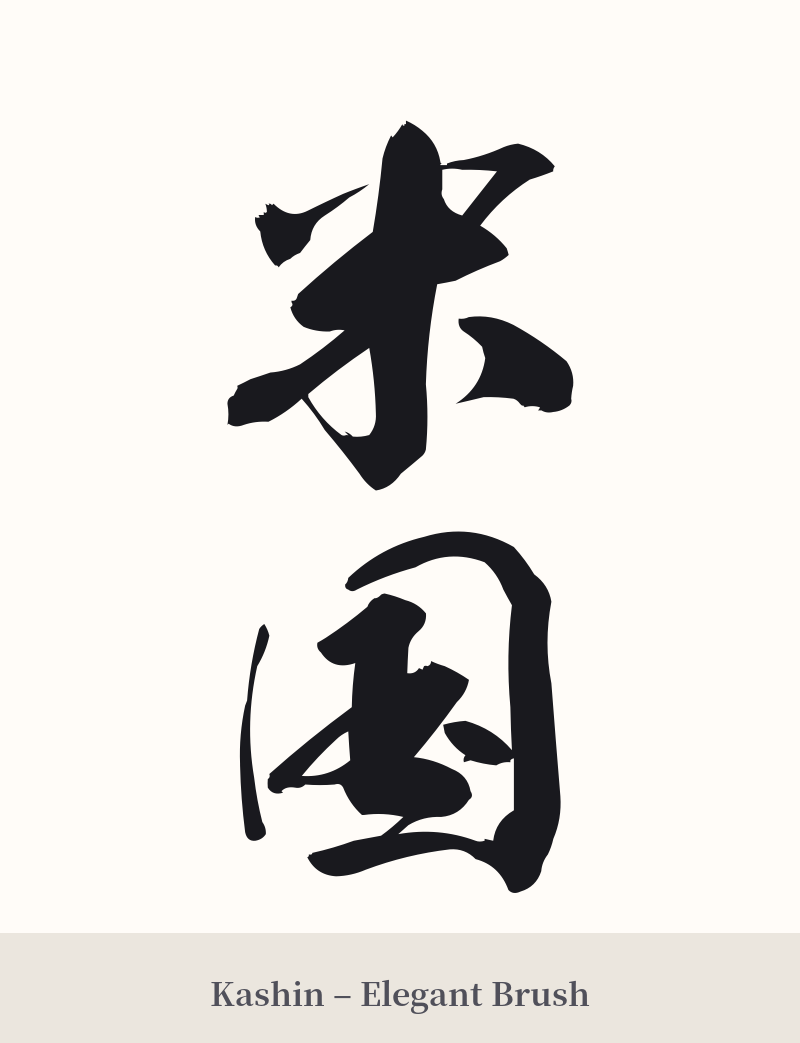
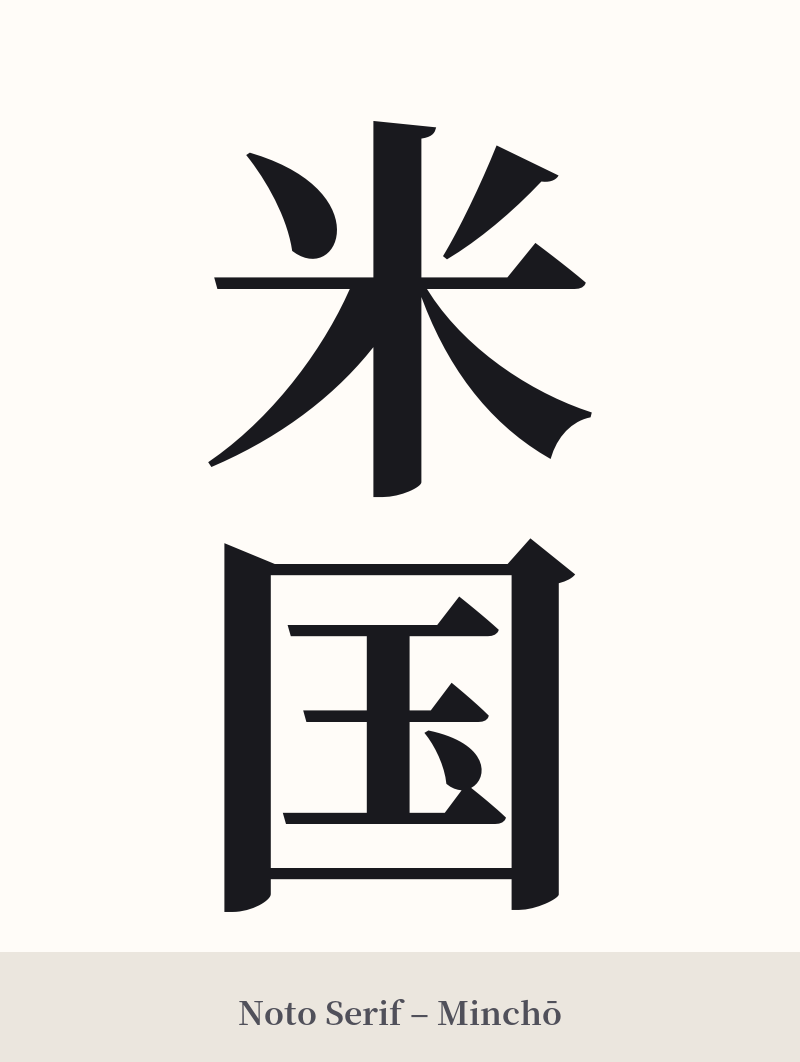
🖌️ Font Styles for 米国
The same kanji can look dramatically different depending on the calligraphy style. Choose a font that matches the mood you want for your tattoo or design.
🎨 Tattoo Suitability
📐 Tattoo Design Guide
Given that 米国 is a formal and official term, a tattoo of it should reflect a sense of structure and tradition. Classic, legible fonts are highly recommended over overly artistic or abstract styles.
– Placement: This two-character compound works well both horizontally and vertically. A vertical alignment on the forearm, bicep, or along the spine can look very classic. Horizontally, it fits well on the chest or upper back.
– Font Style: A standard Kaisho (block script) or Mincho (a serif-like style) would be most appropriate. These styles emphasize the characters' balance and formal nature. A flowing, cursive Gyosho script could offer a slightly more dynamic feel without losing legibility.
– Visual Tips: Keep the design clean. The power of this term lies in its directness, not in embellishment. Avoid adding extra elements like flags or eagles, which can make the design look cluttered and detract from the simplicity of the kanji.
Comments