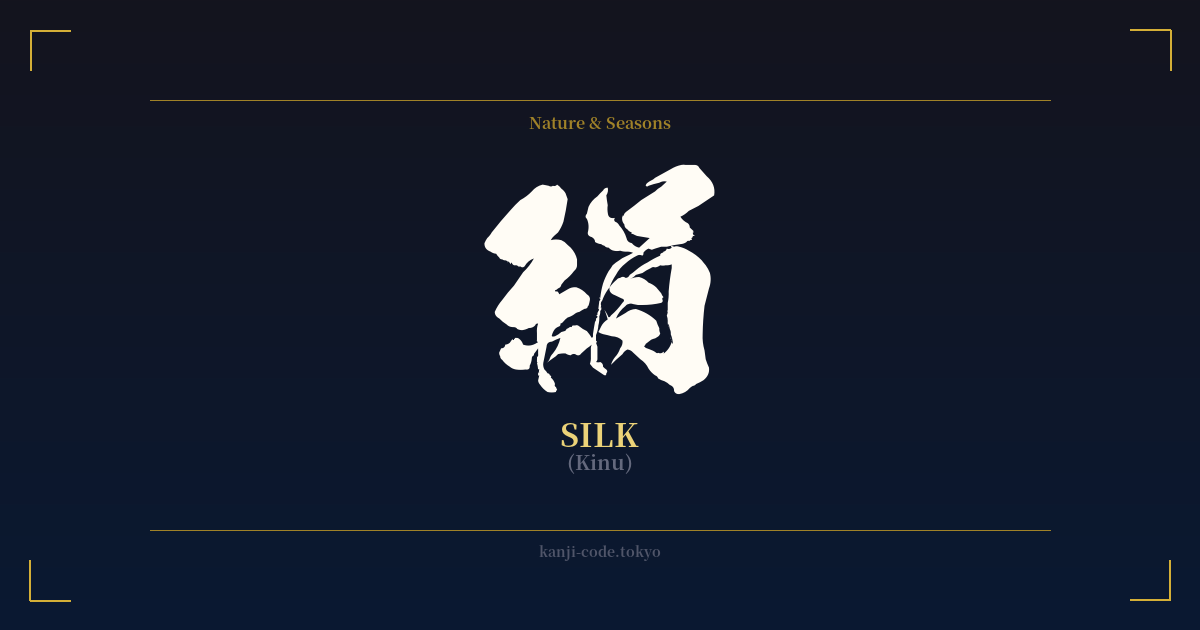
✍️ 絹 (Kinu) — Cultural Context
The kanji 絹 (kinu) translates to 'silk,' a word that immediately conjures images of shimmering kimono, luxurious fabrics, and the timeless elegance of traditional Japan. But its significance runs much deeper than mere material, weaving itself into the very fabric of Japanese history, economy, and aesthetics.
The character itself offers a clue to its origin. It is composed of the radical 糸 (ito), which means 'thread' or 'string,' and the component 月, which here serves a phonetic purpose. This structure beautifully captures the essence of silk as a specific, highly valued type of thread.
Historically, the art of sericulture—the cultivation of silkworms to produce raw silk—was a cornerstone of Japan's economy for centuries. Though the famous Silk Road did not extend directly to the Japanese archipelago, its influence and the precious commodity itself arrived via trade with China and Korea. Japan quickly adopted and perfected its own methods of silk production, which became a vital industry, particularly during the Edo (1603-1868) and Meiji (1868-1912) periods. High-quality silk was a major export, connecting Japan to the global economy and funding its rapid modernization.
Within Japanese culture, silk was the ultimate status symbol. The type, color, and weave of a silk kimono could instantly communicate a person's social standing, wealth, and marital status. From the vibrant, long-sleeved furisode worn by young, unmarried women to the subdued tones of formal wear for older individuals, silk was the medium for expressing social identity. It was also used for creating beautiful obi (sashes), intricate furoshiki (wrapping cloths), and other items that elevated everyday life into an art form.
Symbolically, 絹 represents more than just luxury. It embodies qualities of purity, grace, and delicate strength. The process of creating a single thread from countless tiny filaments mirrors the idea of connection and painstaking effort. While a different kanji is used, the concept is related to the 'red thread of fate' (運命の赤い糸), where unseen threads connect destined individuals. In this way, silk can symbolize a bond that is both beautiful and resilient.
Even today, the word 'kinu' is used metaphorically to describe anything with a smooth, fine texture. You might encounter 'kinu-dōfu' (silken tofu) or skincare products promising 'kinu-hada' (silk skin). This linguistic legacy shows how deeply the qualities of silk are ingrained in the Japanese sense of refinement and quality.
🖌️ Font Styles for 絹
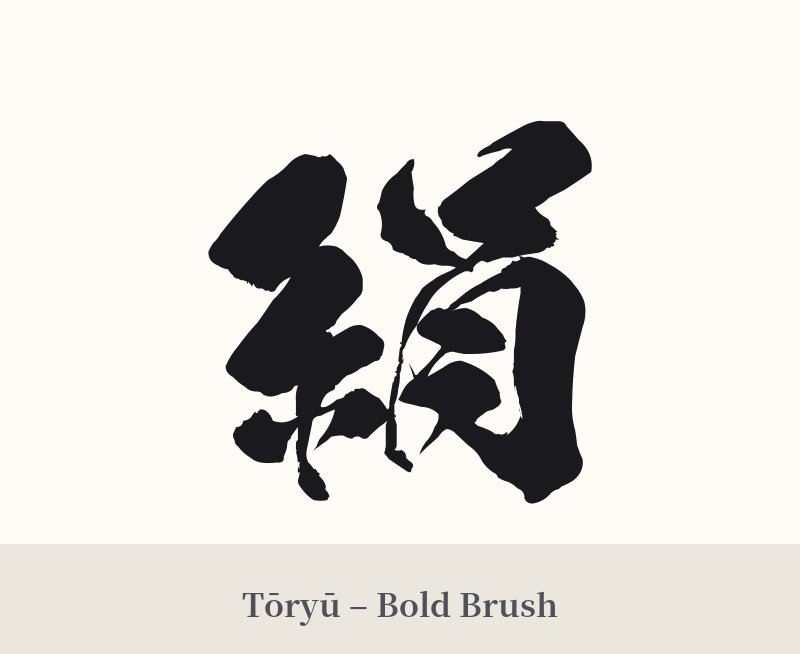
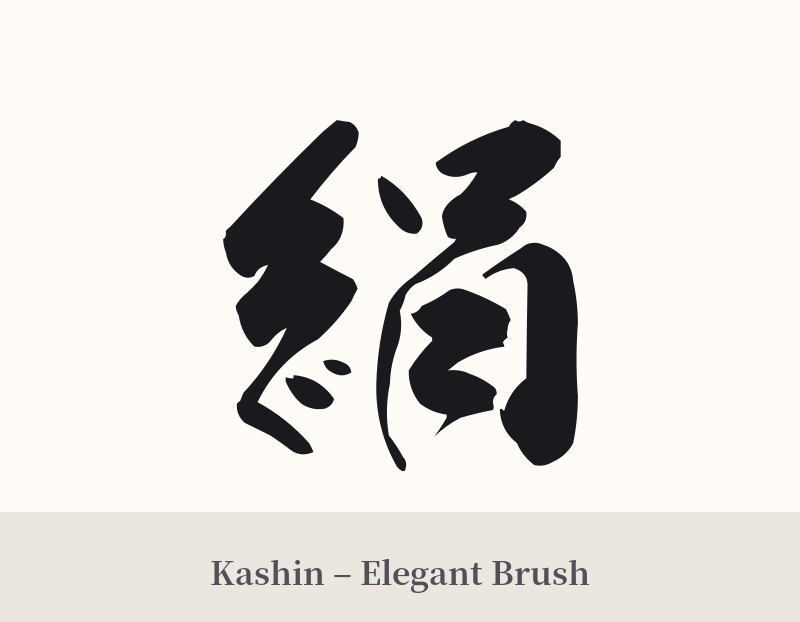
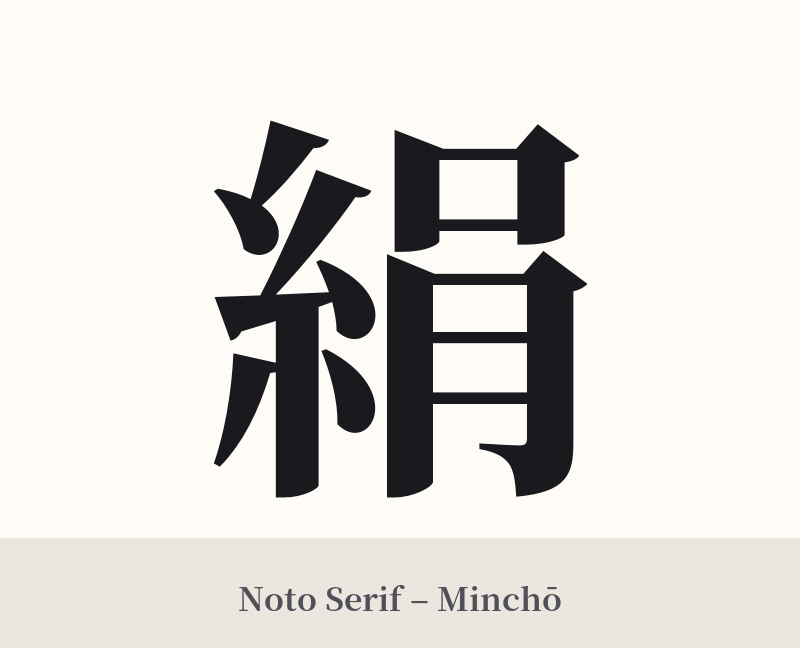
The same kanji can look dramatically different depending on the calligraphy style. Choose a font that matches the mood you want for your tattoo or design.
🎨 Tattoo Suitability
📐 Tattoo Design Guide
A tattoo of 絹 (Kinu) should reflect the elegance and grace of the material itself. Its moderate complexity allows for versatility in both style and placement.
– Placement: Consider areas that are themselves seen as elegant or delicate. The inner forearm, the nape of the neck, along the collarbone, or gracefully wrapping around an ankle are all excellent choices. For a more subtle design, placement behind the ear or on the wrist works well.
– Font Style: To capture the flowing nature of silk fabric, a semi-cursive (Gyōsho) or full cursive (Sōsho) script is highly recommended. These styles add movement and an artistic flair. For a more classic and formal look, a crisp Mincho (serif) font provides excellent readability and a timeless feel.
– Visual Tips: While 絹 stands well on its own, you can enhance its meaning with complementary imagery. Consider pairing it with a single, fluttering cherry blossom petal, a silkworm moth, or abstract lines that evoke a piece of flowing fabric. This adds a narrative layer to the design without overpowering the central kanji.
Comments