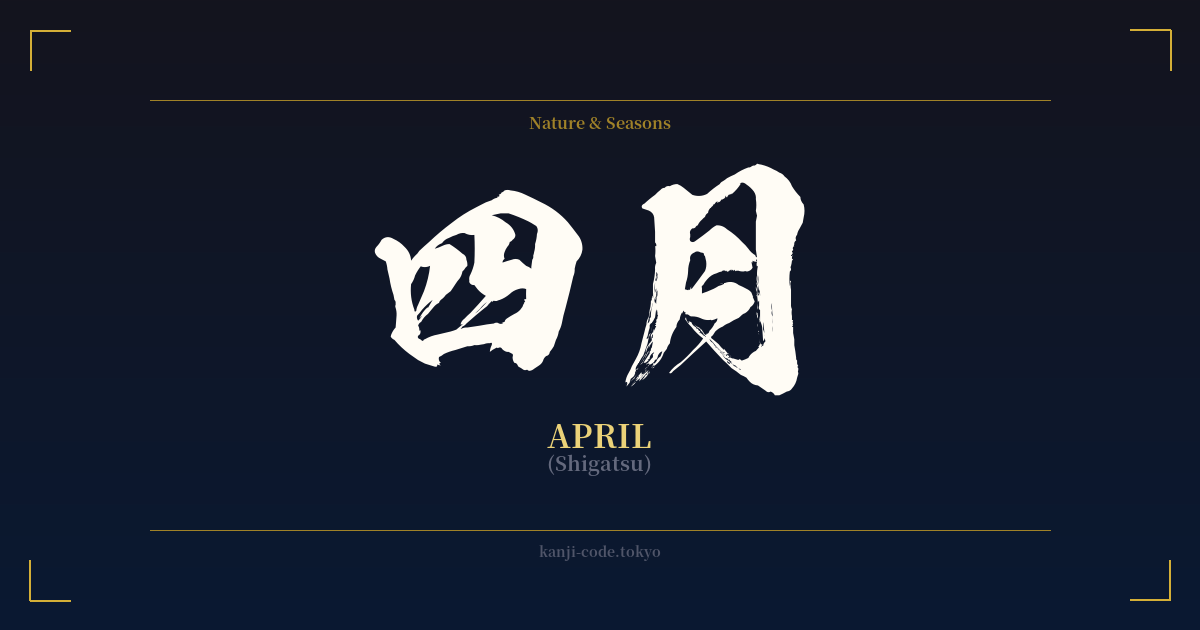
✍️ 四月 (Shigatsu) — Cultural Context
In Japan, 四月 (Shigatsu) is not just another month on the calendar; it is arguably the most significant month of the year, representing a nationwide reset button. It marks the beginning of both the academic and fiscal years, a tradition that shapes the rhythm of life for everyone from schoolchildren to corporate employees.
On April 1st, cities and towns buzz with a unique energy. You'll see children in new uniforms attending their first day of school (入学式, nyūgakushiki) and fresh-faced graduates starting their careers, participating in company entrance ceremonies (入社式, nyūshashiki). This collective sense of a fresh start permeates the atmosphere, filling it with anticipation, nervousness, and hope. It’s a time of profound transition, where old chapters close and new ones begin in unison across the country.
This period of renewal is perfectly synchronized with nature's most iconic display: the blooming of the cherry blossoms (桜, sakura). For a brief, glorious period, the landscape is painted in delicate shades of pink and white. This prompts the beloved tradition of hanami (花見), or flower viewing, where friends, families, and colleagues gather under the blossoming trees to celebrate. The spectacular beauty of the sakura is a feast for the eyes, but its cultural importance runs deeper.
The blossoms are famously transient, often lasting no more than a week or two before their petals scatter in the wind. This fleeting beauty is a powerful symbol of mono no aware (物の哀れ), a central concept in Japanese culture that refers to the gentle sadness or pathos of things, and an awareness of their impermanence. The sakura’s brief life reminds onlookers that beauty, and life itself, is ephemeral and should be cherished in the moment. This poignant philosophy beautifully complements the new beginnings of April, suggesting that every new journey should be embraced with an appreciation for its fleeting moments.
While the modern name is Shigatsu, the traditional name for the fourth lunar month is Uzuki (卯月), which literally means "deutzia month," referring to a flower that blooms during this time. The kanji themselves are straightforward: 四 (shi) for "four" and 月 (gatsu) for "month." Although "Shigatsu" is standard, the reading "shi" for the number four is sometimes avoided because it sounds the same as the word for death (死). In some contexts, you might hear the number four referred to as "yon," but for the month of April, Shigatsu remains the correct and common term.
🖌️ Font Styles for 四月
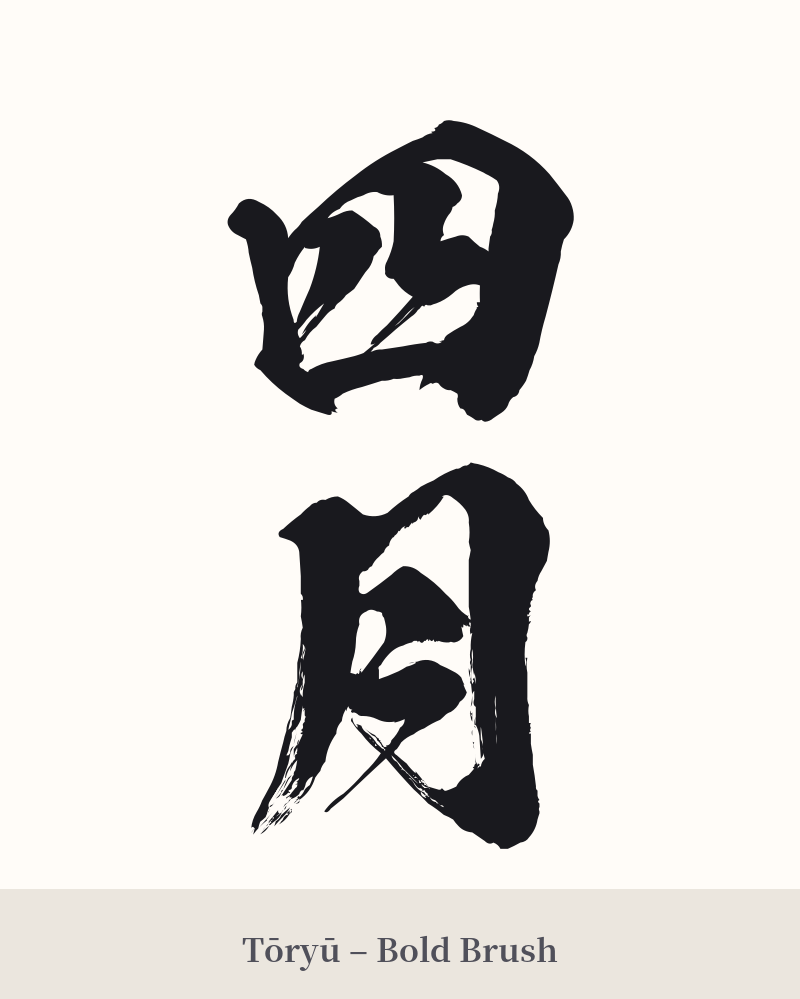
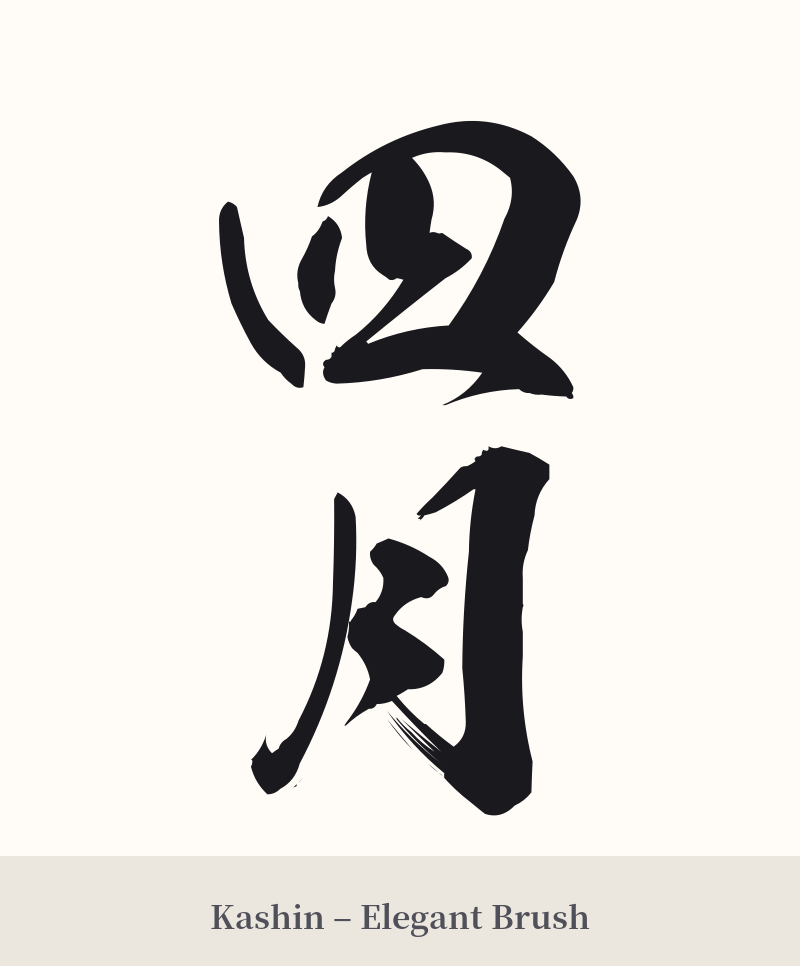
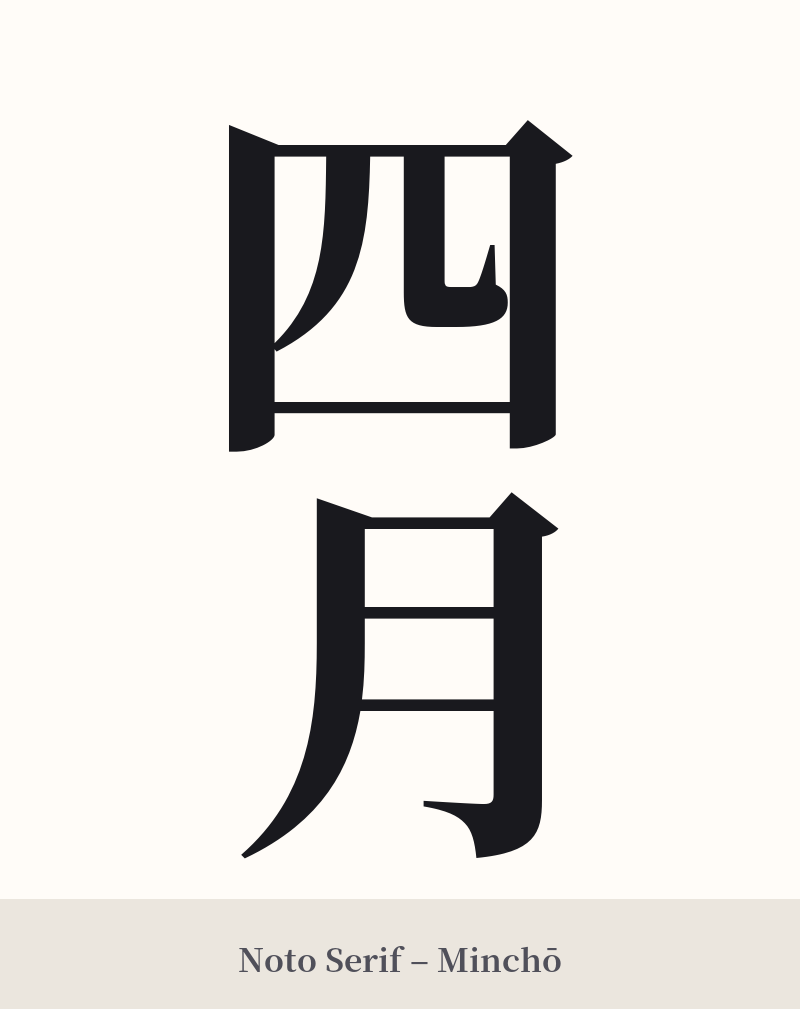
The same kanji can look dramatically different depending on the calligraphy style. Choose a font that matches the mood you want for your tattoo or design.
🎨 Tattoo Suitability
📐 Tattoo Design Guide
If you choose to tattoo 四月 for personal reasons like a birth month, the design should reflect its gentle, transitional nature rather than being bold or aggressive.
– Placement: Consider more personal, discreet locations. The inner wrist, ankle, behind the ear, or along the collarbone are excellent choices that suit the simplicity of the characters.
– Font Style: A delicate, clean font like a classic Mincho style works well. For a more artistic and fluid look, consider a semi-cursive (Gyōsho) or cursive (Sōsho) script, which can add a touch of elegance to the simple forms.
– Visual Tips: To add more depth and context, consider integrating the kanji with other imagery. A few falling sakura petals, a small branch of a cherry tree, or a soft watercolor wash of pink or light blue in the background can elevate the design from a simple word to a beautiful, evocative scene.
Comments