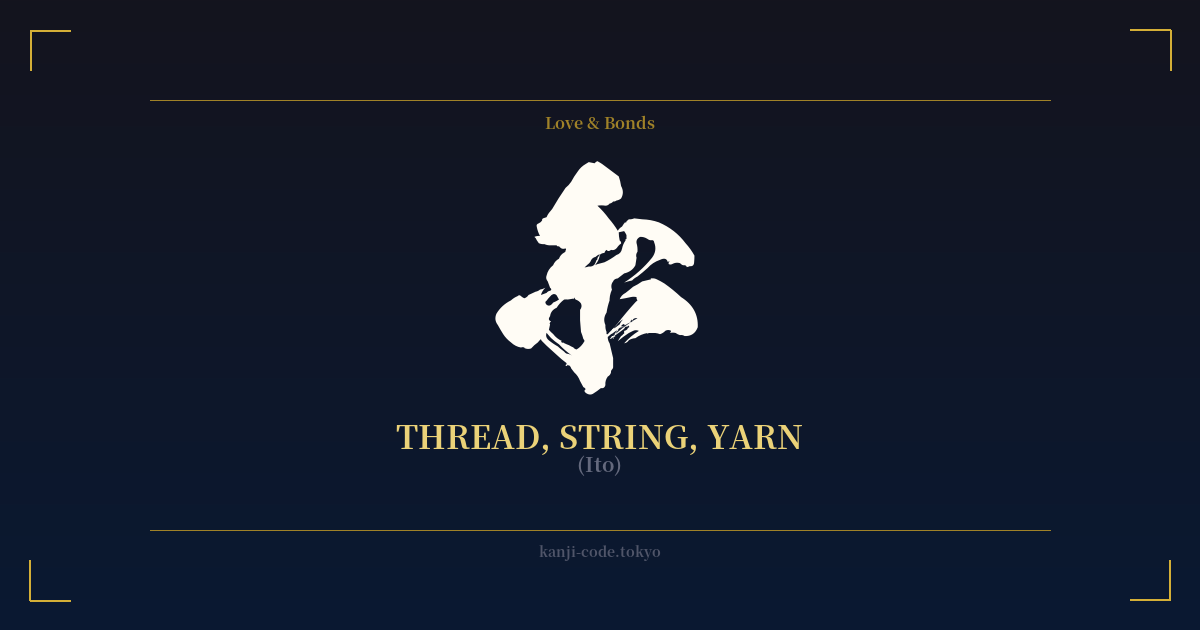
✍️ 糸 (Ito) — Cultural Context
The kanji 糸 (ito) appears deceptively simple. On the surface, it means 'thread,' 'string,' or 'yarn'—a mundane, everyday object. Yet, within Japanese culture, this single character is woven into a rich tapestry of meaning, symbolizing everything from human connection and relationships to the inescapable pull of destiny.
Originally, 糸 was a pictograph of two bundles of silk thread twisted together. This origin hints at its core concept: bringing separate strands together to form a stronger, single entity. This idea of connection is fundamental to its use. You see this character as a component (or radical) in many other kanji related to relationships and binding, such as 絆 (kizuna – bond), 結 (musubi – to tie, connect), and 縁 (en – fate, connection).
Perhaps the most famous cultural concept associated with 糸 is the 'Red Thread of Fate' (運命の赤い糸, unmei no akai ito). This belief, which has roots in Chinese mythology, posits that two people destined to meet are connected by an invisible red thread tied around their little fingers. This thread may stretch or tangle, but it will never break. It's a powerful and romantic metaphor for soulmates, and 糸 is the literal and symbolic heart of this idea.
Beyond romantic fate, 糸 also represents lineage and continuity. A family line is often thought of as an unbroken thread stretching from ancestors to descendants. Traditions, skills, and stories are passed down this thread, ensuring the continuity of a family or a community. In this sense, 糸 is about heritage and the ties that bind us to our past and future.
In the world of traditional arts, thread is the essential material for weaving magnificent kimonos, creating intricate embroidery, and repairing cherished items. The concept of 'mottainai' (a sense of regret over waste) applies strongly here; every piece of thread has value and purpose. This gives 糸 a humble, grounding quality, reminding us of the beauty found in simple, essential things and the skill required to create something lasting from individual strands.
🖌️ Font Styles for 糸
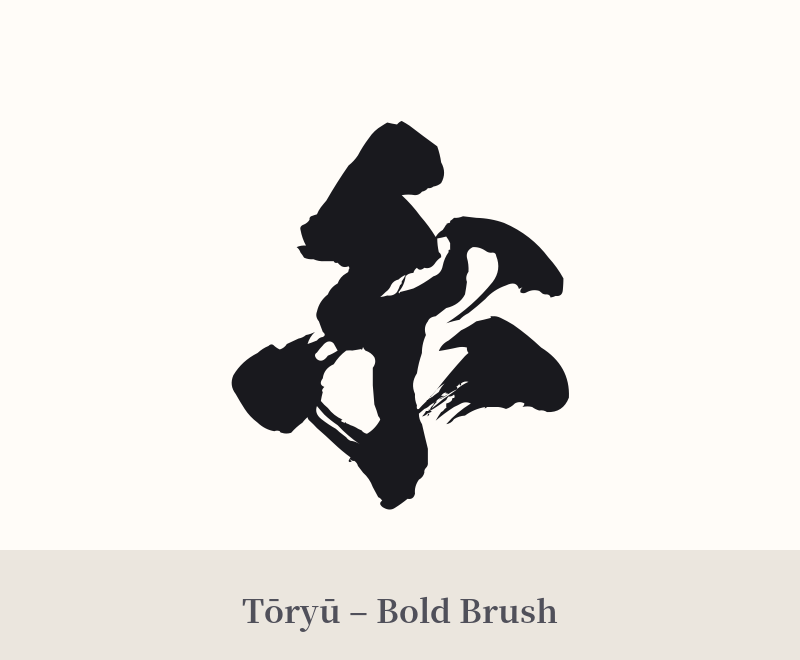
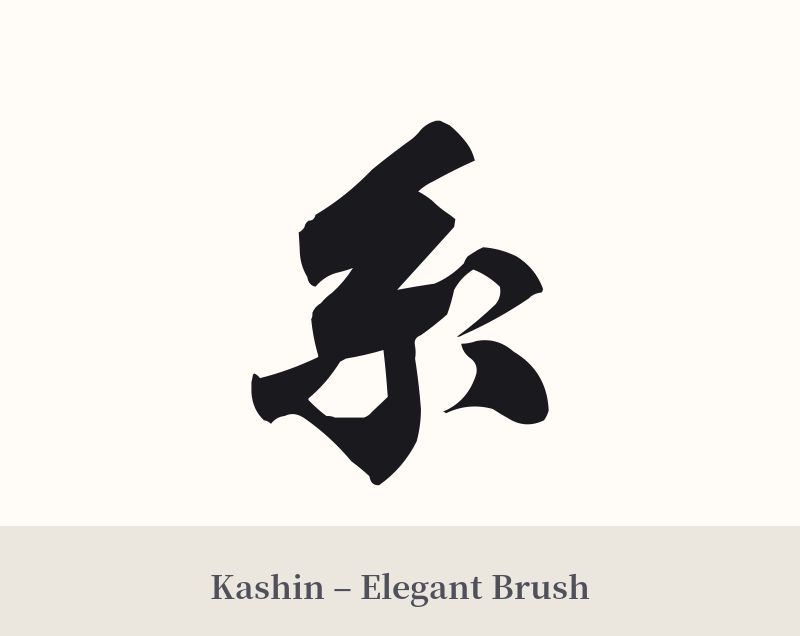
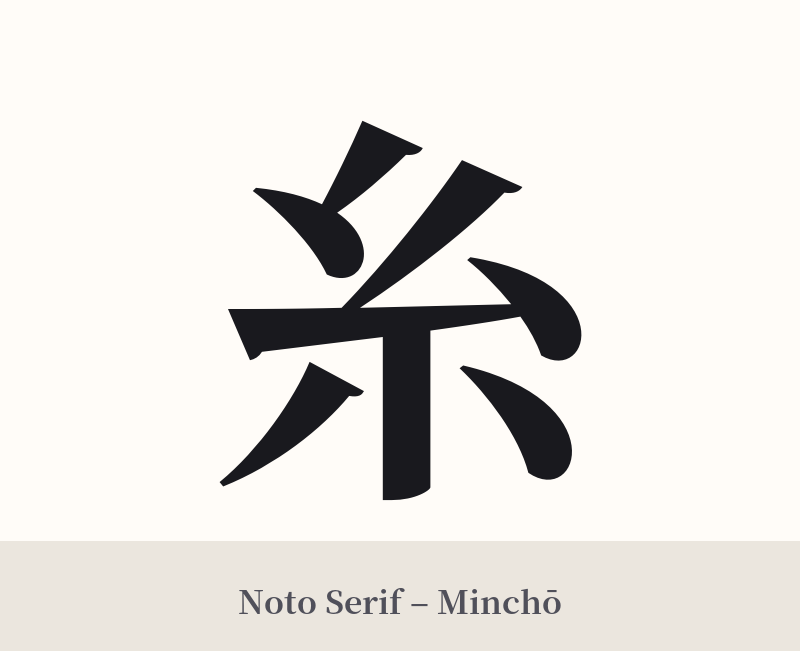
The same kanji can look dramatically different depending on the calligraphy style. Choose a font that matches the mood you want for your tattoo or design.
🎨 Tattoo Suitability
📐 Tattoo Design Guide
The kanji 糸, with its delicate and meaningful nature, lends itself to subtle and elegant tattoo designs.
– Placement: Due to its simplicity and vertical orientation, 糸 works well in smaller, more intimate locations. Consider the inner wrist, behind the ear, on the ankle, or along the collarbone. For a design inspired by the 'Red Thread of Fate,' the pinky finger is a deeply symbolic choice.
– Style: A fine-line or single-needle style perfectly captures the delicate essence of a thread. Alternatively, a minimalist shodō (calligraphy) brushstroke can give it a sense of flow and artistry. Using red ink is a powerful way to directly reference the 'Red Thread of Fate' mythos.
– Visual Tips: While beautiful on its own, 糸 truly shines when incorporated into a larger concept. You could have the character tattooed with a thin red line extending from it, wrapping around your wrist or finger. It can also be used as a connecting element between two other symbols that are meaningful to you, literally 'tying' them together on your skin.
Comments