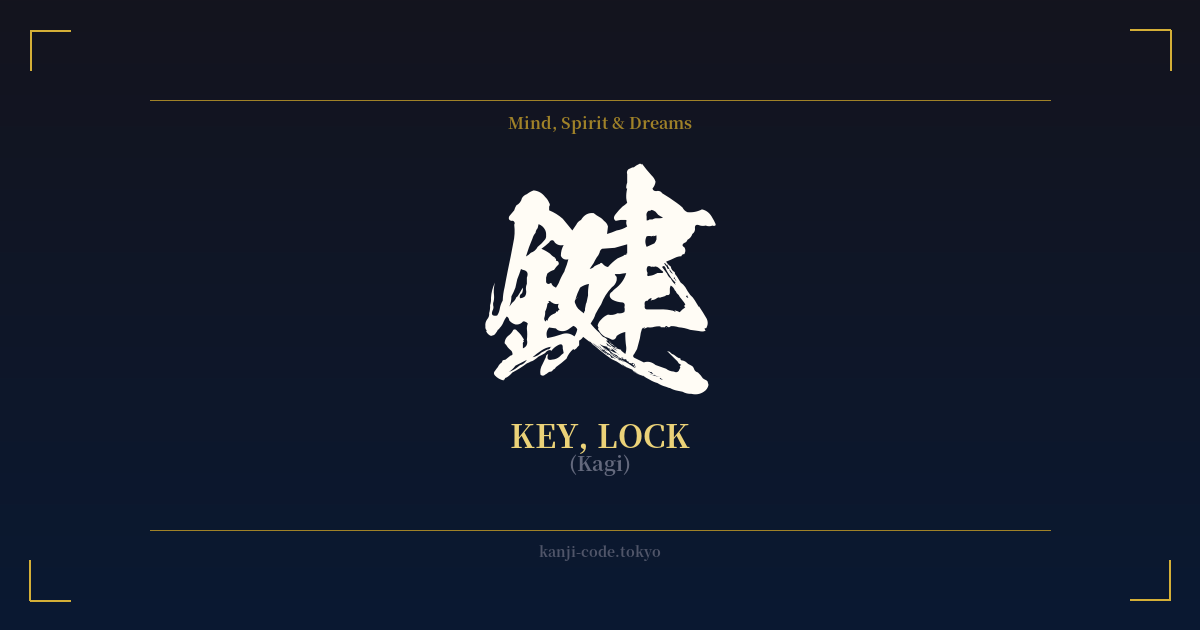
✍️ 鍵 (Kagi) — Cultural Context
The kanji 鍵 (kagi) is a powerful character that holds both a literal and a deeply symbolic meaning in Japanese culture. Its physical form tells a story: the radical on the left, 金 (kane), means 'metal,' grounding the character in the tangible world of physical keys and locks. This connection is immediate and practical, seen in everyday phrases like `kagi o kakeru` (鍵をかける), meaning 'to lock,' and `kagi o akeru` (鍵を開ける), 'to unlock.'
Interestingly, the single character 鍵 can refer to both the key and the lock itself. The context usually makes the meaning clear, but this duality is part of its inherent nature—representing both the problem and the solution, the barrier and the means to overcome it. This concept is fundamental to its use in Japanese language and thought.
Beyond its physical use, 鍵 flourishes in metaphorical expressions. It is frequently used to signify the crucial element needed to solve a problem or achieve a goal. You might hear of the `mondai kaiketsu no kagi` (問題解決の鍵), 'the key to solving a problem,' or the `seikō no kagi` (成功の鍵), 'the key to success.' This usage elevates the kanji from a simple object to a symbol of insight, breakthrough, and opportunity.
This metaphorical weight extends to personal and emotional realms. The `kokoro no kagi` (心の鍵) is 'the key to the heart,' a concept universally understood. It speaks of unlocking trust, intimacy, and understanding in relationships. In this sense, 鍵 can represent a personal journey of self-discovery—finding the key to unlock one's own potential, creativity, or hidden talents. It embodies the idea of access, whether to a physical space, a piece of knowledge, a person's soul, or a new future.
In modern Japanese pop culture, from video games like 'The Legend of Zelda' to countless anime and manga series, keys are often powerful plot devices or magical artifacts. They don't just open doors; they unleash power, reveal forgotten histories, and decide destinies. This has reinforced the kanji's association with mystery, adventure, and the profound act of revelation.
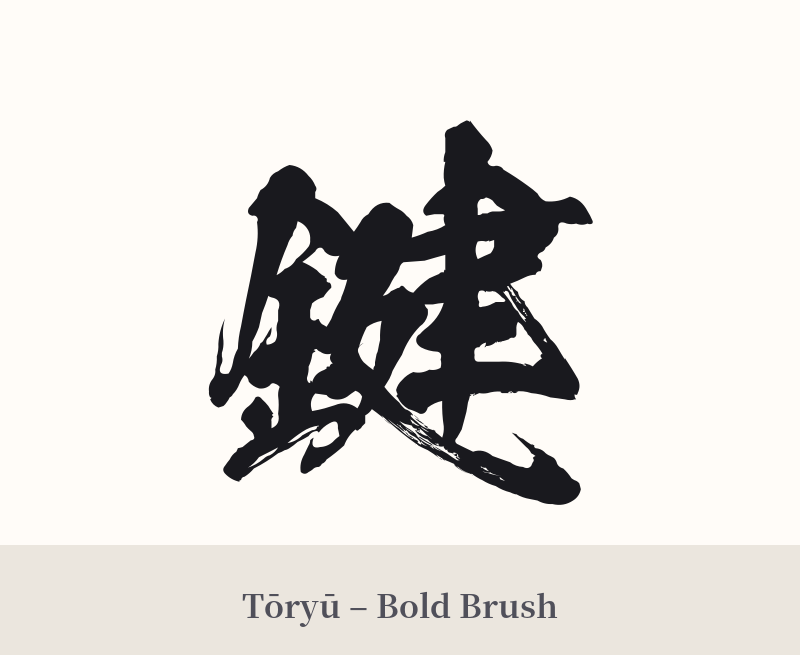
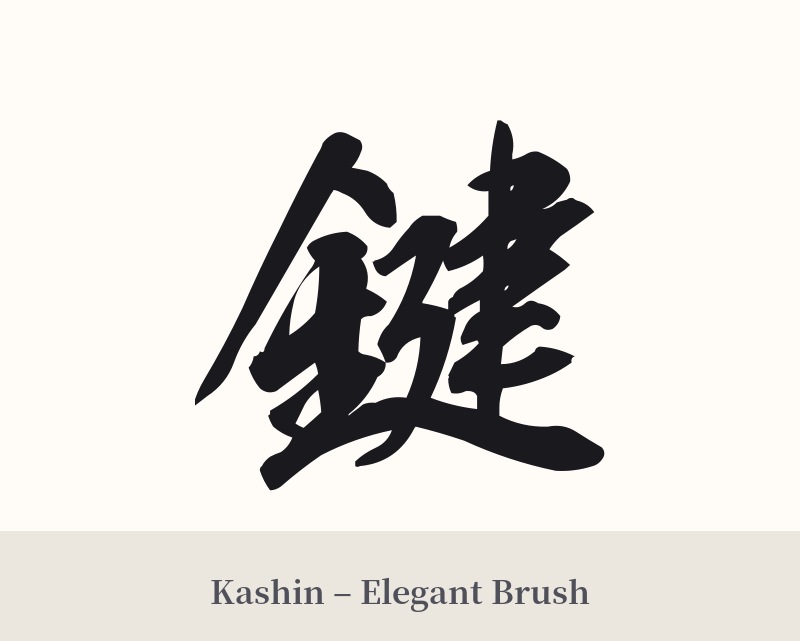
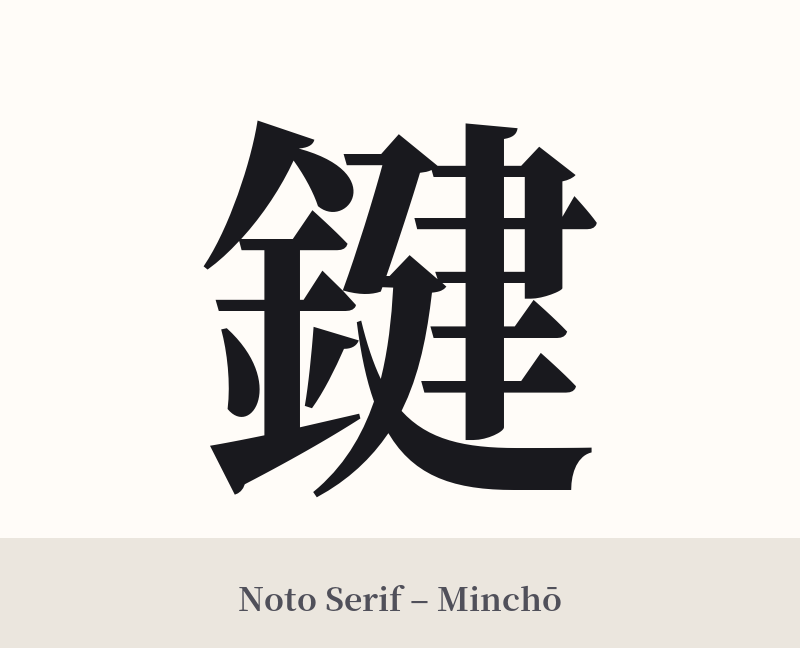
🖌️ Font Styles for 鍵
The same kanji can look dramatically different depending on the calligraphy style. Choose a font that matches the mood you want for your tattoo or design.
🎨 Tattoo Suitability
📐 Tattoo Design Guide
The kanji 鍵 (kagi) has a complex and detailed structure, which should guide your design choices. Its intricacy can be a beautiful feature if handled correctly.
– Placement: This character works best in medium to large-sized applications where its details can be appreciated. Consider placements like the forearm, the calf, the shoulder blade, or along the spine. Avoid small areas like the wrist, ankle, or fingers, as the strokes will likely merge over time.
– Font Style: A clear, crisp font is highly recommended. Kaisho (block script) is an excellent choice as it preserves the integrity of each of the 17 strokes. For a more artistic take, a semi-cursive Gyosho style could work, but it absolutely requires an artist who specializes in Japanese calligraphy to maintain legibility.
– Visual Tips: To emphasize the meaning of 'unlocking,' you could pair this kanji with imagery of something being opened, like a path, a heart, or a birdcage. Alternatively, you could incorporate it into a larger piece featuring a traditional Japanese treasure box or a temple door, making the key a central element of the story.
Comments