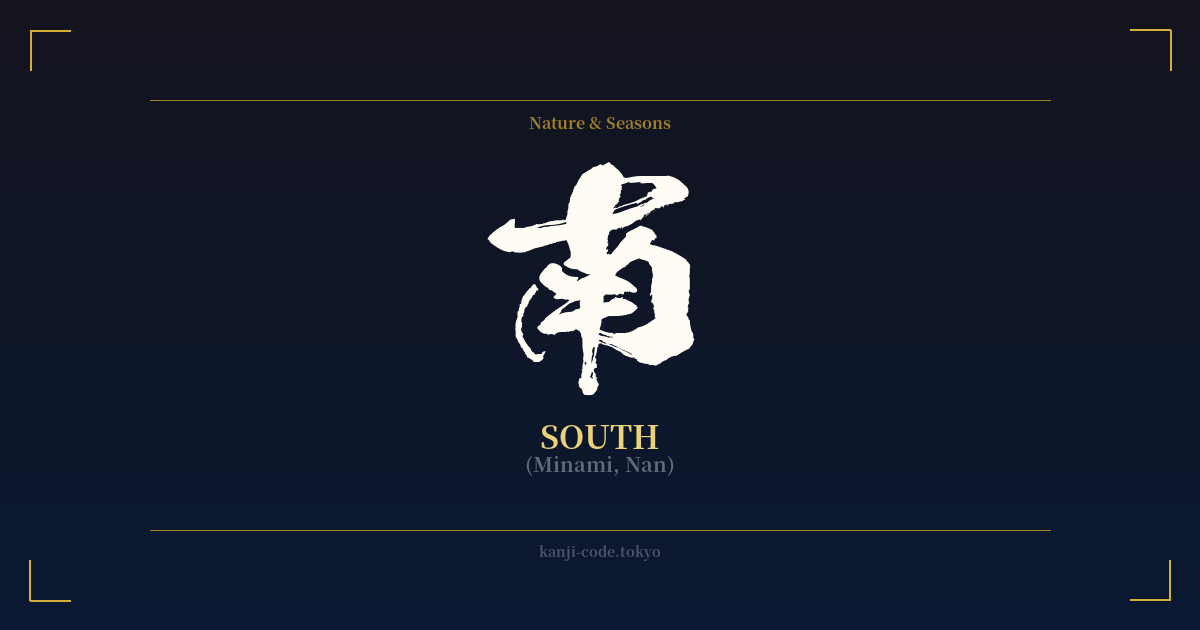
✍️ 南 (Minami, Nan) — Cultural Context
The kanji 南 (Minami/Nan) is more than just a point on a compass; it's a character steeped in warmth, vitality, and auspicious symbolism. Its origins are thought to trace back to a pictograph of a bell-like musical instrument that was hung in the southern part of a house, a representation of culture and artistry from the warmer regions.
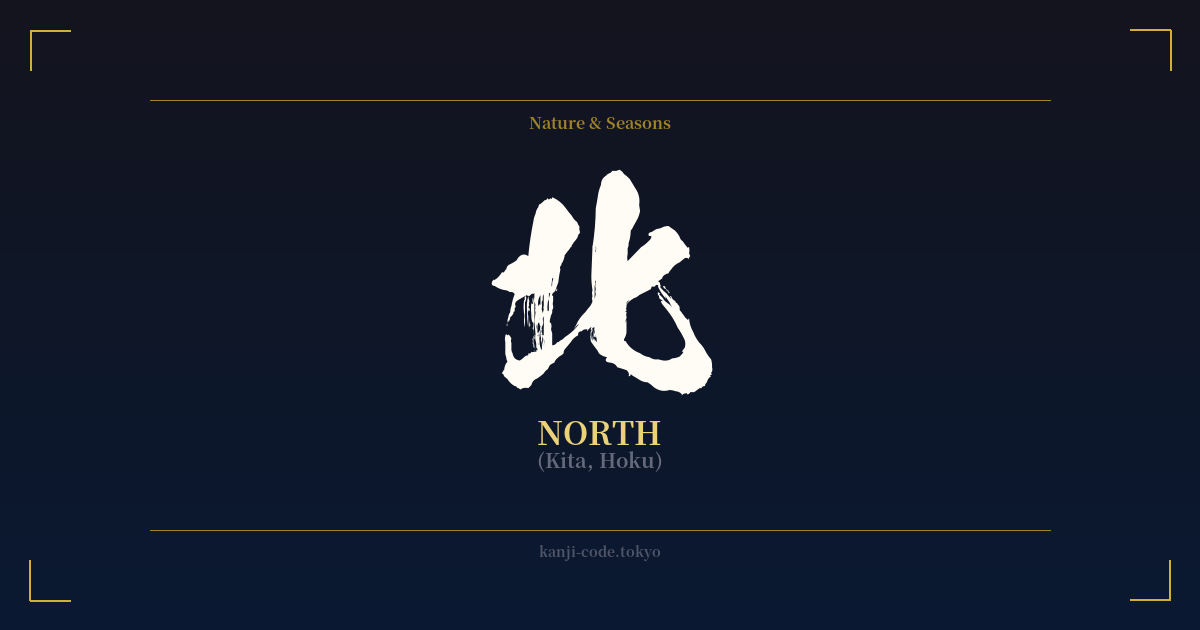
In Japanese and broader East Asian culture, South is inextricably linked with summer, the sun at its zenith, and the peak of life and energy. It represents growth, brightness, and the flourishing of nature. While North (北) evokes the stillness and cold of winter, South embodies the vibrant, active energy of midday and the summer season. This makes it a symbol of passion, fame, and outward expression.
This association is most powerfully personified by the Vermilion Bird, or 朱雀 (Suzaku). As one of the Four Celestial Guardians (Shijin), Suzaku presides over the southern quadrant of the sky. It is a mythical creature representing the fire element, the season of summer, and virtues like good fortune, knowledge, and elegance. To invoke the kanji 南 is to subtly channel the fiery and beautiful spirit of this legendary guardian.
In the practice of Fūsui (the Japanese version of Feng Shui), the southern direction is critically important. It governs one's reputation, social standing, and public recognition. Placing significant objects or orienting a home to properly honor the south is believed to attract fame and positive social connections. Therefore, the character 南 carries an inherent connection to how one is perceived by the world.
Beyond its mythical and philosophical weight, 南 is a practical and common character. It appears in countless place names, from the Nankin-machi (Chinatown) in Kobe to the Nankyoku (南極), the South Pole. It's also a very popular female given name, Minami, adding a gentle, personal dimension to this powerful character.
🖌️ Font Styles for 南
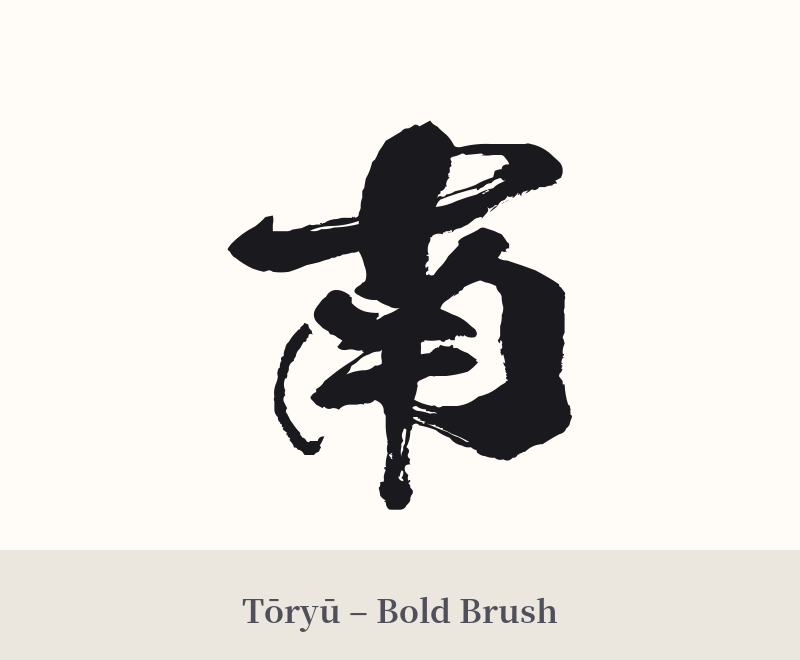
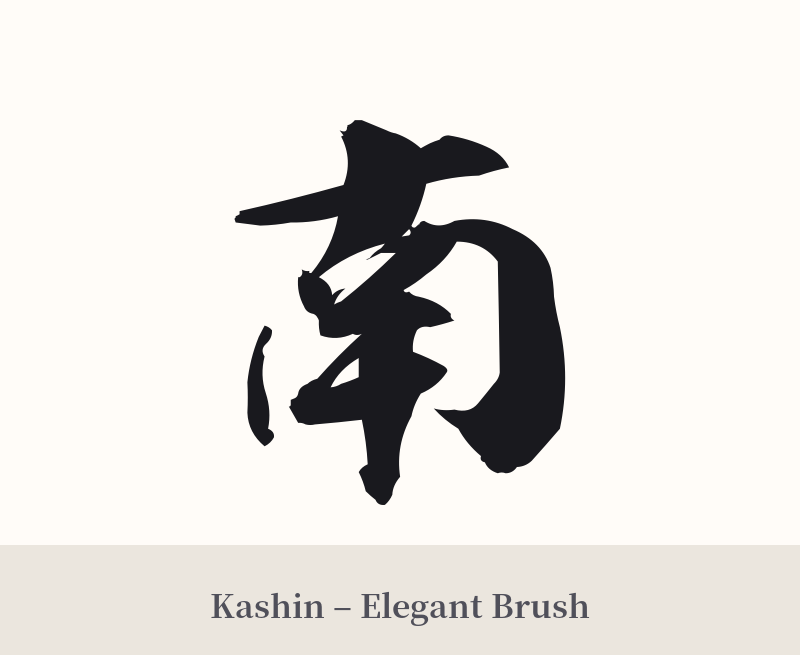
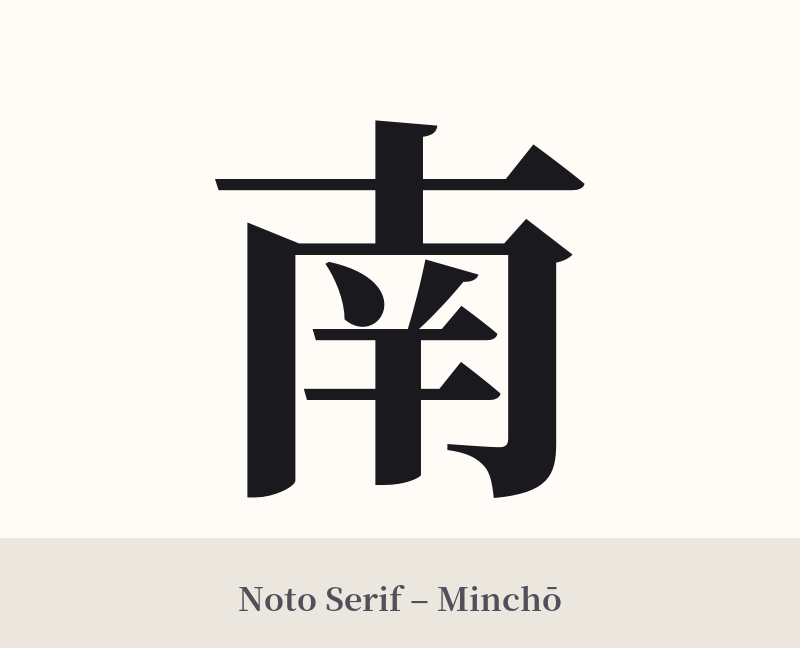
The same kanji can look dramatically different depending on the calligraphy style. Choose a font that matches the mood you want for your tattoo or design.
🎨 Tattoo Suitability
📐 Tattoo Design Guide
The balanced and relatively open structure of 南 makes it versatile for many tattoo designs.
– Placement: For a small, discreet tattoo, the inner wrist, ankle, or behind the ear works well. For a larger, more impactful piece, the forearm, calf, or the space between the shoulder blades allows for more stylistic expression.
– Font Style: A bold, angular script like Kaisho (block style) can emphasize its directional, solid nature. Conversely, a flowing, cursive style like Gyosho or Sosho can evoke the feeling of a warm summer breeze and the elegant spirit of the Suzaku.
– Visual Elements: Consider integrating 南 with other imagery to enhance its meaning. Wreathing the kanji in flames or adding the silhouette of a bird can directly reference the Vermilion Bird. Surrounding it with summer flowers like hibiscus or lotuses can highlight its connection to growth and the season.
Comments