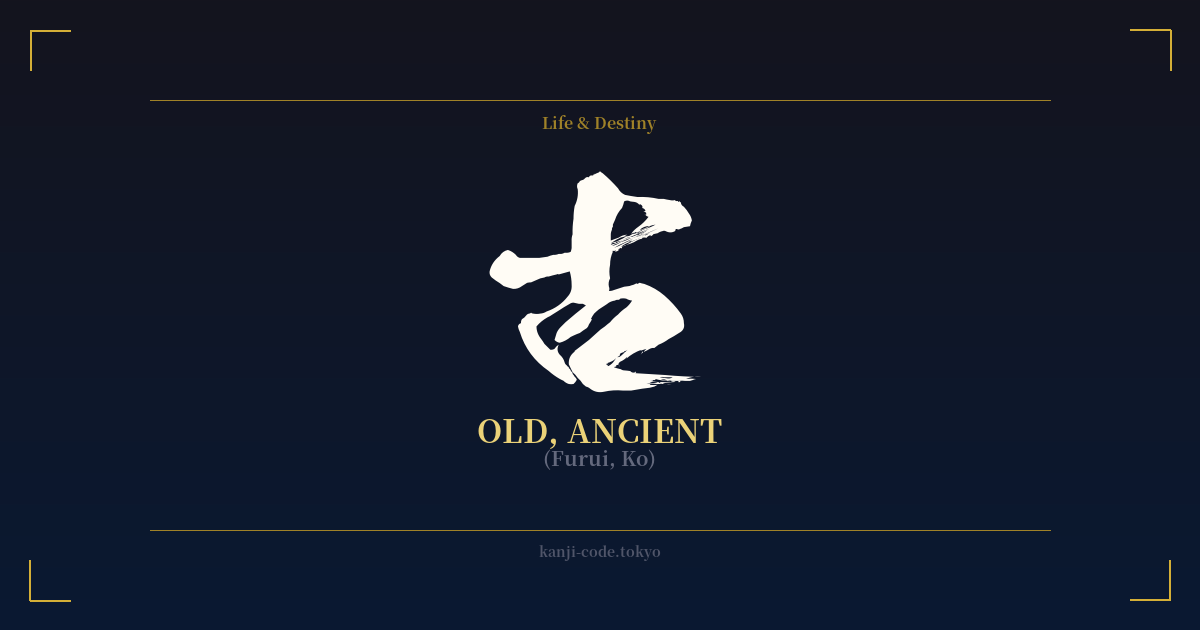
✍️ 古 (Furui, Ko) — Cultural Context
The kanji 古 (ko, furui) is a foundational character in the Japanese language, embodying the concepts of age, antiquity, and the past. Its simple, five-stroke structure belies a rich and layered significance that permeates Japanese culture, from everyday language to profound philosophical ideas.
The character's origin is thought to be a pictograph of a skull or a helmet with a plume, representing something passed down from a previous generation. A popular folk etymology breaks the modern form down into 十 (jū – ten) over 口 (kuchi – mouth), symbolizing stories and wisdom passed down through ten generations. This interpretation beautifully captures the essence of history and oral tradition.
In daily use, the character has two primary readings with different nuances. The Japanese reading, 'furui' (古い), is an adjective used for tangible things that are old—an old book, an old house, old clothes. While neutral, it can sometimes carry a connotation of being worn out or outdated. This is the most common and practical application of the character.
The Sino-Japanese reading, 'ko' (古), elevates the meaning to a more abstract and reverent plane. It is used in compound words to signify 'ancient,' 'classical,' or 'of historical importance.' For example, 古代 (kodai) means 'ancient times,' 古典 (koten) refers to classic literature, and the 古事記 (Kojiki) is the 'Record of Ancient Matters,' Japan's oldest historical chronicle. This 'ko' reading connects the character to a sense of heritage, tradition, and enduring value.
This duality is central to understanding Japanese aesthetics. While 'furui' might describe an old, weathered object, the concept of 'ko' can connect it to wabi-sabi (侘寂), the appreciation of beauty in imperfection and transience. An old, moss-covered stone lantern isn't just 'furui'; it possesses a beauty and character that comes from its journey through time.
Furthermore, 古 is a key component in the famous four-character idiom 温故知新 (onko chishin), which means 'to learn from the past to gain new knowledge.' This proverb, originating from the Analects of Confucius, encapsulates the cultural value placed on studying history and tradition not as static relics, but as a foundation for future innovation and wisdom. It suggests that the 'old' is not something to be discarded, but a vital source of insight for the present and future.
🖌️ Font Styles for 古
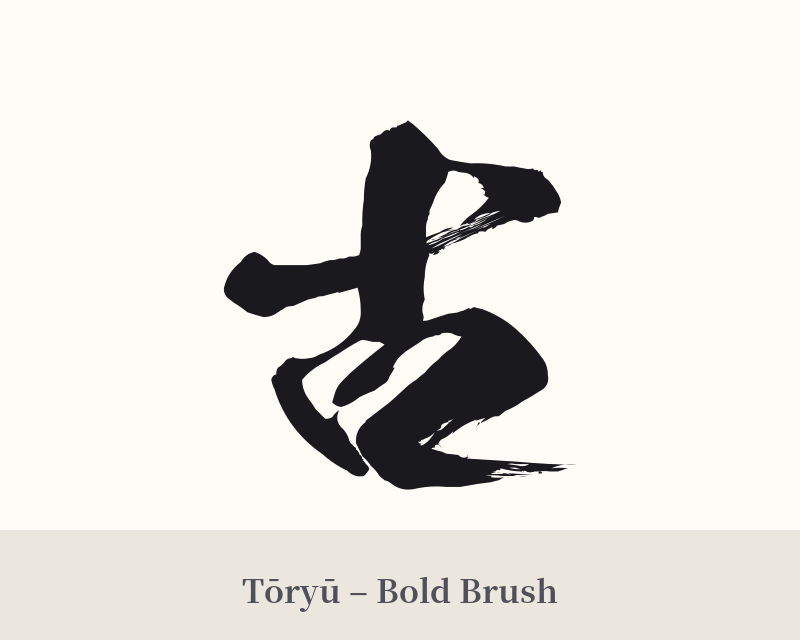
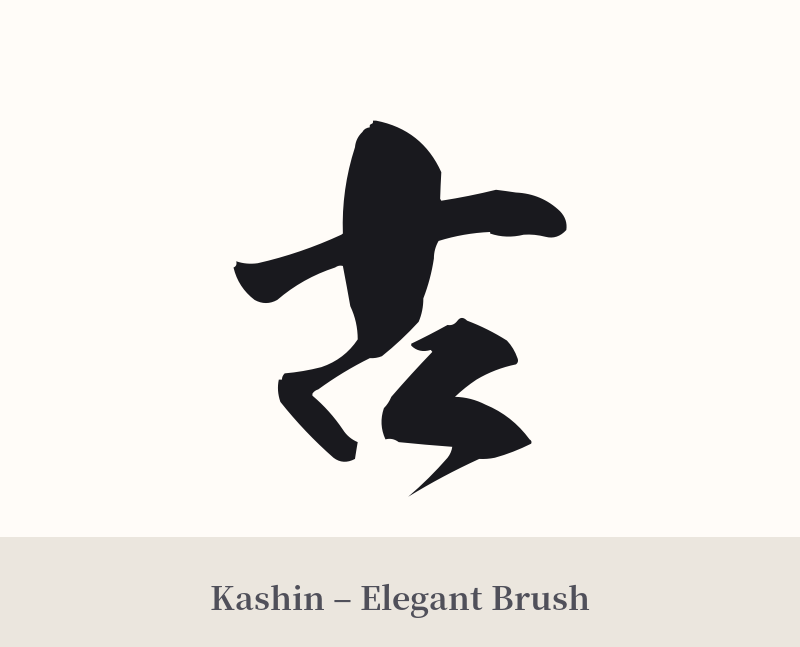
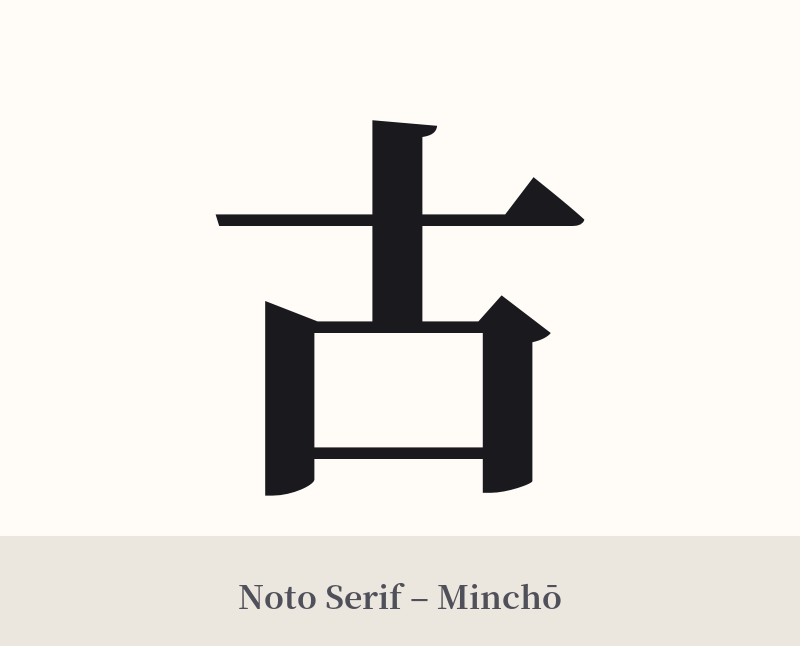
The same kanji can look dramatically different depending on the calligraphy style. Choose a font that matches the mood you want for your tattoo or design.
🎨 Tattoo Suitability
📐 Tattoo Design Guide
Due to its simplicity, the kanji 古 offers unique design challenges and opportunities. It's often best when its context is clear or when the style itself adds the missing layer of meaning.
– Placement: This character works well in small, discreet locations. Consider the inner wrist, ankle, behind the ear, or on the back of the neck. As a large centerpiece, its simplicity might make it look sparse or empty unless it's part of a much larger composition.
– Style: The font style is crucial for 古. A standard block font can look plain. Instead, opt for a dynamic calligraphy style like gyōsho (semi-cursive) or sōsho (cursive) to give it movement and personality. A rough, textured brushstroke (like kasure, showing the 'dryness' of the ink) can visually represent the idea of age and weatheredness.
– Complementary Imagery: To avoid the ambiguity of 'old' vs. 'used,' consider pairing 古 with other imagery. Placing it on a scroll, a weathered stone, or alongside a bonsai tree or koi fish can provide the context it needs to signify 'ancient wisdom' or 'tradition.' It could also be the start of a larger phrase, like 温故知新 (onko chishin).
Comments