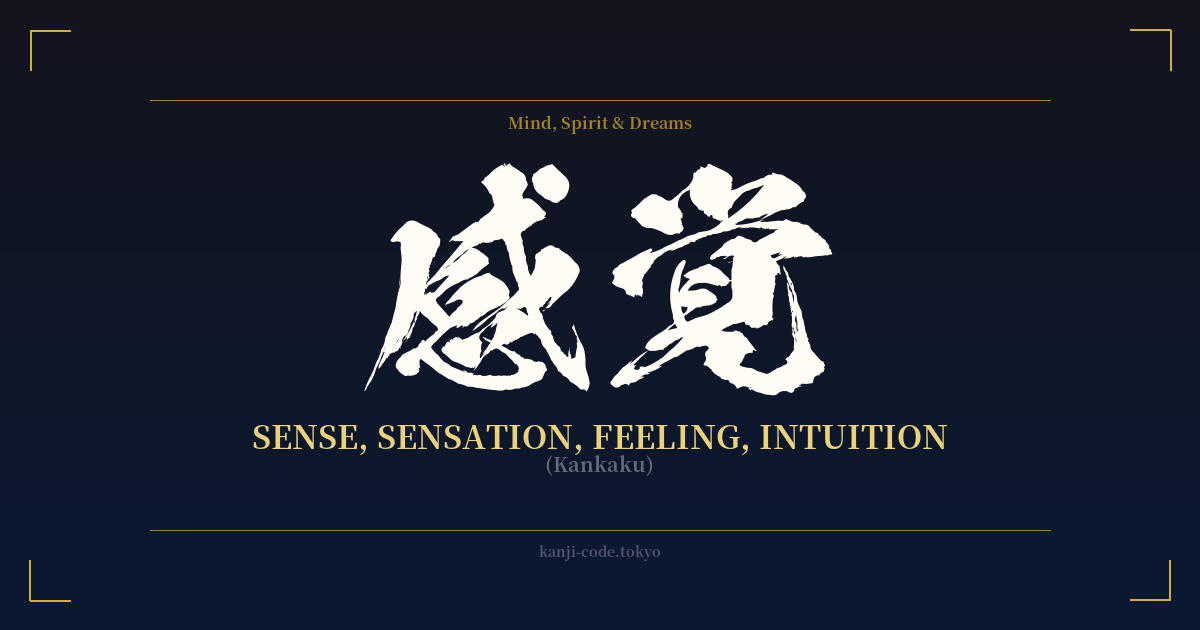
✍️ 感覚 (Kankaku) — Cultural Context
感覚 (Kankaku) is a word that goes far beyond its simple English translations of 'sense' or 'feeling.' In Japanese culture, it represents the entire spectrum of perception, from the raw data of the five senses to the most subtle, almost mystical, forms of intuition. It’s the bridge between the physical world and our inner consciousness.
Unlike 気持ち (kimochi), which describes a specific, personal emotional state (e.g., 'I feel happy'), or 感情 (kanjō), which refers to emotions as a general category, Kankaku is more fundamental. It can be the tingling sensation of cold, the aroma of rain on asphalt, or the inexplicable 'gut feeling' that something is about to happen. It is the mechanism of awareness itself.
This concept is deeply woven into Japanese aesthetics. To appreciate concepts like wabi-sabi (finding beauty in imperfection and impermanence) or mono no aware (the gentle sadness of passing things), one must possess a refined Kankaku. It’s the ability to perceive the subtle, the unsaid, and the transient. An artist or a designer in Japan is often praised for having a good 'Kankaku' or 'sensu' (センス, a loanword from English 'sense' that is used in a similar context), meaning they have an innate talent for style, balance, and beauty.
Furthermore, Kankaku is a cornerstone in many Japanese martial arts and Zen practices. The state of 無心 (mushin), or 'no-mind,' is achieved when a warrior stops overthinking and acts purely on instinct and refined Kankaku. The body perceives and reacts without the delay of conscious thought. This is the 'awakening' part of the word—the moment sensation transforms into instantaneous, perfect action or understanding. In this way, Kankaku is not just passive reception; it is an active, enlightened form of awareness that connects mind, body, and the surrounding world.
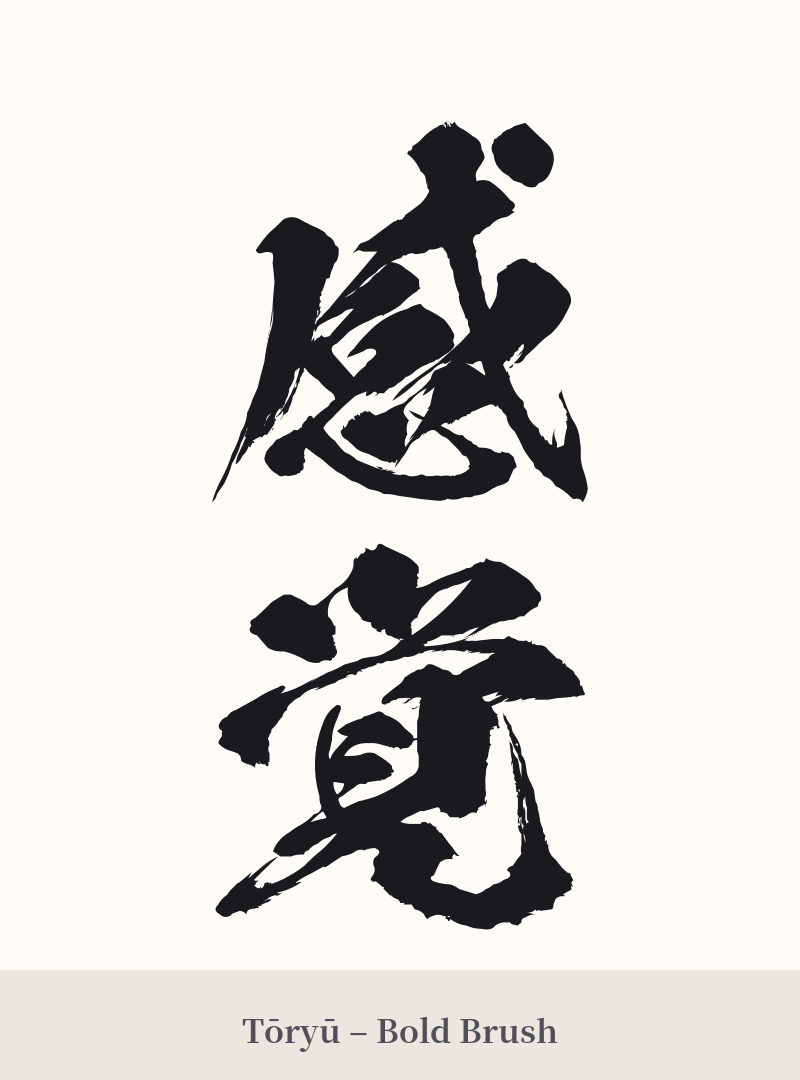
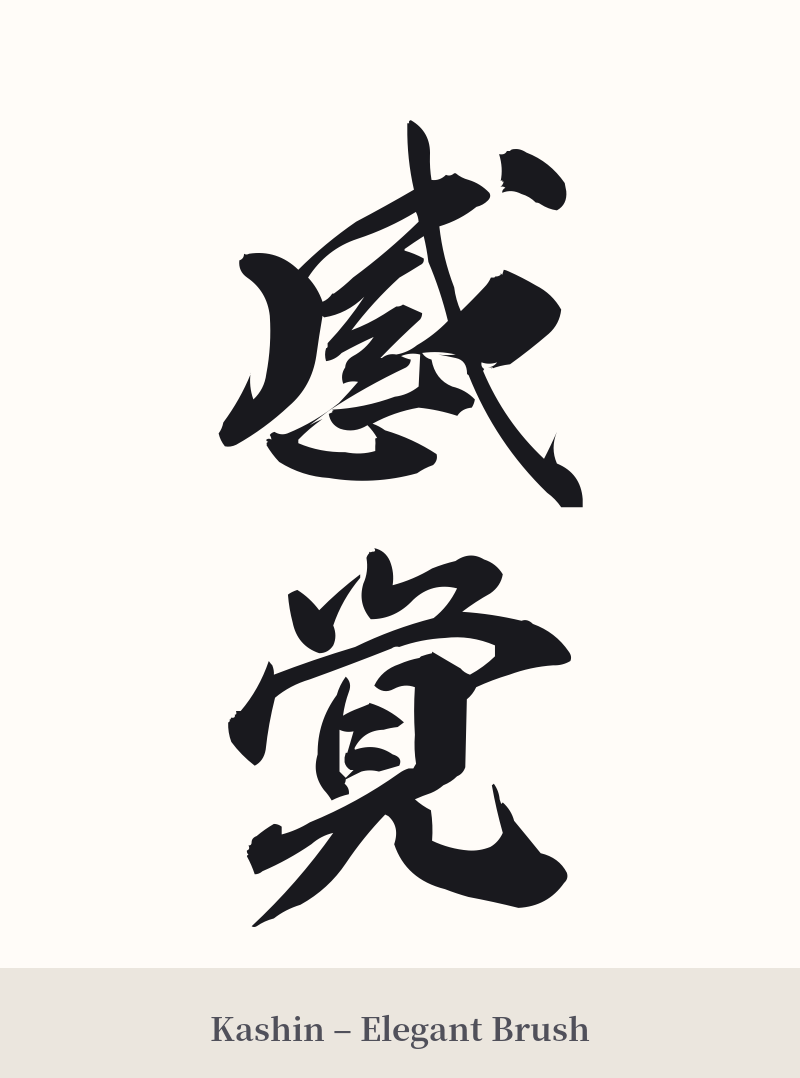
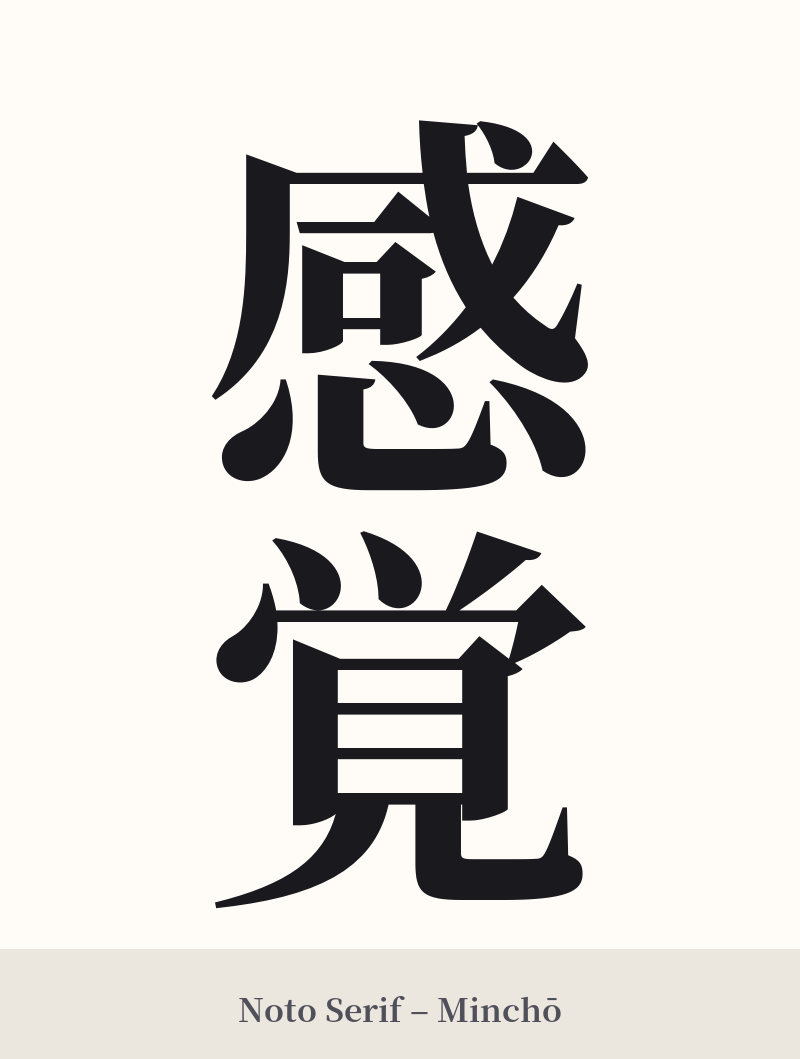
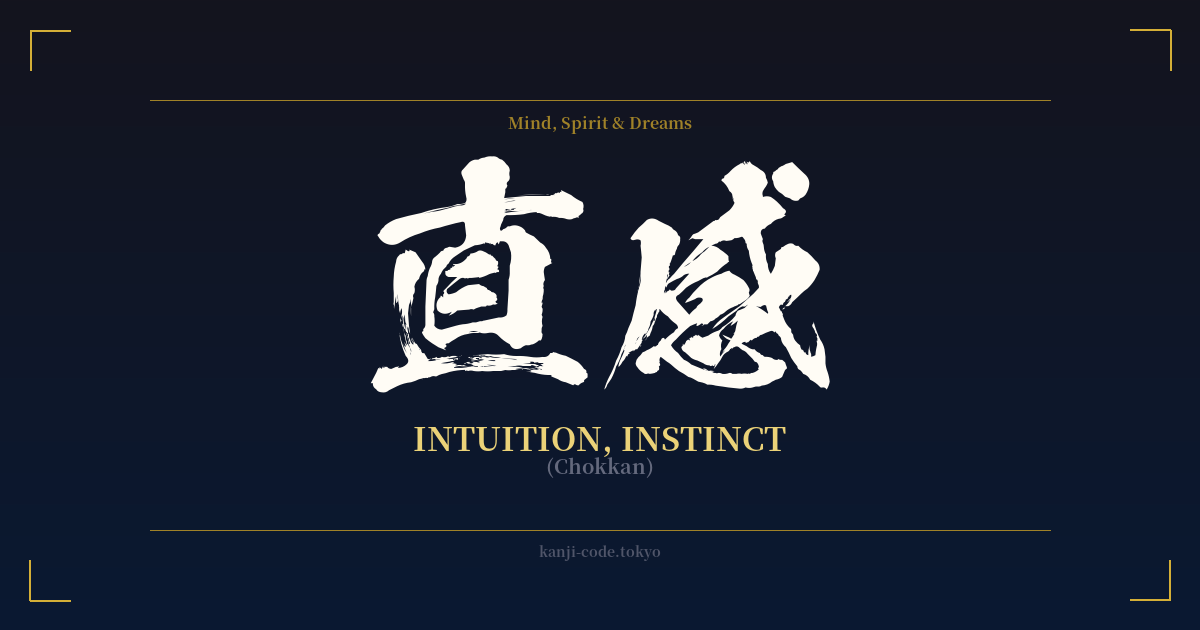
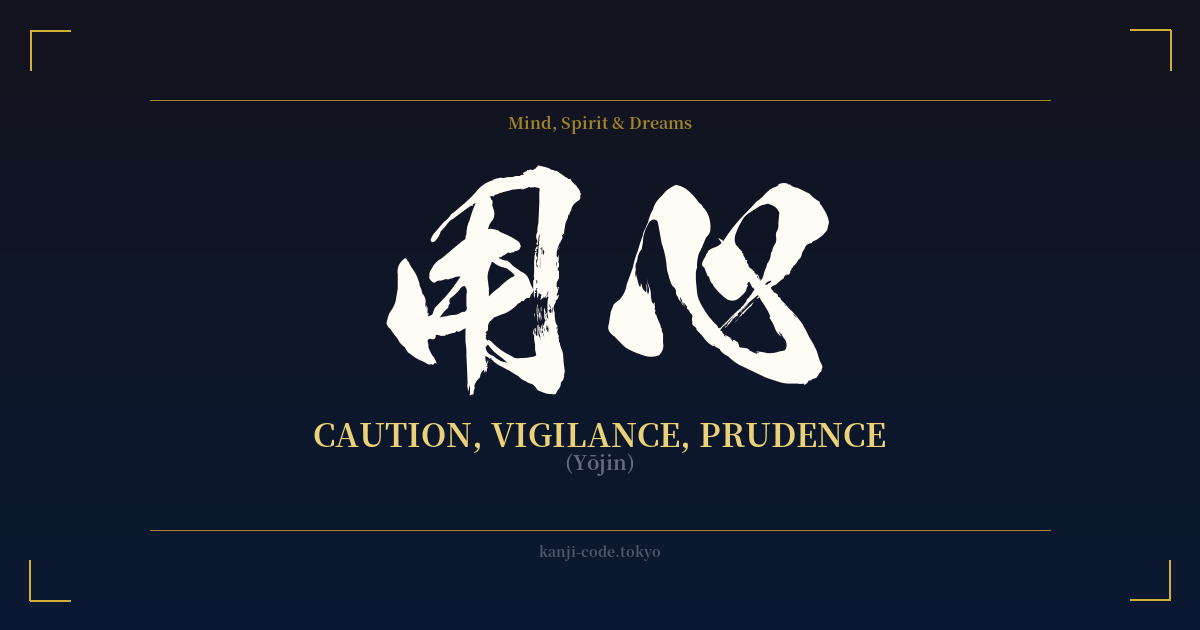
🖌️ Font Styles for 感覚
The same kanji can look dramatically different depending on the calligraphy style. Choose a font that matches the mood you want for your tattoo or design.
🎨 Tattoo Suitability
📐 Tattoo Design Guide
A tattoo of 感覚 (Kankaku) speaks to a deep appreciation for perception, intuition, and the subtle beauty of the world. Its design should reflect this introspective nature.
– Placement: Consider areas that feel personal and connected to the body's senses. The forearm allows for a clear vertical display, symbolizing the flow of information. The back of the neck or along the spine can represent intuition and the central nervous system. The ribs are another popular spot for a personal and meaningful piece.
– Font Style: The style can greatly influence the feeling. A flowing, semi-cursive script (gyōsho) can capture the fluid and organic nature of sensation. A crisp, clean Mincho or Kaisho font would emphasize the clarity of perception and the 'awakening' aspect. A more abstract, brush-stroke style (sōsho) could represent pure, untamed intuition.
– Visual Tips: A vertical orientation is traditional and generally recommended for two-character compounds, as it creates a sense of balance and flow. Given the philosophical nature of the word, it's best to let the kanji speak for themselves. Avoid cluttering the design with extra imagery that might distract from the core concept of pure perception.
Comments