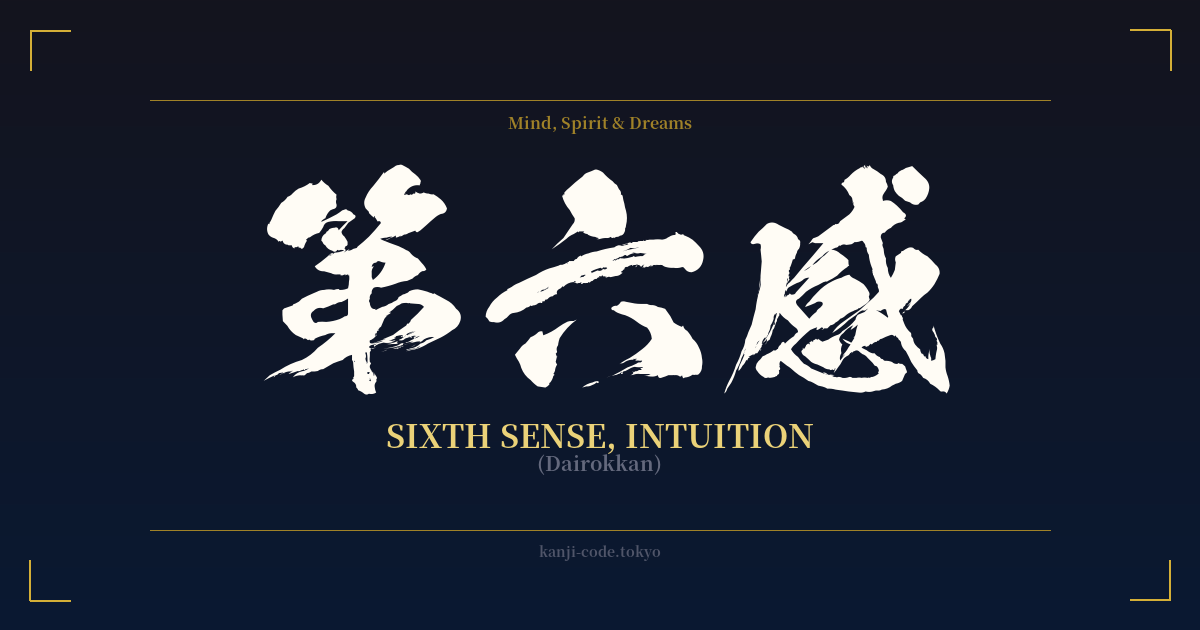
✍️ 第六感 (Dairokkan) — Cultural Context
第六感 (Dairokkan) is the Japanese term for the "sixth sense," a concept that fascinates cultures worldwide. It refers to intuition, premonition, or a form of extrasensory perception (ESP) that goes beyond the five traditionally recognized senses: sight, hearing, smell, taste, and touch.
The word itself is a direct and logical construction. The first two characters, 第六 (dairoku), mean "the sixth" in an ordered sequence. The final character, 感 (kan), means "sense" or "feeling." Together, they literally translate to "the sixth sensation," a perception that exists on another plane.
In Japanese culture, the concept of Dairokkan is widely understood and often referenced in daily life. It's that unexplainable gut feeling you get before something happens, or the sudden, inexplicable understanding of a person or situation. While some may view it with skepticism, it's a common part of the cultural lexicon, used to describe everything from a mother's intuition about her child to a gambler's lucky hunch.
This idea is distinct from a similar term, 直感 (chokkan), which also means "intuition." While chokkan refers to a more grounded, logical leap—a "direct feeling" based on subconscious processing of information—Dairokkan carries a more mystical, almost paranormal connotation. It implies receiving information from an unknown source, a sense that is truly separate from the physical body and rational mind.
The concept is a popular trope in Japanese fiction, especially in anime and manga. Countless characters, from psychic detectives to spiritually attuned warriors, are defined by their powerful Dairokkan. It allows them to predict enemy attacks, sense danger, or communicate with spirits, making it a compelling narrative device that taps into a deep-seated fascination with the unseen world.
Beyond pop culture, the idea of a sense beyond the physical aligns with certain aspects of Eastern philosophy, particularly in Zen Buddhism. The pursuit of enlightenment often involves quieting the rational mind to become more attuned to subtle truths and the interconnectedness of all things. In this context, Dairokkan can be seen as a heightened state of awareness, a glimpse into a reality that logic alone cannot grasp.
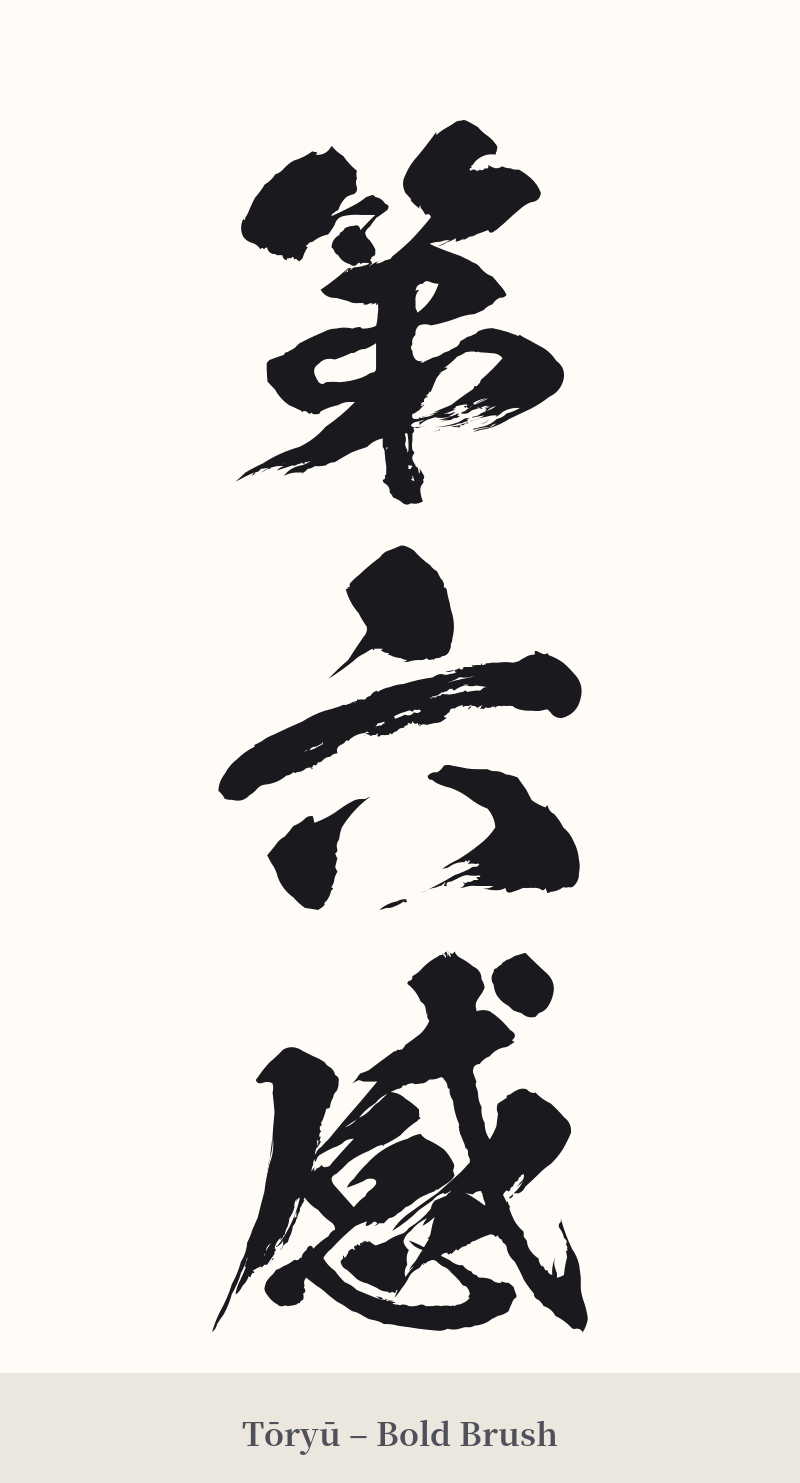
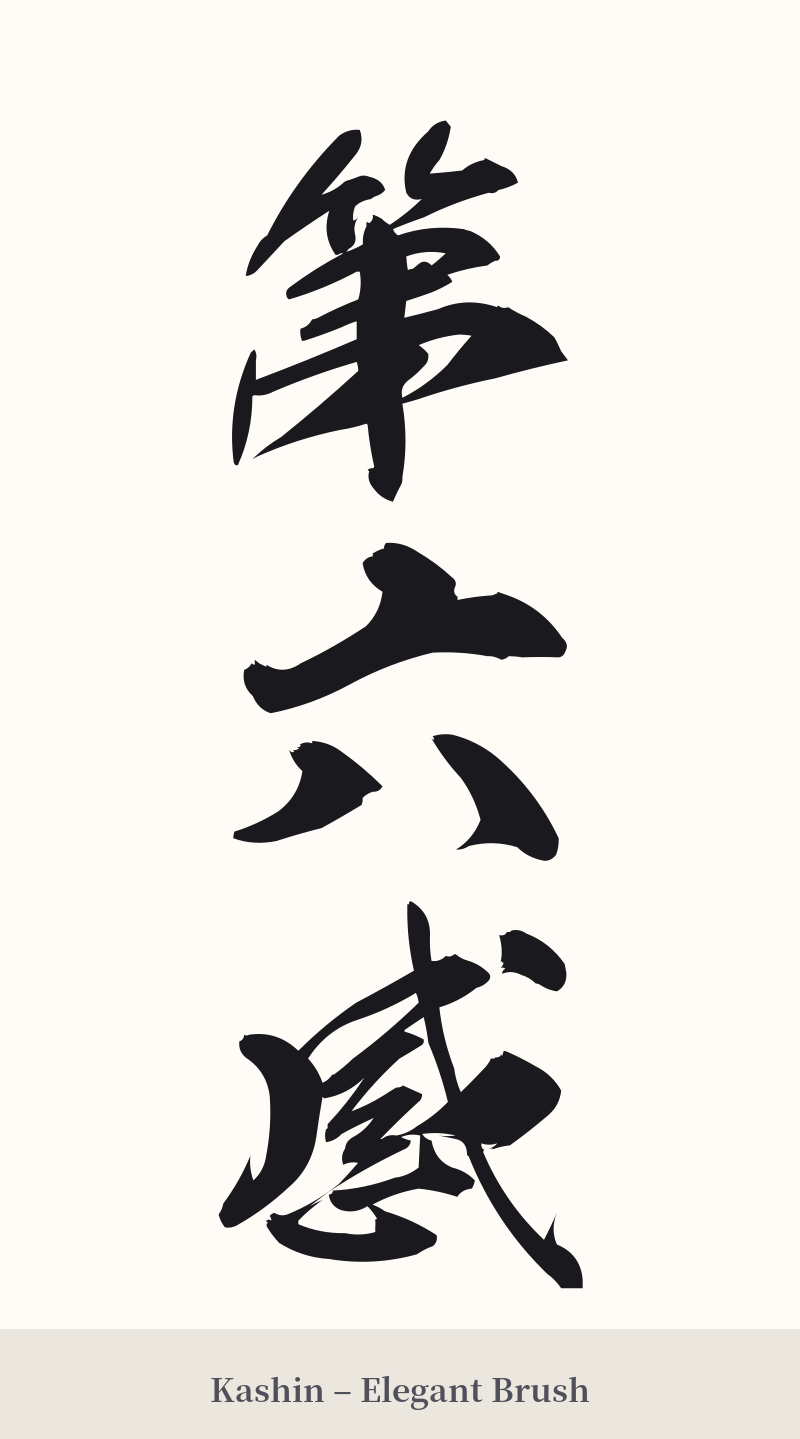
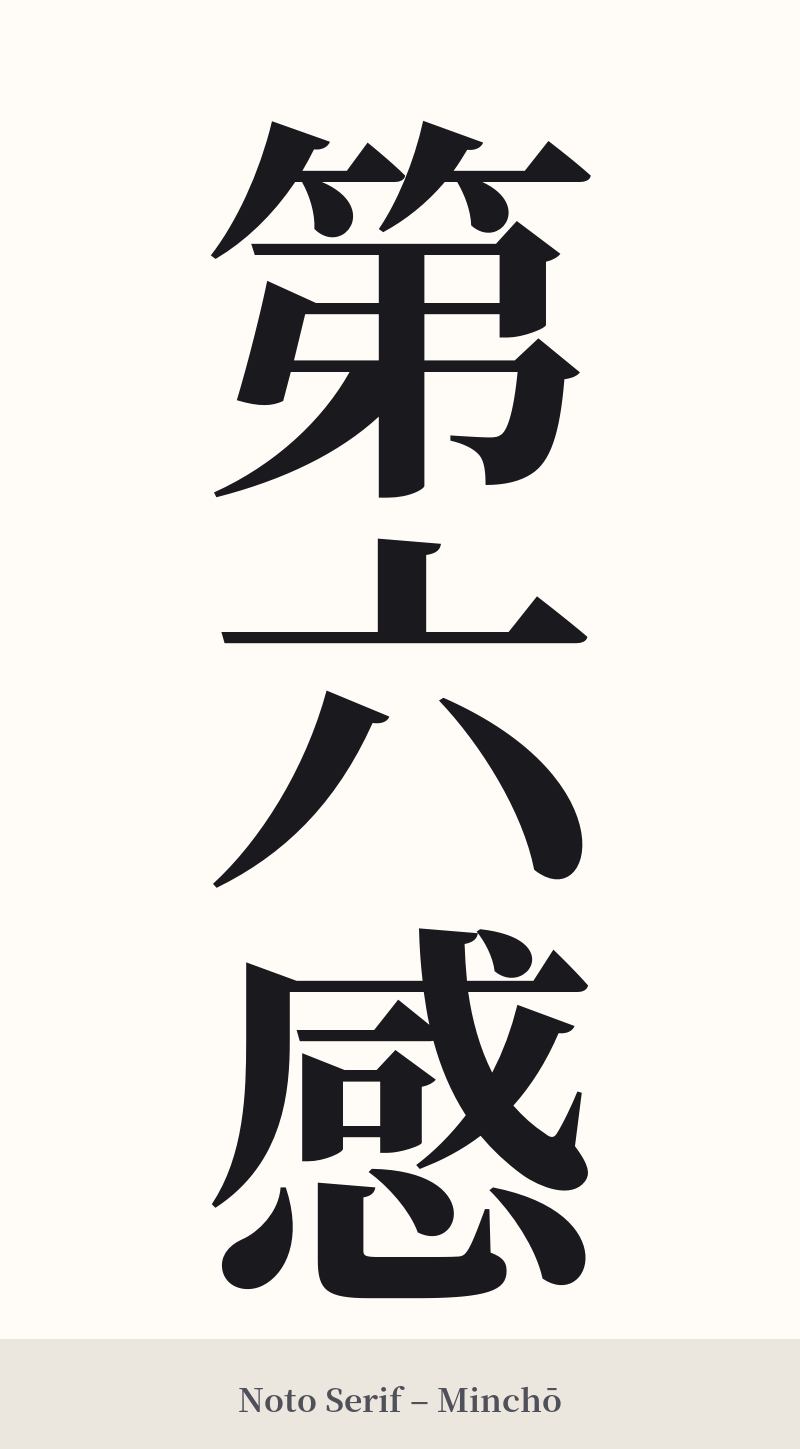
🖌️ Font Styles for 第六感
The same kanji can look dramatically different depending on the calligraphy style. Choose a font that matches the mood you want for your tattoo or design.
🎨 Tattoo Suitability
📐 Tattoo Design Guide
For a 第六感 tattoo, a vertical arrangement is the most traditional and aesthetically pleasing way to display the three characters. This orientation flows naturally down a forearm, calf, or along the spine, creating a powerful and elegant statement.
Consider these style suggestions: – Brushstroke Style (Gyosho/Sosho): A flowing, semi-cursive or cursive calligraphy style beautifully captures the fluid, elusive nature of intuition. It adds a sense of personal expression and energy to the design. – Mincho Style: A classic, serif-based font like Mincho offers a more refined and timeless look. It's clean and legible, emphasizing the philosophical weight of the concept. – Modern Gothic: For a sharper, more contemporary feel, a clean sans-serif or Gothic font can work well, giving the characters a bold and assertive presence.
For visual enhancement, you could subtly integrate abstract elements. A faint, broken circle behind the characters can symbolize the unseen sense, or a wisp of smoke-like ink can trail from the final character, representing a feeling that is hard to grasp. The key is to keep these additions subtle so they don't overpower the kanji themselves.
Comments