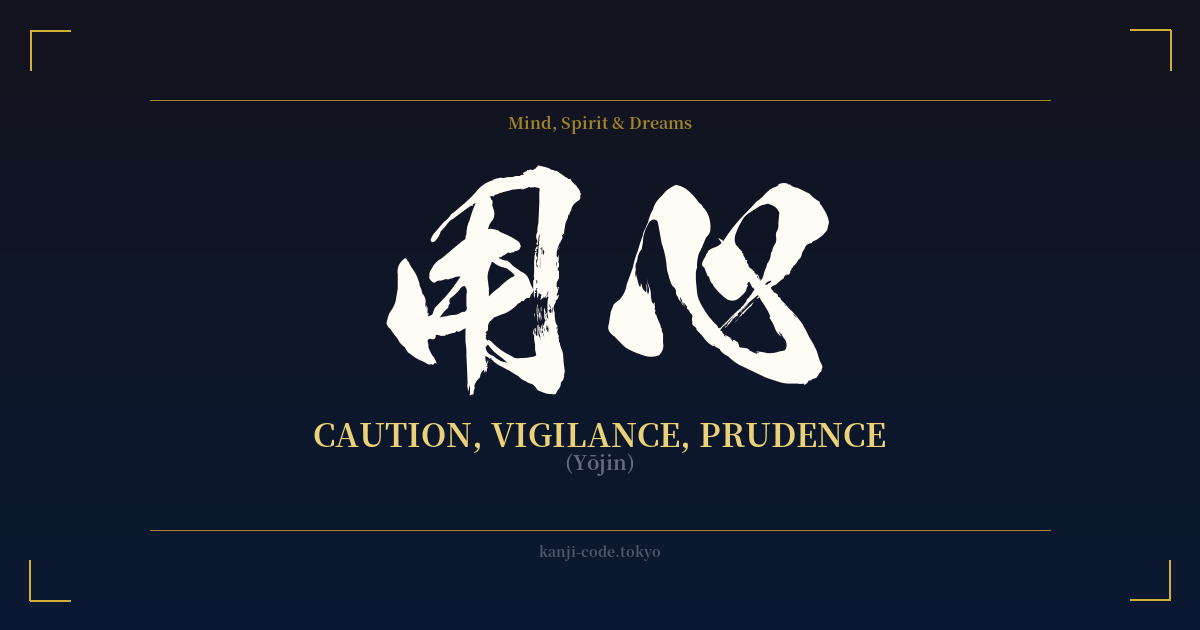
✍️ 用心 (Yōjin) — Cultural Context
The Japanese word 用心 (Yōjin) translates to caution, vigilance, or prudence, but its cultural resonance runs much deeper than a simple warning. It embodies a proactive and mindful state of being, a core tenet in Japanese philosophy that values preparedness and awareness in all aspects of life.
Literally, the kanji combine 用 (yō), meaning 'to use' or 'to employ,' and 心 (shin/kokoro), meaning 'heart,' 'mind,' or 'spirit.' Together, they create the concept of 'using one's mind'—not just thinking, but actively directing one's full attention and consciousness toward a situation. It's about being present, anticipating potential outcomes, and acting deliberately rather than reacting impulsively.
This concept has deep roots in the world of the samurai and Bushido, the way of the warrior. Yōjin is closely related to the martial arts concept of 残心 (Zanshin), the state of relaxed alertness maintained after executing a technique. While Zanshin is the lingering awareness after the fact, Yōjin is the vigilant mindset one holds before and during an engagement. A samurai practiced Yōjin not out of fear, but as a discipline to ensure survival and honor. It was the mental guard that was never lowered, whether on the battlefield or in the tea room.
In modern Japan, Yōjin is a familiar, everyday term. You'll hear it in the context of public safety. During winter, local neighborhood associations (chōnaikai) might patrol the streets at night, clapping wooden blocks and calling out "火の用心!" (Hi no yōjin! – Be careful with fire!), a tradition to prevent fires. The word also appears in proverbs like "転ばぬ先の杖" (korobanu saki no tsue), which means 'a cane before you fall,' perfectly capturing the spirit of taking precautions.
Ultimately, Yōjin isn't about anxiety or paranoia. It is a philosophy of empowerment. It is the wisdom to see ahead, the discipline to prepare, and the quiet confidence that comes from being fully aware of oneself and one's surroundings. It represents a state of inner calm and readiness, allowing one to navigate life's challenges with grace and foresight.
🖌️ Font Styles for 用心
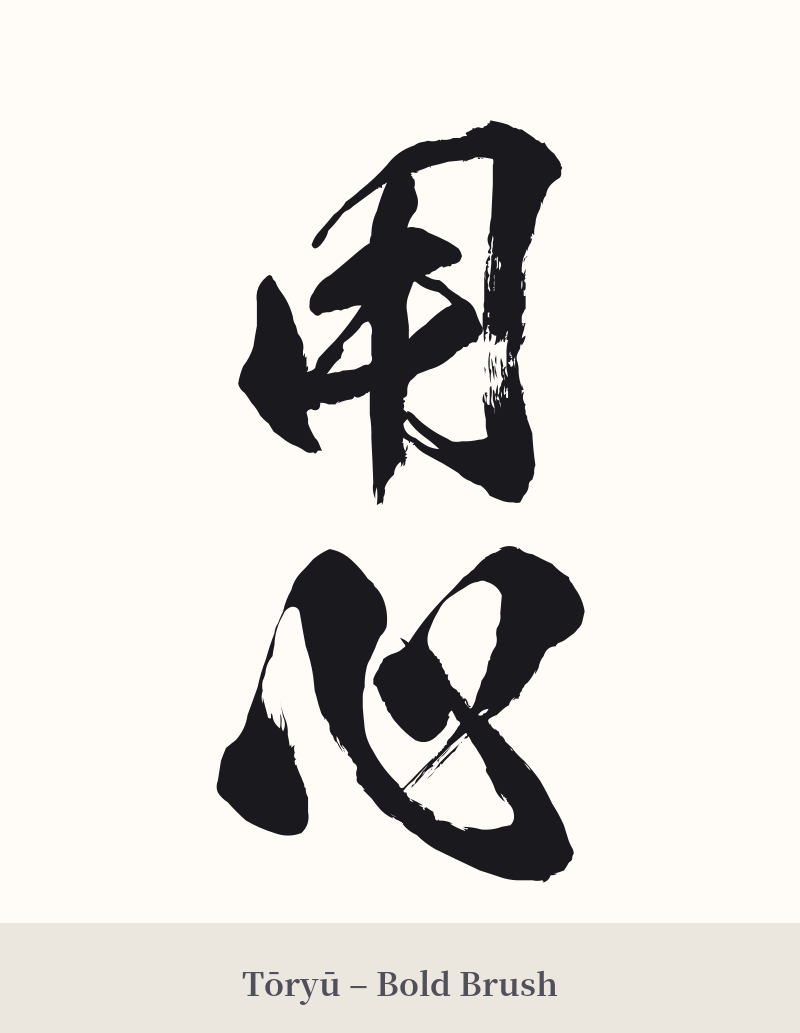
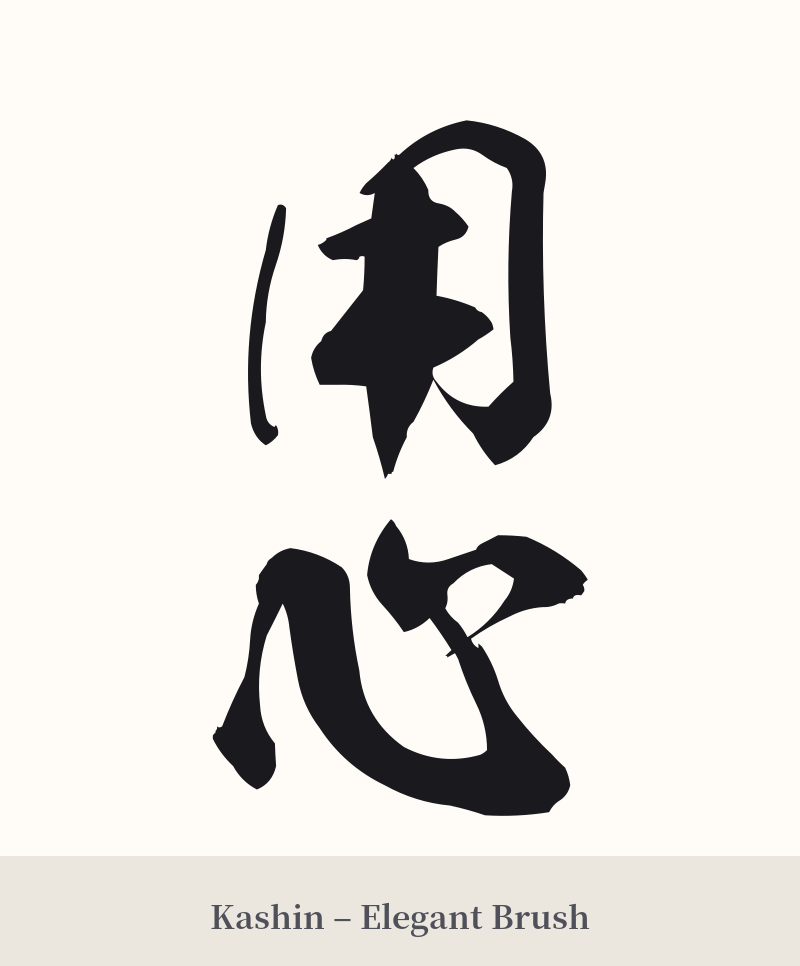
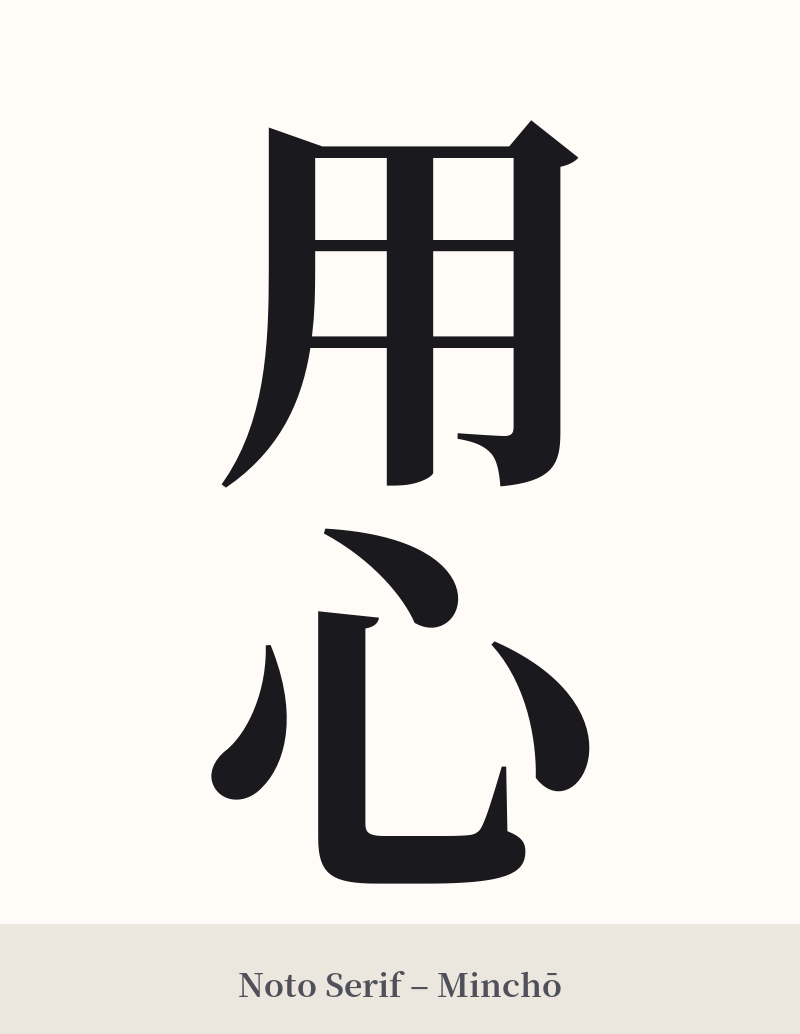
The same kanji can look dramatically different depending on the calligraphy style. Choose a font that matches the mood you want for your tattoo or design.
🎨 Tattoo Suitability
📐 Tattoo Design Guide
For a tattoo of 用心 (Yōjin), the design's subtlety and placement are key to conveying its philosophical depth rather than just being a warning label.
– Placement: Consider areas that feel personal and introspective. The inner forearm allows for personal reflection, while placement over the heart can symbolize the 'mind-heart' connection inherent in the kanji. The back of the neck or along the spine can represent a sense of watchfulness and protection.
– Font Style: The choice of script can dramatically alter the feeling. A strong, clear Kaisho (block script) style emphasizes the stability and deliberateness of prudence. For a more fluid and artistic look, a Gyosho (semi-cursive) script can represent the adaptable state of awareness that Yōjin requires.
– Visual Tips: Because the characters themselves are simple, the quality of the brushwork is paramount. Ensure your artist is skilled in Japanese calligraphy. To add more context, consider incorporating Yōjin into a larger design. It could be paired with an image of a vigilant animal like a wolf or owl, a stoic samurai figure, or a natural element like a pine tree, which symbolizes endurance and steadfastness.
Comments