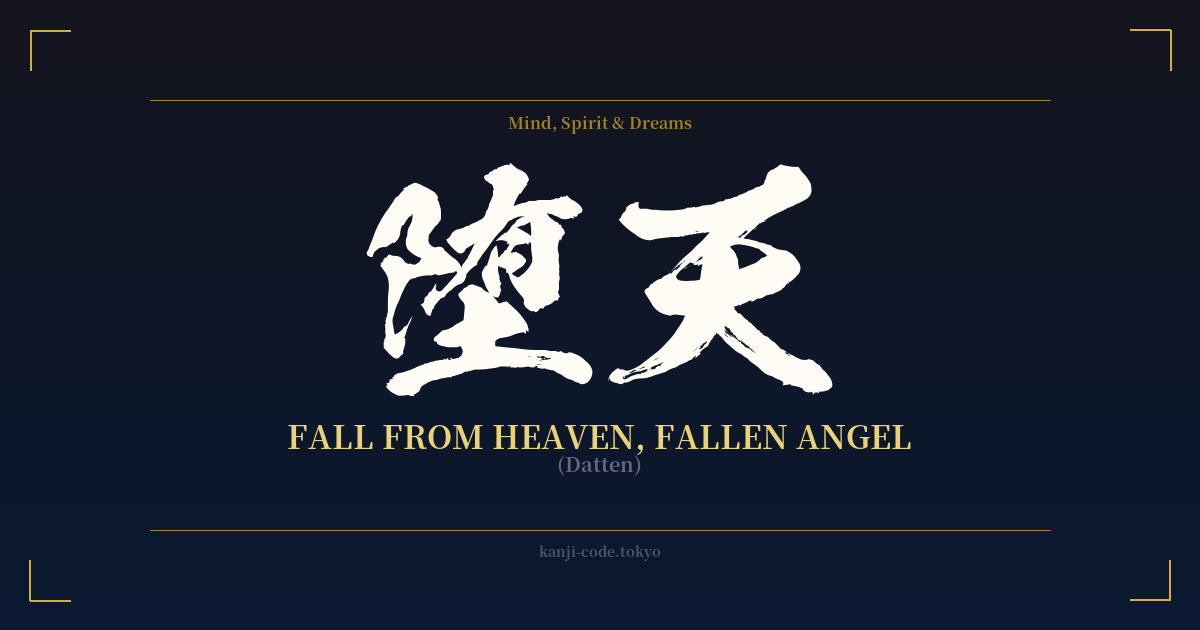
✍️ 堕天 (Datten) — Cultural Context
The Japanese word 堕天 (Datten) literally translates to "fall from heaven." It is a powerful and poetic term that immediately conjures images of a dramatic descent from a state of grace, divinity, or purity. While the characters themselves are straightforward, their combination is laden with profound literary and philosophical weight.
The primary association of 堕天 in modern Japan is directly linked to the Western concept of the fallen angel, most famously embodied by the story of Lucifer. It describes the act of an angel's rebellion against God and subsequent expulsion from paradise. This concept, while not native to Japan's Shinto or Buddhist traditions, has been thoroughly absorbed and reinterpreted through centuries of cultural exchange and, more recently, through global media.
In contemporary Japanese culture, 堕天 and its derivative, 堕天使 (datenshi – "fallen angel"), are extremely popular archetypes in anime, manga, and video games. These characters are often portrayed not as purely evil, but as complex, tragic figures. They might be rebels fighting against an unjust authority, individuals who sacrificed their purity for a noble cause, or beautiful beings defined by their sorrow and loss. They embody a romanticized anti-heroism, combining divine beauty with a dark, rebellious spirit.
It's important to distinguish this from traditional Japanese mythology. While there are stories of gods or spirits being exiled from the heavenly plains (Takamagahara), such as the storm god Susanoo-no-Mikoto, the context is different. These stories often focus on themes of purification, atonement, or the chaotic nature of deities, rather than the specific Abrahamic concept of a moral rebellion against a singular, omnipotent God.
Therefore, the power of 堕天 lies in its modern interpretation. It captures a universal fascination with the tragic anti-hero, the beauty in imperfection, and the poignant story of losing paradise. It speaks to a deep-seated human curiosity about the lines between good and evil, obedience and freedom, and the profound sadness of a fall from an ideal state.
🖌️ Font Styles for 堕天
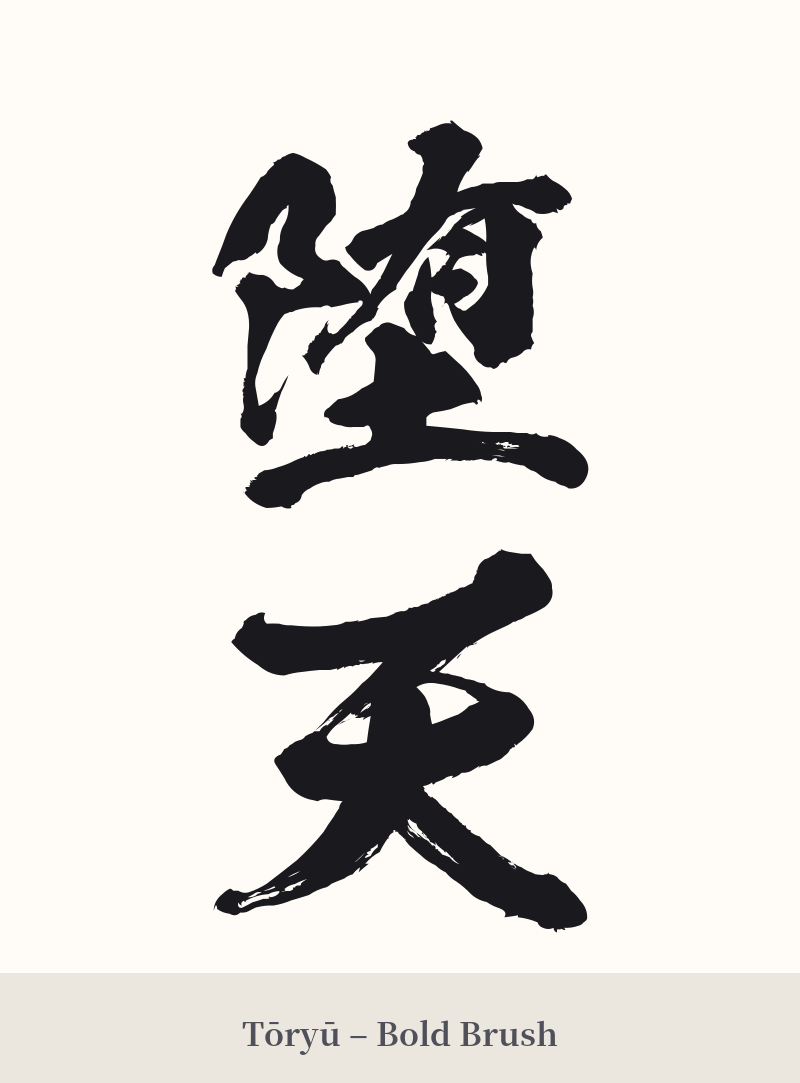
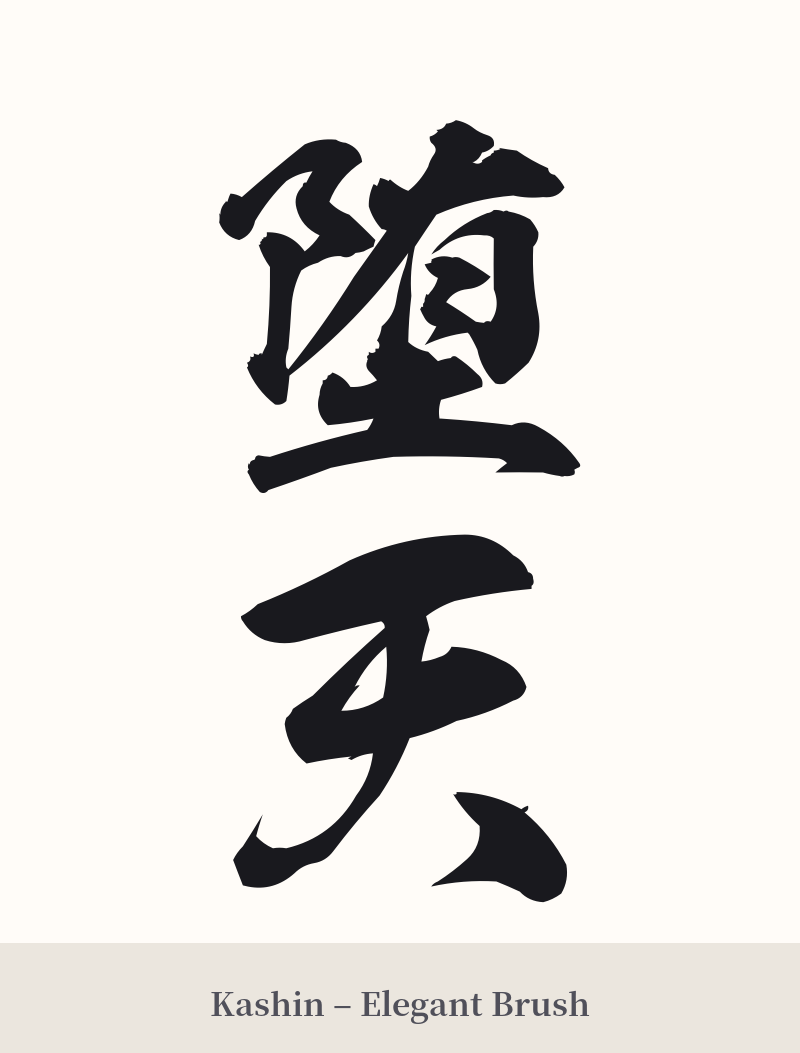
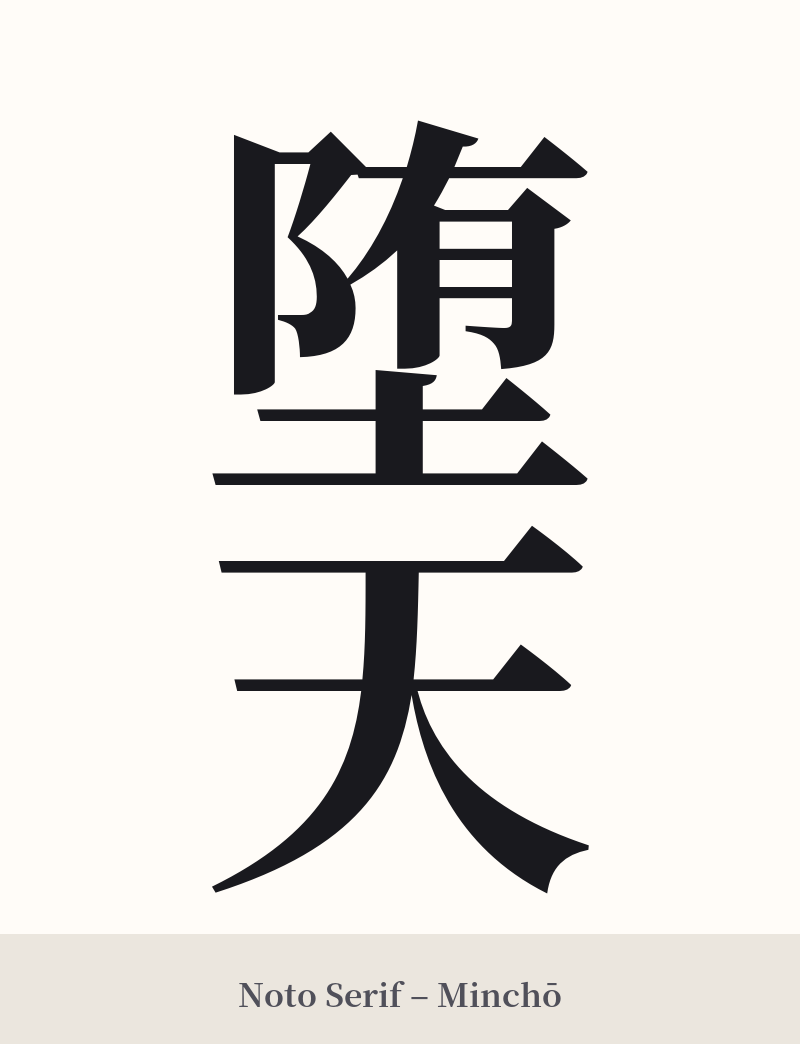
The same kanji can look dramatically different depending on the calligraphy style. Choose a font that matches the mood you want for your tattoo or design.
🎨 Tattoo Suitability
📐 Tattoo Design Guide
For a 堕天 (Datten) tattoo, the design should reflect the dramatic and tragic nature of the concept.
– Placement: Vertical alignment is highly recommended to emphasize the feeling of 'falling.' The spine, forearm, or calf are excellent choices. A horizontal placement across the collarbone or upper back can also work, creating a sense of fallen grace.
– Font Style: A dynamic calligraphy style (shodō) with aggressive, sweeping strokes can capture the chaos and violence of the fall. Alternatively, a sharp and elegant Mincho-style font can create a poignant contrast, hinting at the divine beauty that was lost.
– Visual Tips: Consider integrating imagery that enhances the theme. Broken or single black feathers falling alongside the kanji are classic choices. A cracked or tilted halo above the characters, or roots/thorns creeping up from below, can add narrative depth. Using a color gradient from a light, ethereal color at the top to a dark, shadowy one at the bottom can visually represent the descent.
Comments