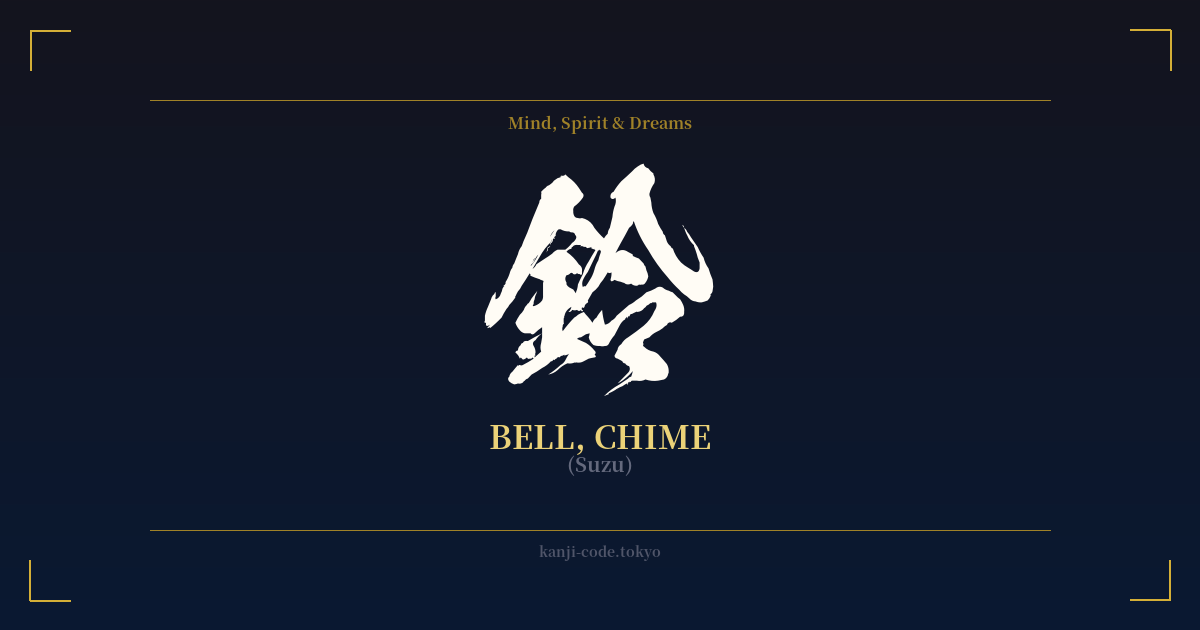
✍️ 鈴 (Suzu) — Cultural Context
The kanji 鈴 (Suzu) is a character rich with sound, spirit, and cultural significance in Japan. While its literal translation is 'bell' or 'chime,' its meaning resonates far beyond the simple object, touching upon the sacred, the seasonal, and the deeply personal.
In the spiritual landscape of Japan, the suzu is most prominently found at Shinto shrines. At the entrance to the main hall, you will often find a large suzu bell hanging from a thick, colorful rope. Visitors shake this rope to ring the bell before praying. This act is not merely to get the gods' attention; the clear, piercing sound is believed to purify the worshipper and ward off malevolent spirits, creating a sacred space for communication with the kami (deities).
This connection to the divine is further embodied by the 'kagura suzu,' a distinctive instrument used by Miko, or shrine maidens. This tool consists of multiple small bells attached to a handle, which the Miko shakes during sacred Kagura dances. The rhythmic chiming is a form of offering and a way to channel divine energy, making the suzu a symbol of spiritual connection and ritual purity.
The character itself, 鈴, offers a clue to its nature. It is composed of the radicals 金 (kin), meaning 'gold' or 'metal,' and 令 (rei), which can mean 'order' or 'command.' Together, they evoke the idea of a sound from metal that commands attention or brings about a certain order, whether it's calling a deity or clearing a space of impurities.
Beyond the shrine, the suzu appears in a more gentle, nostalgic form as the 'fūrin' (風鈴), or wind chime. The sound of fūrin tinkling in the summer breeze is an iconic part of the Japanese seasonal experience. Traditionally, their sound was believed to offer a psychological cooling effect during hot, humid months and, like their shrine counterparts, to keep evil spirits at bay. Today, they represent tranquility, the passage of time, and the simple, fleeting beauty of a summer day.
Finally, tiny suzu bells are commonly attached to 'omamori' (good luck amulets) and other personal charms. The subtle sound serves as a constant, gentle reminder of the charm's protective power. In this context, the suzu becomes a personal guardian, a symbol of safety and well-being. Whether large or small, sacred or secular, the 鈴 carries a feeling of clarity, purity, and a connection to something unseen.
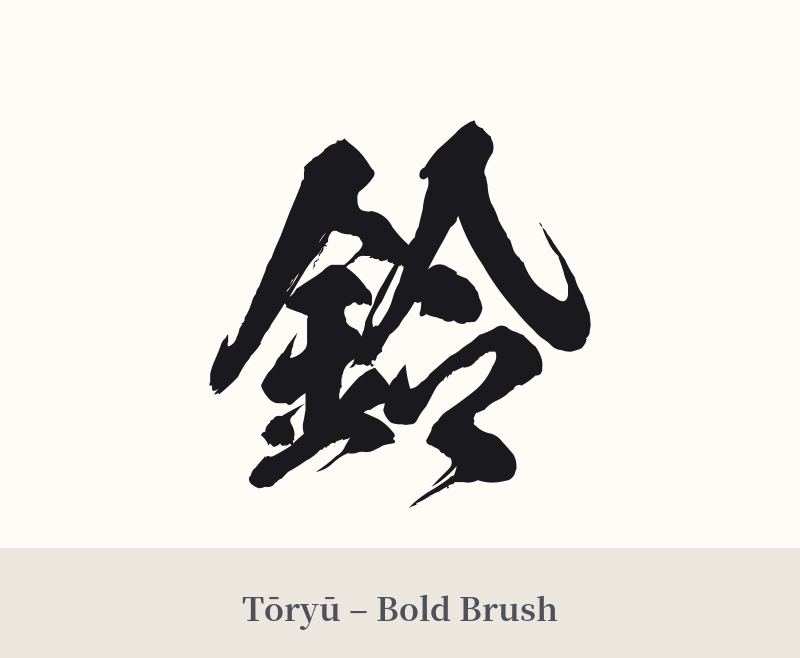
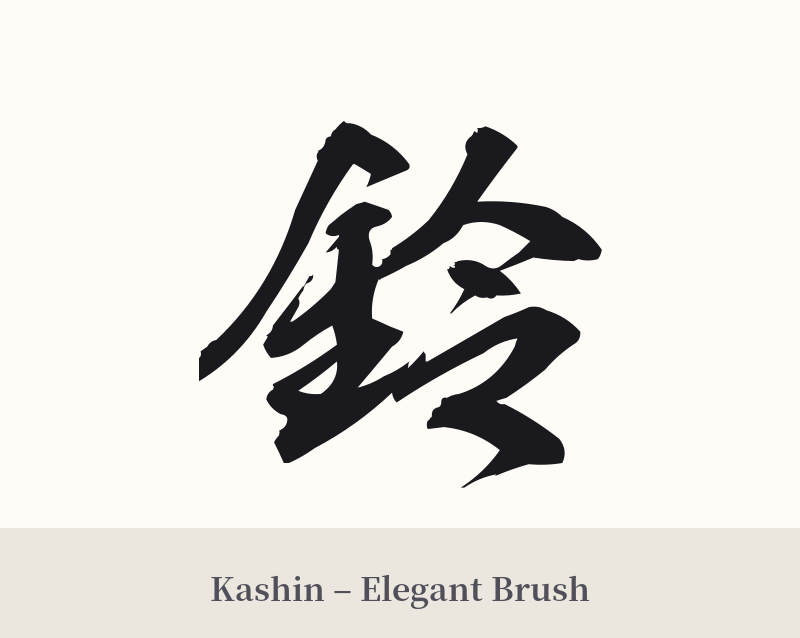
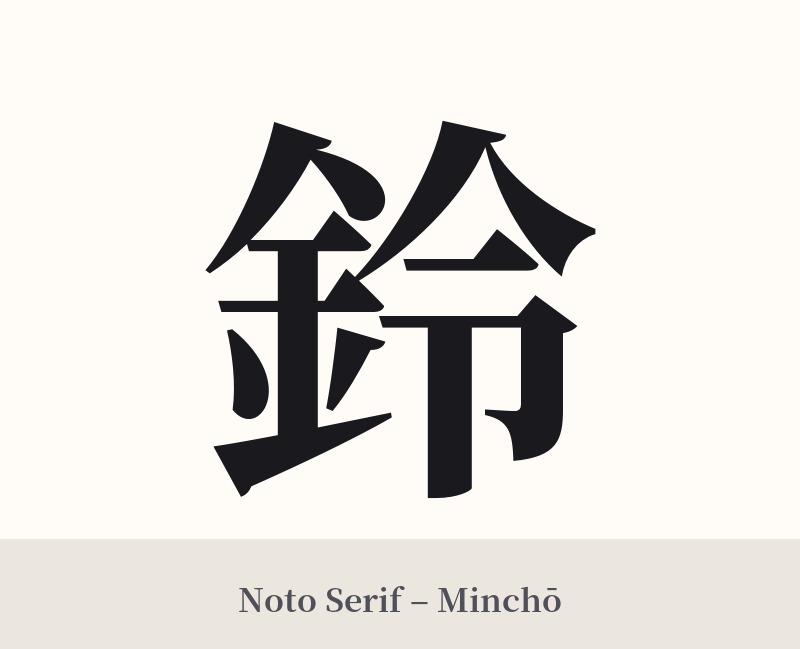
🖌️ Font Styles for 鈴
The same kanji can look dramatically different depending on the calligraphy style. Choose a font that matches the mood you want for your tattoo or design.
🎨 Tattoo Suitability
📐 Tattoo Design Guide
The kanji 鈴 (Suzu) has an elegant and spiritual feel, which lends itself well to certain design choices.
– Placement: Due to its delicate nature, this kanji is beautifully suited for smaller, more intimate placements. Consider the inner wrist, ankle, behind the ear, or on the collarbone. It can also be integrated into a larger Japanese-themed piece, perhaps alongside a Shinto shrine gate (torii) or cherry blossoms.
– Style: A fine-line or single-needle style would beautifully capture the kanji's elegance and clarity. For a more traditional look, a flowing semi-cursive (gyōsho) or cursive (sōsho) calligraphy script can add a sense of movement and spirituality. Blocky, heavy fonts may detract from its inherent grace.
– Pairings: Consider pairing the kanji with a visual element. A tattoo could feature the character alongside an artistic rendering of a 'kagura suzu' with its flowing ribbons, or a 'fūrin' (wind chime) to evoke a sense of summer nostalgia. This adds another layer of meaning and visual interest.
Comments