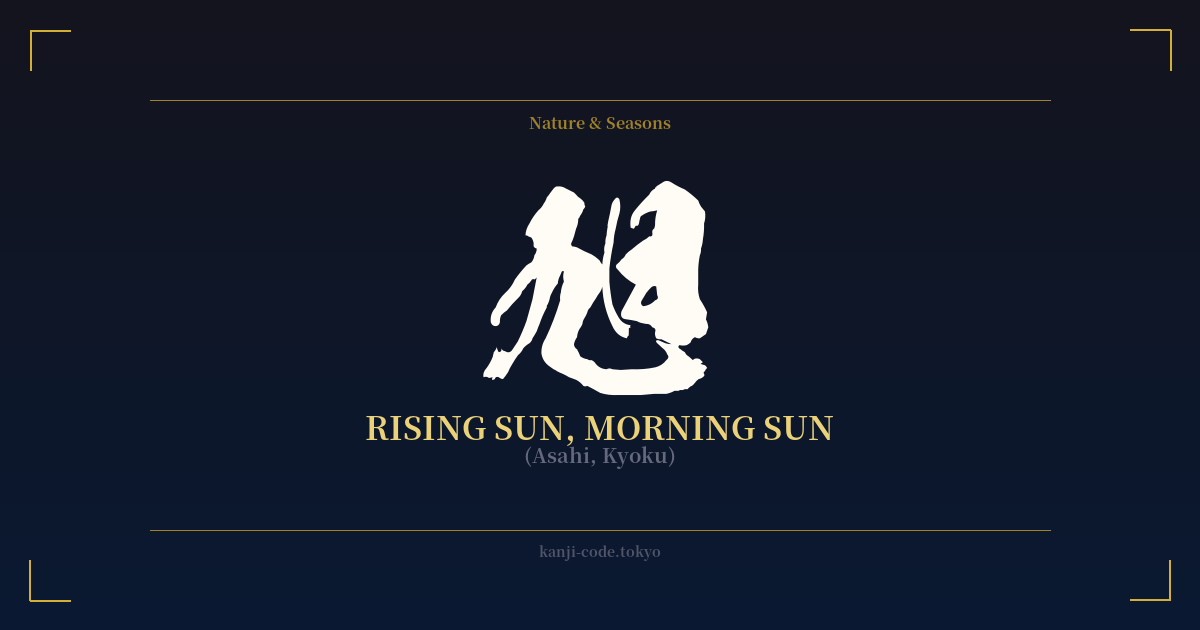
✍️ 旭 (Asahi, Kyoku) — Cultural Context
The kanji 旭 (Asahi) is one of the most visually evocative characters in the Japanese language, capturing a single, powerful moment in time: the sun cresting the horizon at dawn. Its very structure tells a story. The character is a combination of 九 (kyū), which in this context is an pictographic representation of a tree or landscape, and 日 (hi), meaning 'sun'. Together, they paint a picture of the sun (日) rising from behind a tree (九), perfectly encapsulating the image of the 'rising sun'.
This character is deeply woven into the fabric of Japanese identity. Japan is famously known as 日本 (Nihon/Nippon), the 'Land of the Rising Sun'. While the kanji are different, 旭 embodies this national concept. It represents not just the physical dawn, but also the metaphorical promise of a new day—hope, renewal, brilliance, and boundless potential. It’s a symbol of vitality and auspicious beginnings.
Because of these overwhelmingly positive connotations, 旭 is a common element in Japanese culture. You will find it in personal names like 'Asahi', which is a unisex name conveying brightness and optimism. It's also the name of major Japanese corporations, such as Asahi Breweries and the Asahi Shimbun newspaper, chosen to project an image of growth and leadership.
However, the story of 旭 has a darker, more complex side that cannot be ignored. The character is the first component of the word 旭日旗 (Kyokujitsu-ki), the Rising Sun Flag. This military banner, with its red sun and radiating rays, was used by the Imperial Japanese Army during its expansion across Asia in World War II. For many, particularly in China and Korea, this flag is an enduring symbol of Japanese imperialism, aggression, and wartime atrocities. It evokes painful memories and is considered highly offensive.
While the single kanji 旭 is not the flag itself, the association is immediate and powerful for those who have suffered under its banner. Within Japan, the character is often seen in its pure, poetic sense—the beauty of the morning. But outside of Japan, its meaning can be heavily colored by this controversial history. This duality is critical to understand; what one person sees as a symbol of hope, another may see as a painful reminder of oppression.
🖌️ Font Styles for 旭
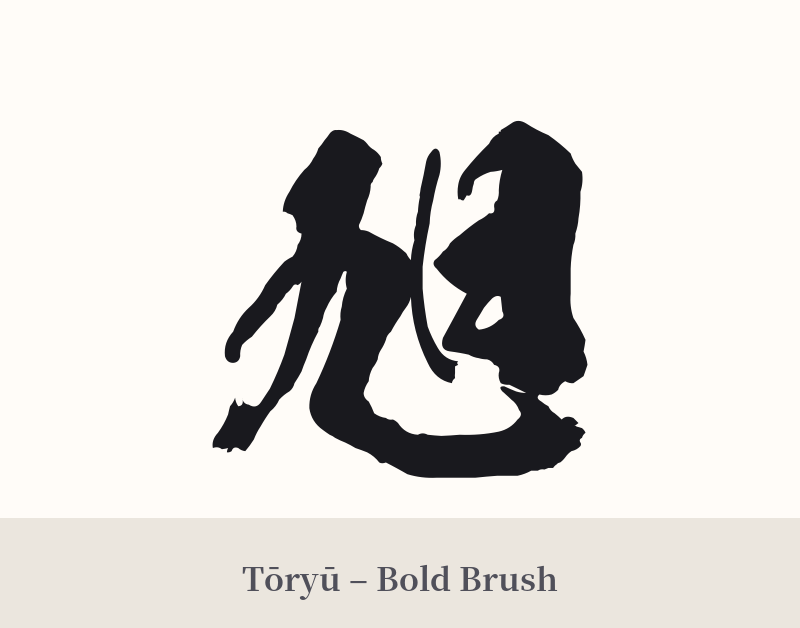
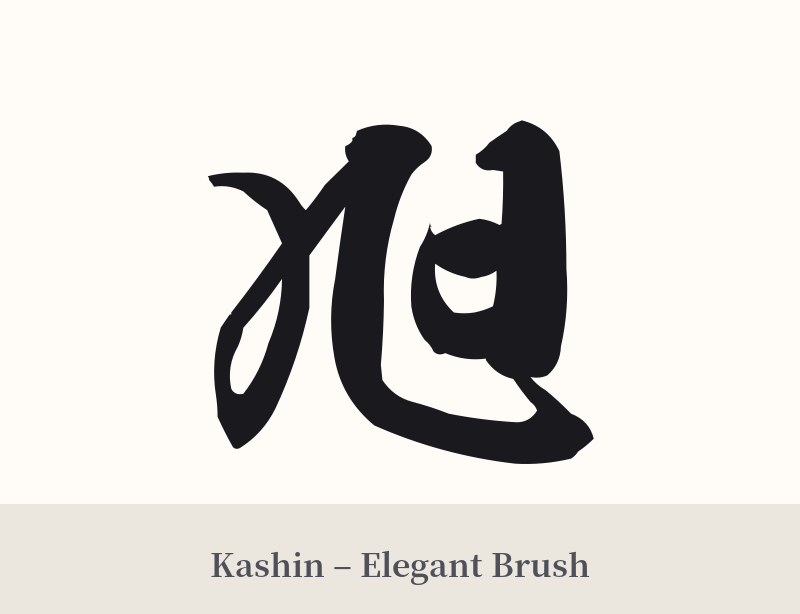
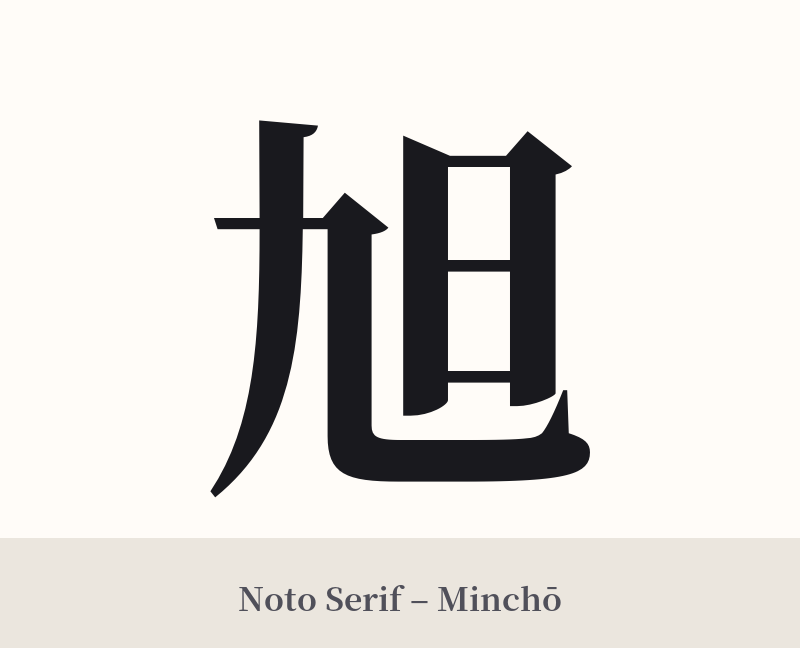
The same kanji can look dramatically different depending on the calligraphy style. Choose a font that matches the mood you want for your tattoo or design.
🎨 Tattoo Suitability
📐 Tattoo Design Guide
For a tattoo of 旭, placement can enhance its meaning. The forearm, calf, or the back of the neck are excellent choices, as they are vertical spaces that can subtly suggest the 'rising' aspect of the sun. A placement over the chest can also be symbolic of a new day dawning within.
– Font Style: A bold, semi-cursive script (gyōsho) can give the design energy and flow, mimicking the dynamic movement of the sunrise. For a more stoic and traditional look, a classic block script (kaisho) provides clarity and strength. A minimalist, clean font can emphasize its simple elegance.
– Visual Tips: To avoid any resemblance to the controversial Rising Sun Flag, it is strongly advised not to add red rays emanating from the character. Instead, consider pairing 旭 with other natural elements. Placing it above a simple line representing the horizon, or alongside kanji for 'wave' (波) or 'mountain' (山), can create a beautiful and unambiguous scene of a Japanese landscape at dawn.
Comments