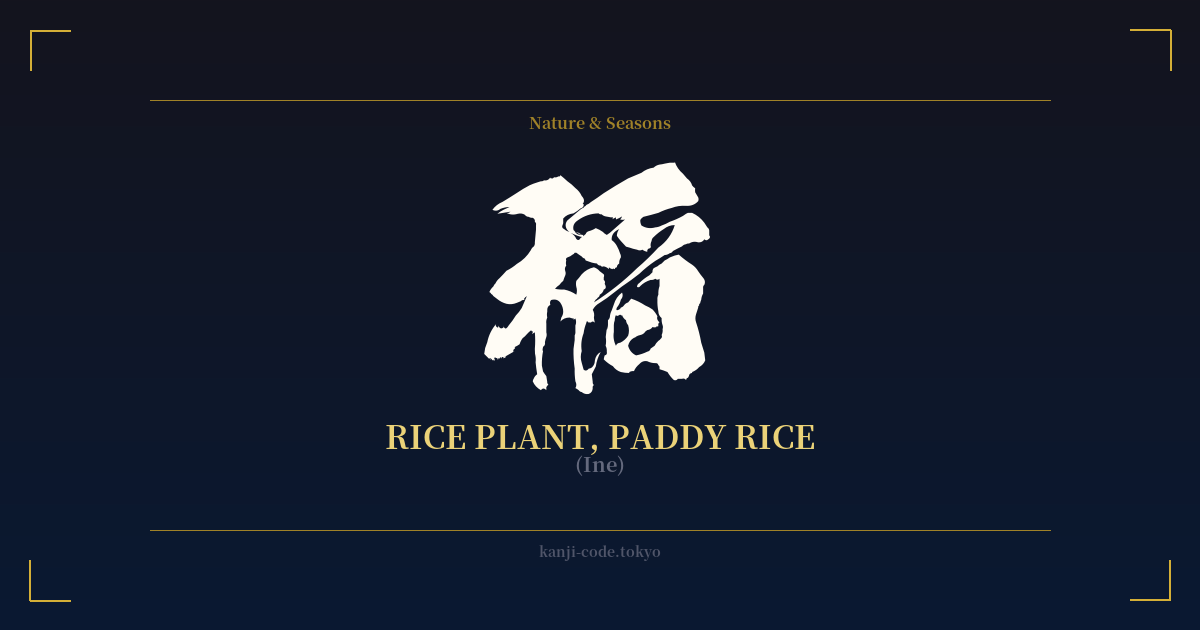
✍️ 稲 (Ine) — Cultural Context
To understand Japan, one must first understand the significance of rice. The kanji 稲 (ine) represents the rice plant itself, the living crop swaying in the fields. This single character is a vessel for centuries of Japanese culture, spirituality, and national identity.
Historically, rice was more than just food; it was the measure of wealth and power. Feudal lords' domains were valued by their 'koku,' a unit of rice production, and samurai were paid in rice stipends. This economic bedrock is woven into the language itself; the word for lightning, 稲妻 (inazuma), literally means 'rice plant's wife,' stemming from the ancient belief that lightning fertilized the rice paddies, promising a good harvest.
The spiritual connection is even deeper. In Shintoism, Japan's indigenous religion, rice is considered a sacred gift from the gods (kami). The deity Inari Ōkami, one of Japan's most revered kami, is the god of rice, sake, and prosperity, with thousands of shrines dedicated to them across the country. Offerings of rice and sake (rice wine) are central to nearly all Shinto rituals, a way of giving thanks and praying for continued blessings.
This reverence extends to the landscape. The terraced rice paddies, known as 田んぼ (tanbo), are an iconic and cherished feature of the Japanese countryside. The cycle of planting rice in the spring, tending the fields through the humid summer, and harvesting in the autumn has defined rural life for generations. These activities were traditionally communal, fostering a deep sense of cooperation and shared purpose that is a cornerstone of Japanese society, often encapsulated in the concept of 和 (Wa), or harmony.
Choosing the kanji 稲 is to embrace a symbol of life itself. It represents nourishment, prosperity, hard work, community, and a deep, respectful connection to nature and the divine. It is not merely a plant; it is the foundation upon which much of Japanese culture was built.
🖌️ Font Styles for 稲
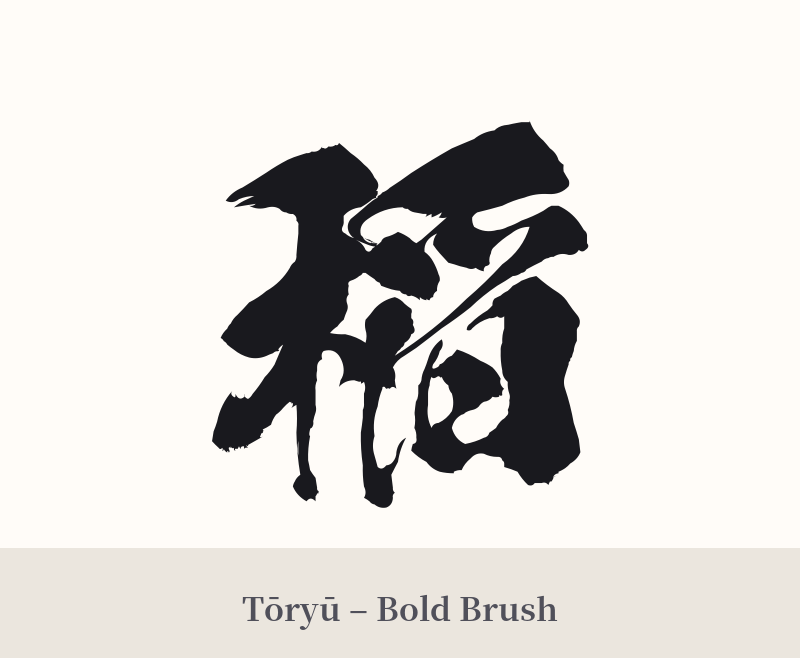
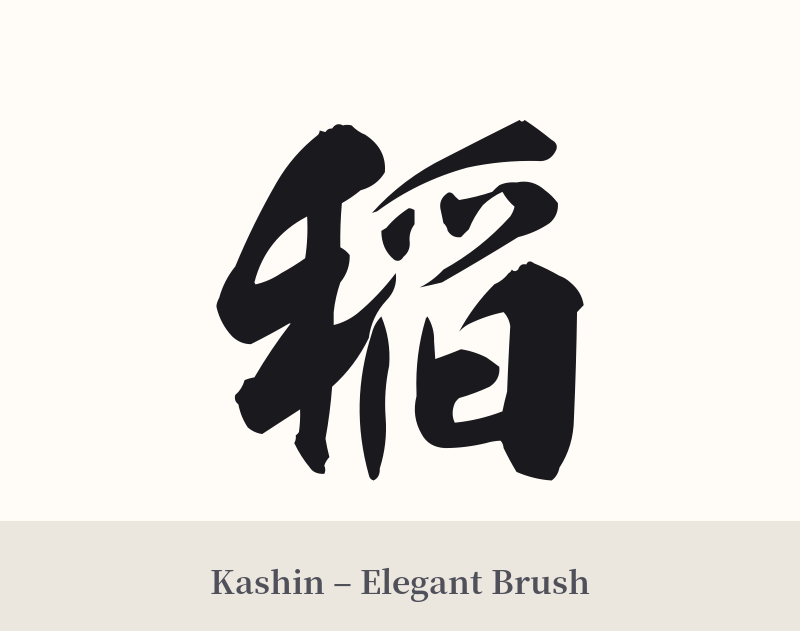
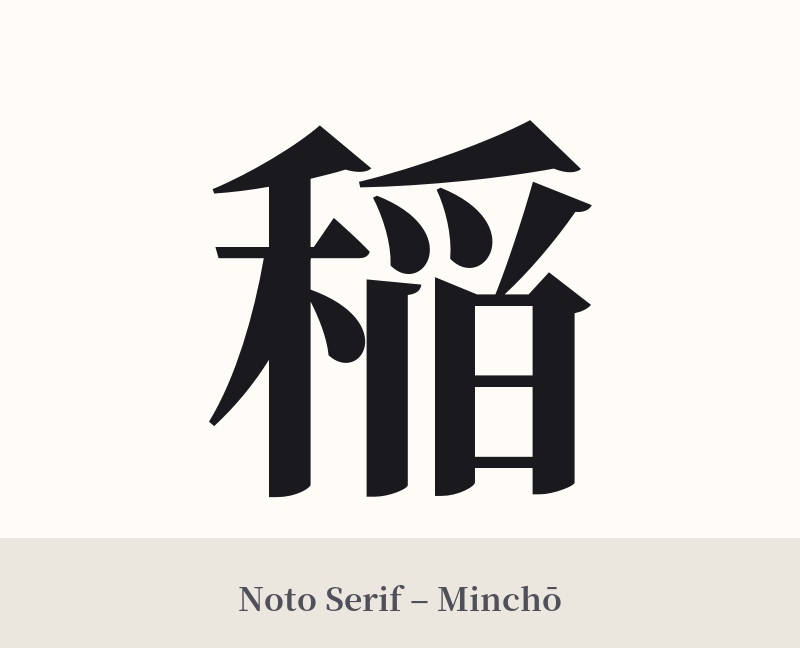
The same kanji can look dramatically different depending on the calligraphy style. Choose a font that matches the mood you want for your tattoo or design.
🎨 Tattoo Suitability
📐 Tattoo Design Guide
The kanji 稲 (ine) offers a design that is both rustic and profound. Its balanced structure works well in various styles and placements.
– Placement: Consider areas with a vertical orientation, like the forearm, calf, or along the spine, to echo the feeling of a growing plant. The back of the shoulder or the chest also provide a solid canvas for the character.
– Style: A traditional shodō (calligraphy) brushstroke style can emphasize its historical and cultural weight, with strong, confident strokes suggesting vitality. For a more modern interpretation, a clean, crisp Mincho or Gothic font can highlight its structural beauty.
– Visual Elements: Consider pairing 稲 with complementary imagery. A few stalks of rice (inaho), the silhouette of a dragonfly (a common sight over rice paddies), or subtle water ripples at the base can beautifully frame the kanji and enrich its narrative context.
Comments