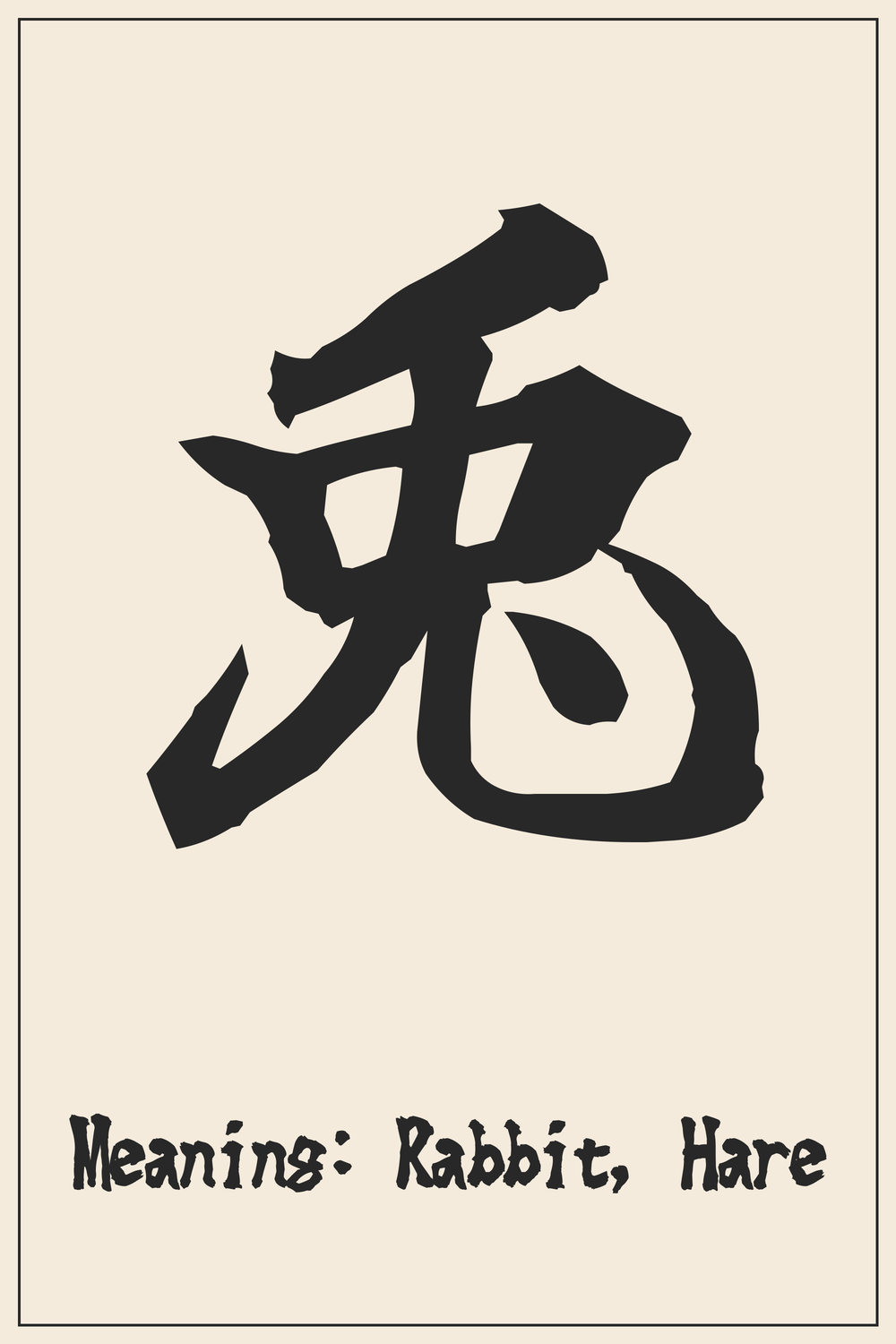
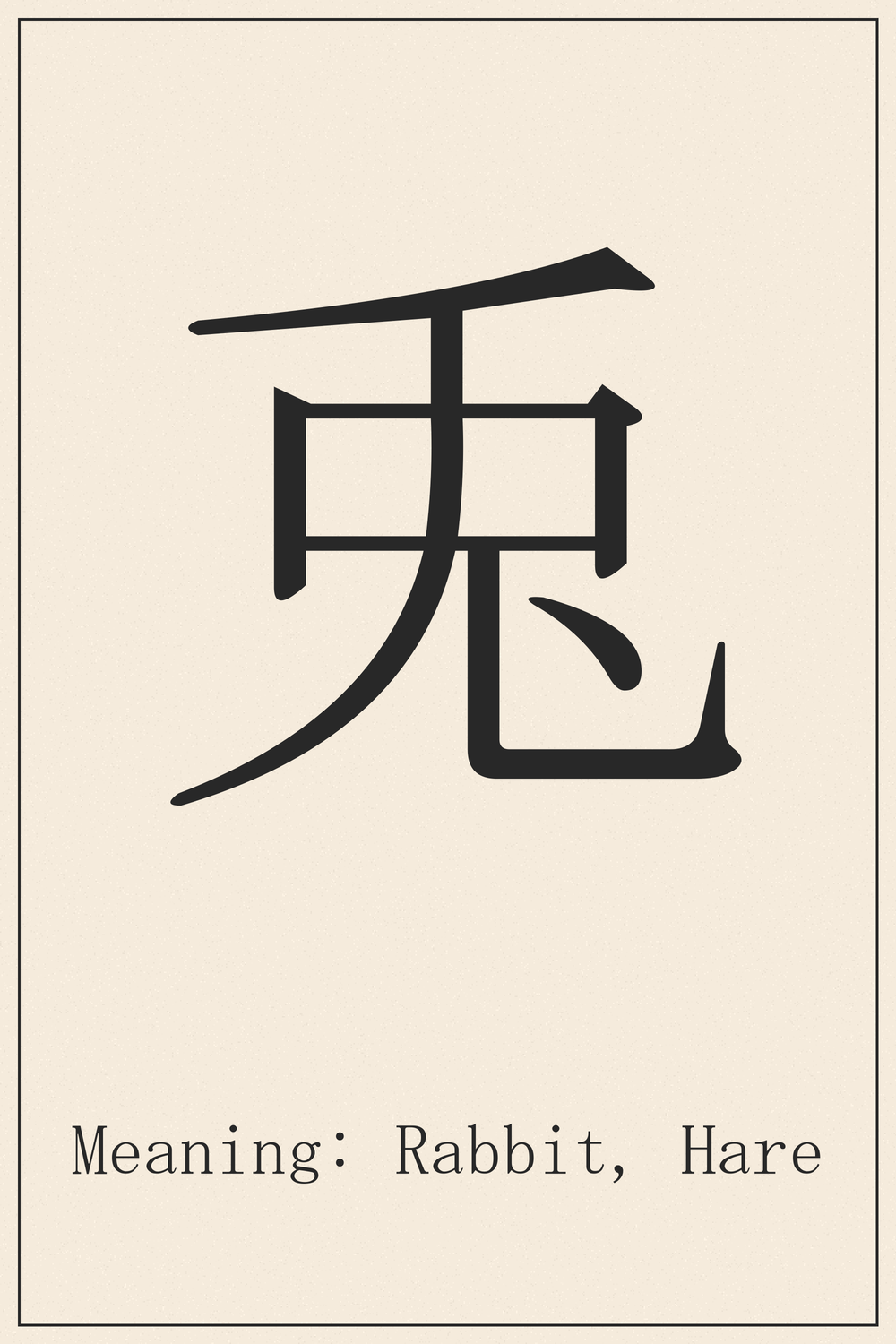
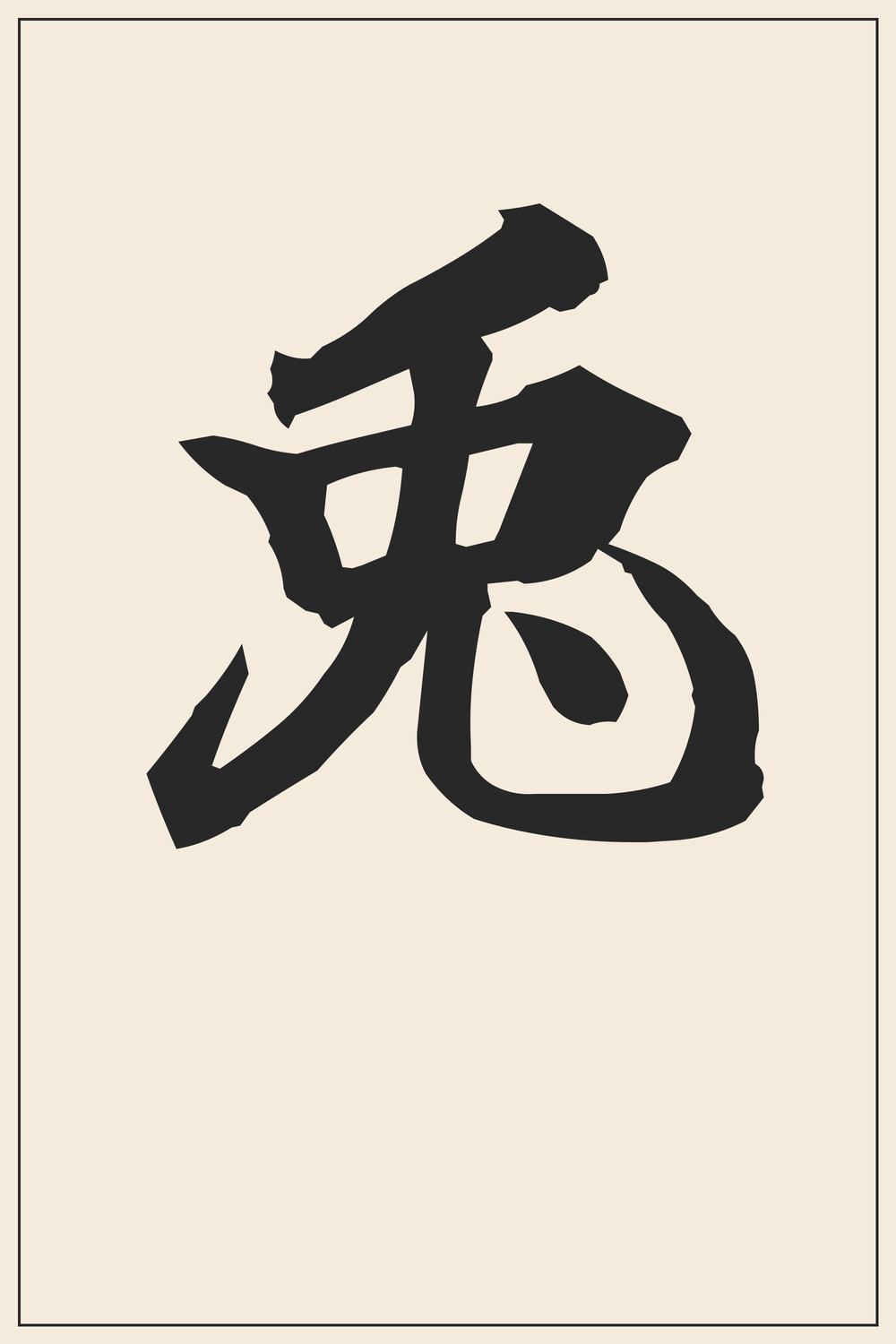
The Kanji 兎 embodies the essence of the rabbit, an animal revered for its agility and gentle nature. It resonates deeply with themes of innocence, quickness, and connections to ancient folklore.
The atmosphere of a Kanji character changes dramatically depending on the font style. A character that looks elegant in a brush style might look bold and modern in a different font.
Recommendation:
Since a tattoo is permanent, we strongly recommend comparing various font styles beyond what is shown here. Use our designs as a trusted reference for the correct structure, but feel free to explore different artistic variations to find the perfect match for your vision.
The Deep Meaning Behind 兎
The Kanji 兎 (usagi) is a fascinating character whose origins trace back to ancient pictographic representations. It visually captures the distinctive features of a rabbit, such as its long ears and short tail, reflecting an early attempt to transcribe the natural world into written form.
Culturally, the rabbit holds a significant place in Japanese folklore, most notably as the ‘Moon Rabbit’ (Tsuki no Usagi). This legend depicts a rabbit pounding mochi (rice cakes) on the moon, symbolizing diligence, gentleness, and a connection to the celestial. This imagery has ingrained the rabbit as a beloved and auspicious animal.
Kanji Breakdown
The Kanji 兎 is a singular character, and its etymology is rooted in its pictographic representation.
Meaning: This character directly represents a ‘rabbit’ or ‘hare’. Its ancient forms clearly show the animal’s silhouette, emphasizing its ears and bounding posture. Over time, it evolved into the stylized form we see today, retaining its visual essence as a symbol of the animal itself.
Conclusion
The Kanji 兎 is more than just a character for ‘rabbit’; it encapsulates the creature’s intrinsic qualities of quickness, innocence, and grace. It also carries the rich cultural resonance of the Moon Rabbit, a symbol of perseverance and gentle spirit in Japanese tradition.
Choosing 兎 for a tattoo signifies an appreciation for these qualities and a connection to the whimsical and ancient folklore it represents. It’s a timeless design that offers a touch of charm and cultural depth.
Comments