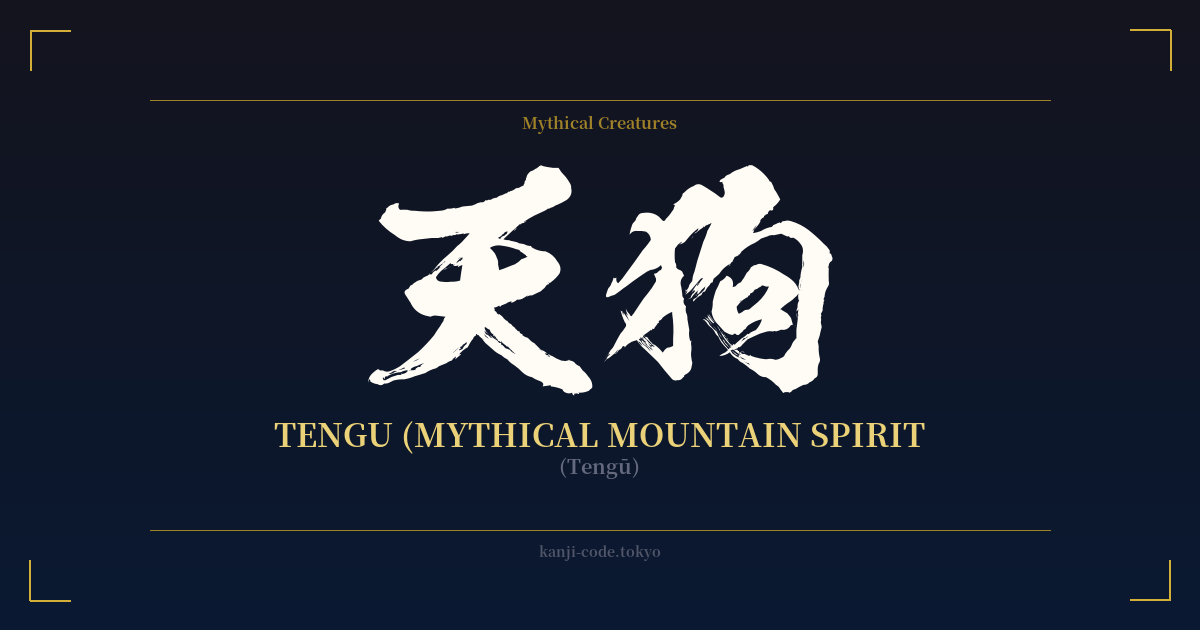
✍️ 天狗 (Tengū) — Cultural Context
The word 天狗 (Tengu) literally translates to “heavenly dog.” This name is a relic of its earliest origins, borrowed from Chinese folklore where a fierce, meteor-like dog spirit called Tiāngǒu was believed to eat the sun or moon during an eclipse. However, once this concept arrived in Japan, it underwent a dramatic and fascinating transformation, evolving far from its canine-named roots.
Early Japanese depictions from around the 7th century portrayed Tengu not as dogs, but as malevolent, bird-like creatures. Known as Karasu Tengu (crow tengu), they were said to abduct priests, start fires, and lead people astray. They were seen as enemies of Buddhism, tricksters who used their powers to disrupt spiritual practice and sow chaos. They were the embodiment of spiritual arrogance, fallen monks reborn as troublesome yōkai.
Over the centuries, the image of the Tengu softened and shifted. By the medieval period, the more familiar form of the Hanataka Tengu (long-nosed tengu) emerged. This version is more human-like, often depicted with a red face, an unnaturally long nose, and dressed in the attire of a Yamabushi, or mountain ascetic warrior monk. This new image reflected a change in their role within folklore.
Instead of being purely disruptive, Tengu became complex figures. They were revered as powerful kami (deities) and guardians of the mountains and forests. Their association with the Yamabushi linked them to Shugendō, a syncretic religion of mountain worship. In this context, they became masters of martial arts and esoteric knowledge. The most famous legend involves the great warrior Minamoto no Yoshitsune, who was said to have been taught the art of swordsmanship by Sōjōbō, the king of the Tengu.
Today, the Tengu remains a powerful and ubiquitous figure in Japanese culture. They are both revered and slightly feared, embodying the wild, untamable spirit of nature. Their masks are common features in festivals, and their stories are told in theater, anime, and manga. A Tengu represents a duality: the divine and the demonic, the master and the trickster, immense power and the cautionary tale of pride that often accompanies it.
🖌️ Font Styles for 天狗
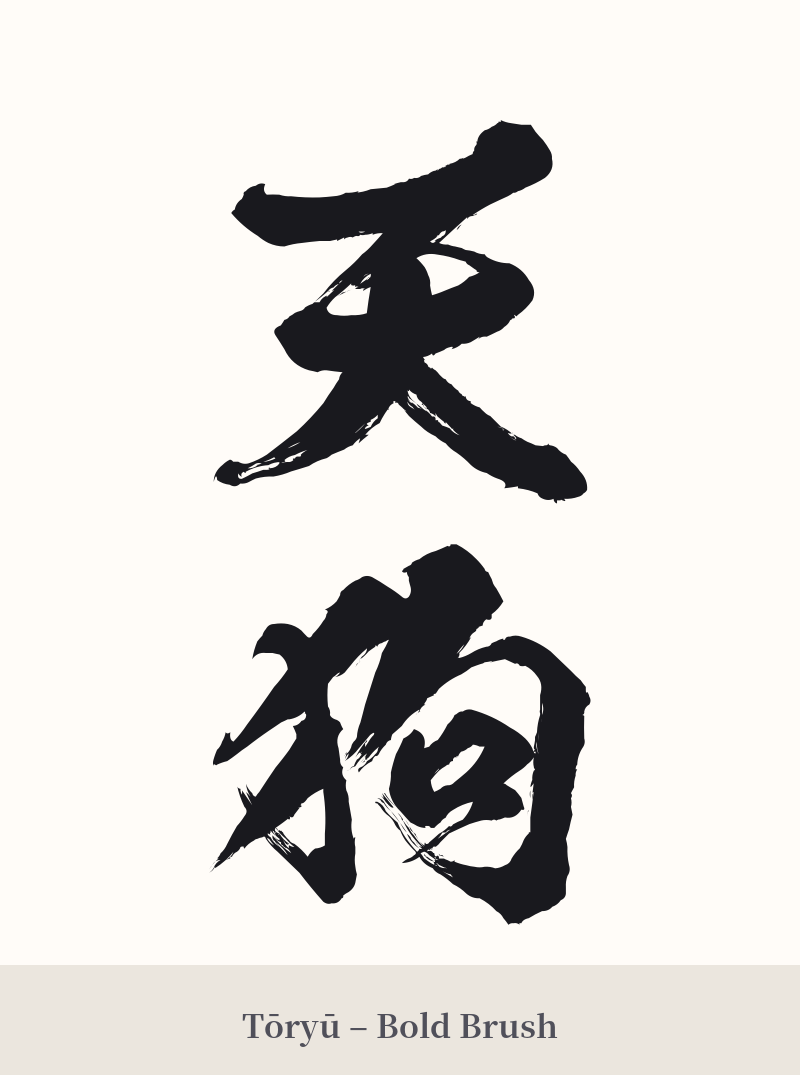
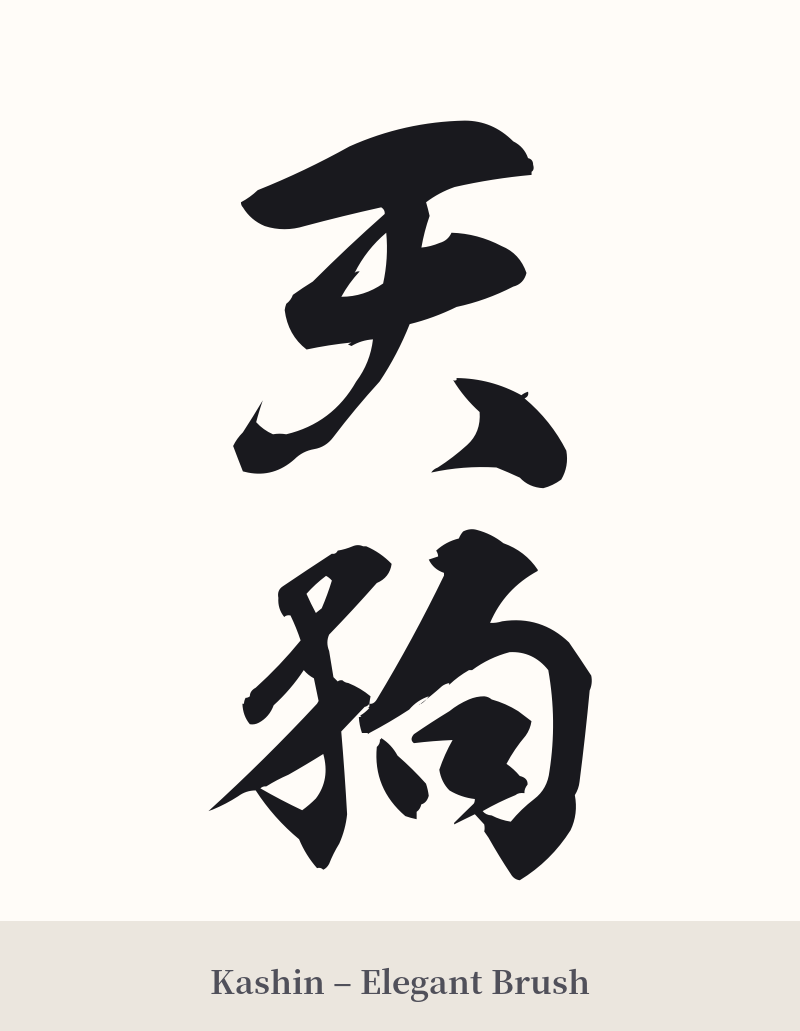
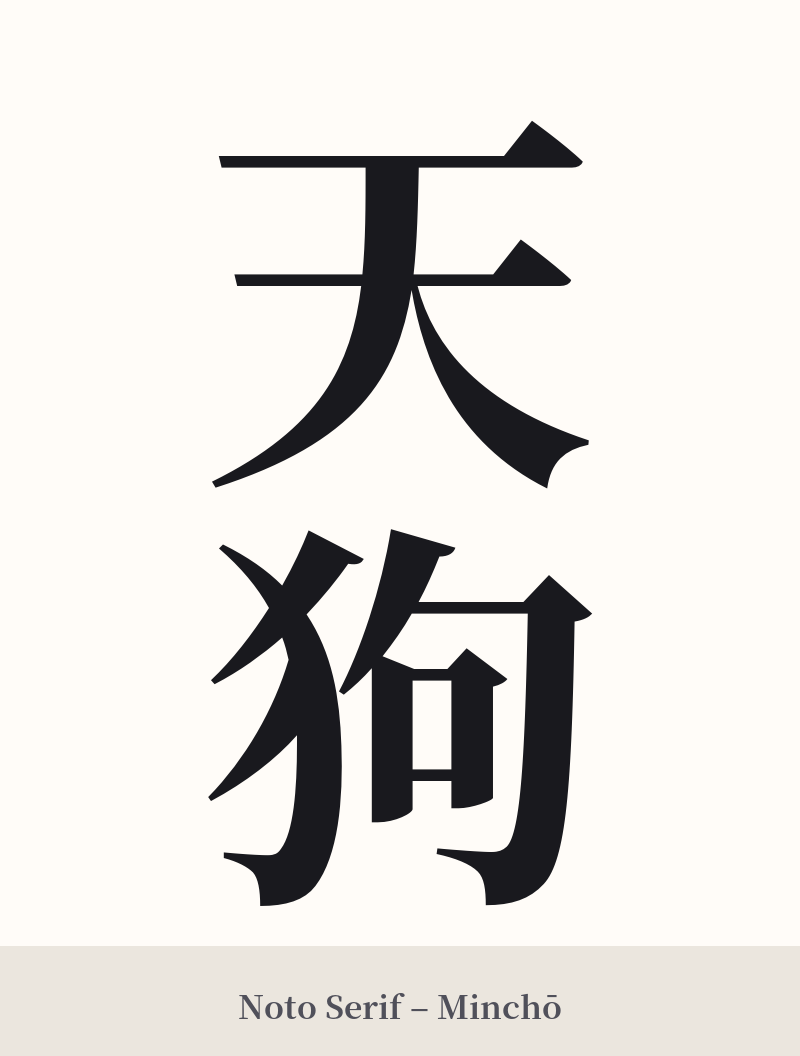
The same kanji can look dramatically different depending on the calligraphy style. Choose a font that matches the mood you want for your tattoo or design.
🎨 Tattoo Suitability
📐 Tattoo Design Guide
The kanji for Tengu, 天狗, offers a powerful and iconic design for a tattoo. Its connection to folklore and martial arts makes it a popular choice.
– Placement: This two-character word fits well vertically on the forearm, calf, or along the spine. For a larger piece, it can be the centerpiece of a back tattoo, integrated with imagery of a Tengu mask or a mountain landscape.
– Style: A thick, bold calligraphy style (Shodō) emphasizes the power and history of the Tengu. A more rugged, scratchy script can evoke their wild, mountainous nature. For a more illustrative piece, the kanji can be subtly incorporated into the robes or background of a full Tengu figure.
– Visuals: Consider pairing the kanji with classic Tengu-related motifs like red maple leaves (momiji), a Yamabushi's staff (shakujō), or the distinctive fan made of feathers. This creates a richer narrative within the design.
Comments