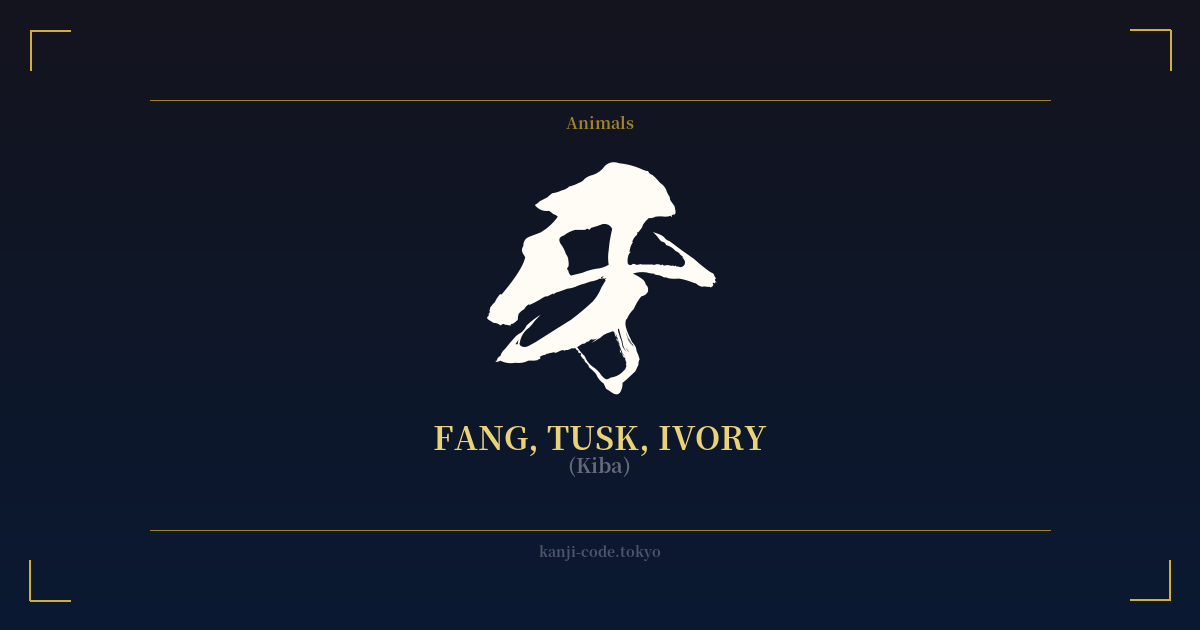
✍️ 牙 (Kiba) — Cultural Context
The kanji 牙 (kiba) is a powerful and primal character, a direct pictograph of interlocking fangs. Its very shape, with its sharp, intersecting lines, evokes a sense of clashing and biting. At its core, it represents the specialized, elongated teeth of predators and other formidable creatures—the fangs of a wolf, the tusks of a boar, or the ivory of an elephant.
This direct connection to the natural world's weaponry imbues 牙 with a deep symbolism of untamed power, ferocity, and survival. It is the tool of the hunter and the defender, a raw expression of nature's inherent danger and strength. Unlike the general character for tooth, 歯 (ha), 牙 is reserved for these more formidable and deadly implements, setting it apart as a symbol of something beyond the ordinary.
In Japanese culture, this imagery appears frequently in folklore and mythology. Demons, or 鬼 (oni), are almost universally depicted with prominent fangs, signifying their monstrous, otherworldly, and threatening nature. Similarly, the wolf (狼, ōkami) and the tiger (虎, tora), both revered and feared, are defined by their fangs, which represent their status as apex predators.
Beyond its literal meaning, 牙 has been absorbed into the language to represent concepts of strength and defense. A key example is the word 牙城 (gajō), which literally translates to "fang castle." This term is used to mean a stronghold, headquarters, or the inner citadel of a powerful entity. It beautifully illustrates how the physical concept of a beast's fangs—its primary defense—has been metaphorically extended to signify an impregnable bastion of power.
In modern Japanese pop culture, from anime and manga to video games, the kanji 牙 is a go-to symbol for characters and techniques that are aggressive, swift, and powerful. A character named with "Kiba" or an attack called "Garen" (Fang Blade) immediately signals a fierce and wild fighting style. This keeps the ancient, primal energy of the kanji alive and relevant for contemporary audiences, making it a timeless symbol of raw, untamed force.
🖌️ Font Styles for 牙
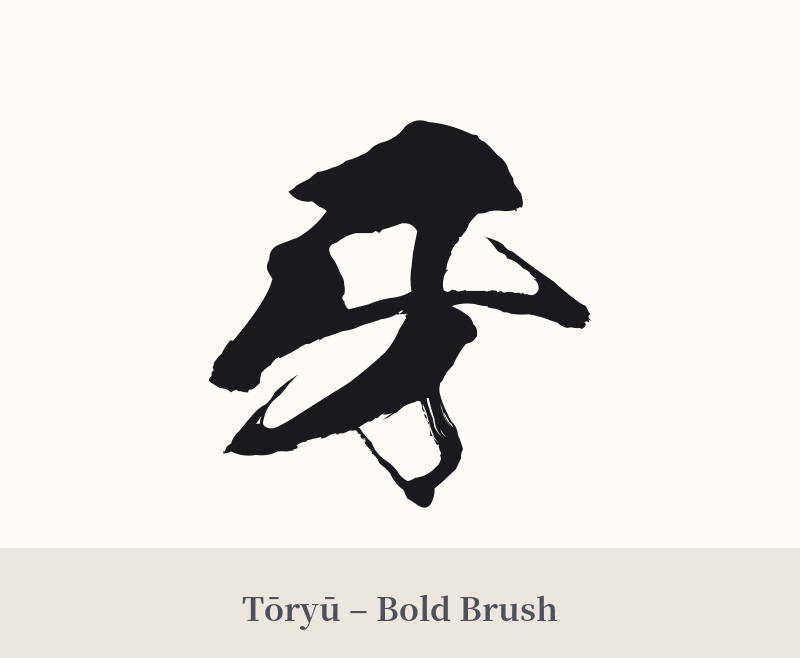
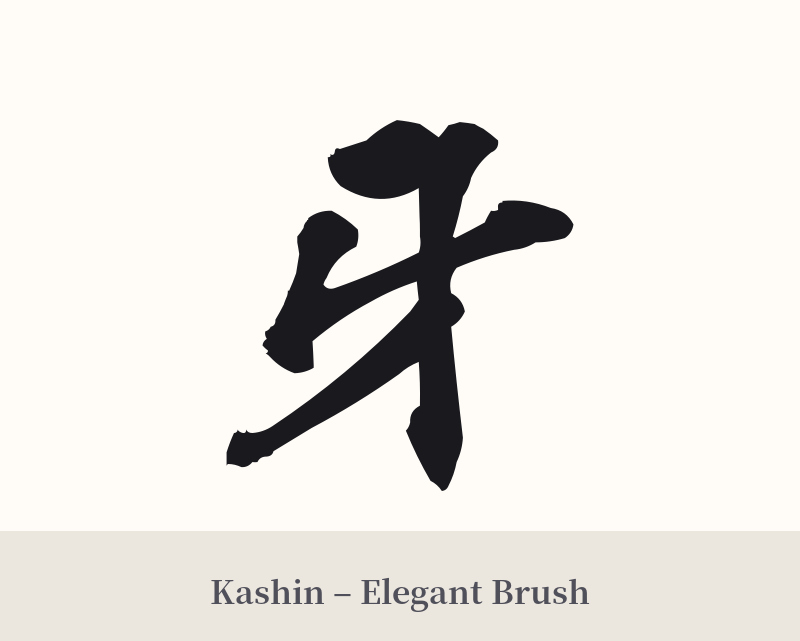
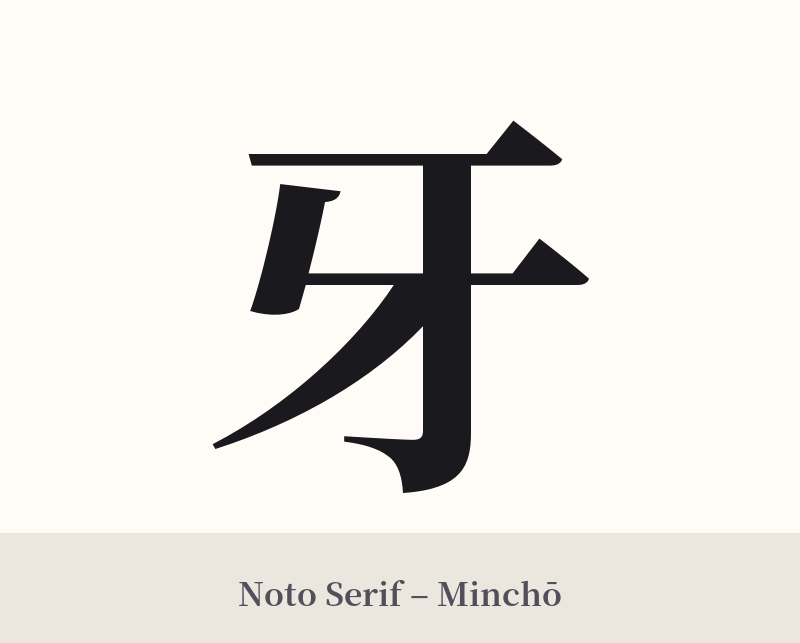
The same kanji can look dramatically different depending on the calligraphy style. Choose a font that matches the mood you want for your tattoo or design.
🎨 Tattoo Suitability
📐 Tattoo Design Guide
The sharp, aggressive nature of 牙 makes it a versatile kanji for a tattoo, but placement and style are key to capturing its energy.
– Placement: Consider areas that suggest power and movement. The forearm, calf, or shoulder blade are excellent choices, as the muscle definition can complement the kanji's meaning. For a more intense statement, placement along the ribs or side can create a striking visual, as if the fang is part of your own core strength.
– Font Style: Bold, angular script styles like Kaisho (block script) emphasize its sharp, biting quality. Alternatively, a more fluid and aggressive brushstroke style like Sōsho (cursive script) can give it an organic, wild feel, as if painted by a claw.
– Visual Tips: While 牙 is strong on its own, it pairs exceptionally well with other imagery. Consider integrating it into a design featuring a wolf, tiger, dragon, or an Oni mask to give it context. Using red ink for a single stroke or as a splash in the background can symbolize blood and heighten the sense of ferocity. For a minimalist approach, a single, perfectly executed 牙 in black ink can be incredibly powerful.
Comments