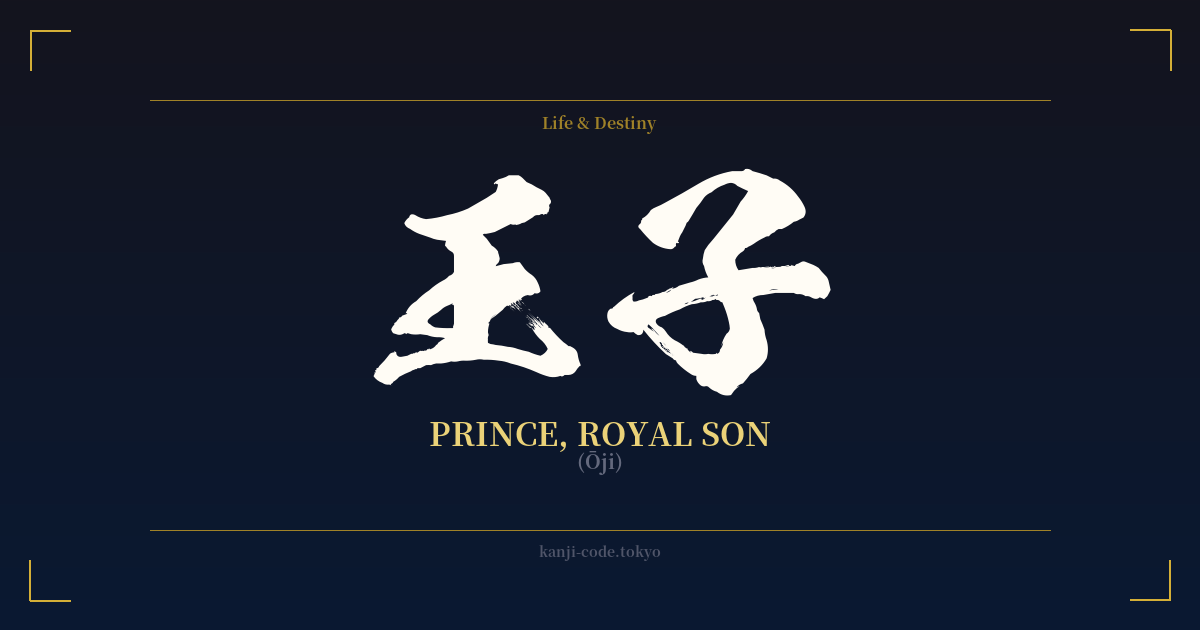
✍️ 王子 (Ōji) — Cultural Context
The Japanese word 王子 (Ōji) literally translates to 'prince' or 'royal son,' combining the characters for 'king' (王) and 'child' (子). Its meaning is direct and deeply rooted in concepts of monarchy, lineage, and nobility that have shaped cultures worldwide, including Japan's.
Historically, the term referred to the son of a king or emperor. In Japan, with its long imperial line, the concept of a prince carries significant weight. Figures like Prince Shōtoku (聖徳太子, Shōtoku Taishi) are revered not just as royalty but as pivotal cultural and political icons who helped shape the nation. The word evokes this history of imperial courts, succession, and the responsibilities tied to a royal bloodline.
Beyond literal history, 王子 has a powerful presence in Japanese folklore, literature, and modern pop culture. In fairy tales and stories, the 'Ōji-sama' (王子様) is often a heroic, idealized figure—the charming prince who saves the day and wins the heart of the heroine. This archetype has cemented the word's association with romance, chivalry, and noble ideals. It's the quintessential storybook hero, a symbol of hope and aspiration.
In contemporary Japan, the meaning has broadened. It's often used metaphorically to describe a handsome, charming, and well-mannered young man, akin to the English 'prince charming.' This is particularly prevalent in manga, anime, and J-pop, where a character or idol might be dubbed the 'prince' of their group or school. However, this usage can also carry a slightly negative nuance, sometimes implying that the person is pampered, sheltered, and out of touch with the struggles of everyday life.
This duality makes 王子 a fascinating word. It simultaneously represents ancient authority and modern romanticism, historical duty and pop culture fantasy. It captures the weight of lineage and the lightness of a fairy tale, embodying a powerful blend of nobility, youth, and idealism that resonates across generations.
🖌️ Font Styles for 王子
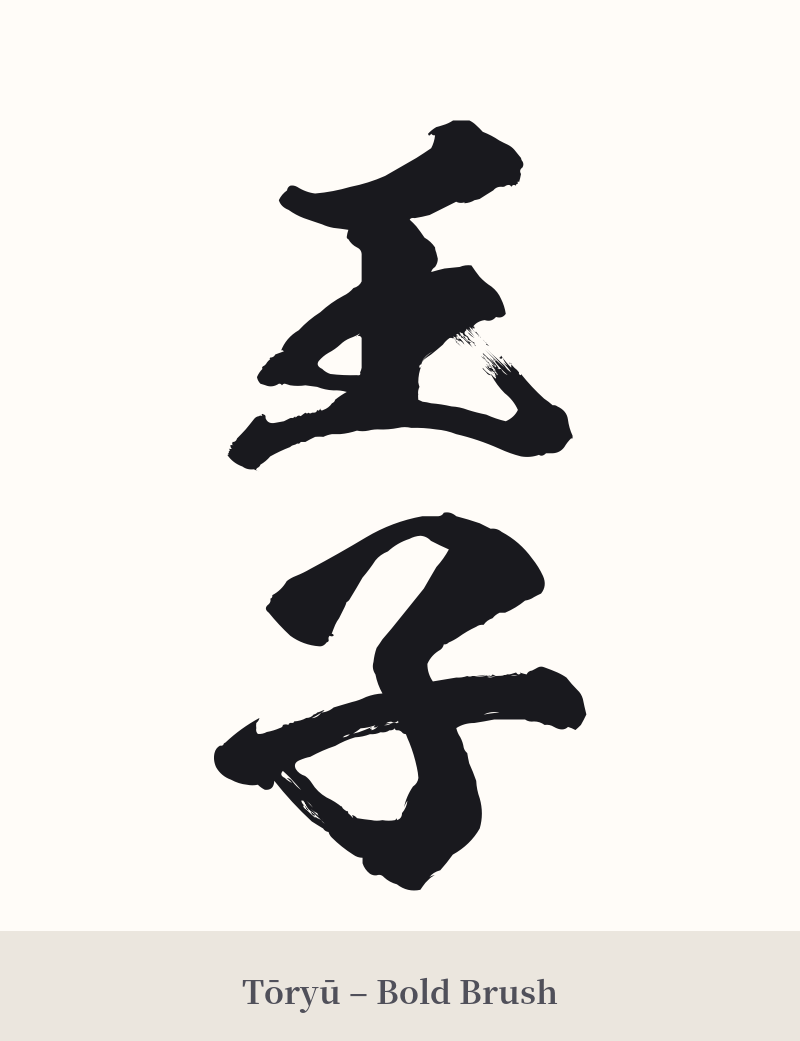
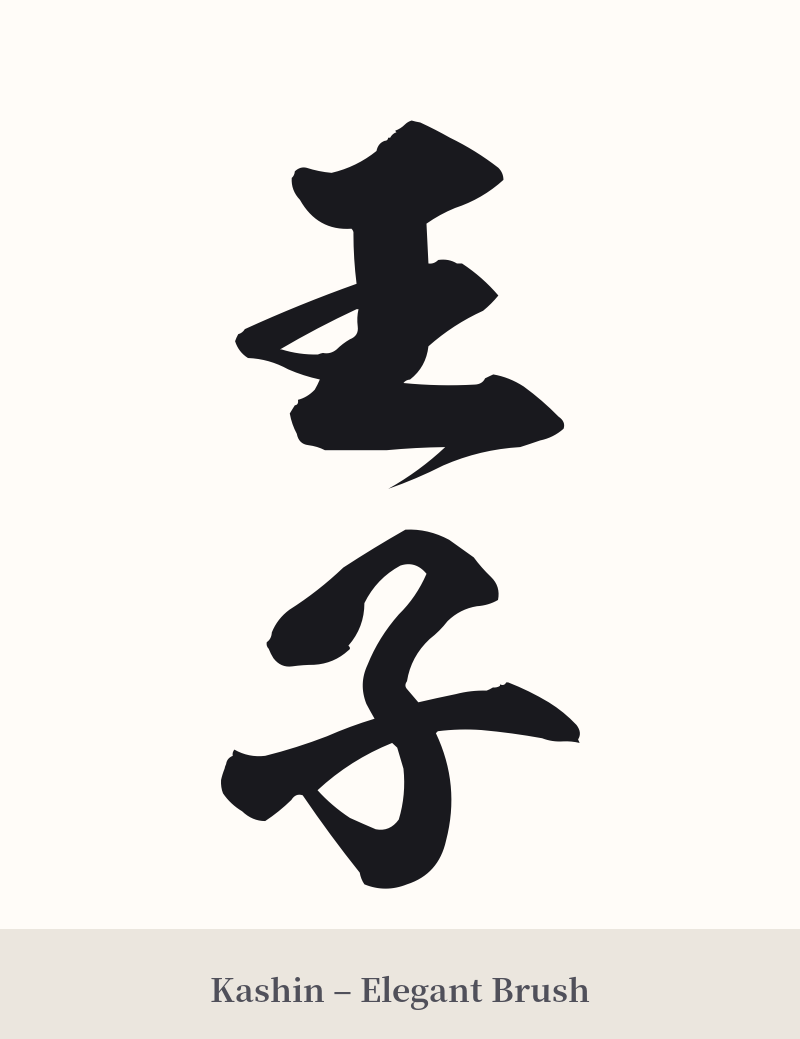
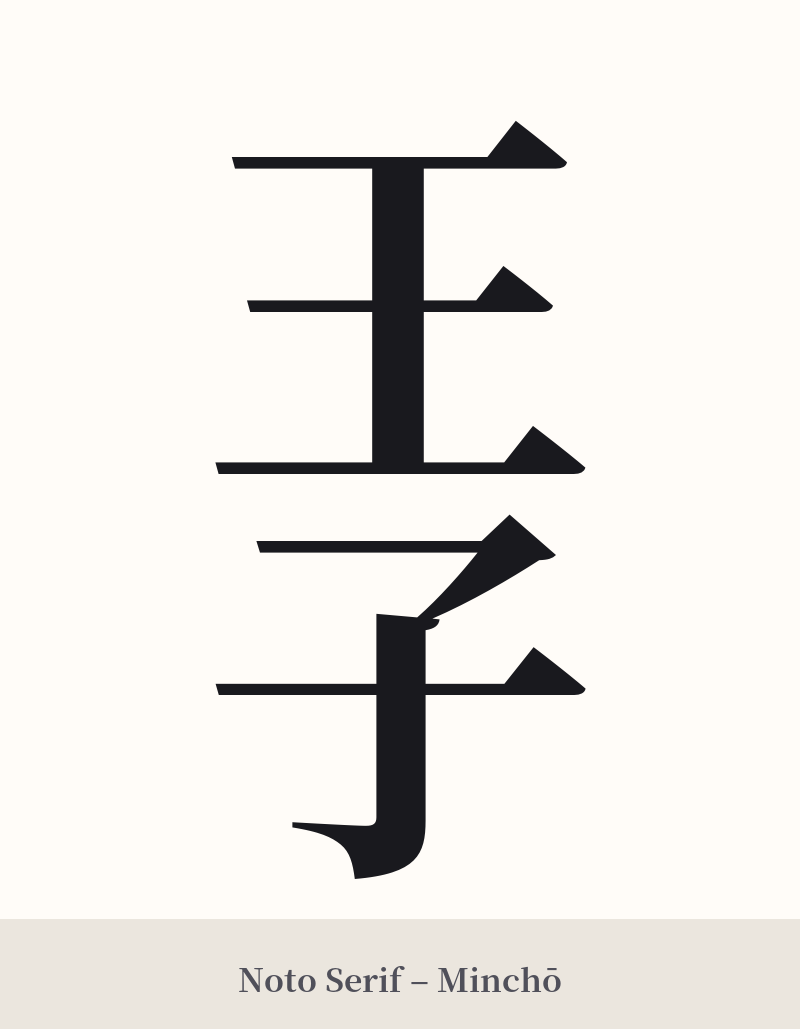
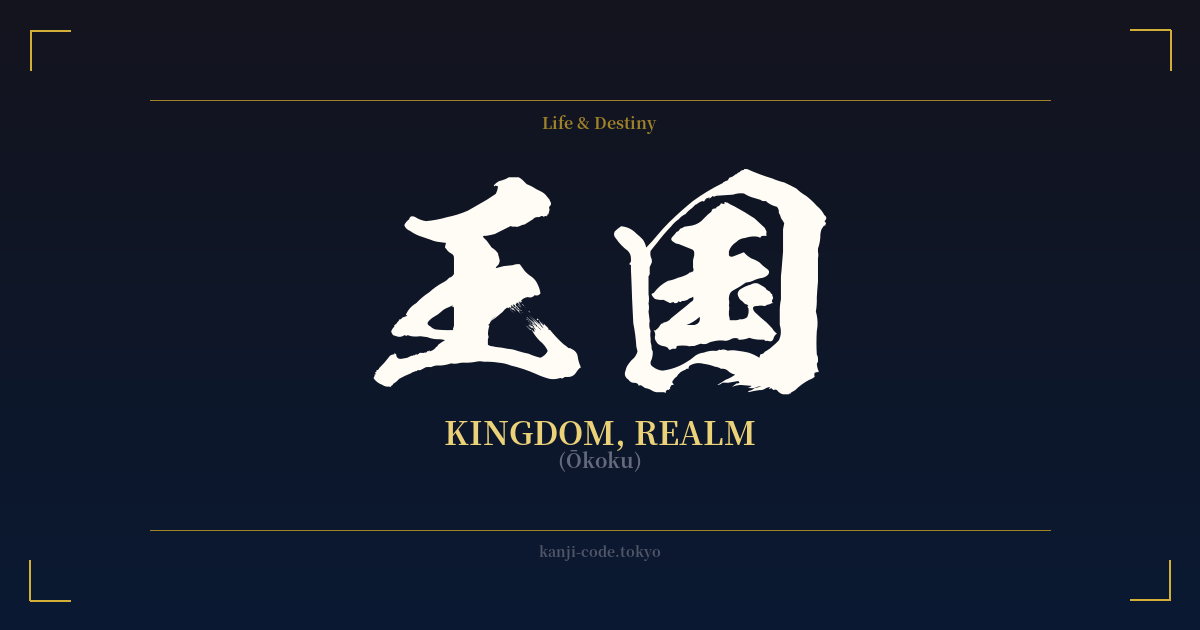
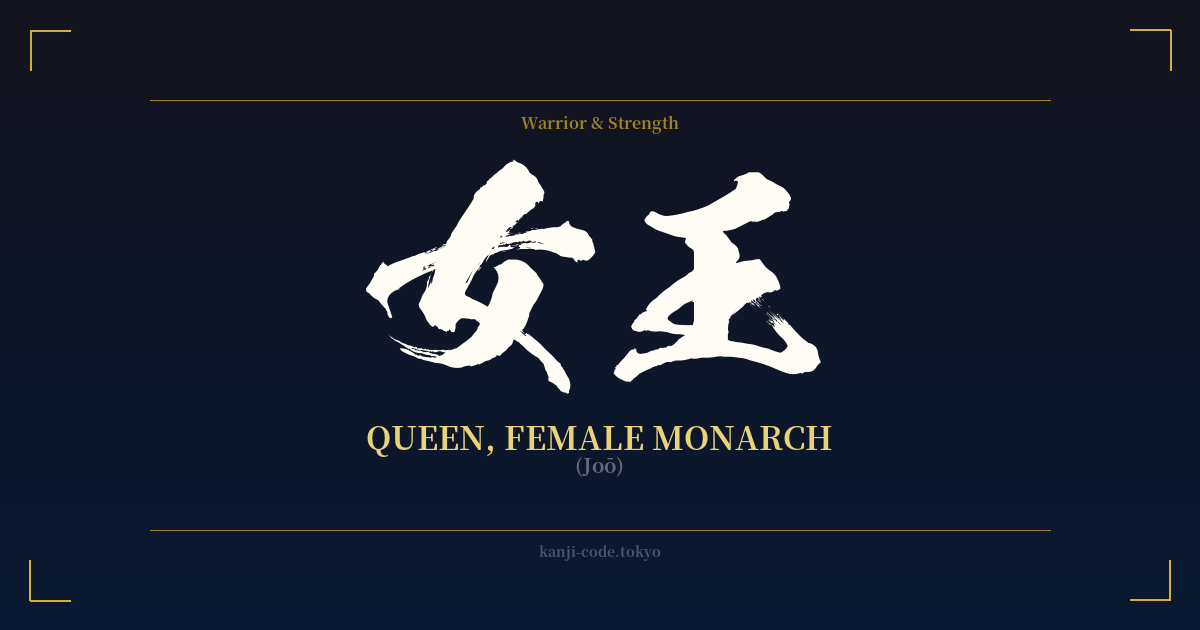
The same kanji can look dramatically different depending on the calligraphy style. Choose a font that matches the mood you want for your tattoo or design.
🎨 Tattoo Suitability
📐 Tattoo Design Guide
When designing a tattoo for 王子 (Ōji), the simplicity of the characters allows for a wide range of stylistic interpretations.
– Placement: For a vertical orientation, the forearm, bicep, calf, or along the spine are excellent choices. A horizontal layout works well across the chest, on the back of the neck, or on the inner wrist.
– Font Style: A traditional Mincho or Kaisho script will give the tattoo a classic, dignified look, emphasizing its royal roots. For a more artistic and flowing feel, a semi-cursive Gyosho script can add a touch of elegance and movement. A modern, bold Gothic font can subvert expectations and give it a contemporary, almost pop-culture edge.
– Visual Tips: While the kanji stands strong on its own, you could consider incorporating subtle complementary elements. A single cherry blossom petal could symbolize the transient nature of power and beauty. A small, stylized crown above or below the kanji can reinforce the 'prince' theme without being overly literal. Due to the simplicity of the strokes, clean lines are crucial to ensure legibility and impact.
Comments