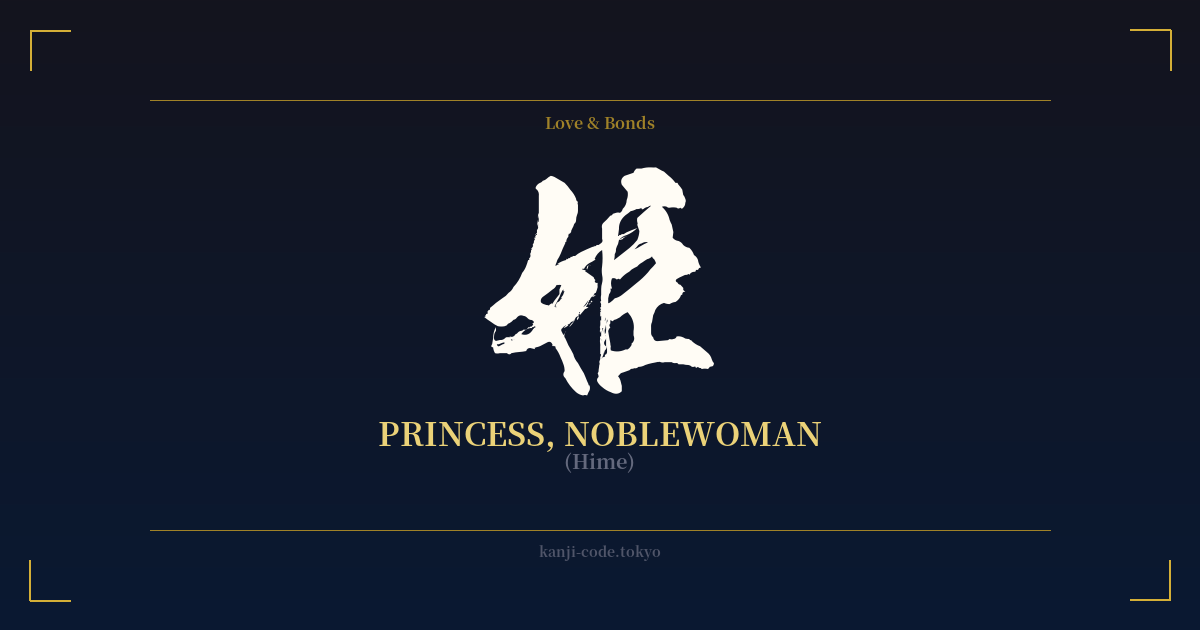
✍️ 姫 (Hime) — Cultural Context
The kanji 姫 (hime) is a single character that instantly evokes images of grace, nobility, and classical Japanese beauty. Its most common translation is 'princess,' but its meaning is richer and more nuanced, encompassing 'noblewoman' or the daughter of a high-ranking individual.
The character itself is a combination of the radical 女 (onna), meaning 'woman,' on the left, and a phonetic component on the right. This structure firmly roots its meaning in the feminine sphere, specifically one of elevated status.
Historically, 'hime' was a title of great respect, used for the daughters of emperors, aristocrats, and powerful daimyo (feudal lords). These were women who, while often living sheltered lives, played crucial roles in politics and society through strategic marriages and cultural influence. The Heian period (794-1185) is particularly famous for its courtly culture, where noblewomen like Murasaki Shikibu, author of 'The Tale of Genji,' shaped Japanese literature and aesthetics. The 'hime' of this era were expected to be accomplished in poetry, music, and calligraphy.
This image of the refined, cultured princess is deeply embedded in Japanese folklore. The most famous example is Kaguya-hime from 'The Tale of the Bamboo Cutter,' a celestial princess of unearthly beauty who ultimately must return to the moon. She represents the ephemeral, unattainable ideal often associated with the 'hime' archetype.
Over time, as the rigid class structures of feudal Japan dissolved, the term 'hime' became more generalized. It could be used more broadly as a respectful and affectionate term for a young lady or daughter, similar to calling a little girl 'princess' in English. This is where the modern nuances begin to appear.
In contemporary Japan, 'hime' carries a complex dual meaning. On one hand, it retains its classical, romantic image, frequently used in pop culture for characters in anime, manga, and video games (e.g., Princess Zelda is 'Zelda-hime'). The 'hime cut,' a hairstyle with long, straight bangs and sidelocks, is a direct nod to this classical aesthetic.
On the other hand, it can have a slightly negative or ironic connotation. Calling an adult woman 'hime' might imply she is spoiled, demanding, or out of touch with reality—a 'daddy's girl.' The term 'hime-sama' can be used sarcastically for a high-maintenance girlfriend or a demanding female customer. This modern usage is a critical piece of context for anyone considering it for a permanent design.
🖌️ Font Styles for 姫
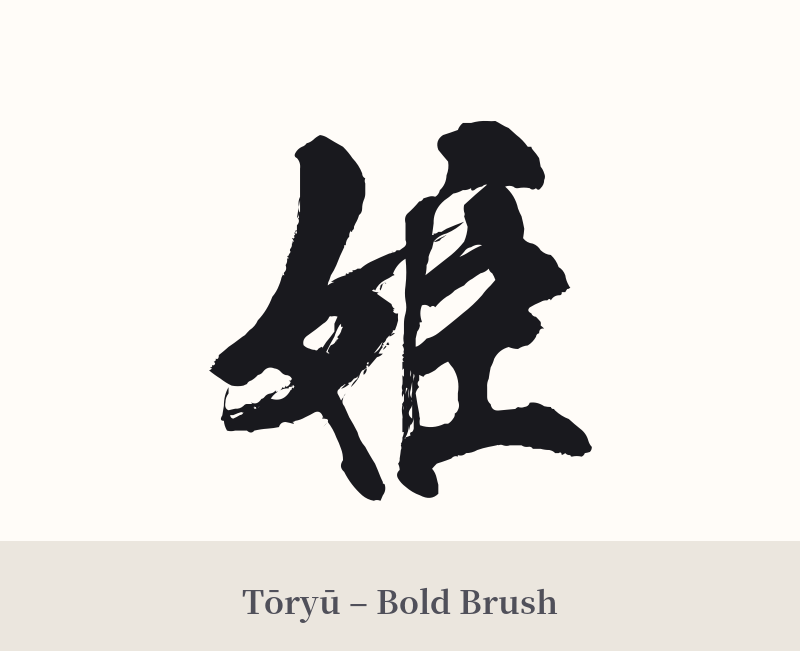
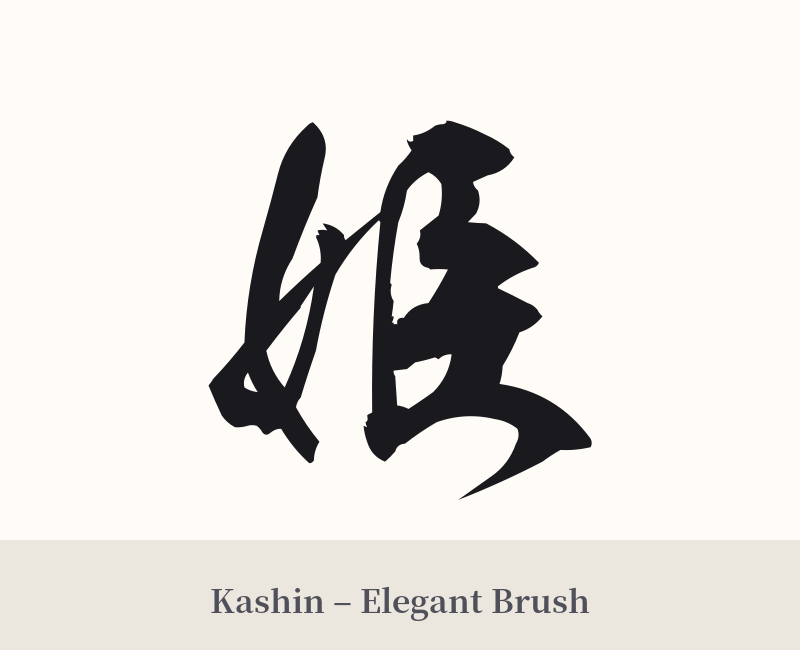
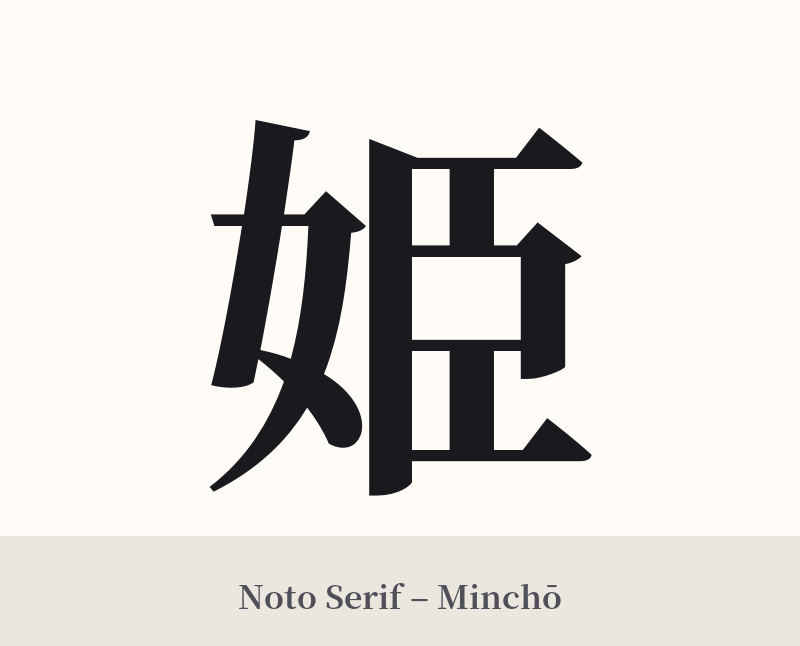
The same kanji can look dramatically different depending on the calligraphy style. Choose a font that matches the mood you want for your tattoo or design.
🎨 Tattoo Suitability
📐 Tattoo Design Guide
The kanji 姫 (Hime) lends itself to elegant and graceful tattoo designs that emphasize its noble and feminine qualities.
– Placement: For a delicate and personal touch, consider smaller placements like the inner wrist, behind the ear, on the collarbone, or the ankle. For a more prominent statement piece, the nape of the neck or the inner forearm allows for a clean, vertical presentation.
– Font Style: Flowing, cursive-like script styles such as Gyosho (semi-cursive) or even Sosho (cursive) can beautifully capture the character's inherent grace. For a more classic and formal look, a clean Mincho (serif) font works exceptionally well. Avoid overly blocky or aggressive fonts, as they would clash with the kanji's meaning.
– Visual Tips: To enhance the 'princess' theme, consider pairing the kanji with classic Japanese motifs. Cherry blossoms (sakura) can symbolize beauty and transience, a crescent moon can add a touch of mystique (referencing Kaguya-hime), or a small folding fan (sensu) can evoke courtly elegance. A watercolor background in soft pinks or purples can also complement the design beautifully.
Comments