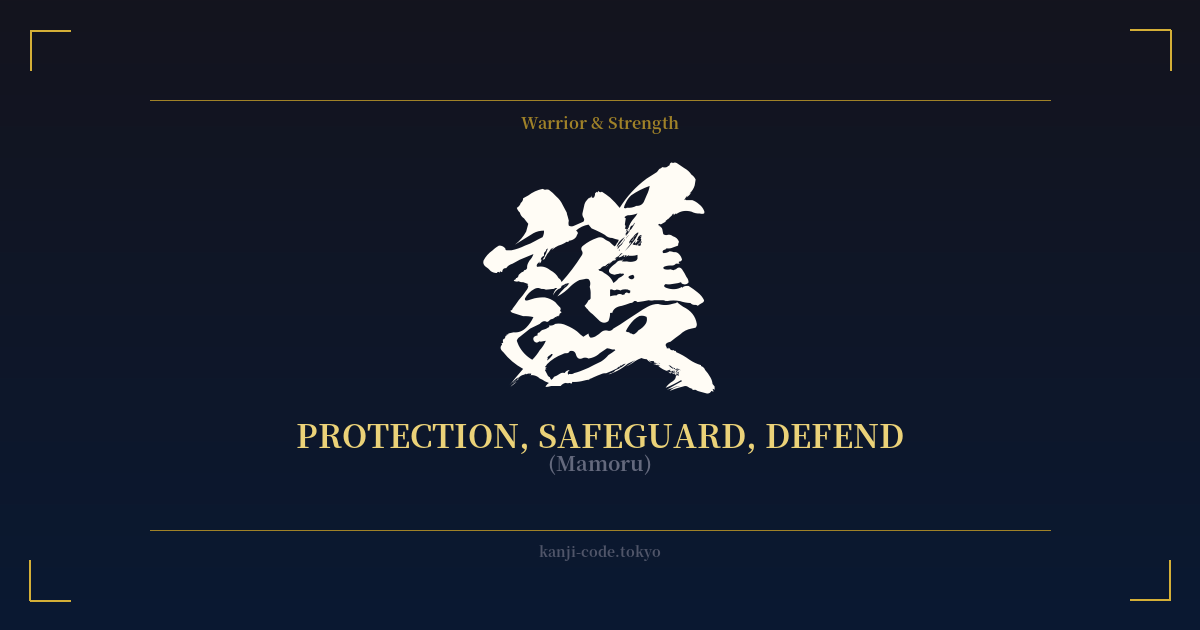
✍️ 護 (Mamoru) — Contexto cultural
El kanji japonés 護, que se lee como 'mamoru', es un carácter poderoso y evocador que encarna el concepto de protección, defensa y salvaguarda. Su significado va más allá de un simple escudo; alude a una forma de protección activa, vigilante y dedicada.
Para comprender su significado, podemos analizar sus componentes. El carácter es una combinación de radicales: 言 (gon, 'palabra' o 'discurso') a la izquierda, y a la derecha, 隹 (sui, un antiguo radical para 'pájaro') sobre 寸 (sun, 'mano' o 'medida'). Se cree que la imaginería original representa el uso de palabras o encantamientos (言) y las manos (寸) para proteger algo pequeño y vulnerable, como un pájaro (隹). Esta etimología no evoca la fuerza bruta, sino una protección cuidadosa, deliberada e incluso verbal.
Esta idea de protección activa está profundamente arraigada en la cultura japonesa. Uno de los ejemplos más comunes de este concepto se encuentra en los omamori (お守り), amuletos protectores que se venden en santuarios sintoístas y templos budistas de todo Japón. Se cree que estas pequeñas bolsitas brocadas contienen el poder de una deidad para brindar protección específica: para viajes seguros, salud, éxito en los exámenes o bienestar general. La palabra "omamori" es el sustantivo derivado de "mamoru", lo que la convierte en una manifestación directa y tangible del significado de este kanji.
En el contexto de las artes marciales, el kanji es fundamental para el término 'goshin-jutsu' (護身術), el arte de la autodefensa. Aquí, 護 significa proteger el propio cuerpo del daño. Enfatiza una postura defensiva, reaccionando ante una amenaza en lugar de iniciar una agresión. Esto concuerda con el valor cultural general que se le da a la armonía y a evitar el conflicto siempre que sea posible, sin dejar de estar preparado para defenderse cuando sea necesario.
A diferencia de su pariente cercano 守 (también 'mamoru'), que puede significar proteger, pero también cumplir una promesa o acatar una norma, 護 conlleva un sentido más fuerte de defensa contra una amenaza externa. Es el kanji que se asocia con un guardaespaldas (un 'bengo-shi' o abogado también lo usa para defender a un cliente en los tribunales), un espíritu guardián o un padre que protege a su hijo. Evoca sentimientos de lealtad, deber y fortaleza inquebrantable ante la adversidad, lo que lo convierte en un profundo símbolo del juramento de un protector.
🖌️ Estilos de fuente para 護
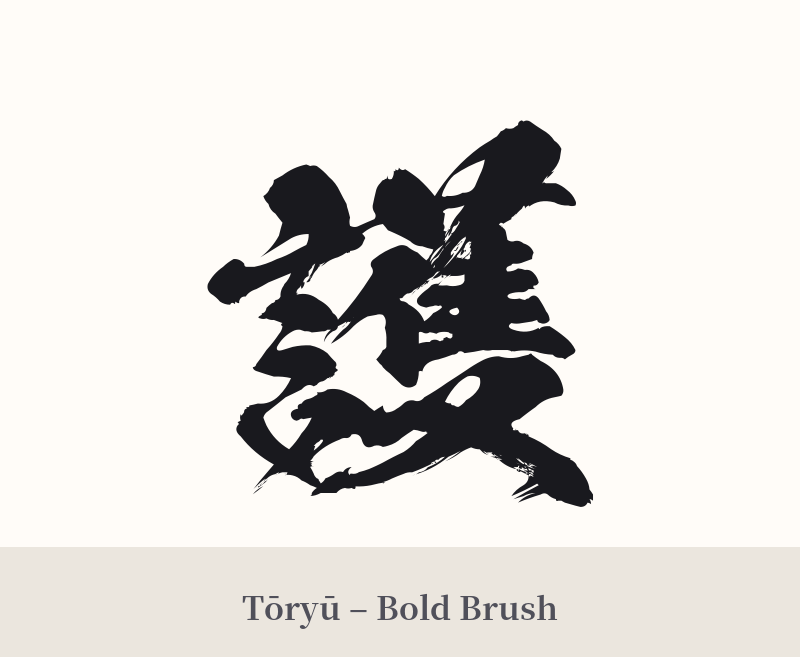
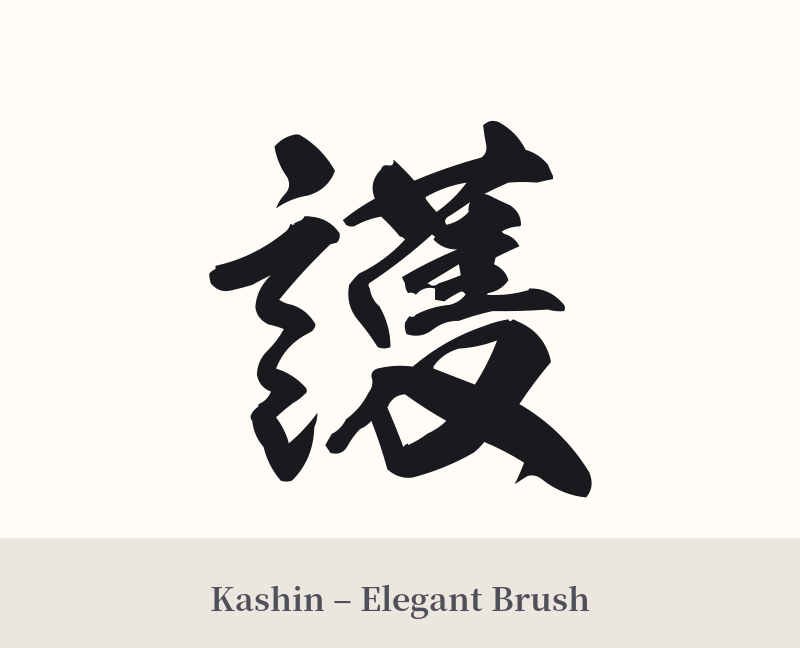
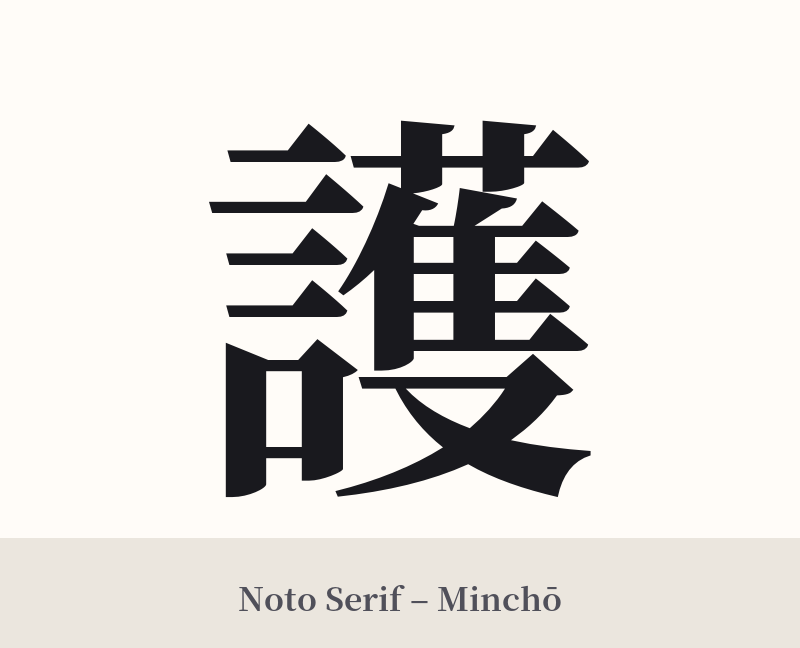
Los mismos caracteres kanji pueden verse muy diferentes según el estilo de caligrafía. Elige una fuente que se ajuste al ambiente que deseas para tu tatuaje o diseño.
🎨 Idoneidad para tatuajes
📐 Guía de diseño de tatuajes
El kanji 護 es visualmente complejo y equilibrado, lo que ofrece un gran potencial para un diseño de tatuaje impactante. Su complejidad exige una cuidadosa consideración del estilo y la ubicación.
– Ubicación: Debido a la gran cantidad de trazos, este personaje funciona mejor en áreas amplias donde se pueda apreciar el detalle. El antebrazo, la pantorrilla, la parte superior de la espalda o el pecho son excelentes opciones. Estas zonas ofrecen un lienzo plano y amplio para que el artista ejecute los 20 trazos con precisión.
– Estilo de fuente: Se recomienda encarecidamente una tipografía clara y en negrita. El estilo 'Kaisho' (letra de imprenta) resalta la estructura y la fuerza del carácter, haciéndolo legible y contundente. Para un efecto más dinámico, un artista experto podría utilizar la tipografía 'Gyosho' (letra semicursiva), pero esto requiere pericia para evitar que el resultado sea ilegible.
Consejos visuales: Considera el espacio negativo dentro del carácter. Un buen artista lo utilizará para crear equilibrio y evitar que el diseño se vea demasiado denso. También puedes incorporar este kanji en una pieza más grande. Imagínalo colocado en el pecho de un dragón, sostenido por una figura guardiana como un samurái o Fudōmyōō, o rodeado de elementos que representen lo que deseas proteger, como flores de loto para la pureza u olas para la resiliencia.
Comentarios