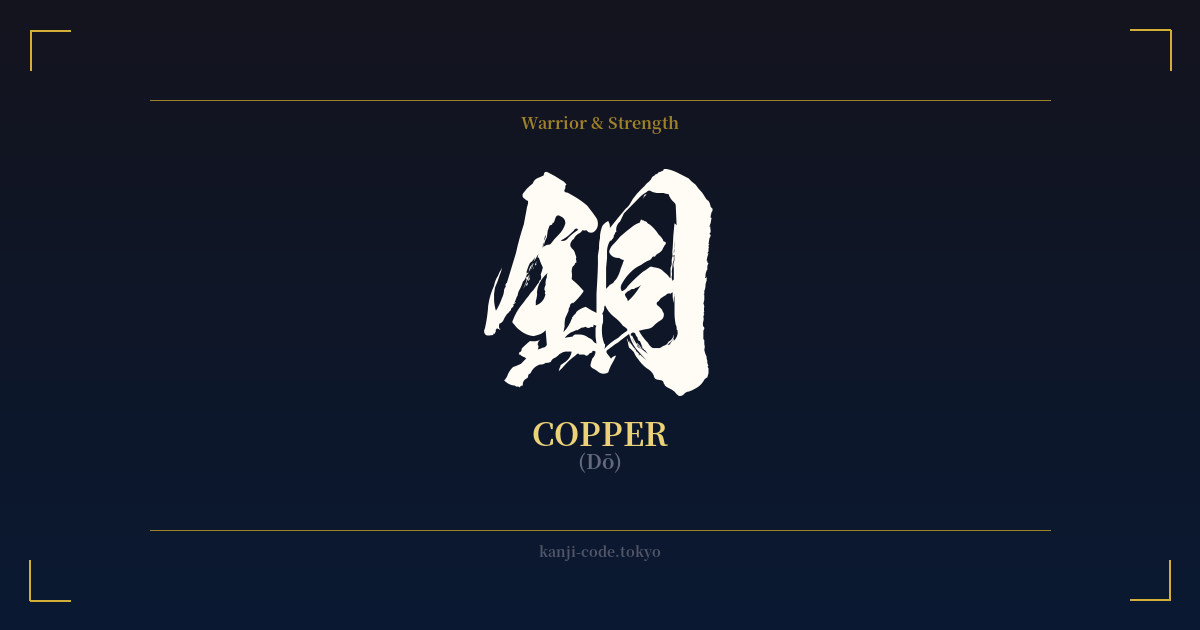
✍️ 銅 (Dō) — Cultural Context
The kanji 銅 (Dō) represents 'copper,' but its story is about much more than just a metal. It is a character deeply embedded in the technological and cultural evolution of Japan. Its form combines the radical 金 (kane), meaning 'metal,' with 同 (dō), which serves as the phonetic component. This structure firmly places it within the family of elemental and precious materials.
The story of 銅 in Japan begins in the Yayoi period (c. 300 BCE – 300 CE), when bronze-making techniques arrived from the Asian mainland. This marked a revolutionary shift, moving society from stone to metal. This era is defined by its bronze artifacts, particularly the mysterious and beautiful dōtaku (銅鐸), large, intricately decorated bronze bells whose exact purpose remains a subject of debate among historians. They were not musical instruments in the conventional sense but likely held ritual or ceremonial significance, symbolizing the power and wealth of the ruling clans.
Perhaps the most staggering display of copper's importance is the Great Buddha (大仏, Daibutsu) of Tōdai-ji temple in Nara. Cast in the 8th century, this colossal bronze statue required such a vast quantity of copper that it is said to have nearly exhausted the nation's supply and bankrupted the imperial government. The project was a national undertaking, a testament to both religious devotion and the state's power to mobilize resources. The kanji 銅, therefore, carries the weight of this monumental artistic and spiritual achievement.
During the Edo period (1603-1868), Japan became a leading global exporter of copper. Mines like the Ashio Copper Mine produced vast quantities of the metal, which was a cornerstone of the nation's economy. This era cemented copper's association with industry, commerce, and national wealth. It became a symbol of Japan's ability to harness its natural resources.
In modern times, 銅 is as essential as ever, forming the basis of electrical wiring and technology due to its high conductivity. It's also the humble material of the 10-yen coin, a part of daily life for every person in Japan. While gold (金) represents ultimate value and silver (銀) elegance, copper (銅) stands for foundational strength, historical endurance, and the indispensable link between the natural world and human civilization.
🖌️ Font Styles for 銅
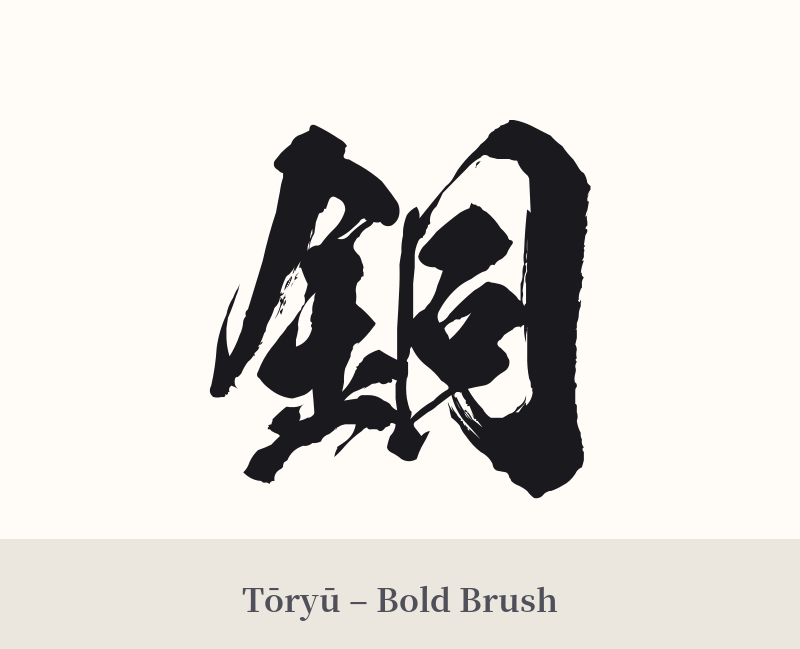
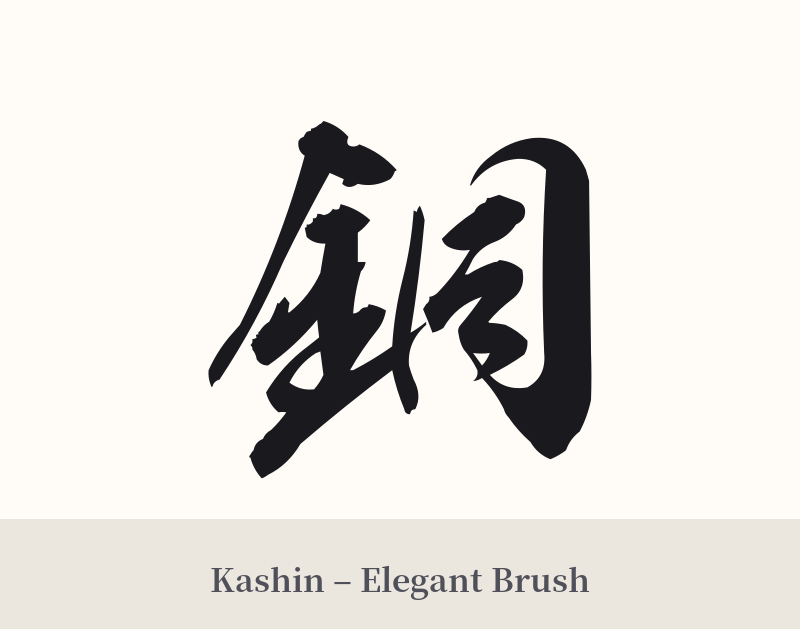
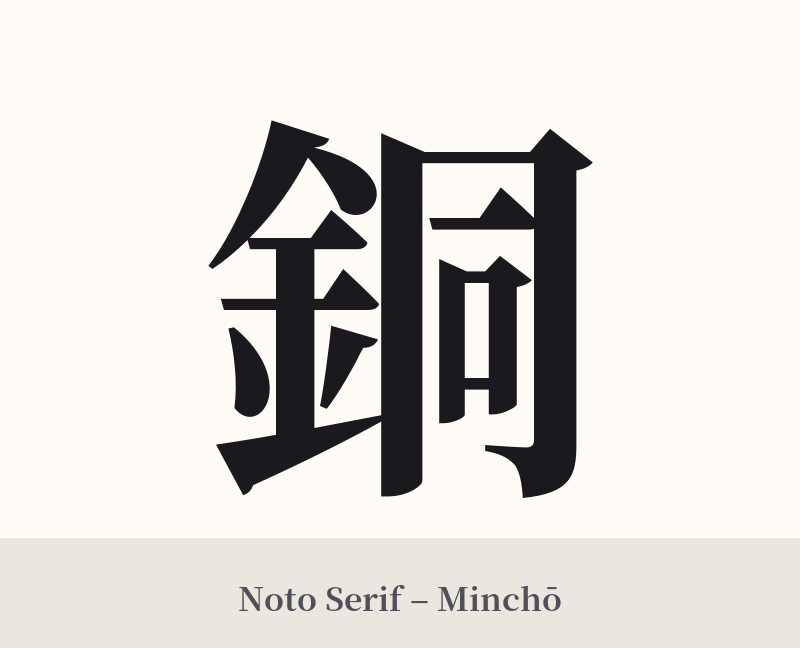
The same kanji can look dramatically different depending on the calligraphy style. Choose a font that matches the mood you want for your tattoo or design.
🎨 Tattoo Suitability
📐 Tattoo Design Guide
When designing a tattoo for 銅, its structural and historical nature offers several creative paths. The kanji has a moderate stroke count (14), making it detailed enough to be interesting but not so complex that it risks blurring at a small size.
– Placement: Consider areas that provide a flat, stable canvas, such as the forearm, calf, or upper back. This allows the character's balanced structure to be appreciated.
– Font Style: A strong, clear Kaisho (block script) style emphasizes its foundational and industrial qualities. For a more historical feel, a slightly weathered or rustic script can evoke the image of ancient bronze artifacts or the patina that forms on copper over time.
– Visual Elements: To enhance its meaning, consider pairing 銅 with complementary imagery. A background with a greenish-blue patina effect would be a powerful visual nod to aged copper or bronze. Incorporating it with a lotus flower could reference the Great Buddha of Tōdai-ji. For a more industrial or elemental theme, you could integrate it with circuit-like patterns to represent its role in conductivity and technology.
Comments