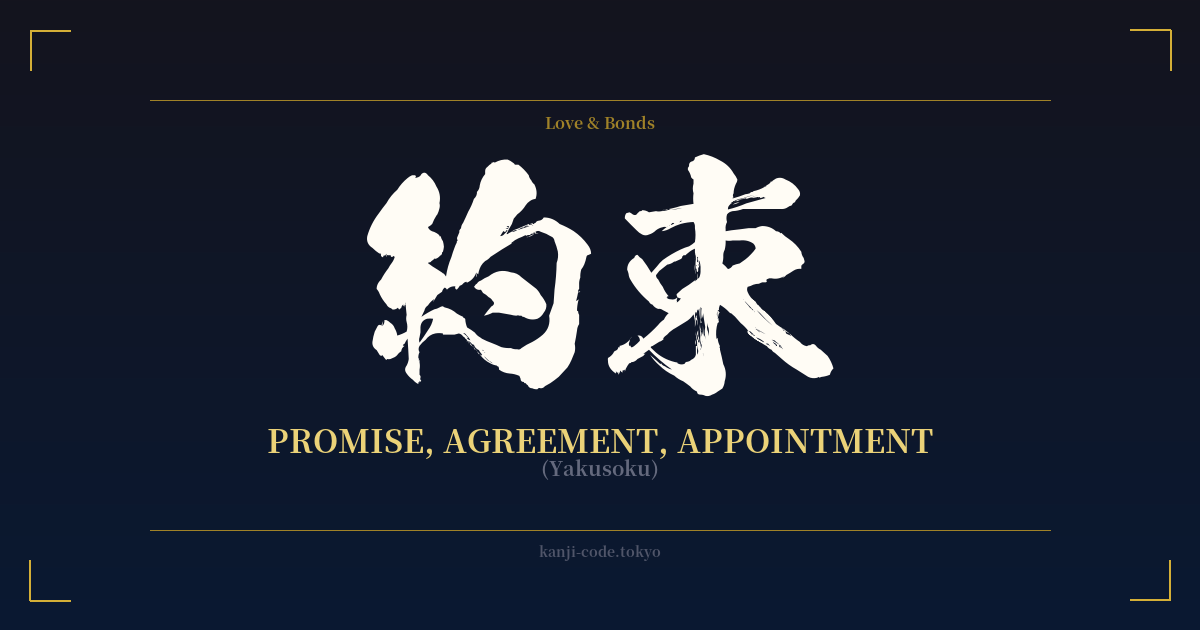
✍️ 約束 (Yakusoku) — Cultural Context
約束 (yakusoku) is one of the most fundamental and powerful words in the Japanese language. While it translates simply as 'promise,' 'agreement,' or 'appointment,' its cultural resonance goes far deeper, touching the very core of social trust, responsibility, and human connection.
In Japanese society, a 'yakusoku' is not something given lightly. It is a verbal bond, a testament to one's character and integrity. Breaking a promise is seen as a serious failing, not just a personal inconvenience. This concept is interwoven with the idea of 'giri' (義理), a complex web of social obligations and duties that one has to others. To make a 'yakusoku' is to place your honor and reliability on the line, creating an invisible but incredibly strong contract between individuals.
The word itself is a beautiful combination of ideas. 約 (yaku) means 'promise' or 'to bind,' while 束 (soku) means 'bundle' or 'to tie.' Together, they create the vivid image of 'tying a bundle'—of gathering intentions, words, and honor into a single, secured commitment. It’s a promise that is neatly bundled and tied, not to be undone easily.
Perhaps the most famous cultural expression of 約束 is 'yubikiri genman' (指切り拳万), the Japanese pinky promise. Children interlock their pinkies while chanting, 'Yubikiri genman, uso tsuitara hari senbon nomasu, yubi kitta!' This translates to, 'Pinky promise, if you lie, you have to swallow a thousand needles, and I'll cut off your finger!' While it sounds gruesome, its origins in the Edo period (where prostitutes would sometimes sever a pinky tip to prove their devotion to a client) highlight the extreme seriousness once associated with making a vow. Today, it's a charming childhood ritual, but it still carries the echo of an unbreakable bond.
From promising a friend you'll meet for coffee to vowing to return to a loved one, 約束 covers the entire spectrum of human commitment. It is the engine of countless stories in Japanese anime, literature, and film, where characters are driven by a promise made long ago. It represents hope, faith in others, and the enduring power of one's word.
🖌️ Font Styles for 約束
The same kanji can look dramatically different depending on the calligraphy style. Choose a font that matches the mood you want for your tattoo or design.
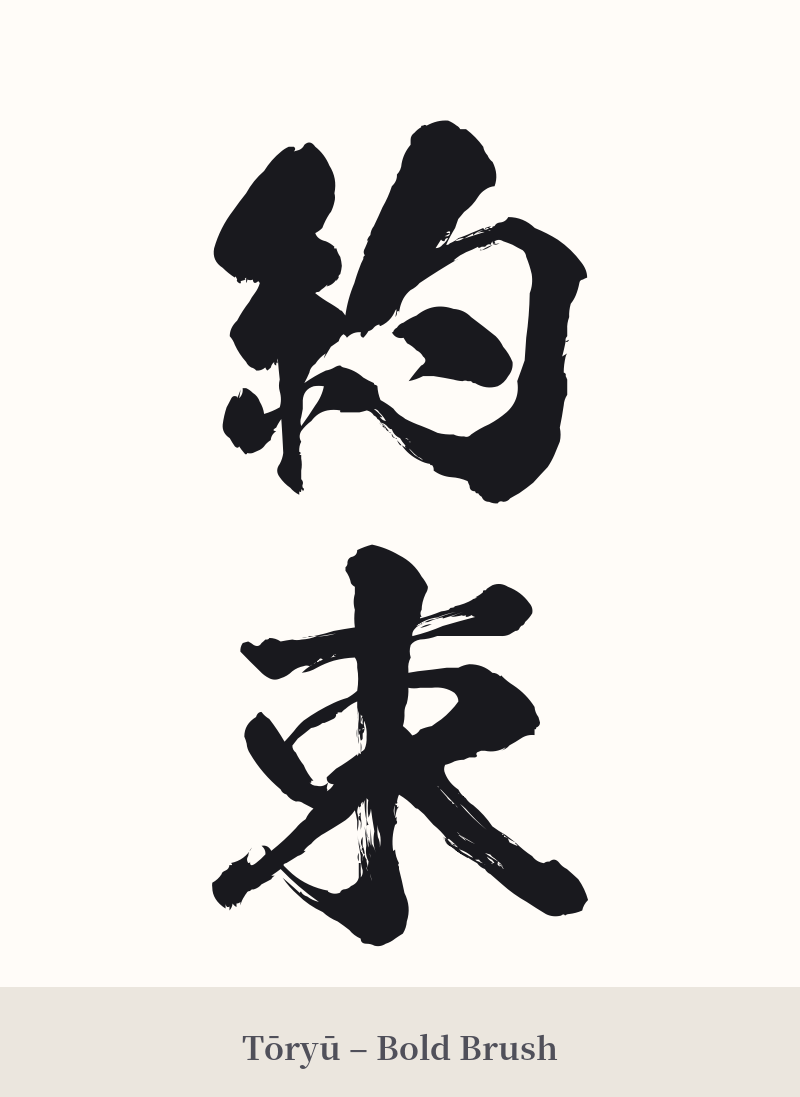
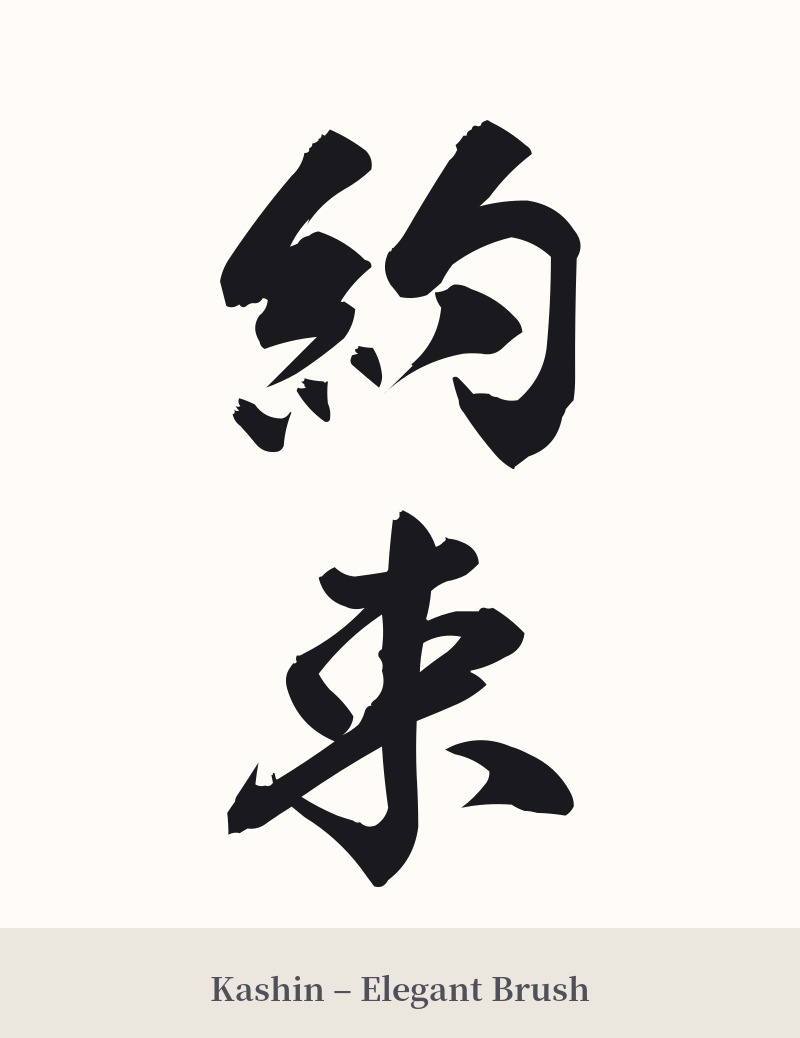
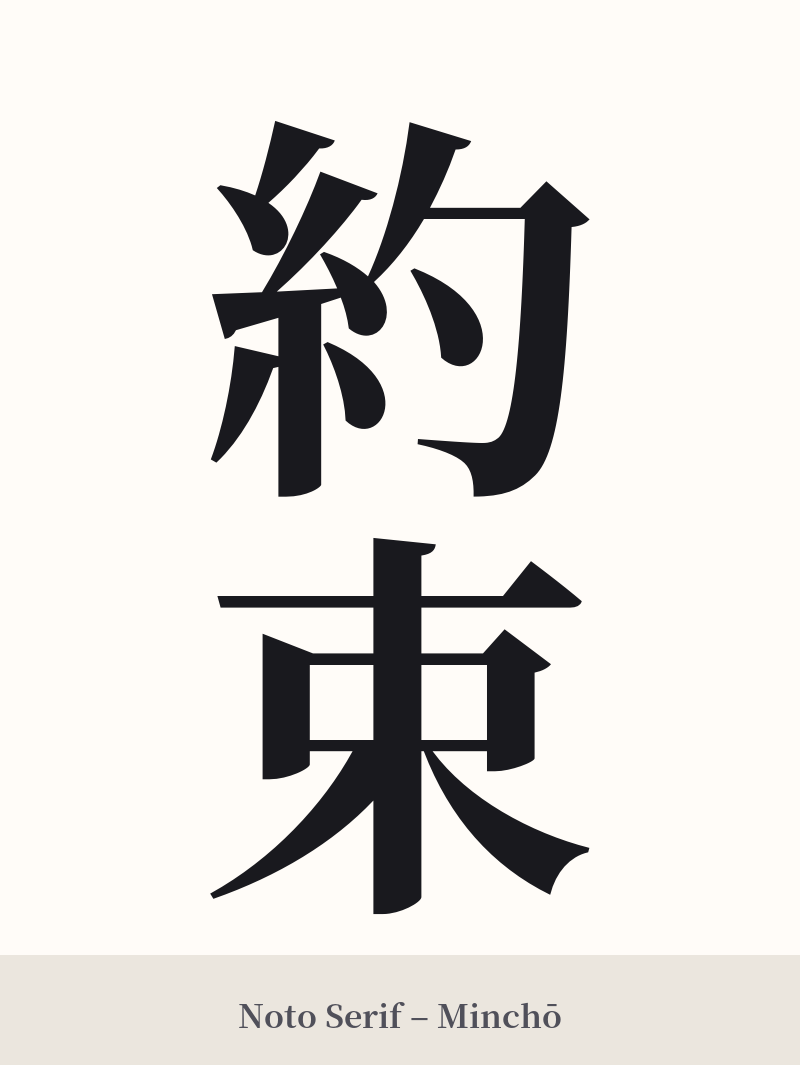
🎨 Tattoo Suitability
📐 Tattoo Design Guide
A 約束 (yakusoku) tattoo is a statement of integrity and commitment. The design should reflect this personal significance.
– Placement: Consider places that feel personal and significant. The inner forearm allows for a daily reminder of your vows. The chest, over the heart, connects the promise to your emotions. The back of the neck or along the spine can symbolize the foundational role of promises in your life.
– Font Styles: A standard Kaisho (block) script provides a look of stability, strength, and clarity, emphasizing the solid nature of a promise. For a more personal and emotional touch, a flowing Gyosho (semi-cursive) or Sosho (cursive) script can represent the heartfelt and human side of an agreement.
– Visual Complements: This kanji pairs beautifully with other symbolic imagery. Consider intertwining it with a red thread, representing the 'unmei no akai ito' (red thread of fate) that connects destined individuals. It could also be designed alongside a stylized pinky-promise gesture or with a single, resilient pine tree, a symbol of longevity and steadfastness in Japan.
Comments