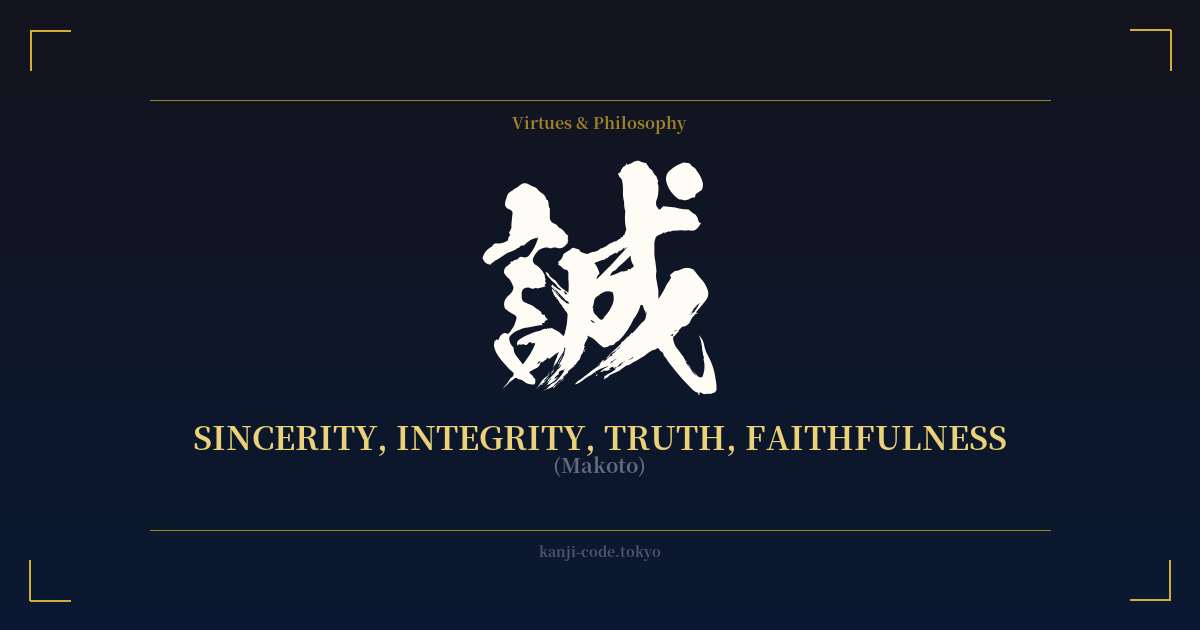
✍️ 誠 (Makoto) — Cultural Context
The kanji 誠 (Makoto) is more than just a word; it's a cornerstone of Japanese ethics and philosophy. It embodies a profound concept of sincerity, integrity, and truthfulness that runs deep in the nation's cultural psyche. Its meaning isn't just about telling the truth, but about a complete alignment between one's words, thoughts, and actions—a state of being utterly genuine and without pretense.
The character's origin offers a clue to its depth. It is composed of two parts: the radical 言 (gon, gen) on the left, which means 'word' or 'speech', and 成 (sei, naru) on the right, meaning 'to become' or 'to complete'. Together, they create a powerful image: one's words becoming reality. It suggests that what you say is what you do; your speech is fulfilled through your actions, representing the ultimate form of reliability and faith.
Historically, 'makoto' was a central tenet of Bushido, the moral code of the samurai. For a warrior, 'makoto' meant that their word was an unbreakable bond. To give one's word was to commit one's life to fulfilling it. This wasn't just about honesty in a transactional sense, but about a deep, internal compass that guided every decision. A samurai without 'makoto' was considered hollow, lacking the very soul of a warrior. This ideal is a recurring theme in historical tales, such as the story of the 47 Ronin, whose actions were driven by an unwavering sense of loyalty and integrity ('chūgi' and 'makoto').
In modern Japan, the spirit of 'makoto' endures. It is a highly prized virtue in all aspects of life, from business negotiations to personal relationships. A person with 'makoto' is someone who is trusted implicitly, who acts with sincerity and whose heart is true. This stands in contrast to the well-known concepts of 'honne' (one's true feelings) and 'tatemae' (the public face one presents), which navigate social harmony. 'Makoto' represents the ideal of transcending this duality, achieving a state where one's inner truth and outer expression are one and the same.
This is why 'Makoto' is also a popular given name in Japan for both boys and girls. To name a child Makoto is to bestow upon them the hope that they will grow to be a person of great integrity, sincerity, and truth. It reflects a parent's deepest wish for their child to live an honorable life.
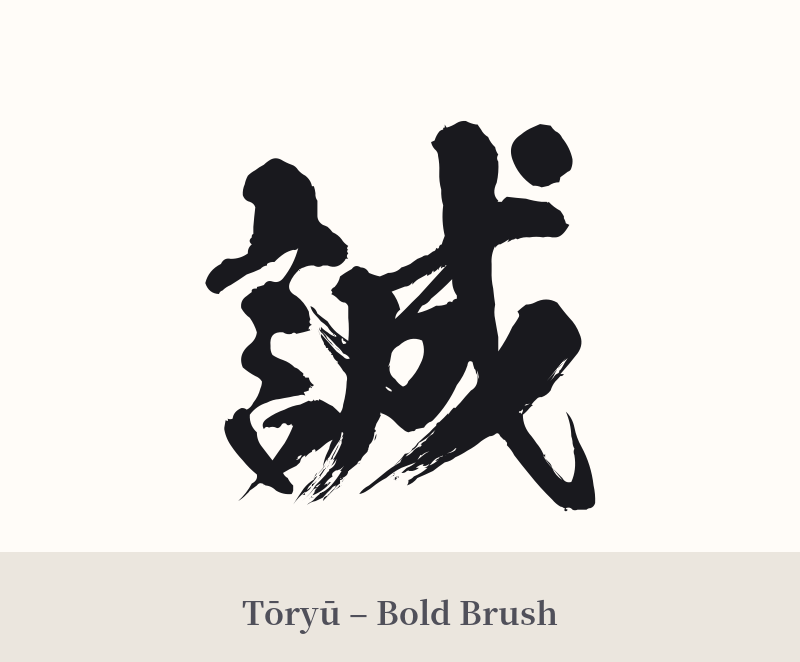
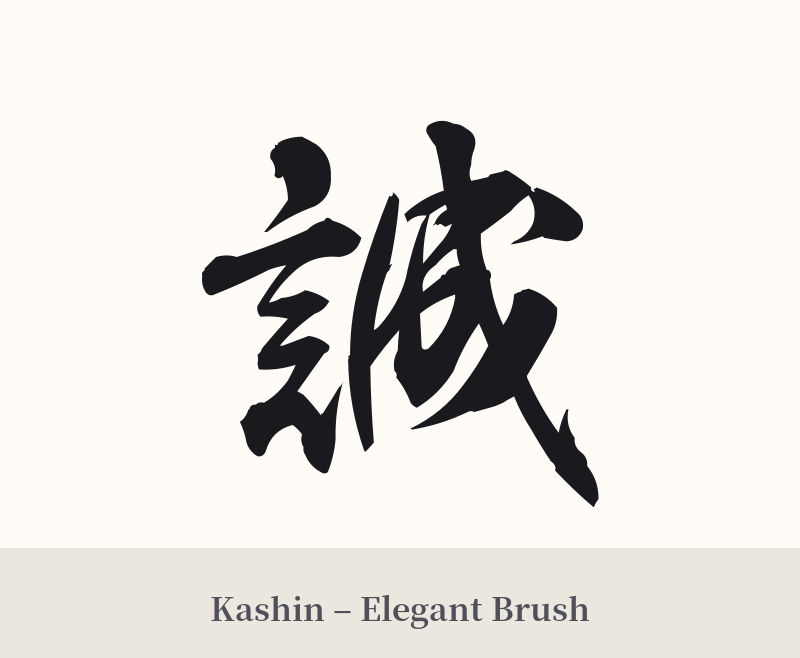
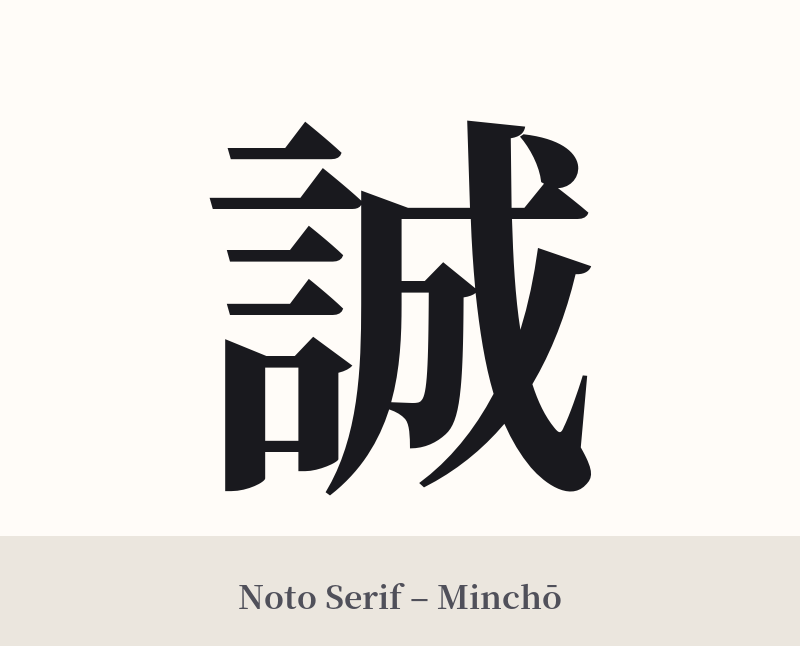
🖌️ Font Styles for 誠
The same kanji can look dramatically different depending on the calligraphy style. Choose a font that matches the mood you want for your tattoo or design.
🎨 Tattoo Suitability
📐 Tattoo Design Guide
The kanji 誠 (Makoto) is a strong, balanced character that lends itself well to a variety of tattoo designs. Its meaning of integrity and truthfulness can be reflected in the style and placement you choose.
– Placement Suggestions: Consider places that feel personally significant. The forearm can symbolize a visible commitment to living with sincerity. Placing it over the chest connects it to the heart, emphasizing the 'true heart' aspect of the word. A placement on the back, along the spine, can represent 'makoto' as a foundational principle of your life.
– Font Style Recommendations: The style can drastically alter the feel. A bold, semi-cursive calligraphy style (Gyosho) can evoke the spirit of the samurai and Bushido, highlighting its historical weight. For a more stoic and formal look, a crisp block script (Kaisho) is excellent. Alternatively, a clean, modern font like a Mincho or sans-serif can give it a contemporary, minimalist feel that focuses purely on the character's form and meaning.
– Visual Tips: 'Makoto' is powerful enough to stand alone. Cluttering it with too many other elements can dilute its impact. If you wish to add a complementary element, consider a simple Enso (Zen circle). The circle can represent wholeness and the universe, while 'Makoto' sits within it as the core principle of truth, creating a harmonious and deeply meaningful design.
Comments