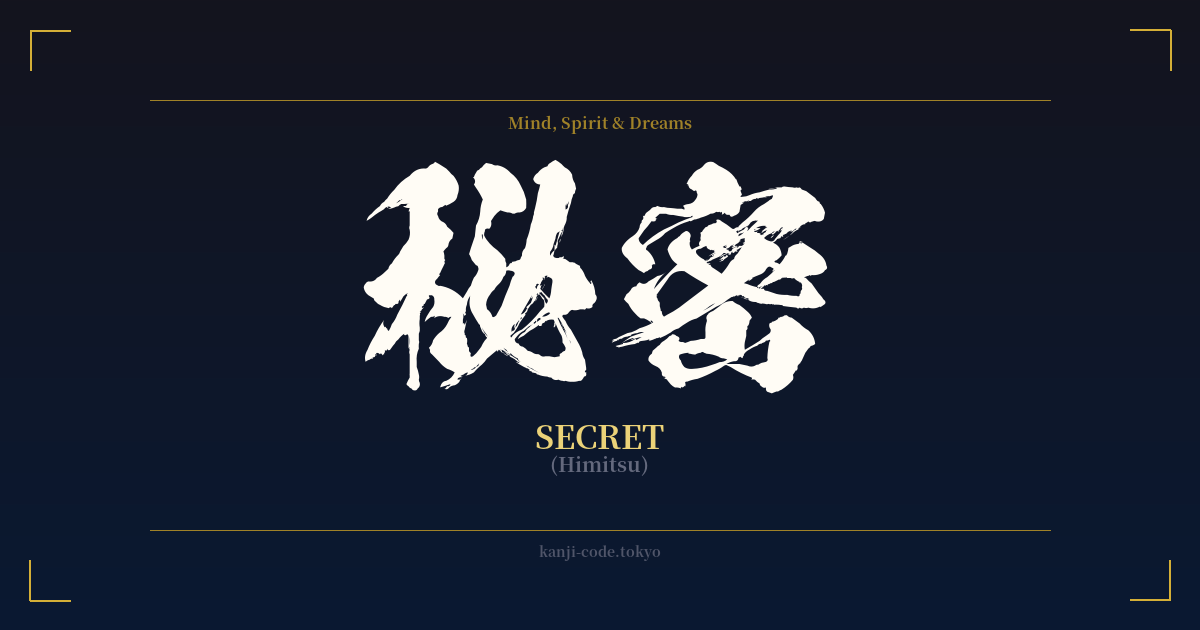
✍️ 秘密 (Himitsu) — Cultural Context
The Japanese word 秘密 (Himitsu) translates to 'secret,' but it carries a weight and nuance that goes beyond simple concealment. It speaks to the worlds we keep within ourselves, the thoughts unshared, and the knowledge held in confidence. In a culture that values harmony and subtlety, the concept of a secret is not just about hiding information; it's a fundamental part of social and personal dynamics.
To understand Himitsu, one must look at the cultural concepts of 'honne' (本音), one's true feelings and desires, and 'tatemae' (建前), the public facade or behavior displayed in social situations. While not a perfect one-to-one match, the existence of these distinct layers in communication highlights the importance of what is kept private. A 'himitsu' can be a form of protecting one's 'honne,' preserving personal integrity in a world that demands a public face.
The word is formed by two powerful kanji: 秘 (hi) and 密 (mitsu). The first, 秘, means 'to conceal' and originally had connotations of the sacred and mysterious, things not meant for common eyes. The second, 密, implies 'density,' 'closeness,' and 'secrecy,' painting a picture of something tightly packed and hidden away. Together, they create a compound word that signifies not just a secret, but a deeply and carefully guarded one.
Historically, secrets were paramount in many Japanese traditions. The esoteric teachings of Buddhism, known as 'mikkyō' (密教) or 'secret teachings,' were passed down only to initiated disciples. Samurai clans and schools of martial arts possessed 'hiden' (秘伝), secret transmissions of techniques and philosophies that ensured their survival and superiority. Ninja, the iconic spies and assassins of feudal Japan, were masters of secrecy, their arts and identities shrouded in mystery.
In modern Japan, 'himitsu' remains a potent concept. It's a common theme in literature, anime, and film, often driving the plot forward as characters grapple with hidden truths, secret identities, or forbidden love. A secret can be a source of immense power, a devastating burden, or a tender bond between two people. This duality makes it a compelling and deeply human idea, representing the universal need for a private space in our hearts and minds, a place that belongs only to us.
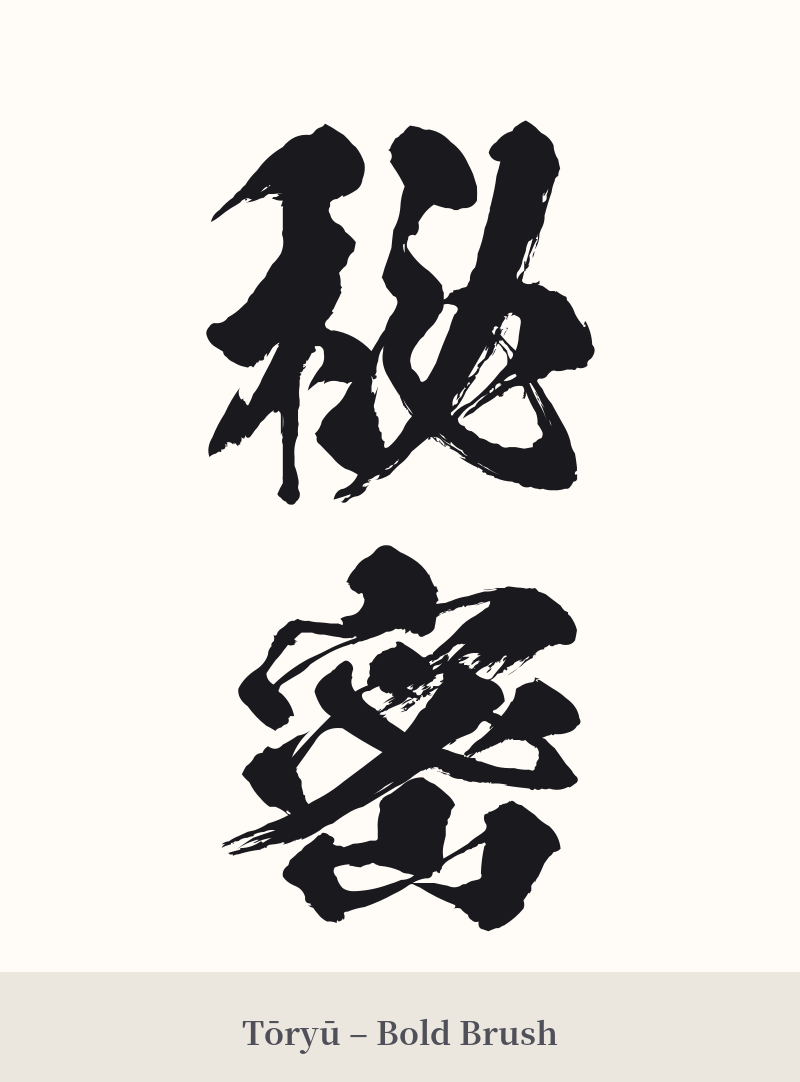
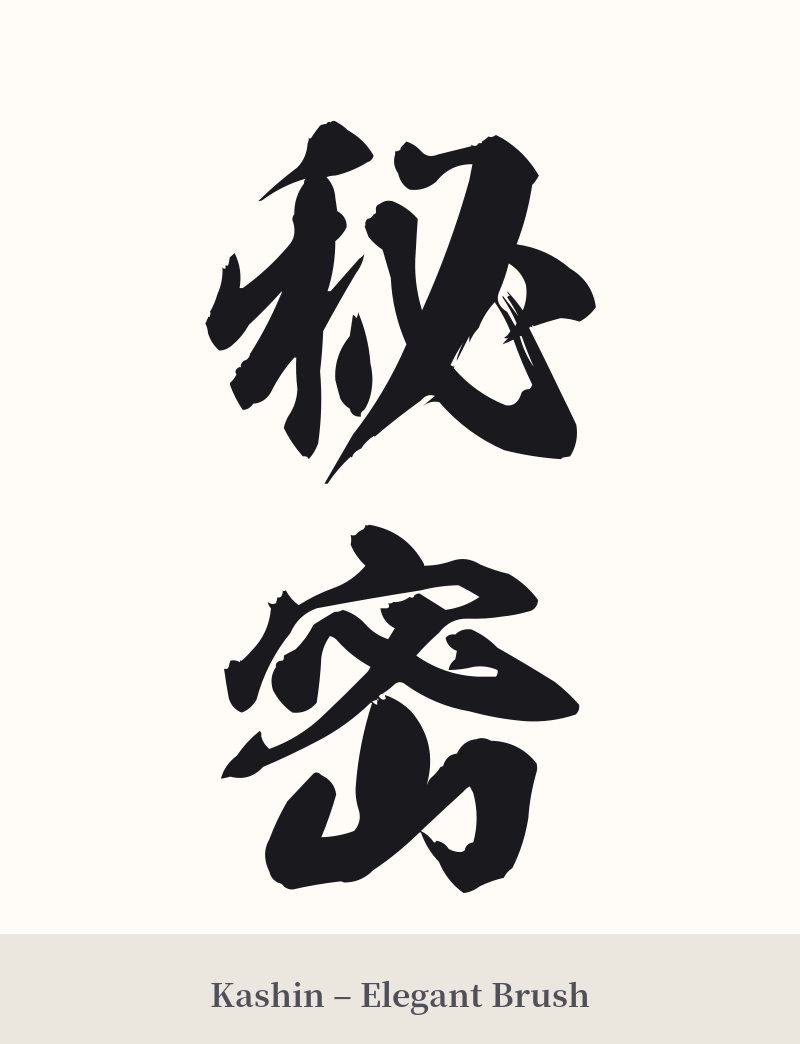
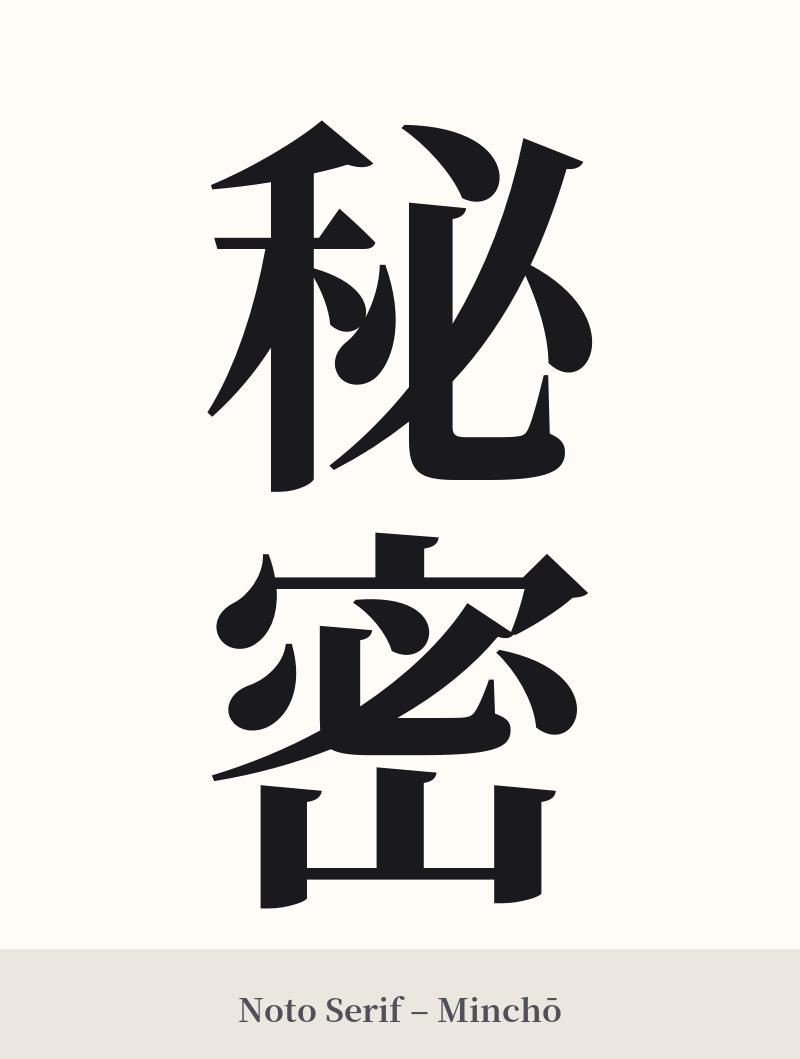
🖌️ Font Styles for 秘密
The same kanji can look dramatically different depending on the calligraphy style. Choose a font that matches the mood you want for your tattoo or design.
🎨 Tattoo Suitability
📐 Tattoo Design Guide
A tattoo of 秘密 (Himitsu) lends itself to designs that are personal and discreet, reflecting the very nature of the word.
– Placement: Consider locations that can be easily concealed, enhancing the theme. The inner wrist, behind the ear, along the ribs, or over the heart are all powerful choices. These spots make the tattoo a personal discovery for you or for those you choose to show.
– Style: A flowing, semi-cursive calligraphy style like 'Gyosho' can evoke a sense of personal, handwritten confidence. For a more modern and stark look, a crisp Mincho or blocky Gothic font works well. The key is to match the font style to the personal meaning your secret holds.
– Visuals: The kanji can be written vertically (top-to-bottom) for a classic look, or horizontally. Consider integrating symbolic imagery. A keyhole, a closed scroll, a blooming flower with its roots hidden, or even simple lines that box in the characters can visually reinforce the idea of concealment and containment.
Comments