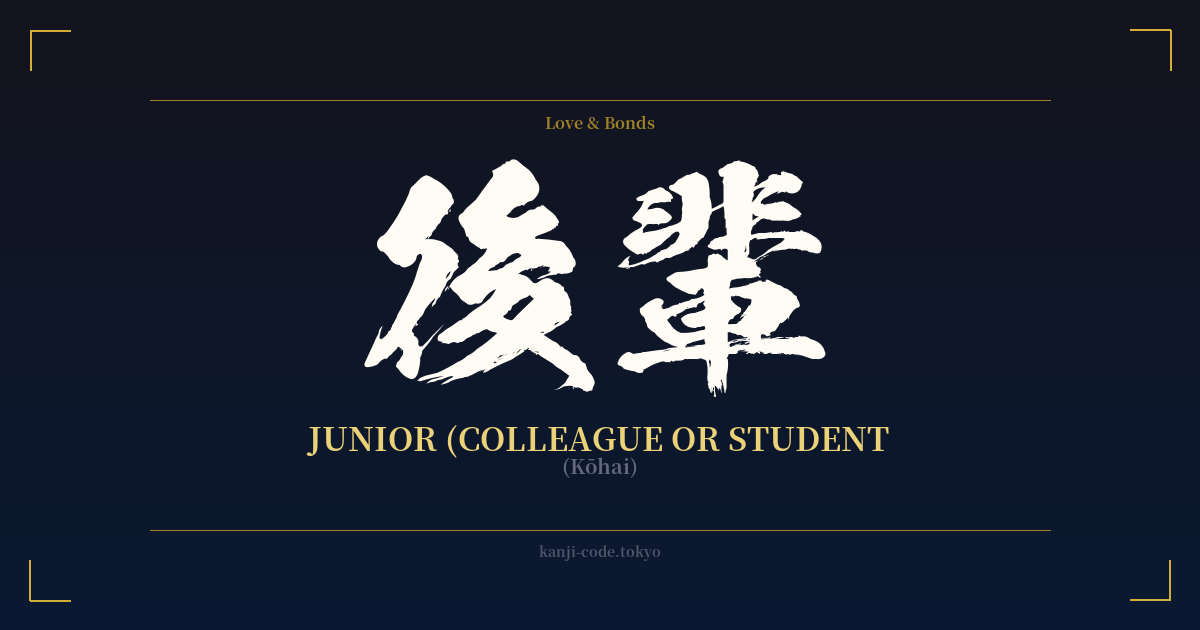
✍️ 後輩 (Kōhai) — Cultural Context
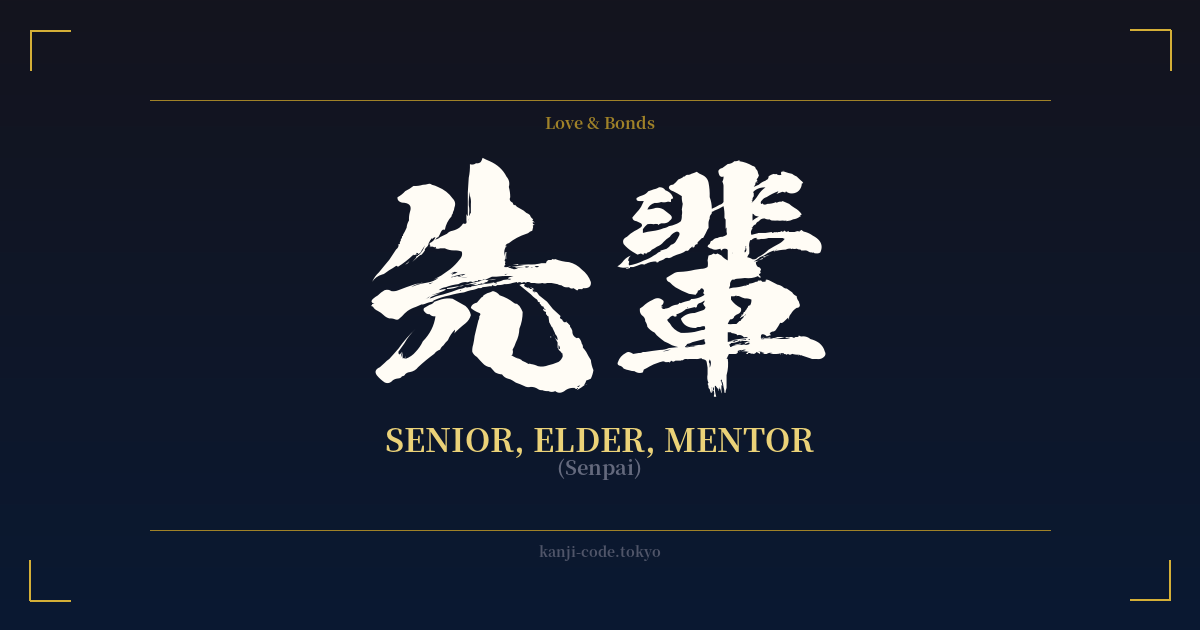
The word 後輩 (Kōhai) translates to 'junior,' but this simple English word fails to capture the profound social and cultural weight it carries in Japan. Kōhai is one half of a foundational relationship dynamic that structures Japanese society: the 先輩-後輩 (senpai-kōhai) system.
This system is a form of informal, hierarchical mentorship rooted in Confucian ideals of respecting elders and experience. It's not strictly about age, but rather about seniority within a specific organization—be it a school, a company, or a sports club. The person who joined first is the senpai (senior), and anyone who joins after them is the kōhai.
The senpai's role is to guide, teach, and look out for their kōhai. They offer advice, share their experience, and often take responsibility for the kōhai's integration into the group. This can range from teaching a new student the club rules to a senior employee showing a new hire the ropes and even taking them out for drinks to build camaraderie.
In return, the kōhai is expected to show respect, deference, and loyalty to their senpai. This involves using respectful language (keigo), listening attentively to advice, and performing supporting tasks. The kōhai helps the senpai, learns from them, and upholds the group's traditions. This is not seen as servitude but as a crucial part of the learning process and a sign of respect for the established order.
This dynamic permeates daily life in Japan. In a business setting, a kōhai might be expected to pour drinks for their senpai at a dinner. In a school sports team, first-year students (kōhai) might be responsible for cleaning equipment and preparing the grounds for the senior players (senpai).
While the senpai-kōhai relationship can be a source of pressure, it is more often a foundation for strong, lifelong bonds. A good senpai becomes a trusted mentor and advocate, while a dedicated kōhai becomes a valued protégé and successor. The relationship is one of mutual obligation, built on a shared sense of belonging and a commitment to the group's success.
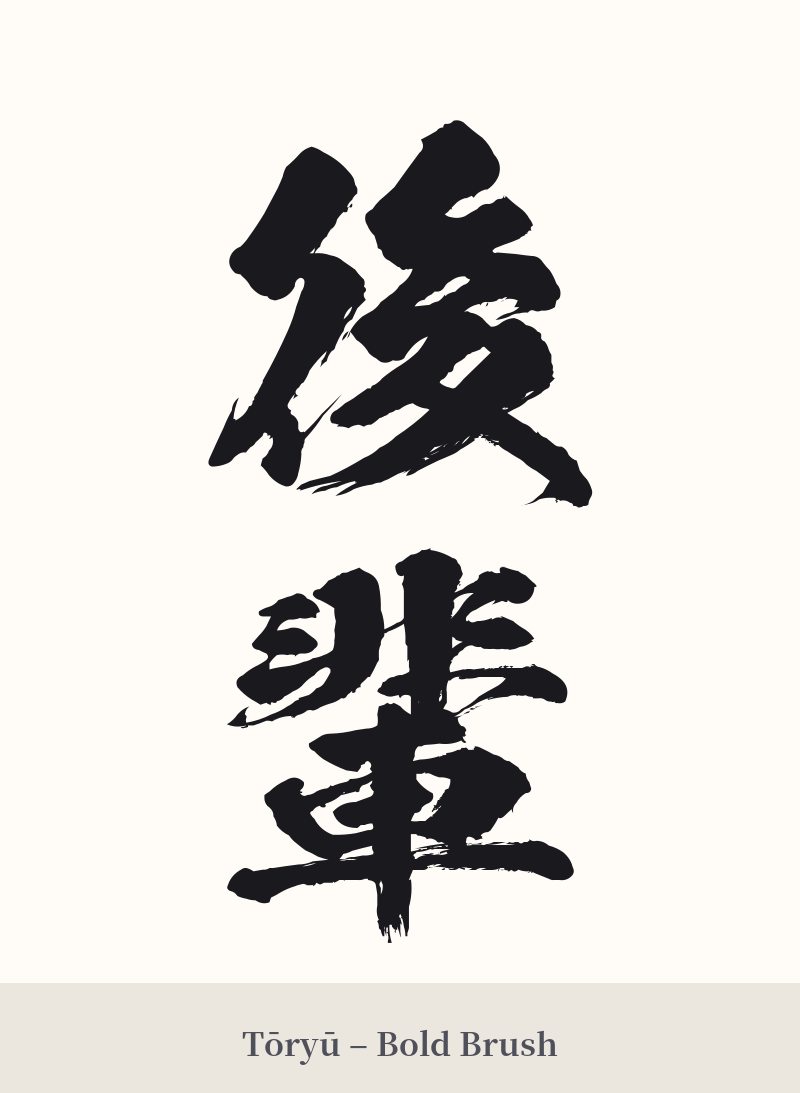
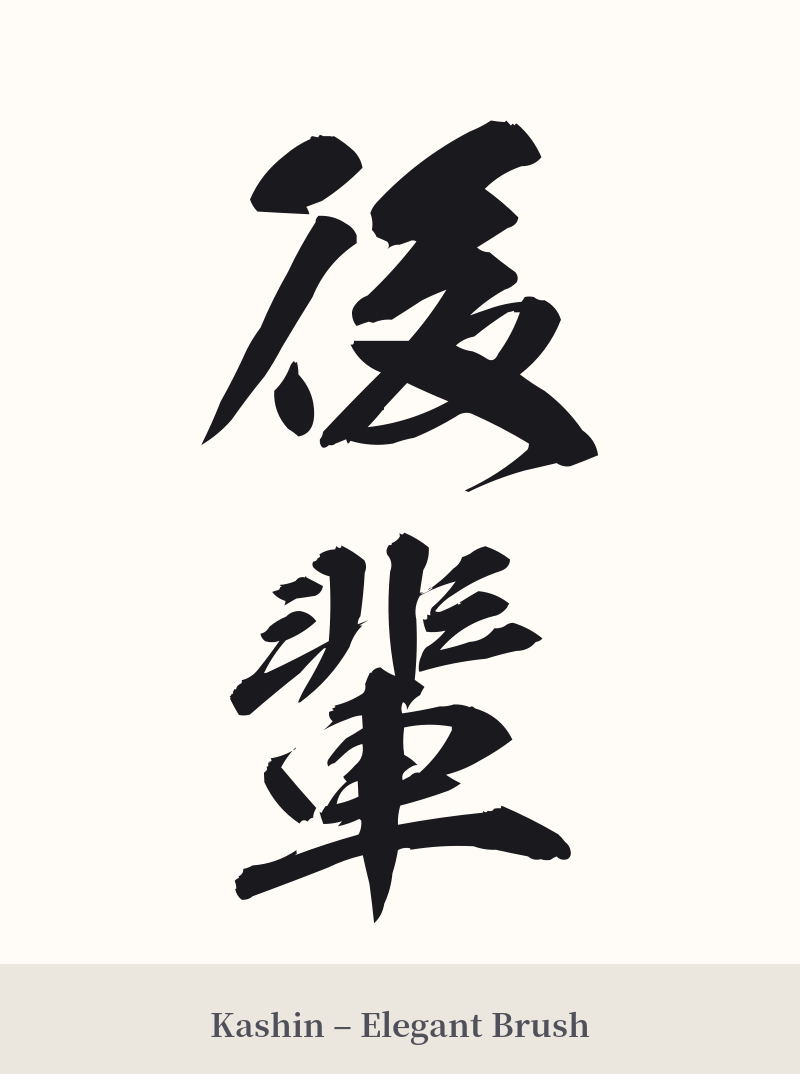
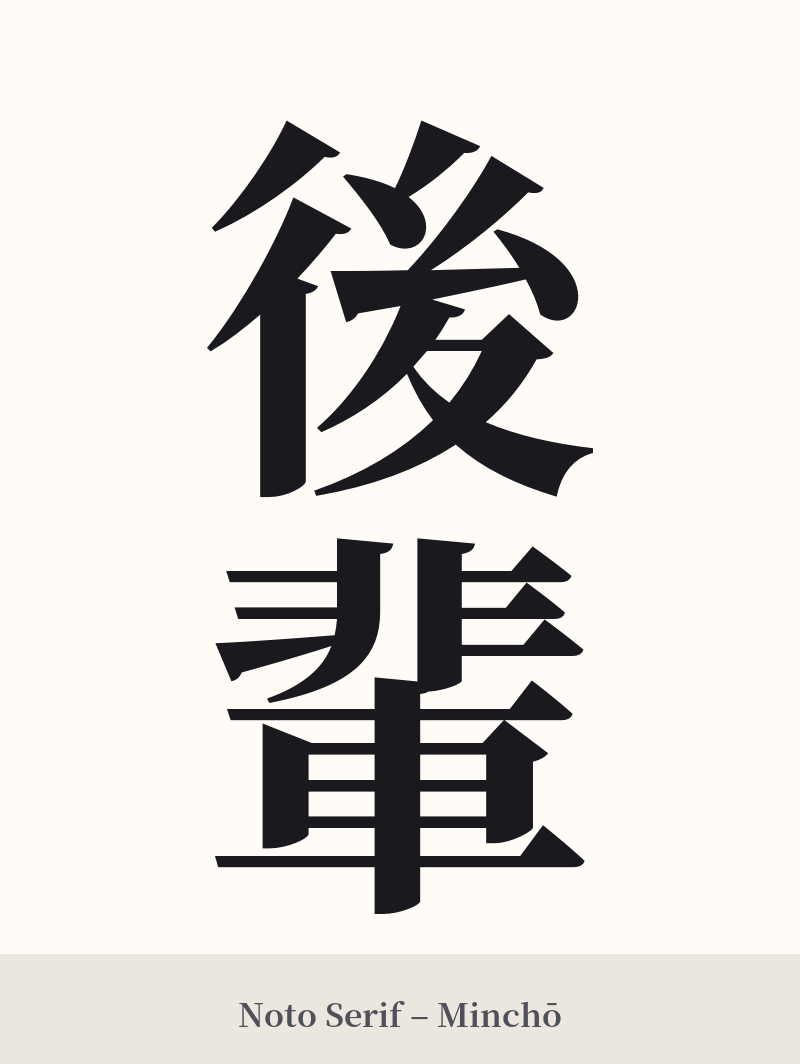
🖌️ Font Styles for 後輩
The same kanji can look dramatically different depending on the calligraphy style. Choose a font that matches the mood you want for your tattoo or design.
🎨 Tattoo Suitability
📐 Tattoo Design Guide
Given the nuanced and relational meaning of Kōhai, a tattoo of this word requires thoughtful design and placement.
– Placement: Consider a more personal, less conspicuous placement like the inner forearm, calf, or along the ribs. This reflects the word's role as a personal relationship rather than a public declaration. A vertical orientation is classic and suits the two-character structure.
– Font Style: Legibility is key, especially for the complex second character, '輩'. A clean, crisp Kaisho (block) or Mincho (serif) font is highly recommended. Avoid overly cursive or abstract styles, as they could cause the dense strokes of '輩' to blur and become unreadable, especially over time.
– Visual Tips: This kanji should not be tattooed too small. The 15 strokes in '輩' need space to remain distinct. Consider this word as part of a larger piece dedicated to a specific mentor (senpai) rather than as a standalone label for yourself. Pairing it with its counterpart, '先輩' (Senpai), could create a more complete and meaningful story, perhaps on opposite limbs.
Comments