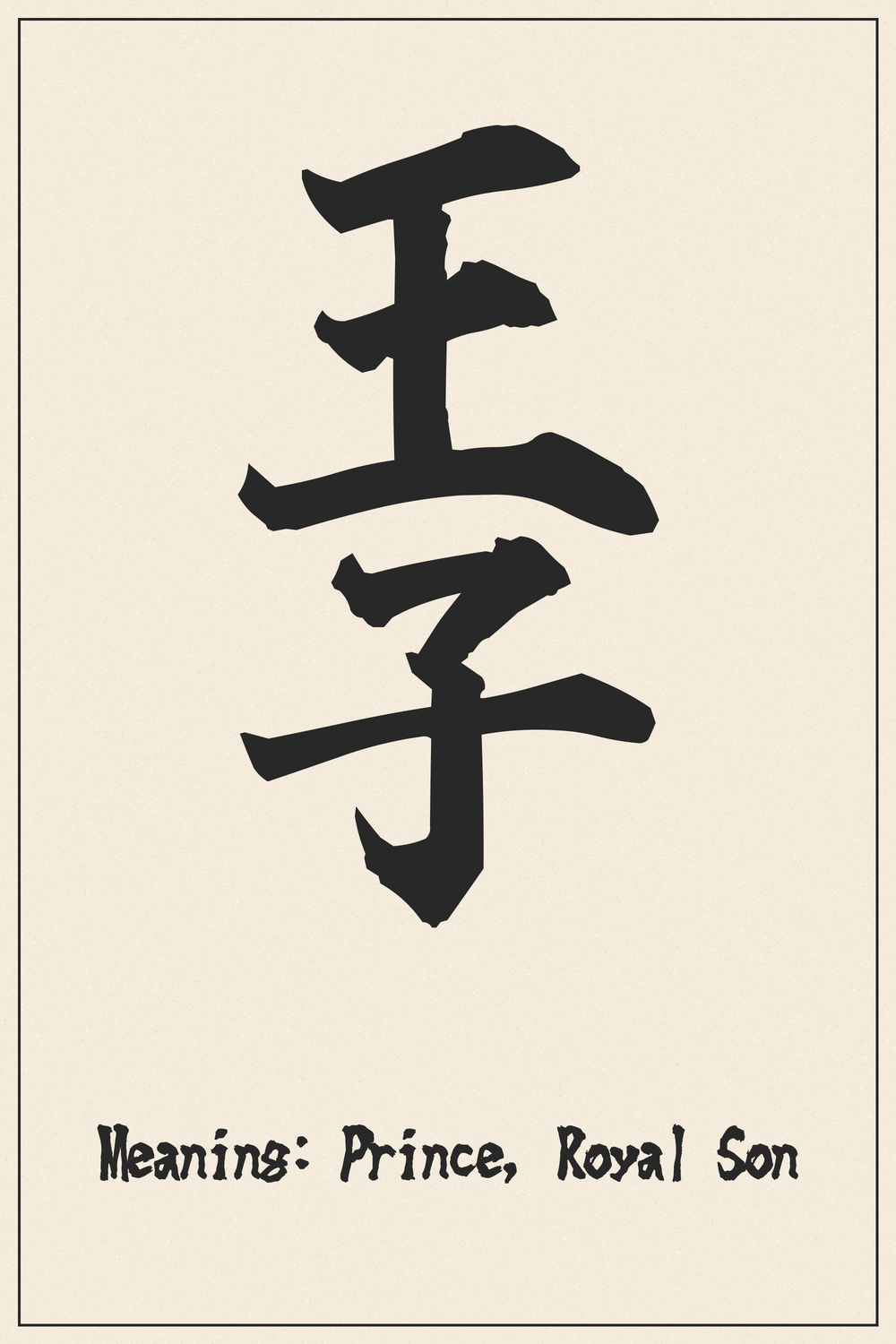
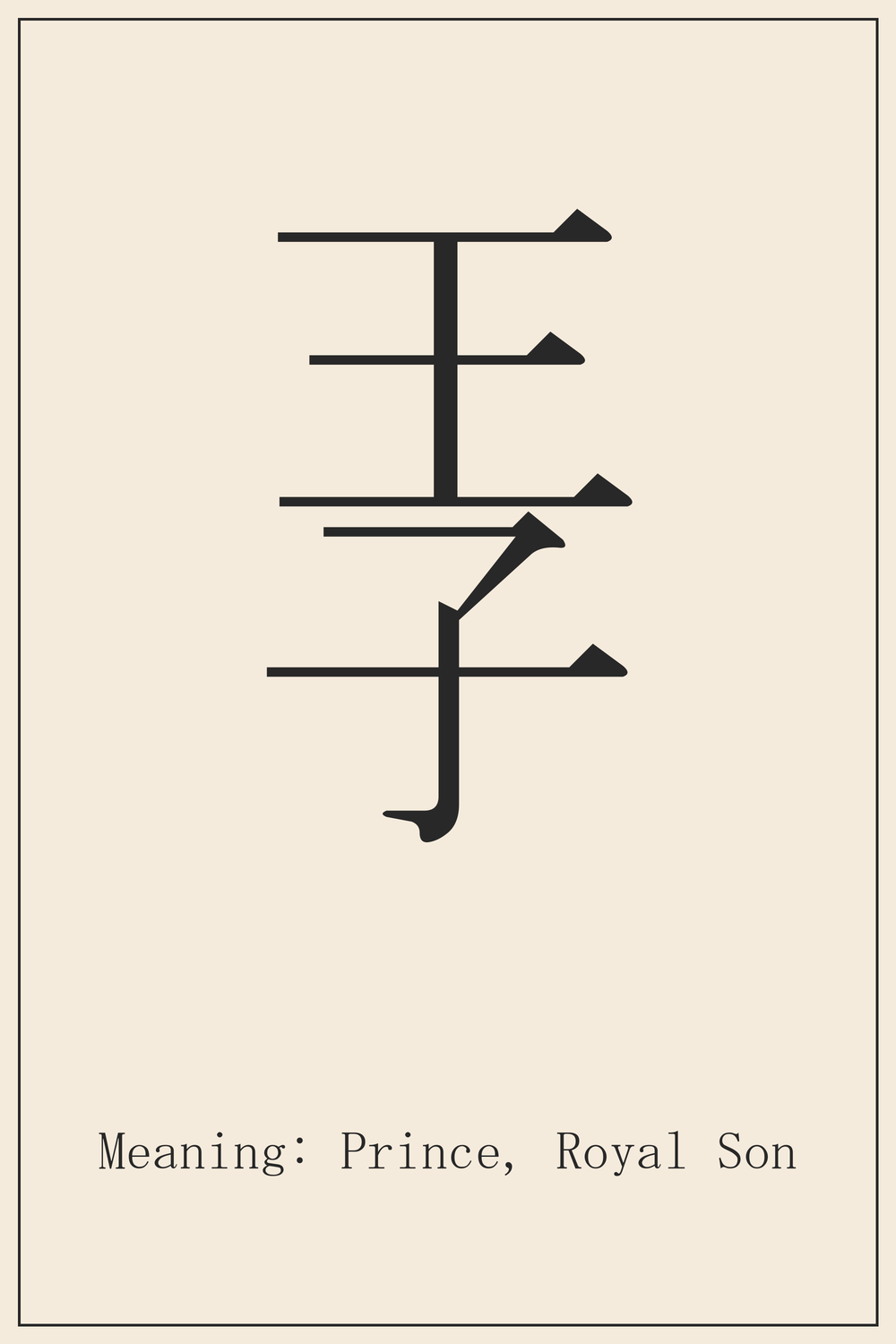
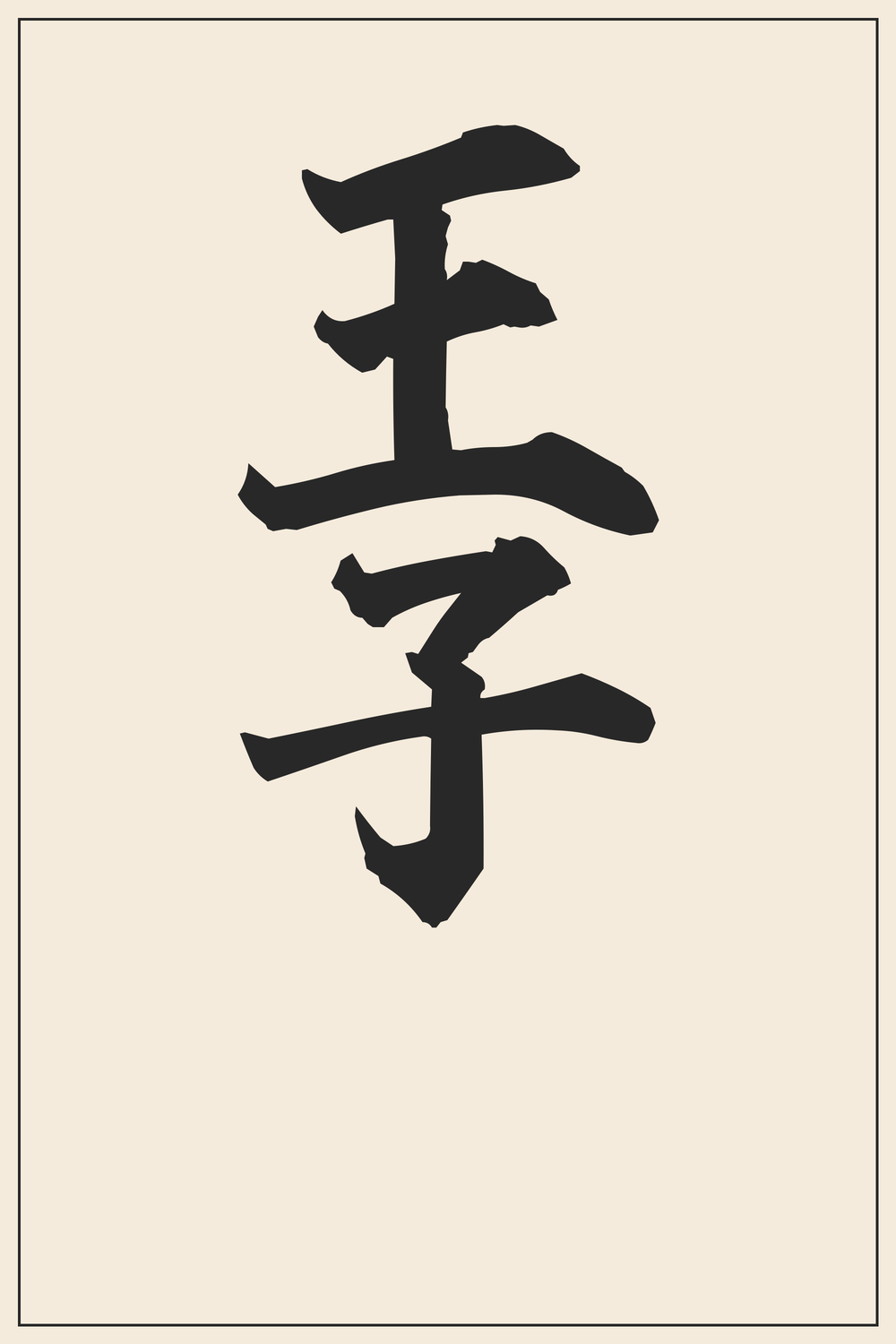
The Kanji ‘王子’ embodies noble lineage and the promise of a regal future. It represents inherent dignity and a path shaped by destiny.
The atmosphere of a Kanji character changes dramatically depending on the font style. A character that looks elegant in a brush style might look bold and modern in a different font.
Recommendation:
Since a tattoo is permanent, we strongly recommend comparing various font styles beyond what is shown here. Use our designs as a trusted reference for the correct structure, but feel free to explore different artistic variations to find the perfect match for your vision.
The Deep Meaning Behind 王子
The Japanese Kanji ‘王子’ (Ōji) directly translates to ‘prince’ or ‘royal son.’ This compound word is rich with historical and cultural significance, denoting not just a family relation but a specific societal role and destiny. It carries an aura of nobility, leadership, and the continuation of a prestigious lineage.
In Japanese culture, the concept of a prince is deeply intertwined with tradition and the imperial system. It signifies a person born into a position of inherent dignity and responsibility, often destined for a significant role in their family or nation’s future. The term evokes images of grace, potential, and the weight of a royal birthright.
Kanji Breakdown
The compound ‘王子’ is formed from two fundamental Kanji, each contributing to its profound meaning.
Meaning: King, Sovereign. Originally a pictograph, ‘王’ is often interpreted as representing a ruler who connects heaven, humanity, and earth with their upright rule. It symbolizes supreme authority and leadership.
Meaning: Child, Son. This Kanji is a pictograph depicting a baby with its head, arms, and legs. It broadly refers to a child, but in compounds like ‘王子’, it specifically denotes a son or male descendant.
Conclusion
The Kanji ‘王子’ represents more than just a title; it encapsulates the essence of nobility, inherited legacy, and a life path often dictated by destiny. It signifies a person of esteemed birth, endowed with grace and the potential for great leadership, embodying the hopes and future of a lineage.
Choosing ‘王子’ as a tattoo is an affirmation of dignity, heritage, and the aspirations for future greatness. Its clear, balanced strokes make it visually appealing and its profound meaning ensures it remains a timeless symbol of potential and regal character.

Comments