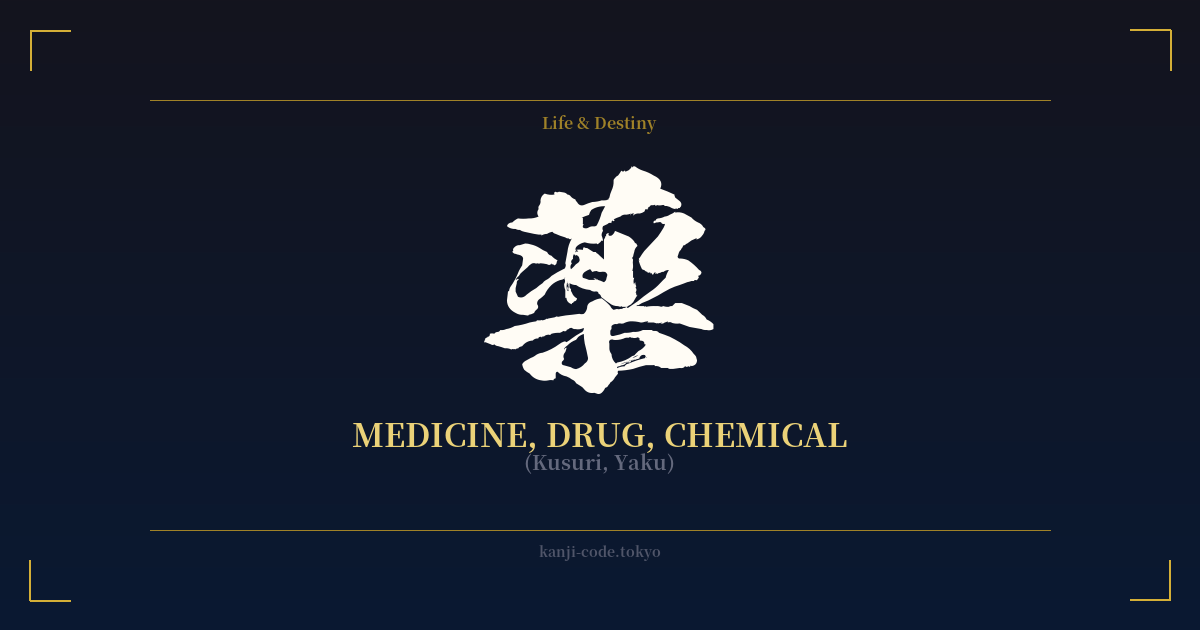
✍️ 薬 (Kusuri, Yaku) — Cultural Context
The kanji 薬 (kusuri) is a fascinating character that encapsulates a worldview where healing, nature, and even danger are intricately linked. Its visual construction tells a story. The top radical, 艹 (kusa-kanmuri), represents grass or herbs. The bottom component, 楽 (raku), means ‘comfort,’ ‘ease,’ or even ‘music.’ Together, they paint a picture of 'herbs that bring comfort and ease to the body,' a direct nod to the origins of medicine in the natural world.
Historically, this kanji is deeply tied to Kampō (漢方), traditional Japanese medicine derived from classical Chinese practices. For centuries, before the advent of modern pharmaceuticals, remedies were painstakingly prepared from plants, roots, and minerals. The character 薬 was a symbol of this botanical wisdom, representing the power of nature to restore balance and health. It’s a character you’d see on the signs of old apothecaries and in the texts of ancient healers.
However, the beauty of 薬 lies in its inherent duality. It doesn’t just mean a beneficial cure; it represents any substance that causes a significant effect on the body. This is perfectly captured in the Japanese proverb, 「薬も過ぎれば毒となる」 (Kusuri mo sugireba doku to naru), which means, “Even medicine becomes poison if taken in excess.” This saying reflects a deep cultural understanding that the line between a remedy and a harm is often a matter of dosage and context. The same substance can heal or kill.
In modern Japan, this duality persists. 薬 is the standard word for medicine you get at a pharmacy (薬局, yakkyoku). Yet, it is also used in words like 火薬 (kayaku), meaning 'gunpowder,' highlighting its 'chemical' aspect. Figuratively, it can describe a difficult but valuable experience. If someone goes through a tough breakup and learns from it, they might say it was a 「良い薬になった」 (ii kusuri ni natta), or “a good medicine,” akin to the English phrase “a bitter pill to swallow.” This rich tapestry of meaning—from herbal remedy to potent chemical, from healing balm to a harsh life lesson—makes 薬 a powerful and complex symbol of life's delicate balance.
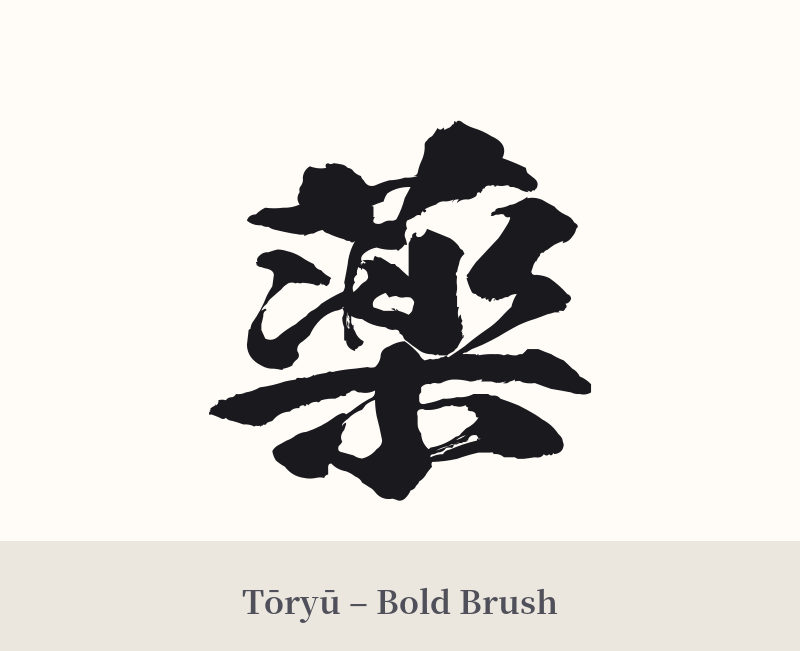
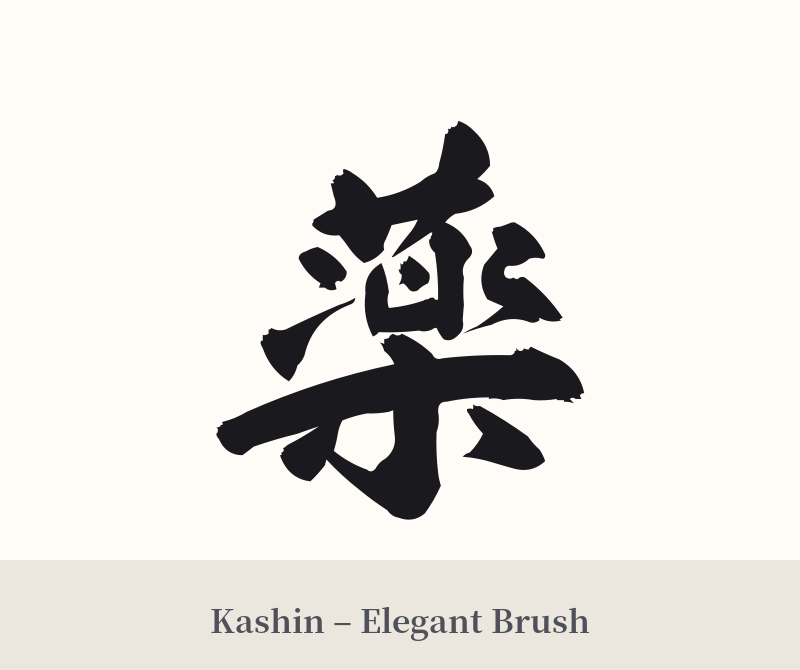
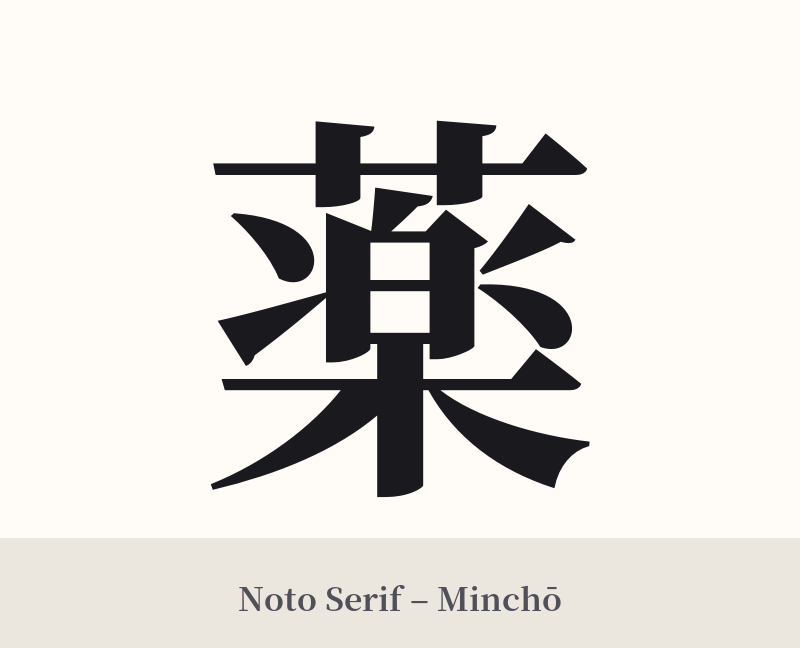
🖌️ Font Styles for 薬
The same kanji can look dramatically different depending on the calligraphy style. Choose a font that matches the mood you want for your tattoo or design.
🎨 Tattoo Suitability
📐 Tattoo Design Guide
Given the nuanced meaning of 薬, the design can be used to steer its interpretation. Consider these points for a tattoo:
– Placement: A forearm, calf, or the back of the shoulder are good spots. These areas provide a flat enough surface for the character's 13 strokes to be rendered clearly without distortion. Avoid very small placements where the details within the 楽 component might blur over time.
– Font Style: A flowing, organic calligraphy style (gyōsho or sōsho) can emphasize the 'natural herb' origin of the character. Conversely, a crisp, geometric Mincho or Gothic font can play up the modern 'chemical' or 'scientific' aspect of the kanji.
– Complementary Imagery: To clarify intent, pairing 薬 with other elements is highly recommended. For a 'healing' theme, surround it with medicinal plants like lotus flowers, chrysanthemum, or ginkgo leaves. To embrace the duality, you could use a design where one side has healing herbs and the other has something representing poison or danger, like a snake or a skull.
Comments