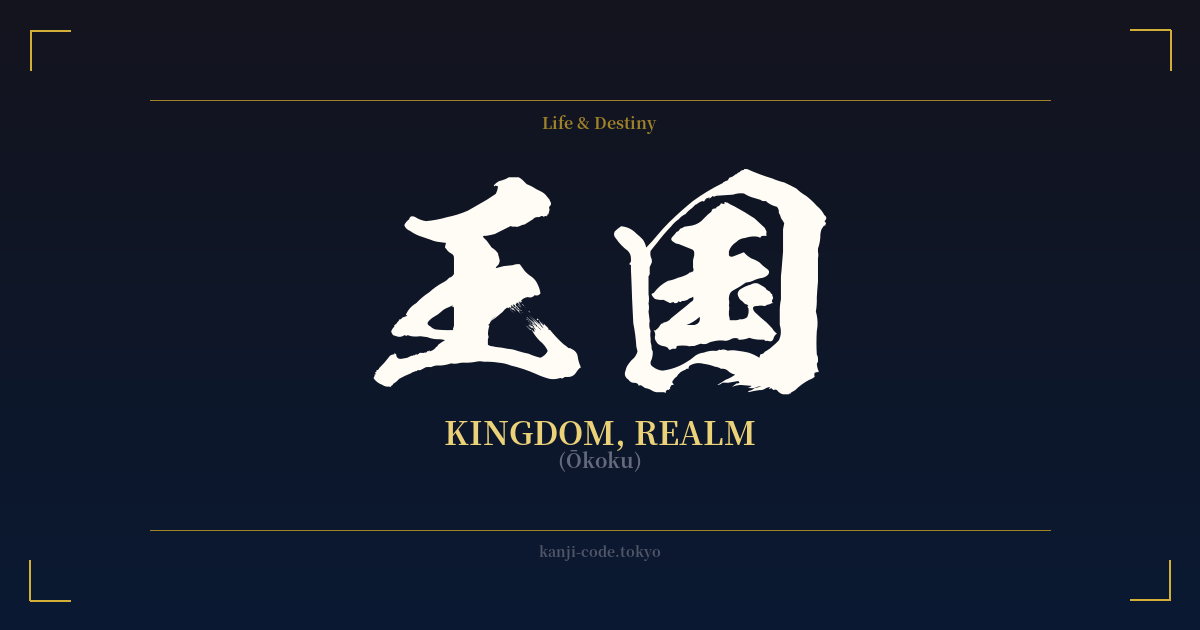
✍️ 王国 (Ōkoku) — Cultural Context
王国 (Ōkoku) is the Japanese word for 'kingdom' or 'realm,' a term that resonates with themes of power, history, and grand narratives. The word is a direct and elegant combination of two characters: 王 (Ō), meaning 'king,' and 国 (koku), meaning 'country.' Together, they literally translate to 'king's country,' a sovereign state ruled by a monarch.
Historically, while Japan has been an empire (帝国, Teikoku) ruled by an emperor (天皇, Tennō) for most of its history, the concept of a kingdom is well understood and has specific historical applications. The most famous example is the Ryūkyū Kingdom (琉球王国), which ruled the islands of Okinawa from the 15th to the 19th century. It was a vibrant, independent maritime state with a rich culture before being annexed by Japan. This historical anchor gives Ōkoku a tangible connection to a real-world sovereign entity.
Beyond history, Ōkoku has found a powerful home in the world of fiction and fantasy. It is the default term for the kingdoms found in countless video games, manga, and anime. From the Kingdom of Hyrule in 'The Legend of Zelda' to the various warring states in epic tales, Ōkoku sets the stage for adventure, conflict, and lore. This has imbued the word with a modern sense of fantasy, magic, and epic storytelling, making it popular among fans of these genres.
Metaphorically, Ōkoku is also used to describe a domain or sphere where something reigns supreme. For example, 'animal kingdom' is 動物王国 (dōbutsu ōkoku), and a confectionary paradise might be called an お菓子の王国 (okashi no ōkoku), or 'kingdom of sweets.' This flexibility allows it to represent not just a physical territory but a personal realm of passion or expertise.
In choosing Ōkoku, one invokes a sense of established power, legacy, and a defined world. It is less expansionist than 'empire' (Teikoku) and more defined than a simple 'country' (Kuni). It speaks to a self-contained, sovereign world, whether that world is a historical dynasty, a fantastical realm, or a personal domain of one's own making.
🖌️ Font Styles for 王国
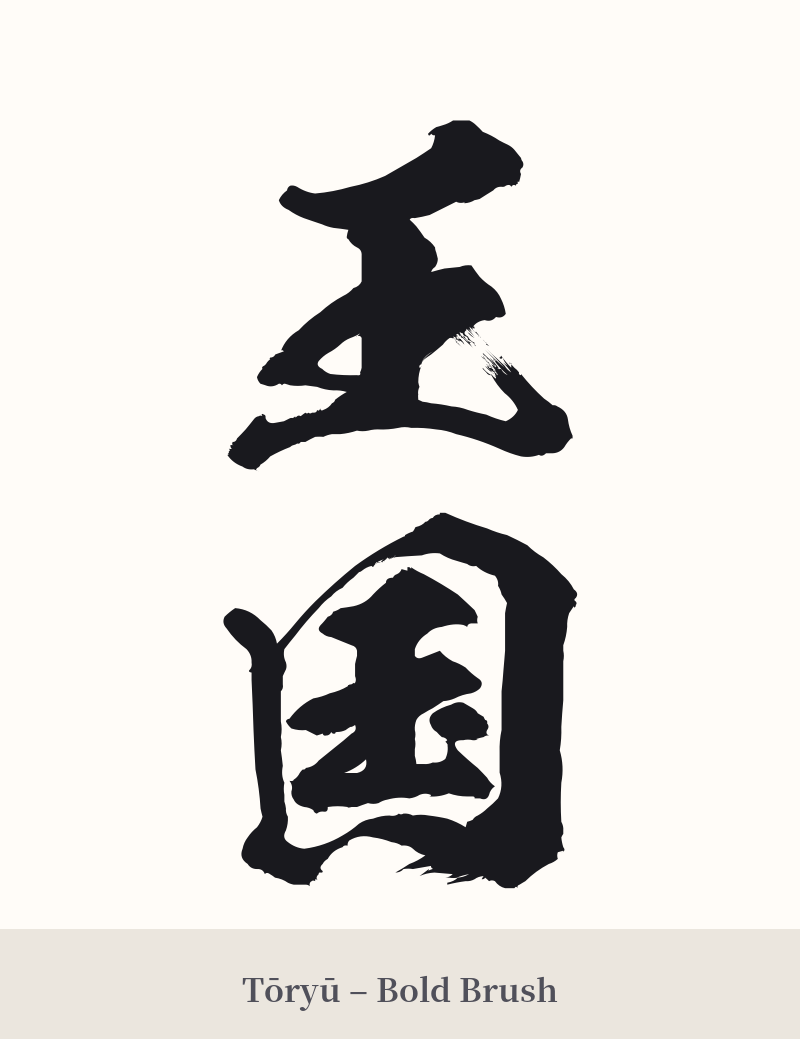
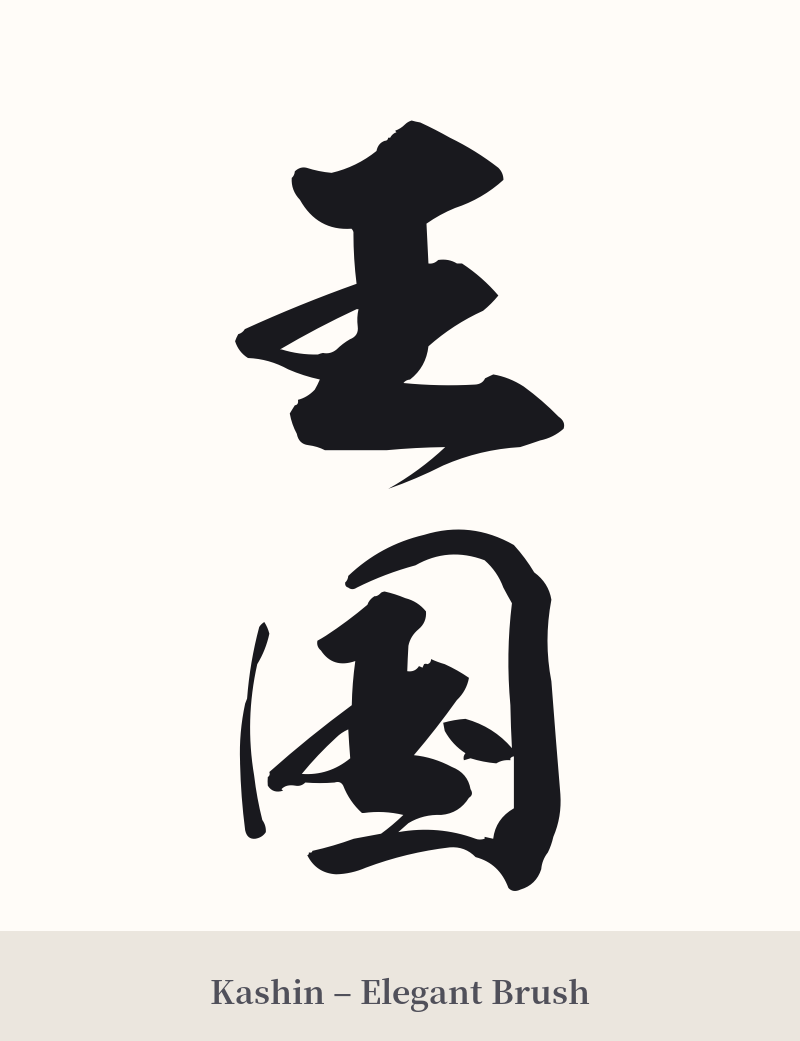
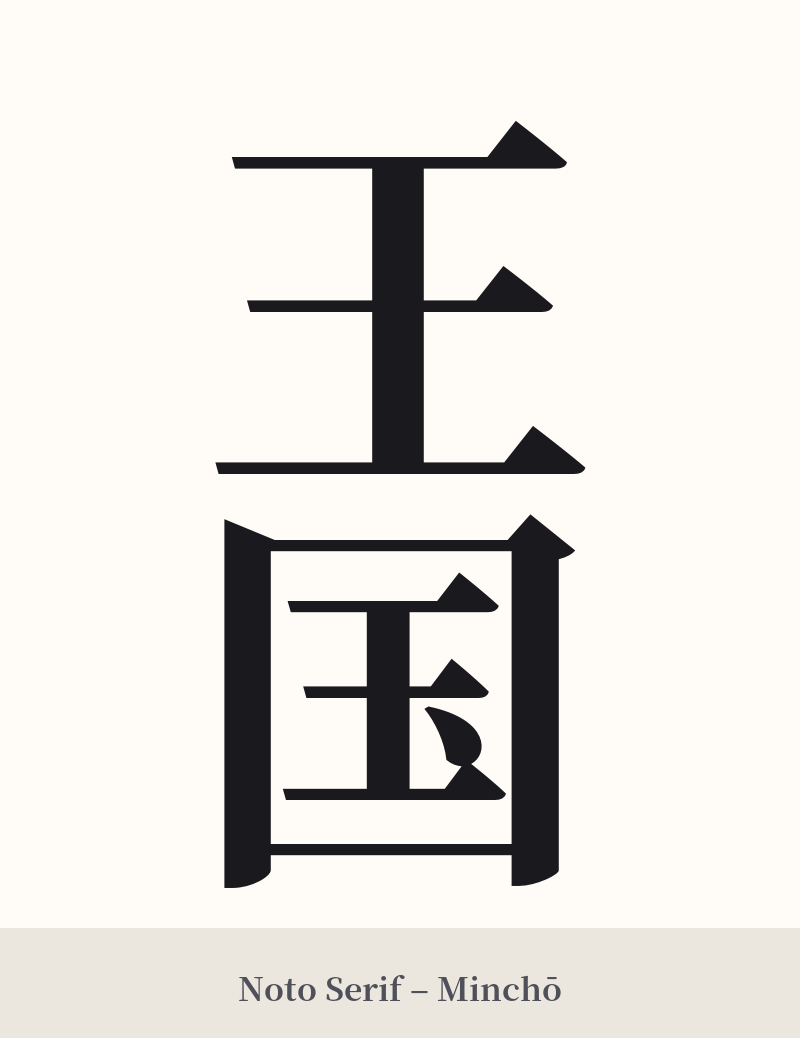
The same kanji can look dramatically different depending on the calligraphy style. Choose a font that matches the mood you want for your tattoo or design.
🎨 Tattoo Suitability
📐 Tattoo Design Guide
The kanji for 王国 (Ōkoku) carries a sense of strength and structure, making it suitable for a variety of tattoo designs.
– Placement: Its balanced, rectangular shape works well on flat, broad areas of the body. Consider the forearm, the calf, the chest, or across the upper back. A vertical orientation, with 王 above 国, is traditional and visually striking, especially along the spine or arm.
– Font Style: For a bold, authoritative look, a thick, blocky font like a Kaisho or a heavy Mincho style emphasizes the kanji's architectural structure. For a more historical or fantastical feel, a semi-cursive (Gyosho) or fully cursive (Sosho) calligraphic style can add a sense of ancient elegance and movement.
– Visual Tips: While 王国 stands strong on its own, it can be integrated with complementary imagery. Consider pairing it with a Japanese-style dragon, a crown, a castle silhouette, or a stylized family crest (kamon) to reinforce the theme of sovereignty and power. Using a red ink for a seal stamp (hanko) effect near the kanji can also add a touch of authenticity.
Comments