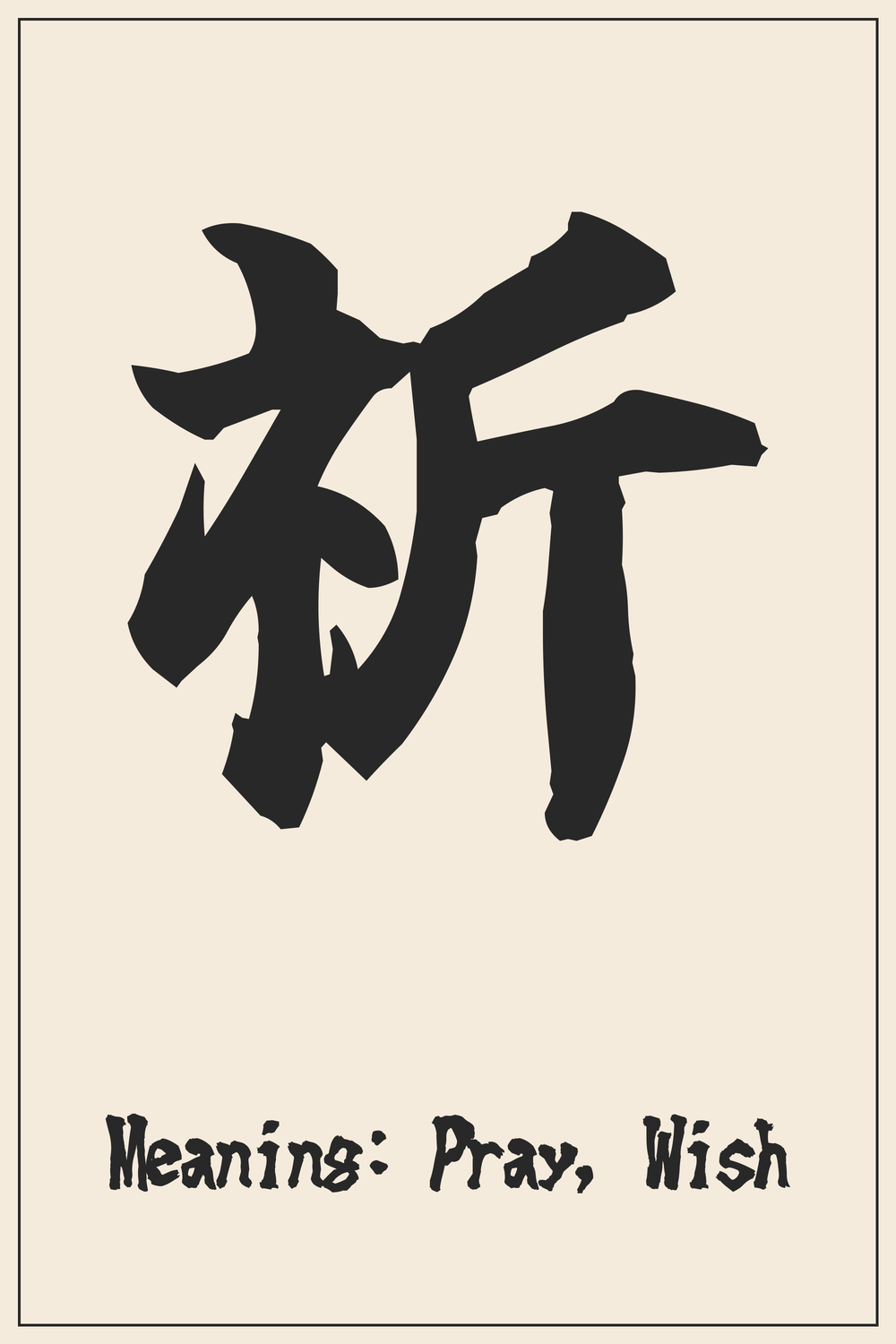
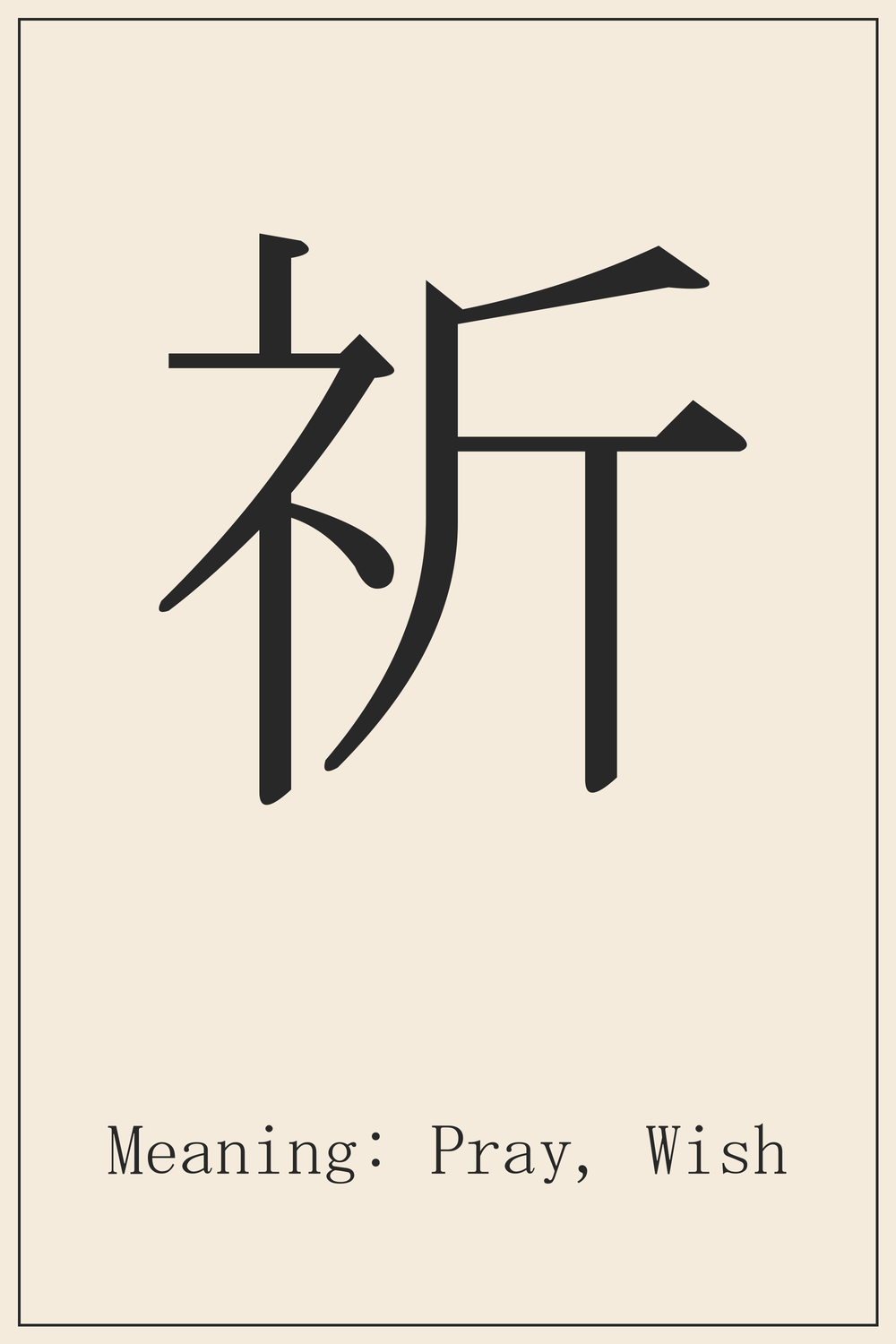
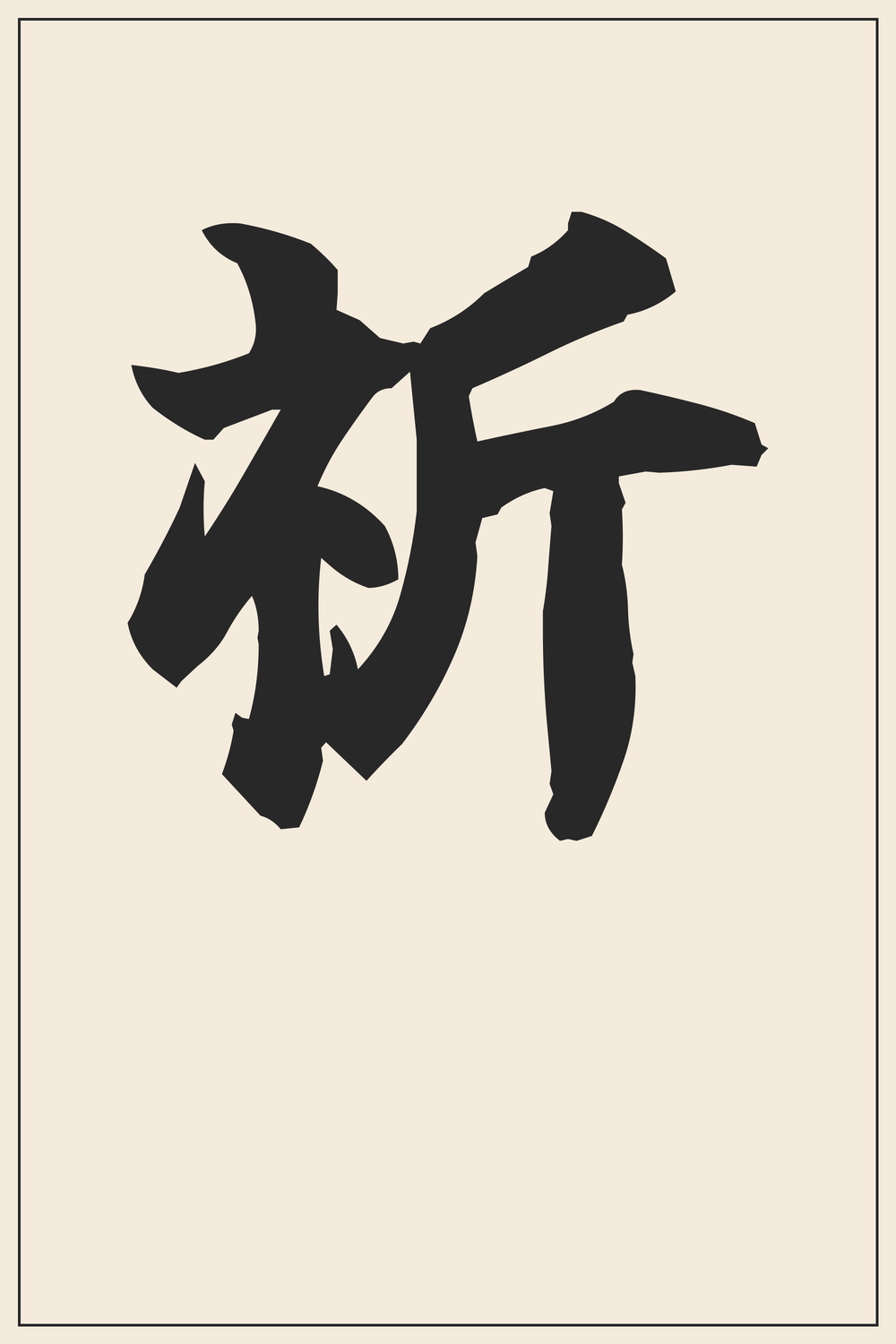
The Kanji 祈 (Inoru) encapsulates the profound human act of prayer and the fervent desire for hope and fulfillment. It symbolizes a connection to the spiritual realm and the power of heartfelt intention.
The atmosphere of a Kanji character changes dramatically depending on the font style. A character that looks elegant in a brush style might look bold and modern in a different font.
Recommendation:
Since a tattoo is permanent, we strongly recommend comparing various font styles beyond what is shown here. Use our designs as a trusted reference for the correct structure, but feel free to explore different artistic variations to find the perfect match for your vision.
The Deep Meaning Behind 祈
The Kanji 祈 is a phono-semantic compound. It combines the radical 示 (shí), meaning ‘altar’ or ‘reveal/show,’ with 斤 (jīn), which provides the phonetic element and possibly suggests ‘axe’ or ‘to chop,’ conceptually linked to a decisive, focused action. Together, it represents an offering or request made at an altar with earnest intent.
In Japan, 祈り (inori) is central to Shinto and Buddhist practices, from annual harvest prayers at shrines to personal supplications for health, safety, and success. It signifies a deeply personal and cultural act of seeking solace, expressing gratitude, or channeling aspirations.
Kanji Breakdown
The Kanji 祈 is comprised of two significant components, each contributing to its profound meaning:
Altar, Revelation: This radical signifies a connection to the divine, altars, or ceremonies where gods are addressed.
Axe, Catty (unit of weight): While phonetically contributing to the ‘ki’ sound, it also implies a focused, cutting action, suggesting the precise and earnest nature of a prayer or wish.
Conclusion
The Kanji 祈 serves as a potent symbol of deep-seated desires, spiritual connection, and the universal act of prayer. It embodies hope and the earnest appeal for betterment and well-being.
Embracing 祈 as a tattoo is to carry a constant reminder of one’s faith, aspirations, and the enduring power of heartfelt wishes. It is a testament to perseverance and the belief in a higher purpose.
Comments