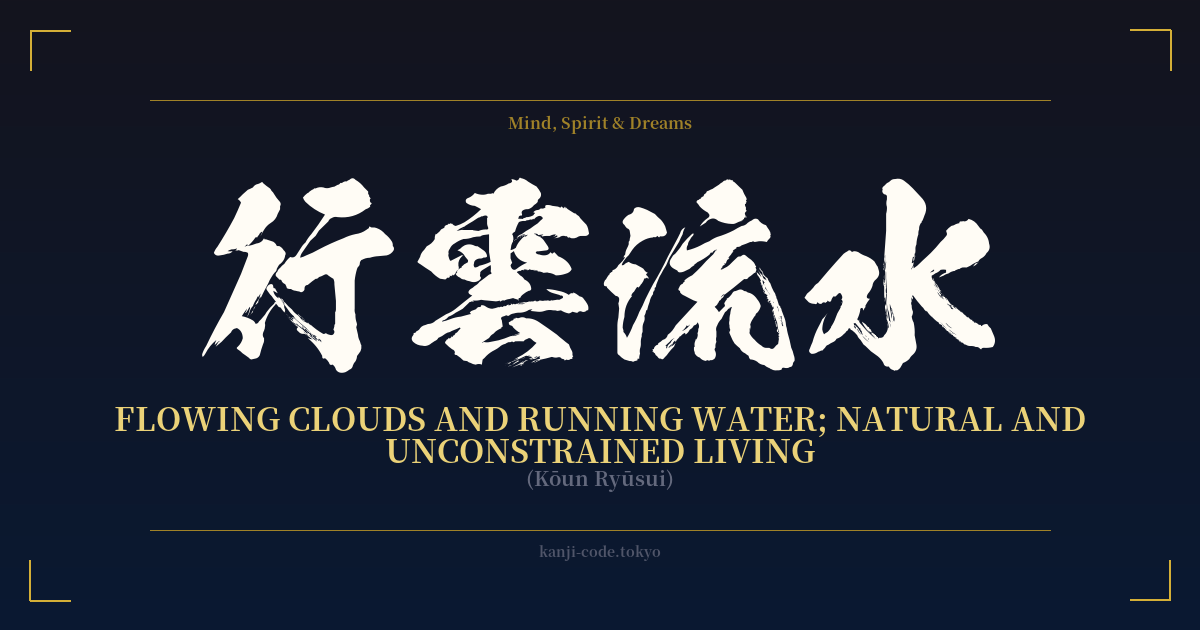
✍️ 行雲流水 (Kōun Ryūsui) — Cultural Context
行雲流水 (Kōun Ryūsui) is a four-character Japanese idiom, or yojijukugo, that translates literally to "going clouds, flowing water." This beautiful phrase, however, carries a much deeper meaning, one that is profoundly connected to the philosophies of Zen Buddhism and Taoism. It encapsulates an ideal state of being: living a life that is natural, free, and unconstrained by worldly attachments or rigid plans.
Imagine clouds drifting effortlessly across the sky, changing shape without resistance. Picture a river winding its way to the sea, adapting to the terrain it encounters, sometimes rushing, sometimes pooling, but always moving forward. This is the essence of Kōun Ryūsui. It is a metaphor for a person who acts with complete freedom and naturalness, their actions dictated not by ambition or anxiety, but by a serene acceptance of life's course.
The origins of the phrase are traced back to Song Dynasty China, where it was used by Zen monks to describe their itinerant lifestyle. These monks would wander from temple to temple, not settling in one place, their lives as transient and unattached as the clouds and water they observed. They sought enlightenment by detaching from material possessions, social status, and even their own ego, aiming to move through the world with grace and spontaneity.
In modern Japan, Kōun Ryūsui is used to admire a person, an artwork, or a piece of writing that feels effortless and sublime. A calligrapher whose brushstrokes move with fluid grace might be described as embodying Kōun Ryūsui. A person who navigates life's challenges with a calm, adaptable spirit is said to live in this state. It stands in direct contrast to a life of meticulous planning and stressful striving, advocating instead for embracing the present moment and trusting in the natural flow of events.
To adopt the mindset of Kōun Ryūsui is to let go of the need to control everything. It is to find strength in flexibility and peace in impermanence. It doesn't mean being passive; rather, it suggests a dynamic and responsive way of living, where one is fully engaged with the world yet free from the anxieties that bind so many. It is a powerful reminder that sometimes, the most profound journey is the one taken without a map.
🖌️ Font Styles for 行雲流水
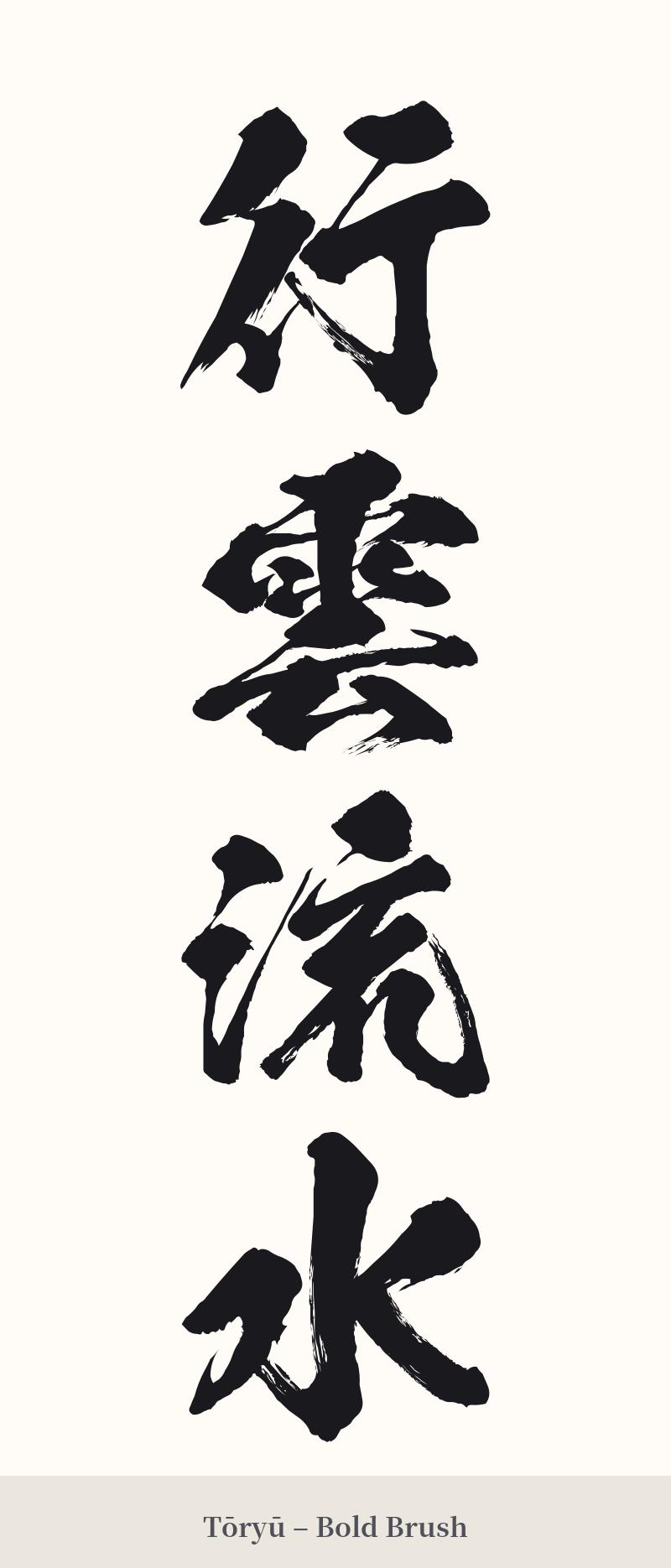
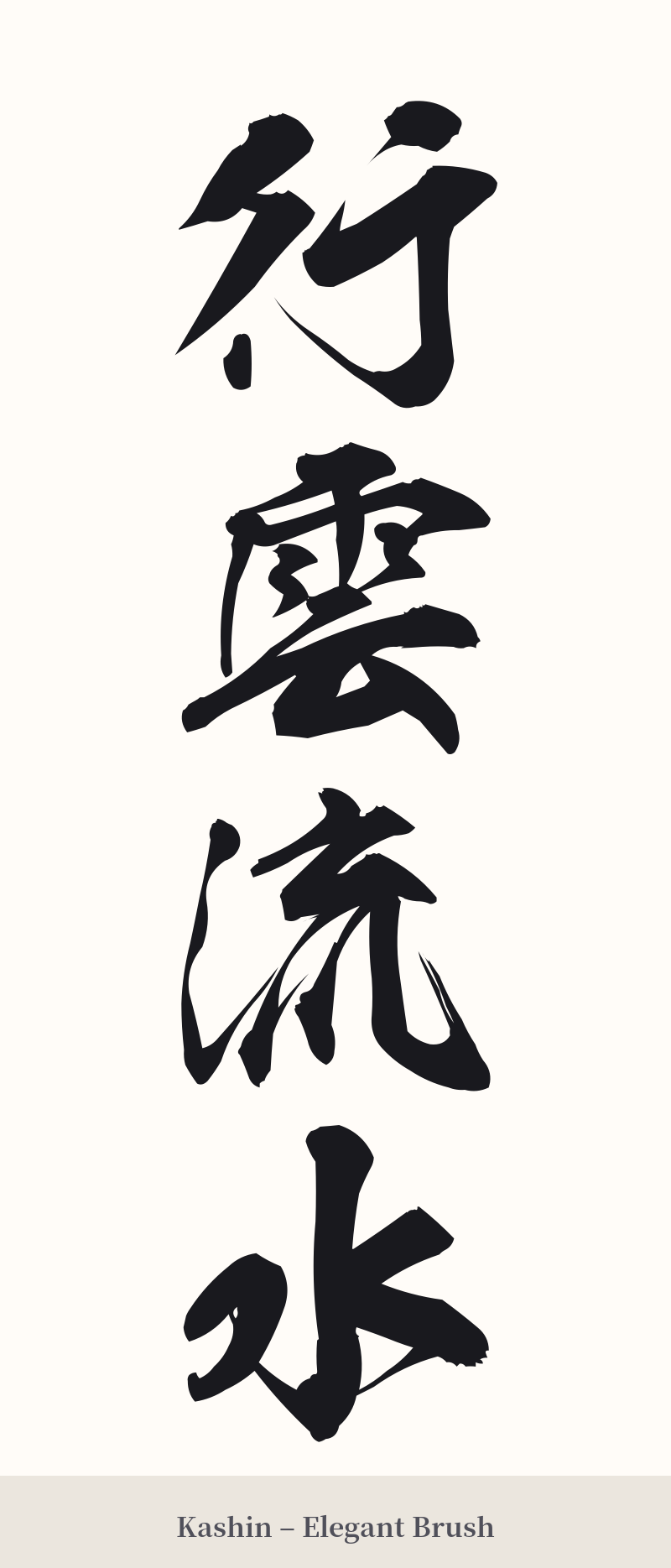
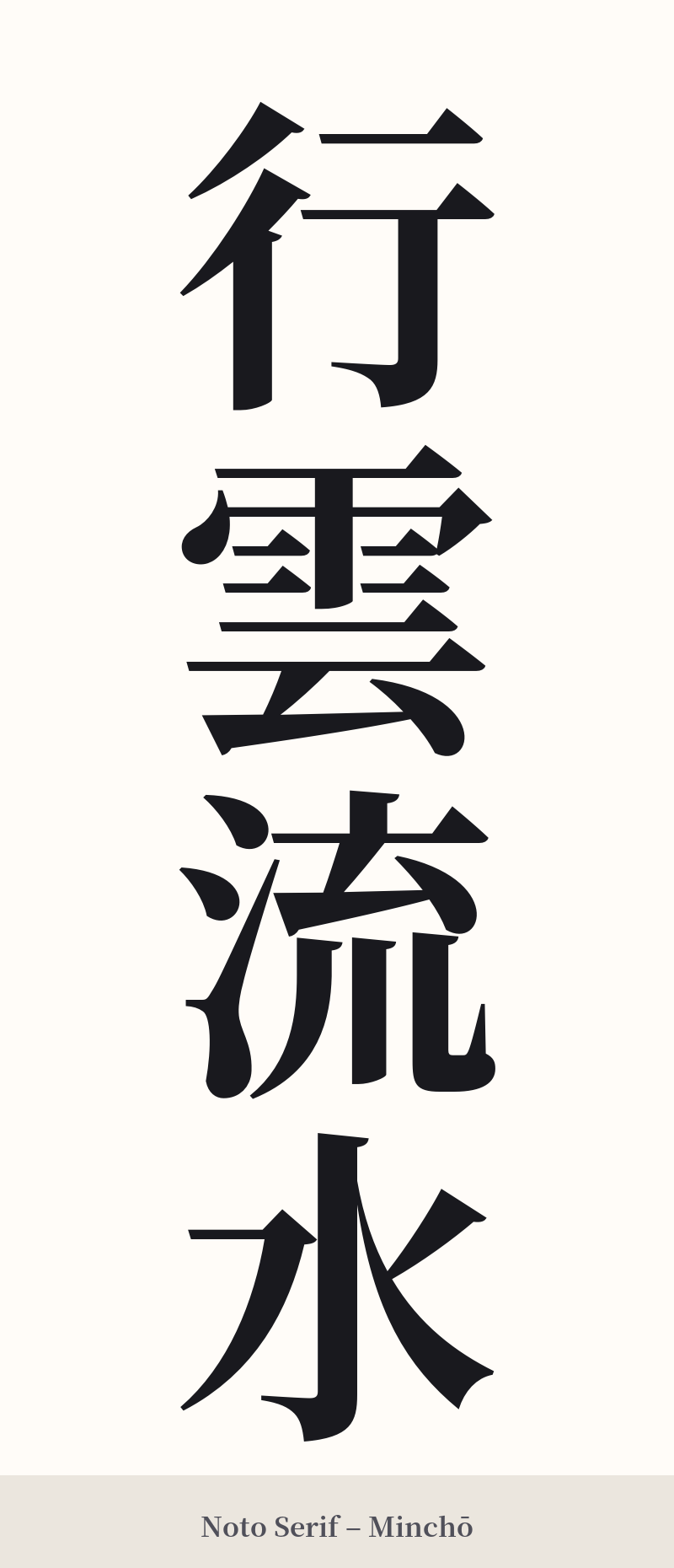
The same kanji can look dramatically different depending on the calligraphy style. Choose a font that matches the mood you want for your tattoo or design.
🎨 Tattoo Suitability
📐 Tattoo Design Guide
The four-character structure of 行雲流水 offers excellent design versatility. Its inherent meaning of 'flow' and 'freedom' can be beautifully expressed through careful design choices.
– Placement: A vertical orientation is classic and powerful, making it ideal for the spine, forearm, or along the calf. A horizontal arrangement works well across the chest, upper back, or inner bicep.
– Font Style: To honor the 'flowing' nature of the idiom, a semi-cursive script like Gyōsho (行書) is a superb choice. It adds a sense of movement and elegance. For a bolder, more grounded statement, the standard block script, Kaisho (楷書), provides clarity and strength.
– Visual Tips: While the kanji alone are powerful, you could consider incorporating subtle, minimalist elements of clouds or water. However, be cautious not to overwhelm the characters. The focus should remain on the kanji themselves. A 'smudged ink' or 'watercolor' background effect can also enhance the theme without cluttering the design.
Comments