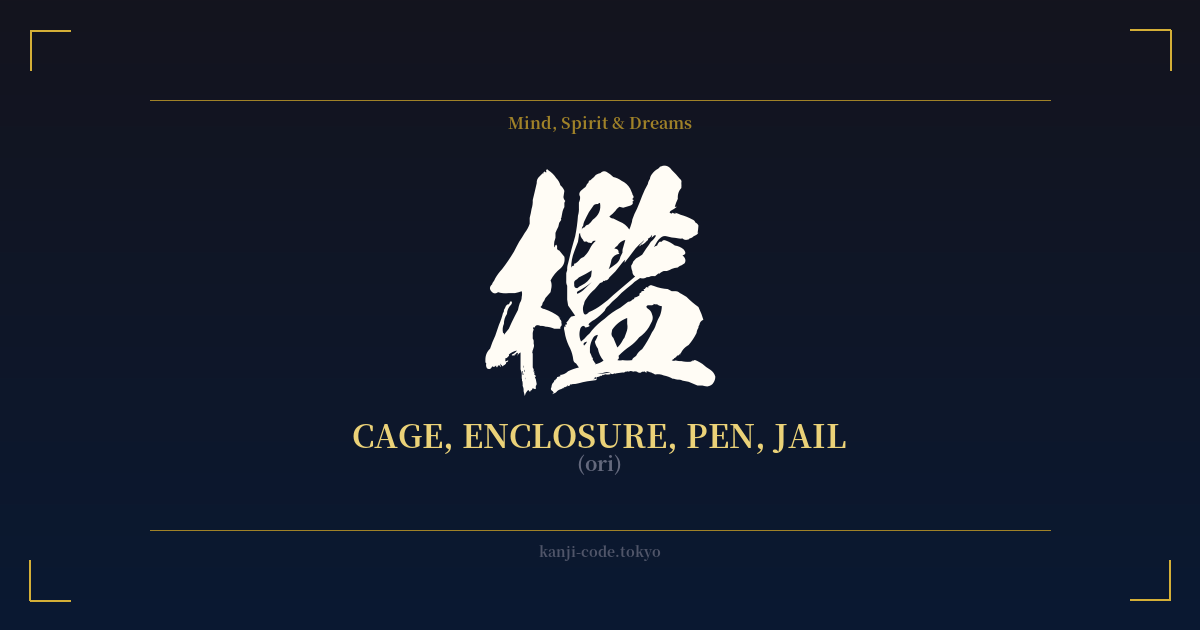
✍️ 檻 (ori) — Cultural Context
The kanji 檻 (ori) is a visually and conceptually potent character, encapsulating the idea of confinement. Its most direct translation is 'cage' or 'pen,' an enclosure designed to hold something captive. This literal meaning is deeply rooted in its structure; the character is composed of the radical 木 (ki), meaning 'wood' or 'tree,' and a more complex component on the right. This composition paints a picture of a cage constructed from wooden bars, a common form of enclosure throughout history for animals and, grimly, for people.
While the literal meaning is straightforward, the true power of 檻 lies in its extensive metaphorical use in the Japanese language and psyche. It's frequently used to describe psychological or emotional states of being trapped. The phrase 心の檻 (kokoro no ori), 'the cage of the heart' or 'the cage of the mind,' is a common and evocative expression. It refers to self-imposed limitations, crippling anxieties, past traumas, or societal pressures that confine a person's spirit and prevent them from achieving their full potential. This concept resonates deeply, turning the kanji from a simple noun into a symbol of internal struggle.
In Japanese literature, anime, and manga, the 'kokoro no ori' is a recurring theme. Characters are often depicted as battling against their inner cages, whether it's a fear they must conquer, a social role they feel trapped in, or a secret they cannot reveal. This makes 檻 a powerful symbol for storytelling, representing the universal human desire for liberation and self-actualization. The struggle is not just against an external force, but against the prison one has built within oneself.
It’s important to distinguish 檻 (ori) from 牢獄 (rōgoku), which means 'prison' or 'jail' in a more formal, carceral sense. While both imply confinement, 檻 carries a broader, more personal, and often more poetic nuance. An animal is in an 'ori'; a person might build an 'ori' in their own mind. A criminal is sent to 'rōgoku.'
Ultimately, 檻 stands as a stark dual symbol. On one hand, it represents restriction, helplessness, and captivity. On the other, it represents the very thing that must be broken to achieve freedom. Its presence implies a story of confinement, but it also powerfully suggests the possibility of liberation, making it a complex and thought-provoking character.
🖌️ Font Styles for 檻
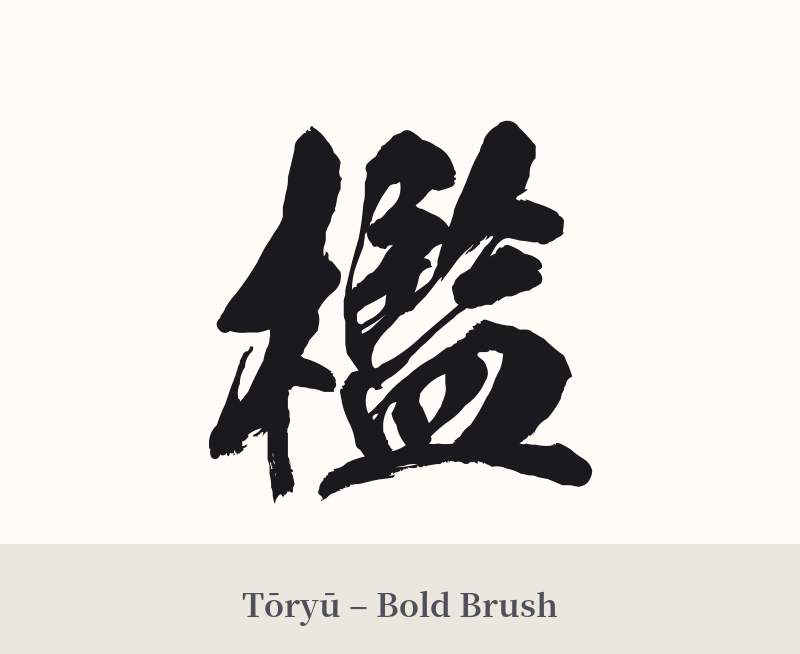
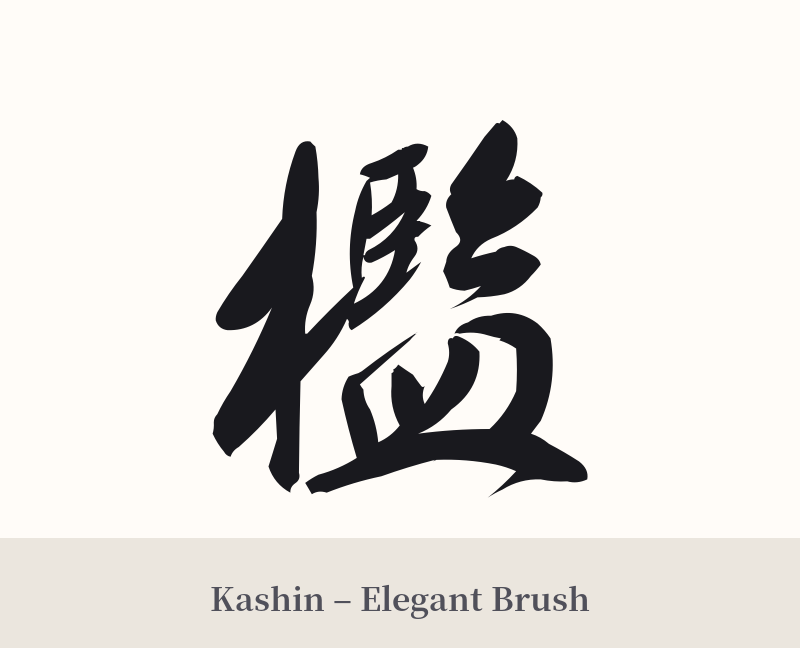
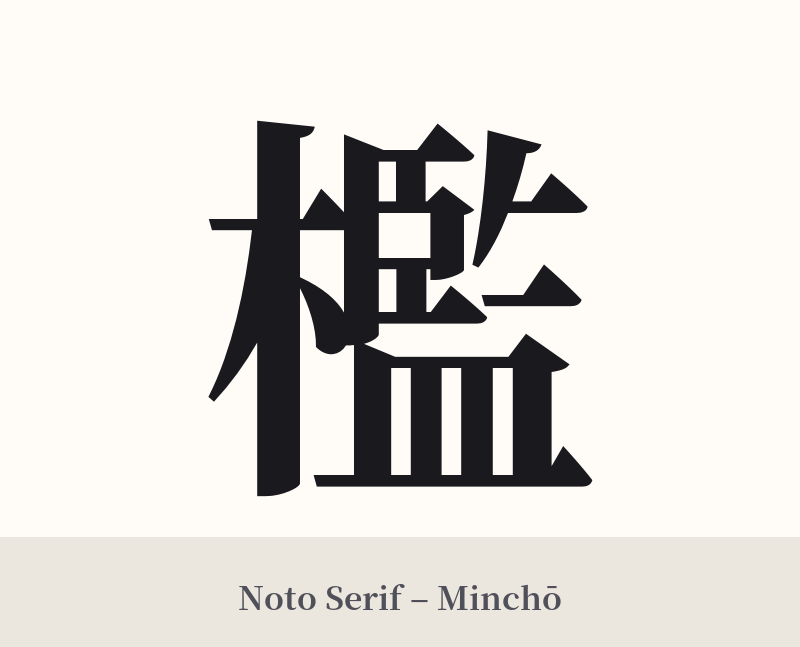
The same kanji can look dramatically different depending on the calligraphy style. Choose a font that matches the mood you want for your tattoo or design.
🎨 Tattoo Suitability
📐 Tattoo Design Guide
A tattoo of 檻 (ori) is a statement piece, heavy with meaning. Its design should reflect the specific nuance you wish to convey—confinement or the act of breaking free.
– Placement: Consider areas that suggest a sense of being bound or a point of release. The forearm, wrist, or back of the neck can symbolize a personal and visible struggle. A larger piece on the back or ribs could depict a more expansive, internal cage.
– Font Style: The choice of font is critical. A rigid, blocky Kaisho (block script) style can emphasize the unyielding, structural nature of the cage. Conversely, a dynamic and fluid Gyosho (semi-cursive) or Sosho (cursive) script can represent the act of breaking or shattering the cage, with explosive and energetic strokes.
– Visual Tips: To emphasize a message of liberation, consider incorporating other elements. The character could be designed to look like it's breaking apart, with fragments flying off. A bird or other symbol of freedom emerging from the kanji is another powerful option. Using negative space to 'carve' the kanji out of a dark background can also create a visually arresting effect, as if one is looking out from inside the cage.
Comments