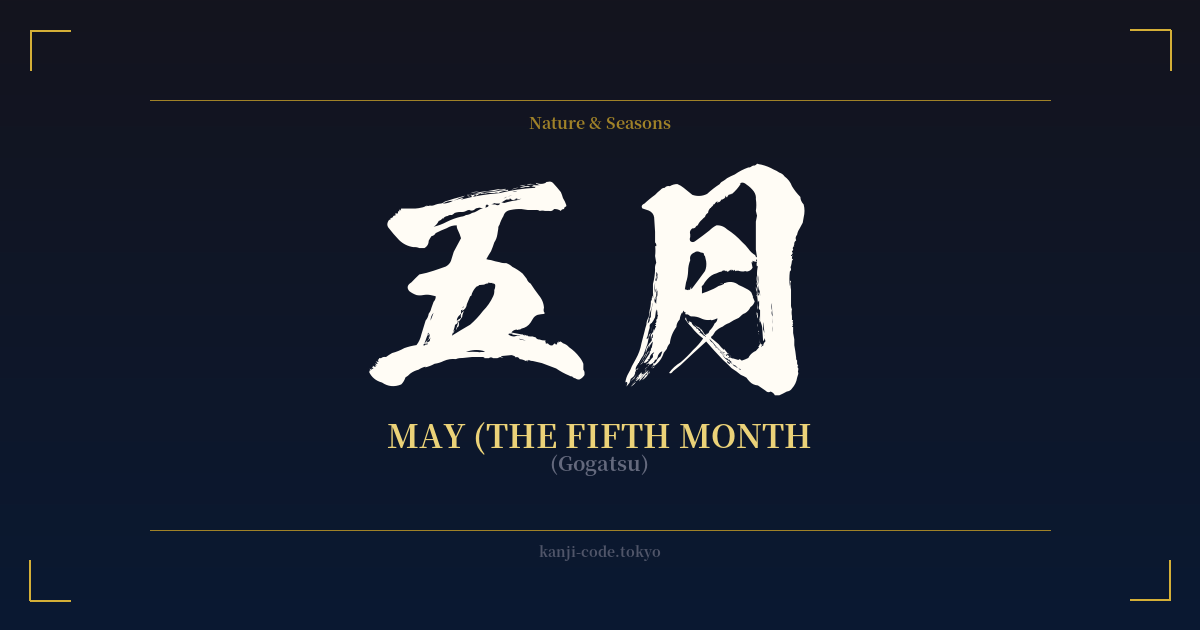
✍️ 五月 (Gogatsu) — Cultural Context
五月 (Gogatsu) is the Japanese word for May, literally translating to "the fifth month." While straightforward, this term is deeply woven into the fabric of Japanese culture, evoking a specific and cherished time of year marked by holidays, vibrant nature, and distinct social phenomena.
Perhaps the most significant cultural event in May is Golden Week (ゴールデンウィーク). This is a collection of four national holidays within a seven-day period, creating one of Japan's busiest holiday seasons. It's a time for travel, family gatherings, and festivals. The holidays include Shōwa Day, Constitution Memorial Day, Greenery Day, and the culminating celebration, Children's Day.
Children's Day (こどもの日, Kodomo no Hi) on May 5th is a spectacle of color and tradition. Families fly koinobori, or carp-shaped streamers, one for each member of the family. The carp is a symbol of strength and perseverance, admired for its ability to swim upstream against strong currents. This imagery expresses the hope that children will grow up healthy, strong, and resilient. Inside homes, families may display samurai helmets (兜, kabuto) or dolls of folk heroes like Kintarō, further reinforcing themes of strength and courage.
May is also a month of breathtaking natural beauty. The intense green of new leaves, known as shinryoku (新緑), blankets the mountains and parks. After the fleeting cherry blossoms of April, this lush, vibrant greenery symbolizes fresh life and invigorating energy. The weather is typically warm and pleasant, making it a perfect time for outdoor activities before the onset of the rainy season in June.
The older, more poetic name for May is Satsuki (皐月). This name is linked to the traditional rice-planting season, a fundamental part of Japan's agricultural heritage. While Gogatsu is the standard term, Satsuki is often used in literature and art to evoke a more rustic and traditional feeling.
On a more modern and psychological note, May is also associated with Gogatsu-byō (五月病), or "May Sickness." This is not a clinical illness but a term for the lethargy and lack of motivation that students and new employees often feel after the excitement of the new school and fiscal year (which starts in April) and the Golden Week vacation has passed. It reflects the emotional letdown after a period of high stress and high excitement, a uniquely modern aspect of this fifth month.
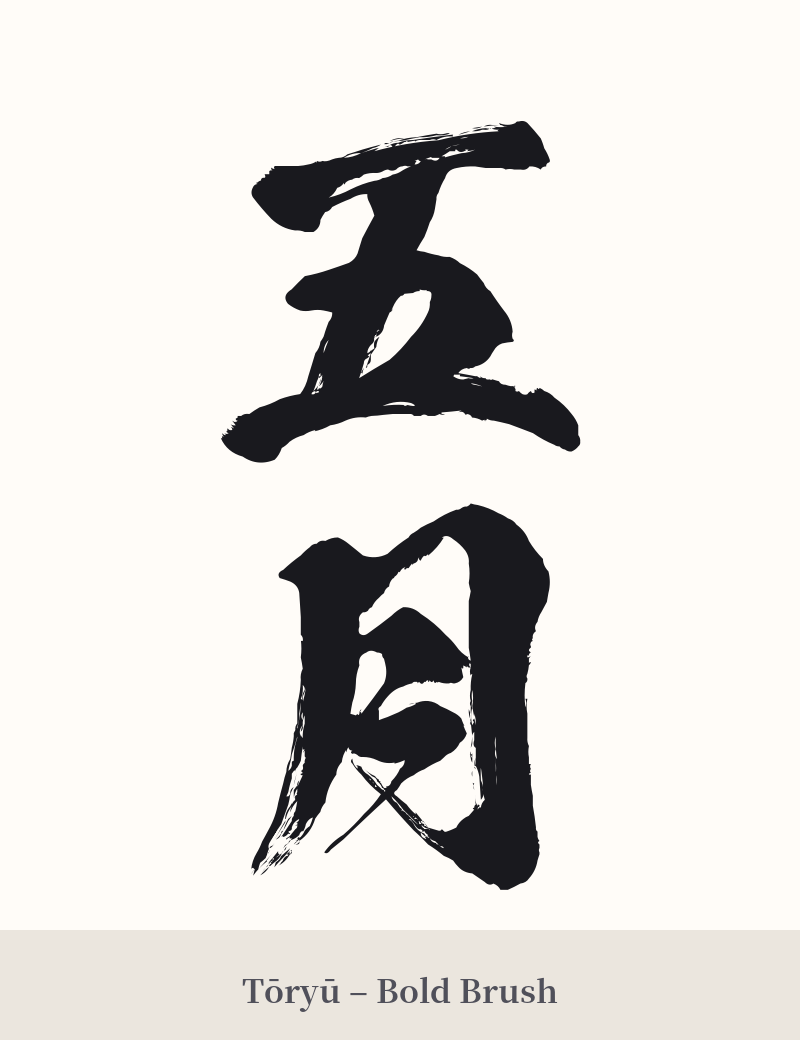
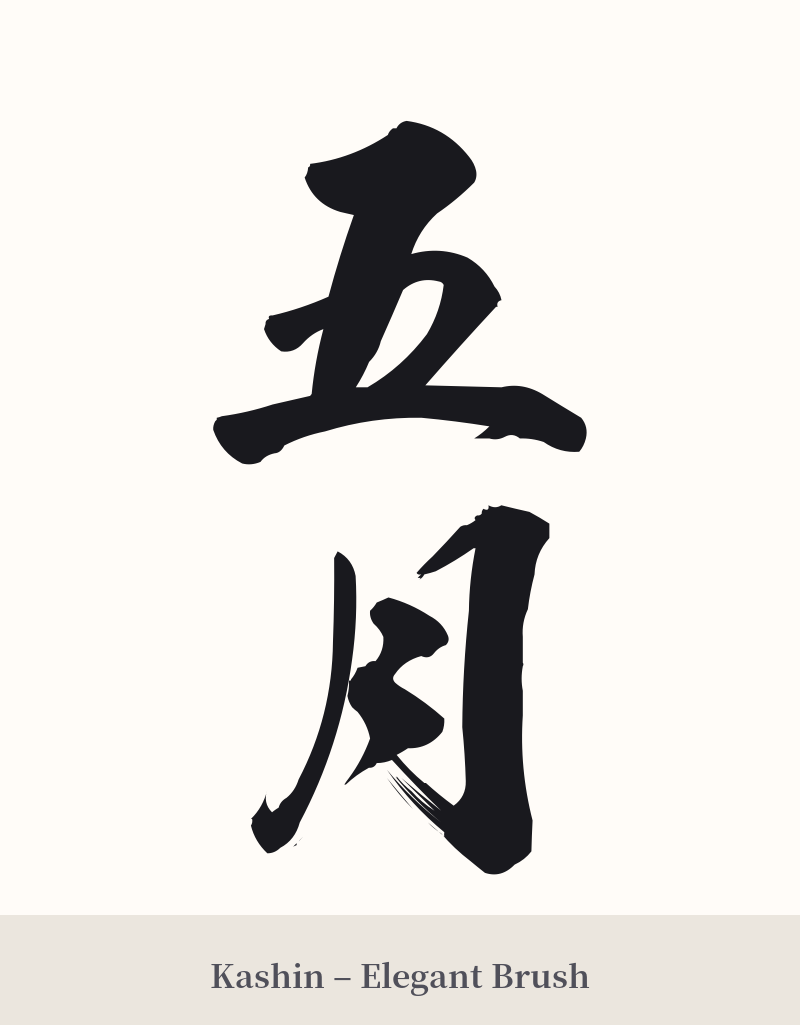
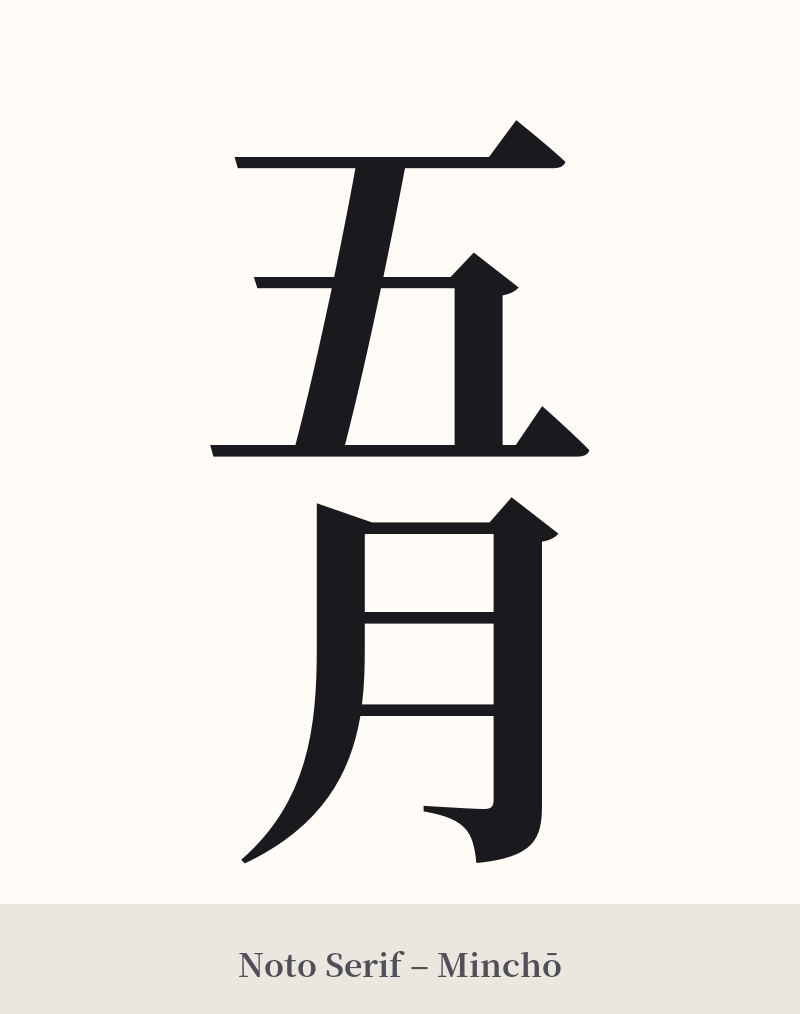
🖌️ Font Styles for 五月
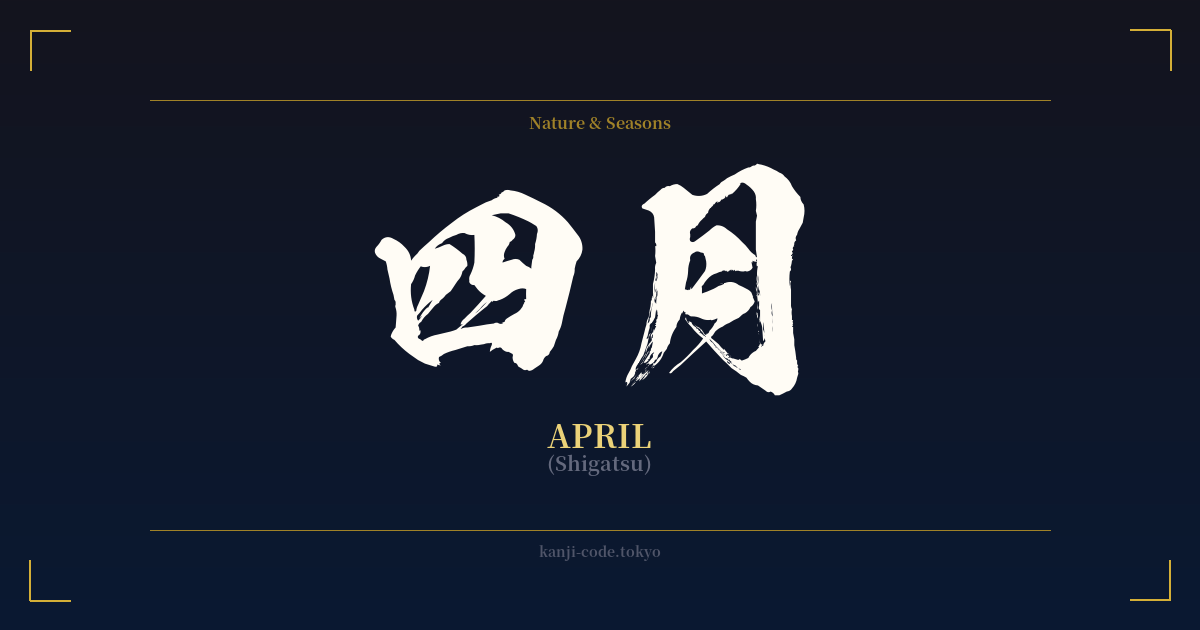
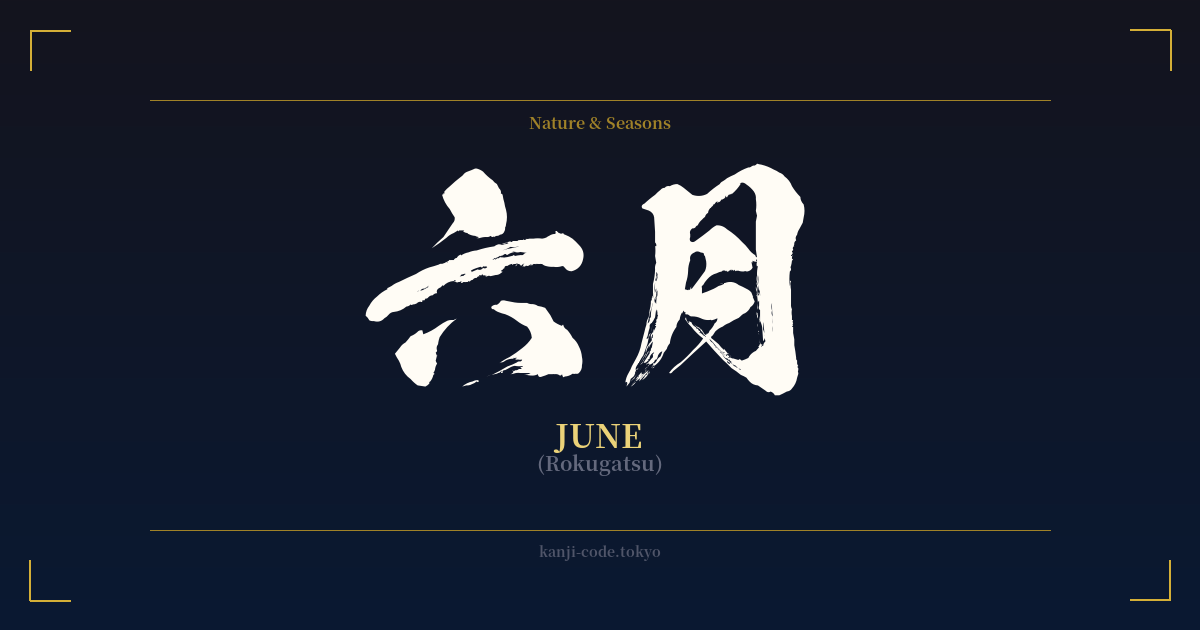
The same kanji can look dramatically different depending on the calligraphy style. Choose a font that matches the mood you want for your tattoo or design.
🎨 Tattoo Suitability
📐 Tattoo Design Guide
A tattoo of 五月 offers a clean and classic aesthetic. Its simplicity allows for versatility in design and placement.
– Placement: For a vertical orientation, the spine, forearm, or calf are excellent choices. Horizontally, it works well on the collarbone, inner wrist, or across the ribs.
– Font Style: A crisp, serif font like Mincho will give it a timeless, printed look. For a more organic feel, a semi-cursive or calligraphy (shodō) style can add grace and movement, echoing the natural themes of the month.
– Visual Tips: To add more context and visual interest, consider incorporating elements associated with May in Japan. Winding a koinobori (carp streamer) around the kanji can symbolize strength and family. Adding fresh green maple leaves or iris flowers (which bloom in May and are associated with Children's Day) can create a beautiful, seasonal composition that tells a richer story.
Comments