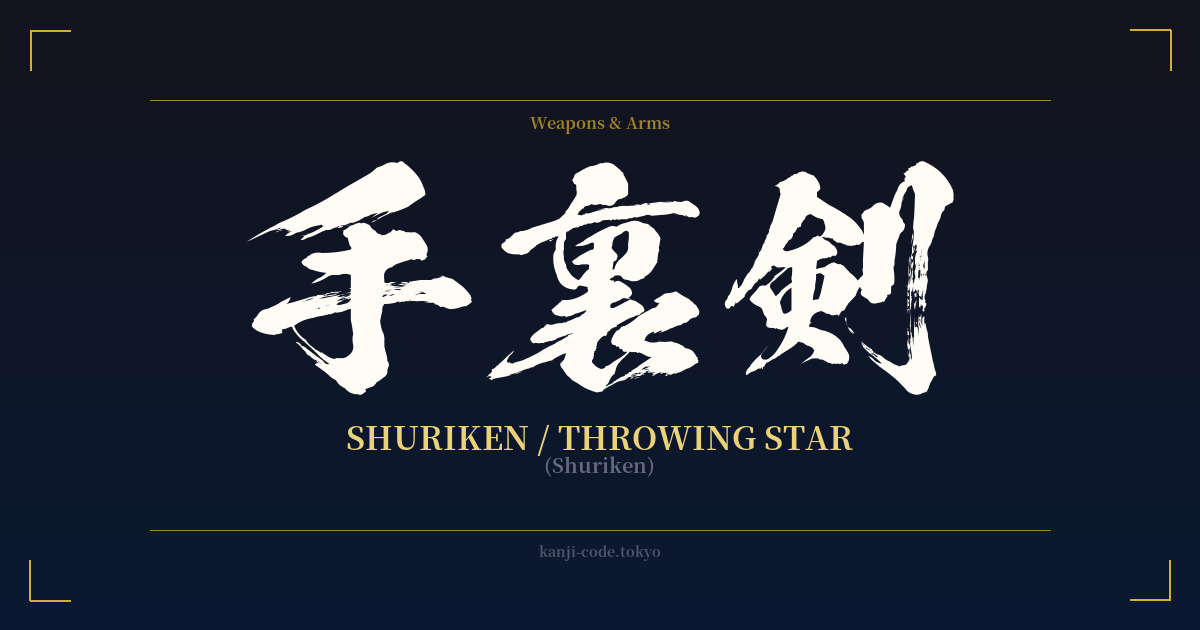
✍️ 手裏剣 (Shuriken) — Cultural Context
The word 手裏剣 (Shuriken) instantly conjures images of shadowy ninjas, silent assassins of feudal Japan, flinging star-shaped blades from the darkness. While this pop-culture image is powerful, the true history of the shuriken is more nuanced and practical.
Literally translated, the kanji break down to 手 (te – hand), 裏 (ri – inside/palm), and 剣 (ken – blade), forming the phrase "blade inside the hand." This name perfectly captures the weapon's essence: a small, concealable blade meant to be deployed quickly from a hidden position.
Historically, shuriken were not the primary weapons of the ninja or samurai. They were auxiliary tools used for distraction, defense, and escape. Unlike the cinematic trope of a single shuriken causing instant death, these blades were more likely to be thrown at an opponent's face or hands to create an opening, slow a pursuer, or cause a moment of hesitation. Their effectiveness lay in surprise and disruption, not lethal force.
There are two main categories of shuriken. The iconic star-shaped ones are called hira-shuriken (flat shuriken) or shaken. The other, arguably more common historical type, is the bō-shuriken (stick shuriken), which were essentially sharpened metal spikes. These were often fashioned from everyday objects like nails or needles, making them easy to produce and conceal.
The art of wielding these weapons, known as shurikenjutsu, was a supplementary skill studied in many classical martial arts schools (ryūha), not just those associated with ninjutsu. It was a practical skill for a warrior who might find themselves disarmed of their primary weapon, the sword.
In the modern era, the shuriken has been almost entirely co-opted by popular culture. From the Naruto series to countless movies and video games, the throwing star has become a globally recognized symbol of the ninja. This has cemented its place as an iconic piece of Japanese imagery, though it has also detached it from its more grounded historical reality. For many, the shuriken is less a historical weapon and more a symbol of stealth, speed, and the mystique of the shadow warrior.
🖌️ Font Styles for 手裏剣
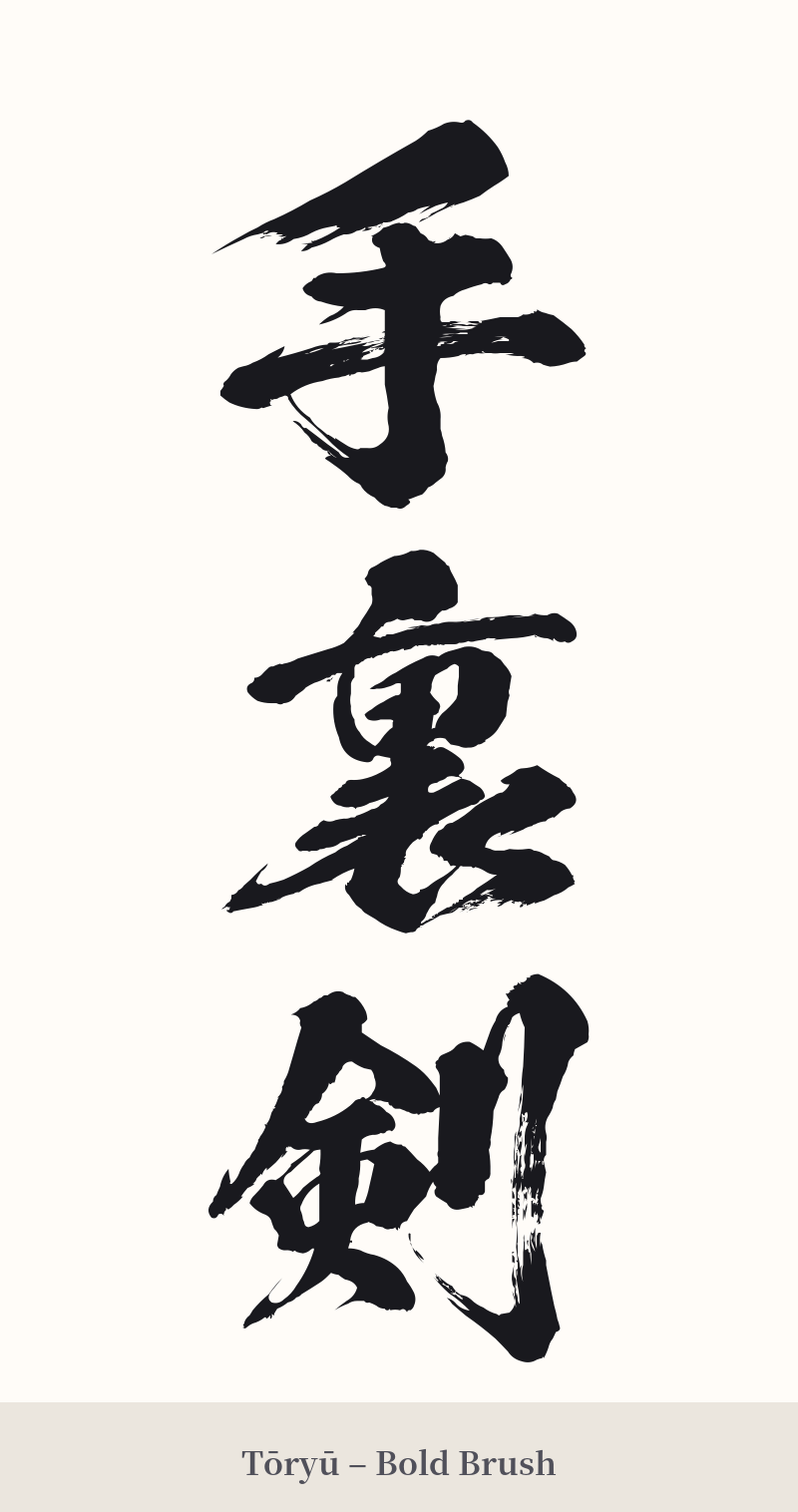
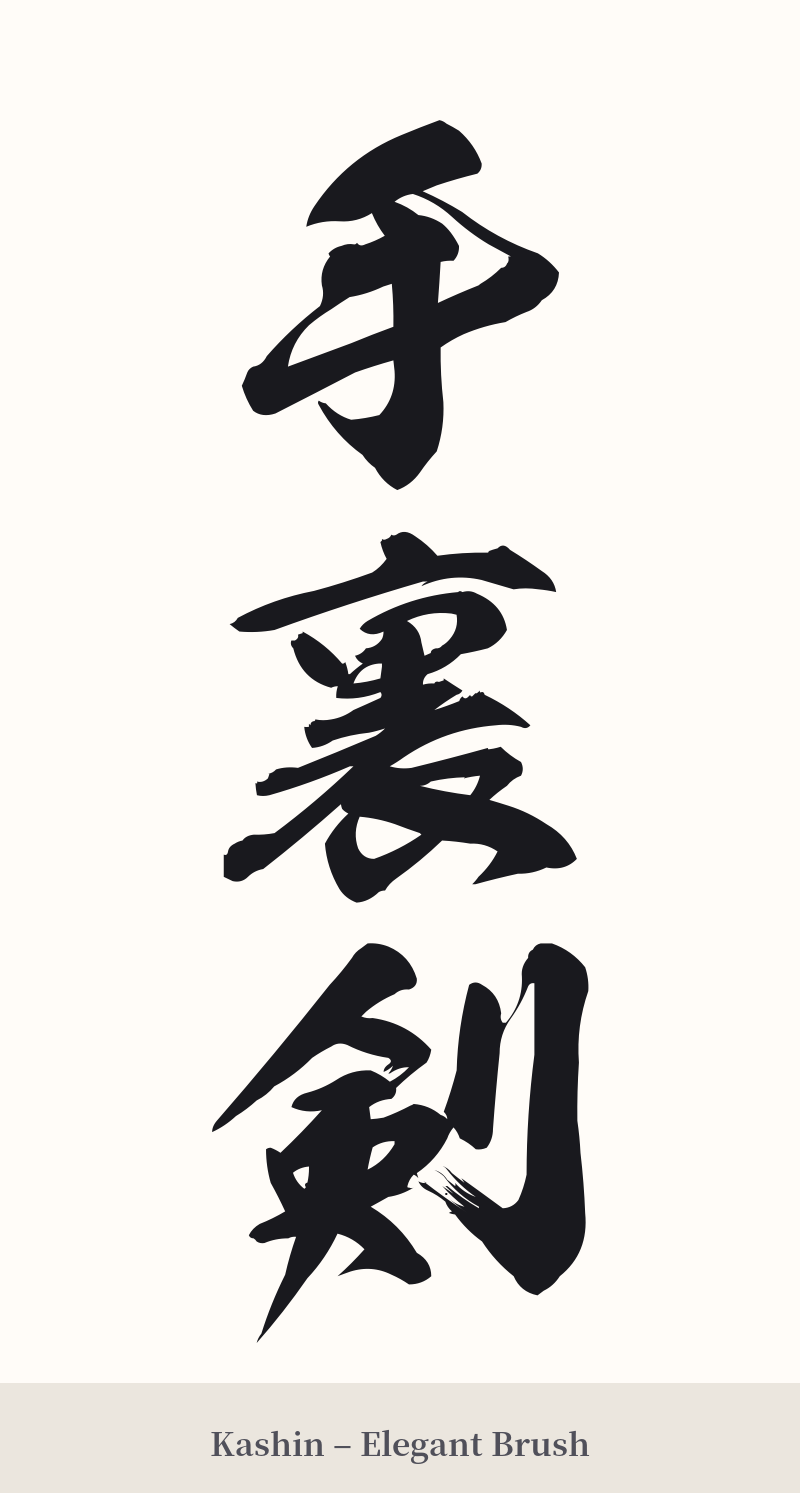
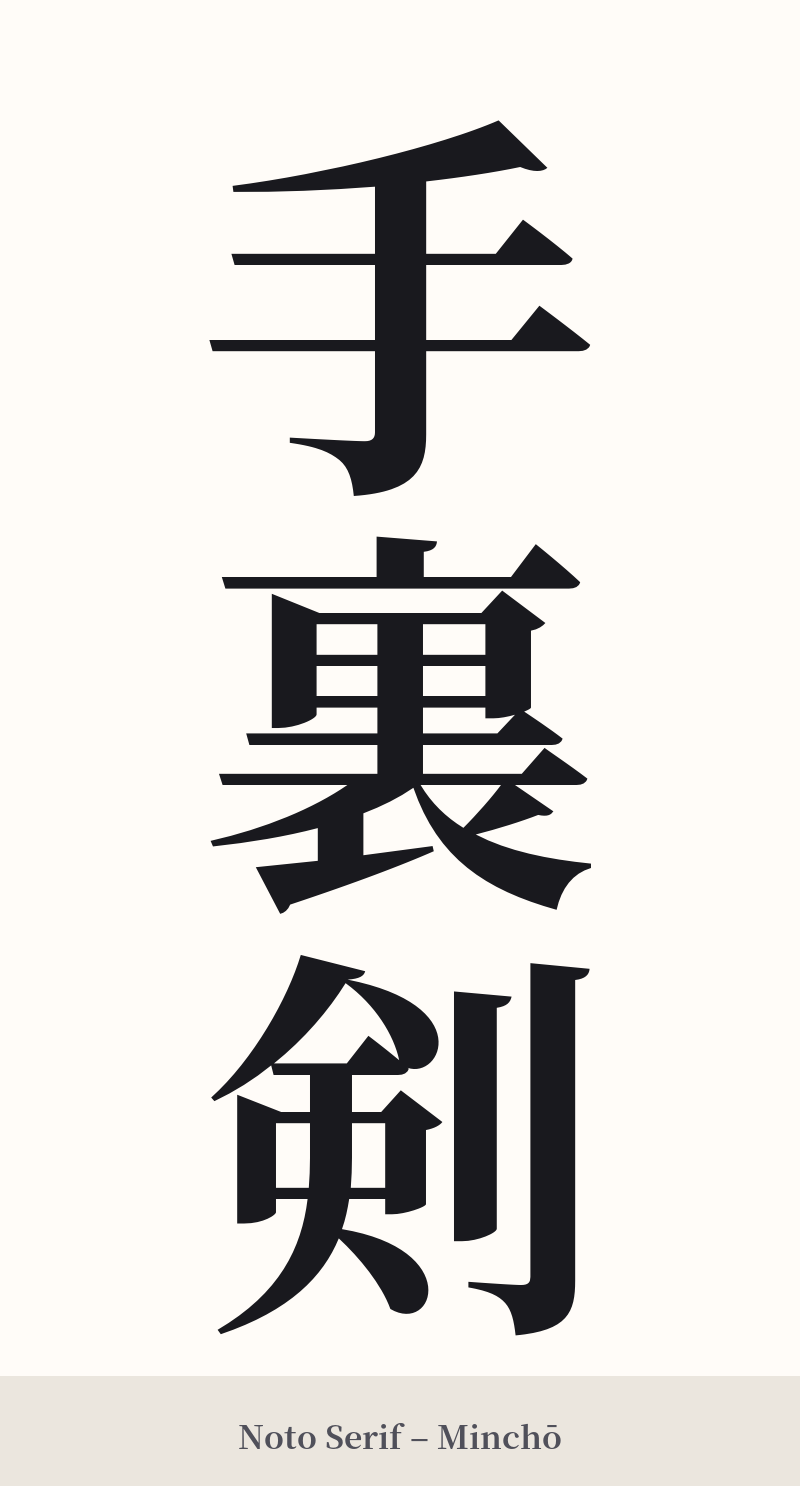
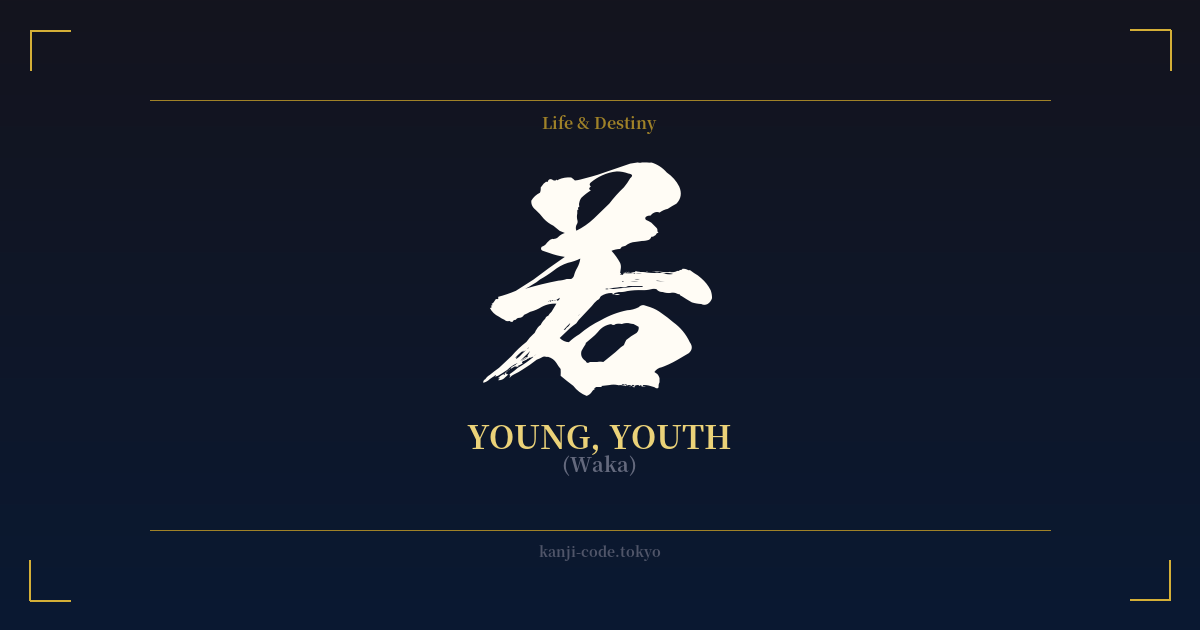
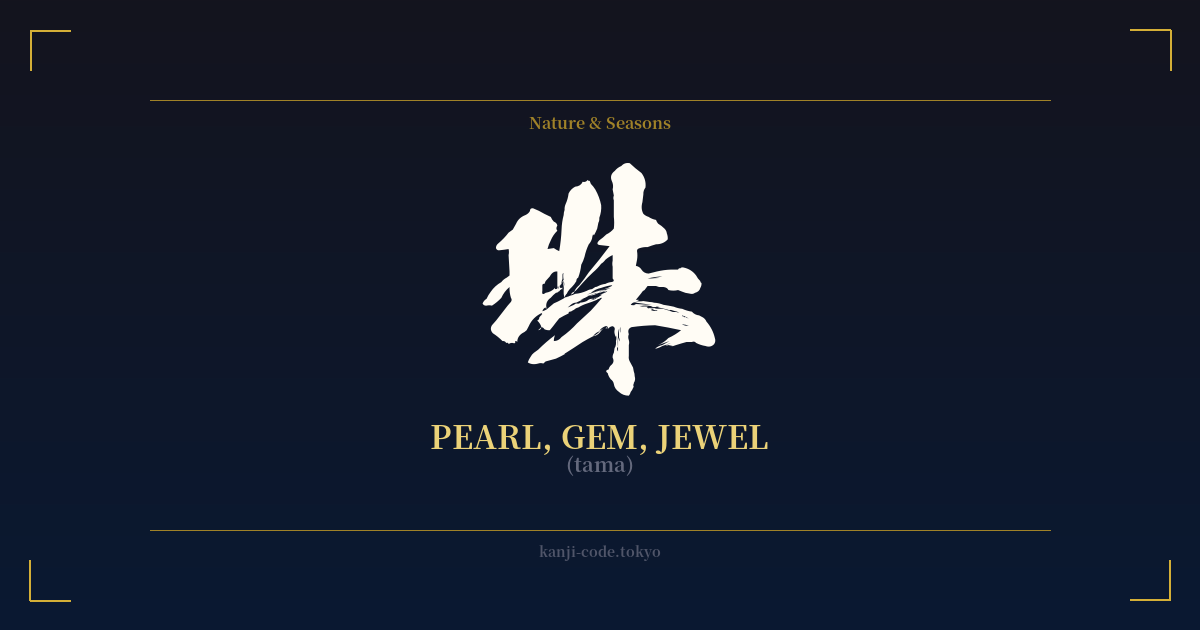
The same kanji can look dramatically different depending on the calligraphy style. Choose a font that matches the mood you want for your tattoo or design.
🎨 Tattoo Suitability
📐 Tattoo Design Guide
For a 手裏剣 tattoo, the design should emphasize sharpness and motion.
– Placement: A vertical orientation of the kanji is a classic choice and looks fantastic running down the forearm, calf, or along the spine. For a horizontal layout, the upper back or chest provides a good canvas.
– Font Style: A sharp, angular Mincho or Kaisho font style will enhance the 'blade' aspect of the word. Alternatively, a dynamic, flowing brush script (gyosho or sosho) can capture the feeling of movement, as if the characters themselves are being thrown.
– Visual Tips: Because the characters are somewhat complex, especially 裏 and 剣, avoid making the tattoo too small, as the lines could blur over time. Consider incorporating the kanji into a larger image, perhaps with ink wash (sumi-e) style smoke, a crescent moon, or even a subtle silhouette of a ninja. A design that makes the characters appear to be flying or spinning can add a unique and dynamic touch.
Comments