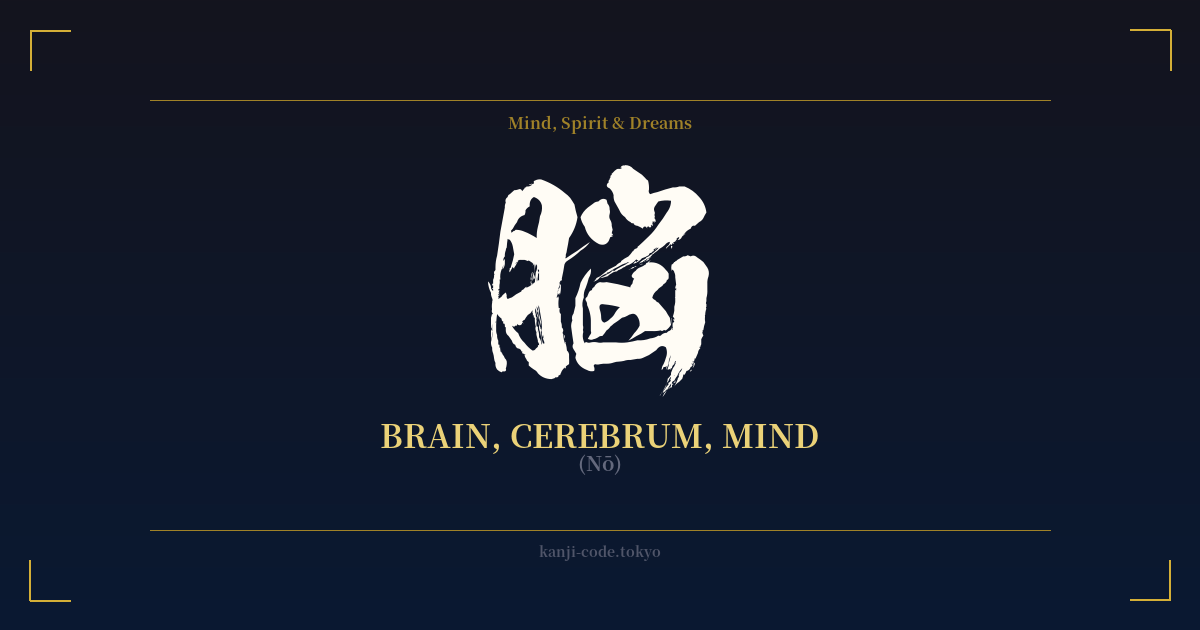
✍️ 脳 (Nō) — Cultural Context
The Japanese kanji 脳 (Nō) is a fascinating character that straddles the line between the physical and the abstract. Its primary meaning is 'brain,' referring to the biological organ responsible for thought, memory, and bodily control. However, its meaning extends beyond mere anatomy to encompass the concepts of 'mind,' 'intellect,' and 'brains' in the sense of intelligence.
The character's structure offers a glimpse into its origins. The left-side radical, 月, is a simplified form of 肉 (niku), meaning 'flesh' or 'meat.' This radical is used in many kanji related to body parts, firmly grounding 脳 in the physical realm. The right side is a more complex phonetic and semantic component, historically depicting the top of the head and its contents, reinforcing the location of the brain.
In modern Japanese, 脳 is a staple of scientific and intellectual vocabulary. You'll find it in words like 脳科学 (nōkagaku – neuroscience), 頭脳 (zunō – brains/intellect), and the rather ominous 洗脳 (sennō – brainwashing). This usage highlights its connection to logic, reason, and the mechanics of thought.
However, it's crucial to distinguish 脳 (Nō) from another key character related to the mind: 心 (kokoro). While 脳 refers to the intellect and the physical brain, 心 encompasses the heart, emotions, spirit, and the seat of feeling. A Japanese person 'thinks' with their 脳 but 'feels' with their 心. This distinction is fundamental. If you want to express raw intelligence or a scientific view of consciousness, 脳 is appropriate. If you wish to convey emotion, spirit, or a more holistic sense of self, 心 is the correct choice.
In popular culture, particularly in science fiction anime and manga, 脳 is a recurring motif. Series like 'Ghost in the Shell' and 'Psycho-Pass' delve deeply into themes of cyber-brains, artificial intelligence, and the nature of consciousness, placing the kanji 脳 at the center of complex philosophical questions about what it means to be human in a technological age. This gives the character a modern, sometimes cold and analytical, connotation.
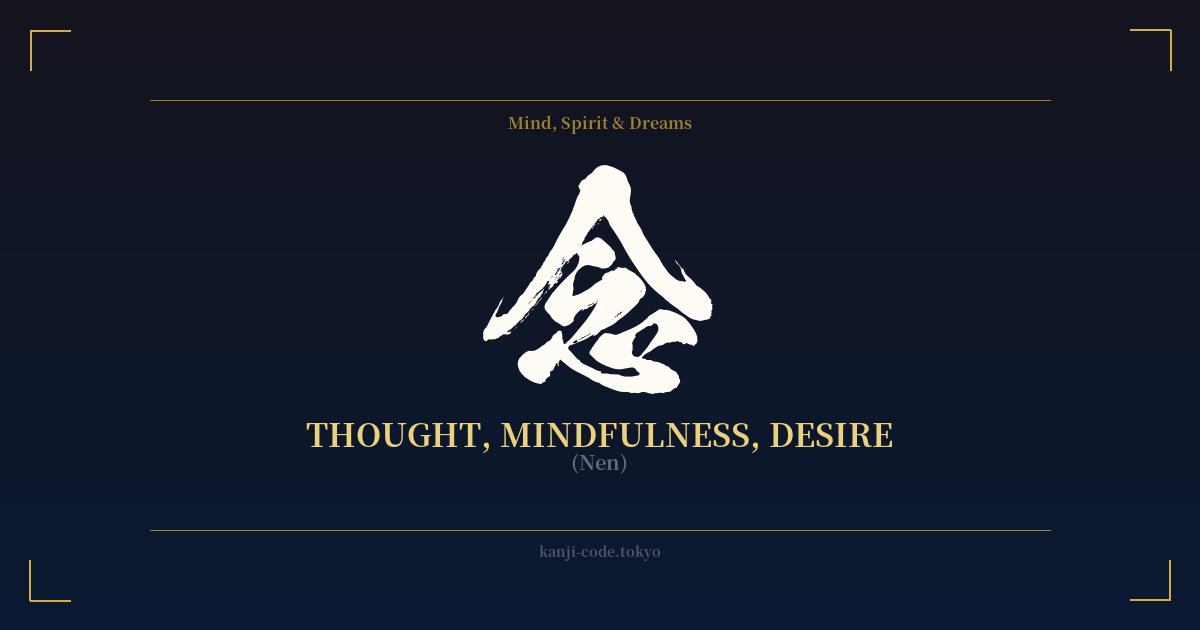
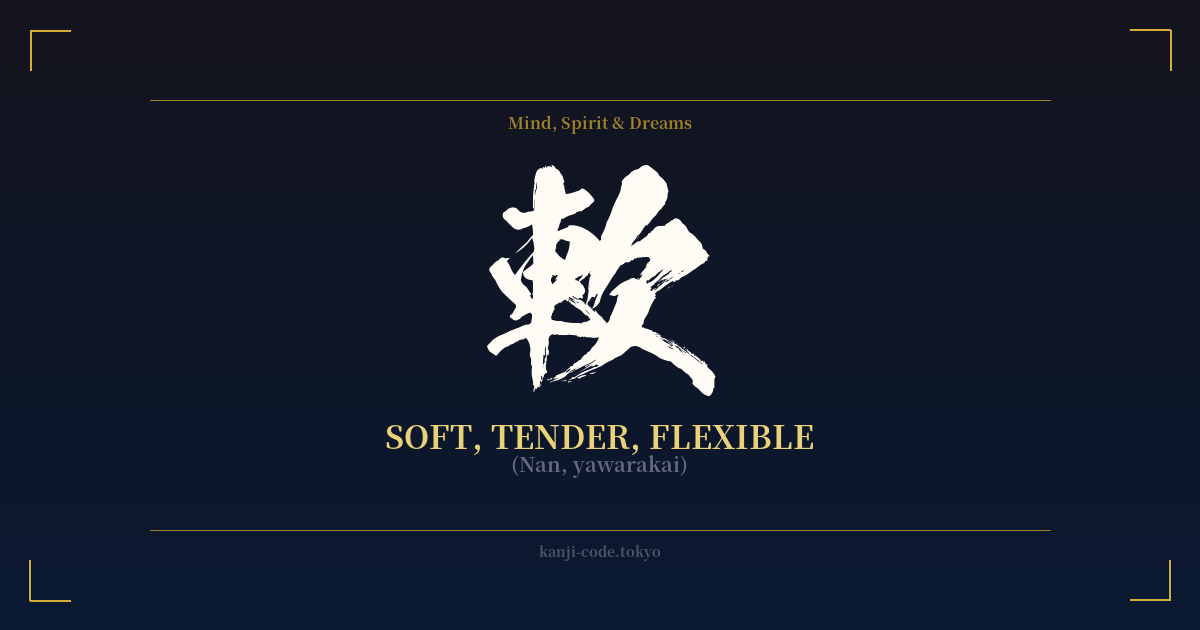
🖌️ Font Styles for 脳
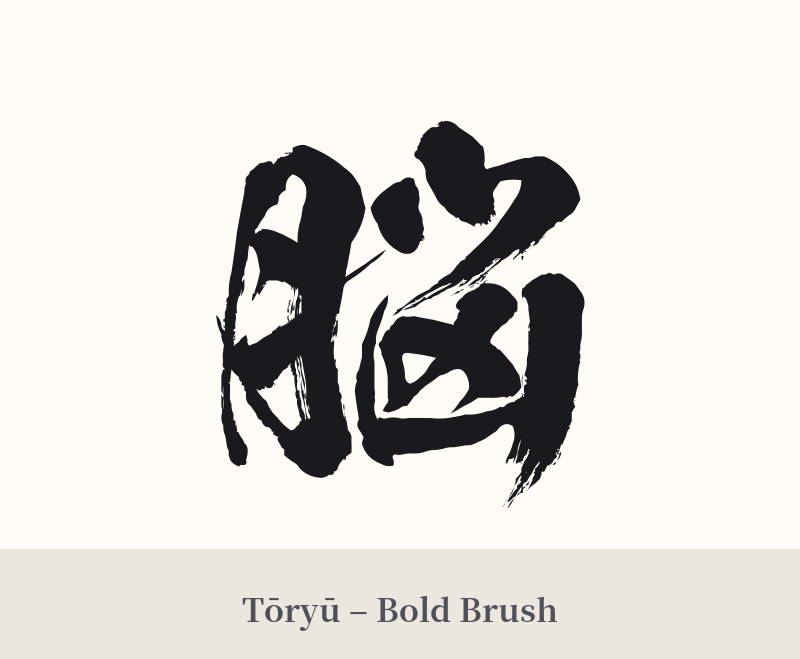
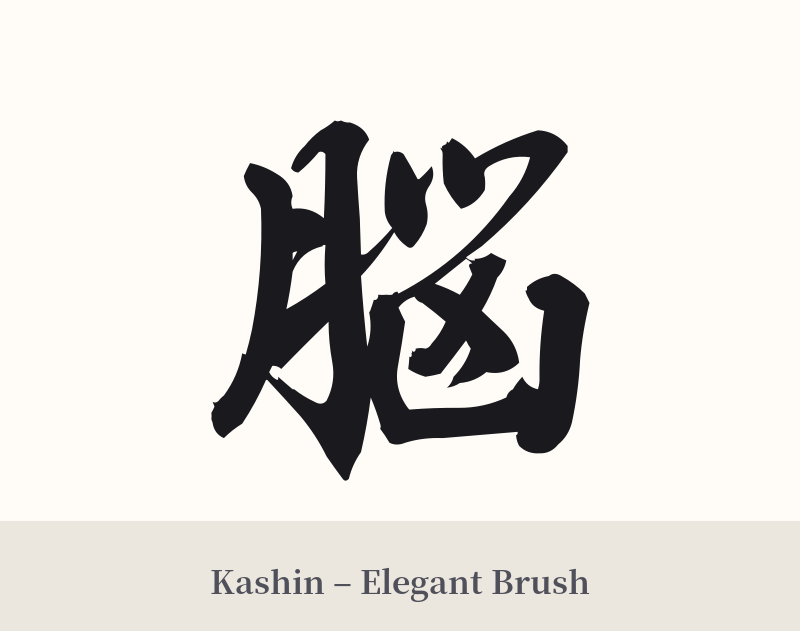
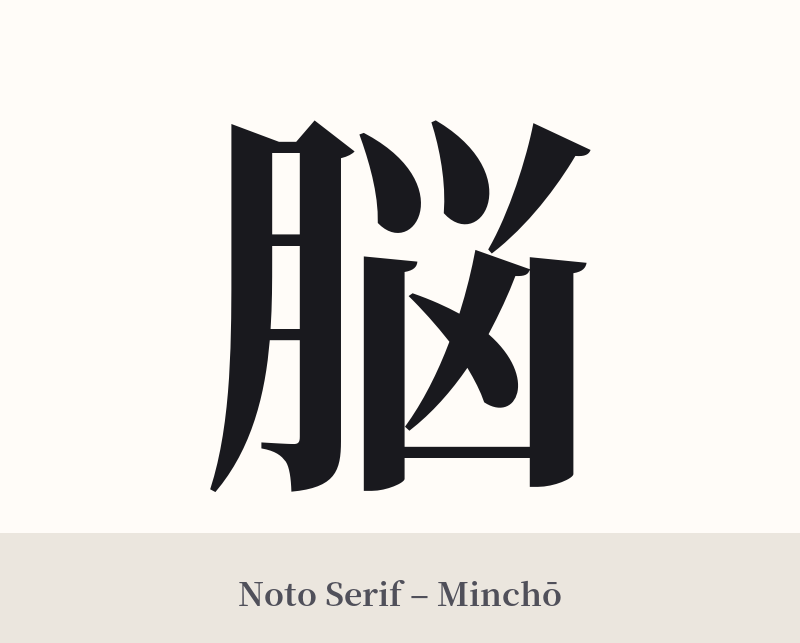
The same kanji can look dramatically different depending on the calligraphy style. Choose a font that matches the mood you want for your tattoo or design.
🎨 Tattoo Suitability
📐 Tattoo Design Guide
While an unusual choice, a tattoo of 脳 can be striking if approached with clear intention. Its literal and scientific nature can be a unique statement.
– Placement: For a standalone character, the forearm, bicep, or calf allows for clear visibility and sufficient space for its strokes. A more discreet placement like the back of the neck or behind the ear could suggest a hidden intellect.
– Font Style: A crisp, blocky Mincho or Gothic font would amplify the kanji's scientific and modern feel. Conversely, a flowing, semi-cursive Gyosho or Sosho script could create an interesting contrast, blending the anatomical with the abstract flow of thought.
– Visual Tips: Because it's so literal, pairing 脳 with other imagery can define its context. Consider integrating it with technological elements like circuitry for a cyberpunk theme, or with organic forms like tree roots or water to symbolize the connection between intellect and nature. As a standalone piece, its strength lies in its stark, direct meaning.
Comments