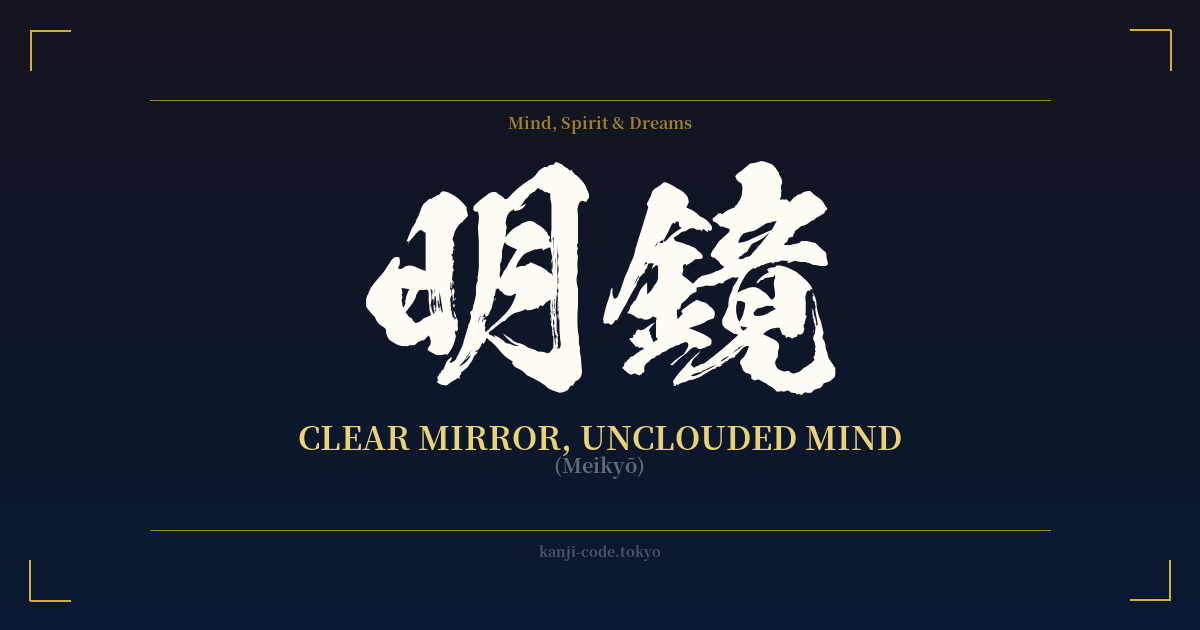
✍️ 明鏡 (Meikyō) — Cultural Context
The term 明鏡 (Meikyō) literally translates to "bright mirror" or "clear mirror." However, its true power lies in its profound metaphorical meaning, representing a state of mind that is perfectly clear, unbiased, and able to perceive reality exactly as it is, without distortion from emotion, ego, or preconceived notions.
This concept has deep roots in Chinese philosophy, particularly Daoism, which was later absorbed and refined by Japanese Zen Buddhism. Zen masters use the metaphor of the mirror to describe the ideal state of consciousness. The mind, like a mirror, should simply reflect what comes before it. It doesn't cling to beautiful images or recoil from ugly ones. When the object is gone, the reflection vanishes, and the mirror remains empty and ready. The goal is to keep this mirror free from the "dust" of desire, anger, and ignorance.
This philosophy was central to the warrior class of Japan, the samurai, and became a cornerstone of Bushido (the way of the warrior). The full expression of this ideal is found in the four-character idiom 明鏡止水 (Meikyō Shisui), which means "Clear Mirror, Still Water." This described the ultimate mental state for a warrior in combat. A mind like a clear mirror reflects the opponent's every move without judgment, and a spirit like still water is undisturbed by fear or passion. This state of profound calm allowed for instantaneous, intuitive, and perfect reactions—the difference between life and death.
While 明鏡 is often seen as the first half of this longer idiom, it stands powerfully on its own. It encapsulates the pursuit of objectivity and self-awareness. In a world filled with constant noise and information, the ideal of Meikyō is a reminder of the importance of cultivating a calm, clear, and perceptive inner world. It is a symbol not of emptiness, but of a mind so pure it can contain and understand everything without being tainted by it. This makes it a timeless concept, relevant not just to monks and warriors, but to anyone seeking mental fortitude and clarity in their own life.
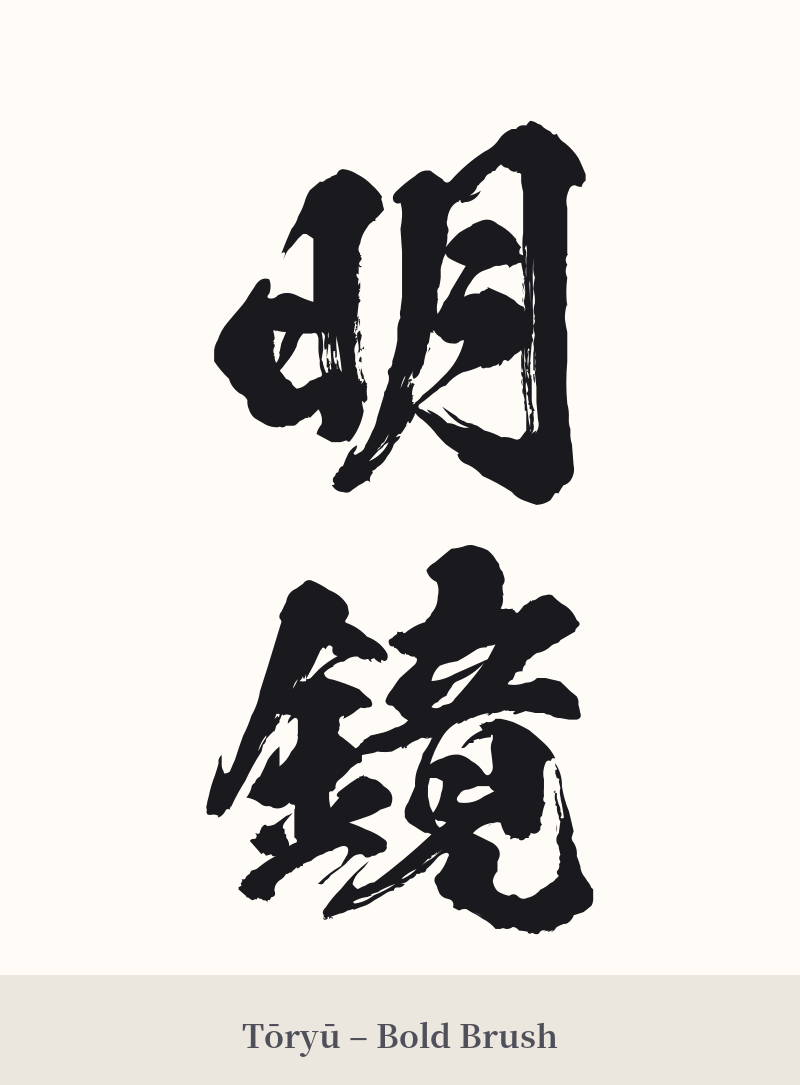
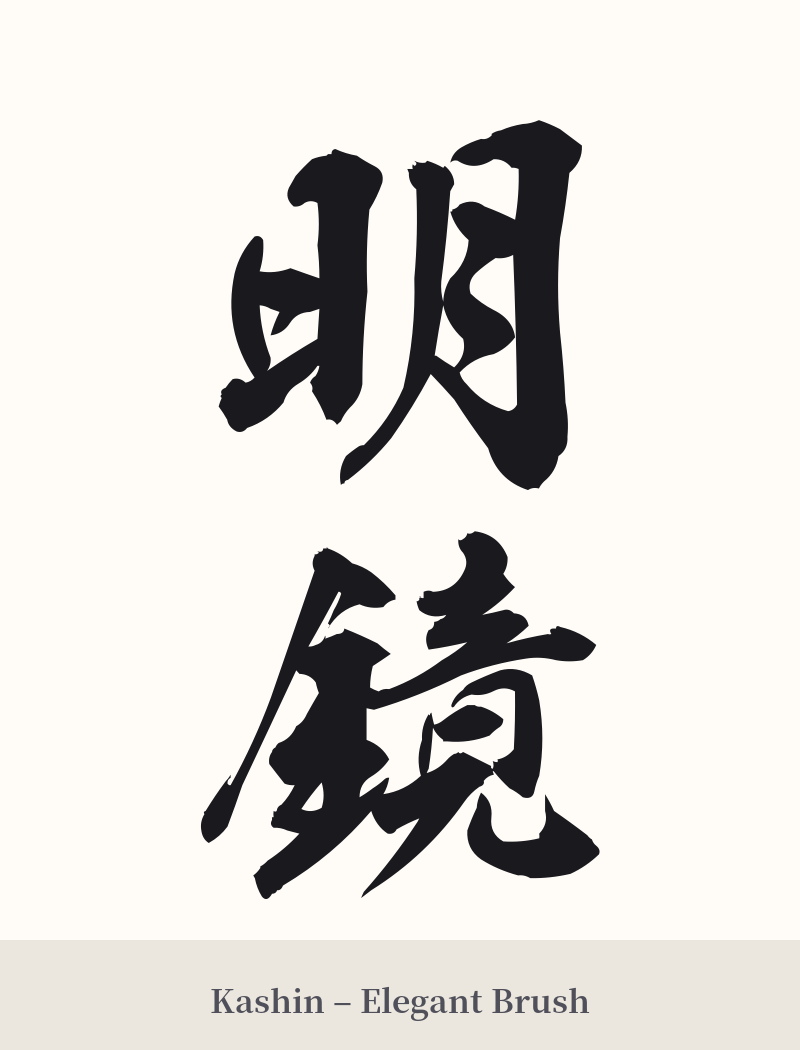
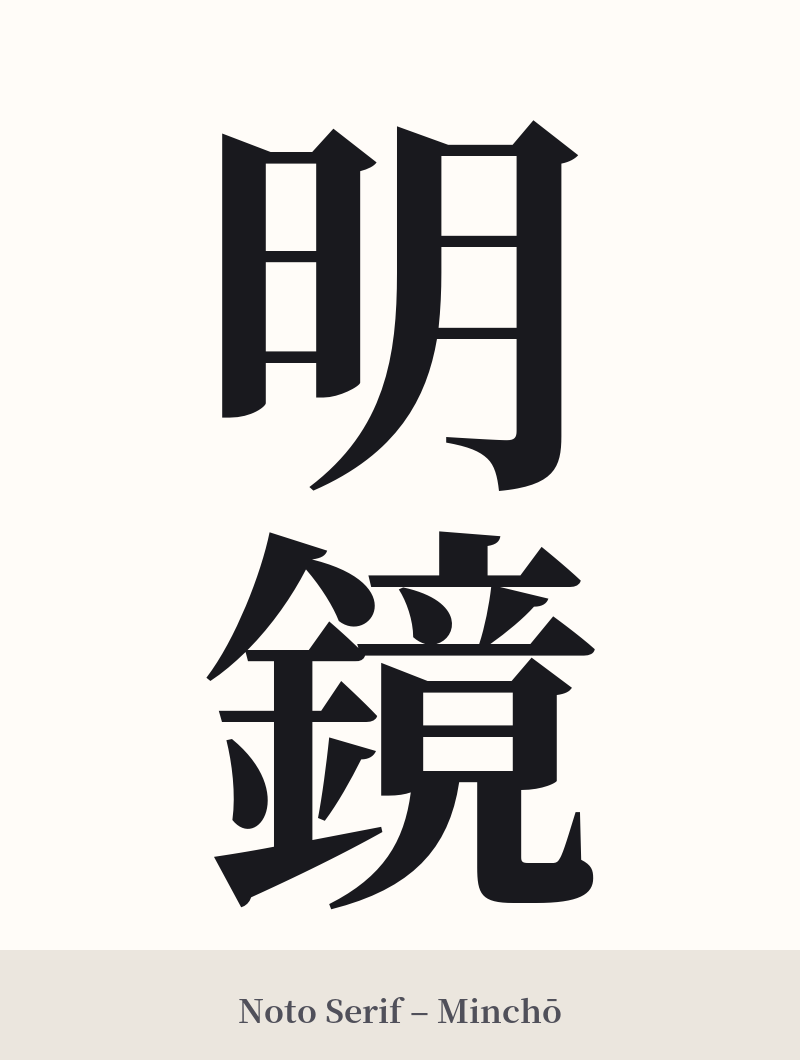
🖌️ Font Styles for 明鏡
The same kanji can look dramatically different depending on the calligraphy style. Choose a font that matches the mood you want for your tattoo or design.
🎨 Tattoo Suitability
📐 Tattoo Design Guide
A 明鏡 tattoo is a statement of inner discipline. To ensure its beauty and legibility, consider the following:
– Placement: Due to the complexity of the character 鏡, this tattoo needs space. It is best suited for larger, flatter areas of the body like the back (vertically along the spine), the chest, the forearm, or the calf. Avoid small or highly curved areas like the wrist or fingers.
– Font Style: Legibility is key. A clean, crisp Kaisho (block) or Mincho (serif) font is highly recommended to preserve the integrity of each stroke in the 19-stroke second character. A heavily stylized Gyosho (semi-cursive) or Sosho (cursive) script could easily become an illegible smudge.
– Orientation: A vertical alignment is the most traditional and aesthetically pleasing for a two-character kanji compound. It creates a sense of elegance and flow.
– Visual Elements: While the kanji is powerful alone, you could subtly hint at the full 'Meikyō Shisui' concept by incorporating a gentle water ripple effect at the base of the characters or framing the design within a Zen circle (ensō).
Comments