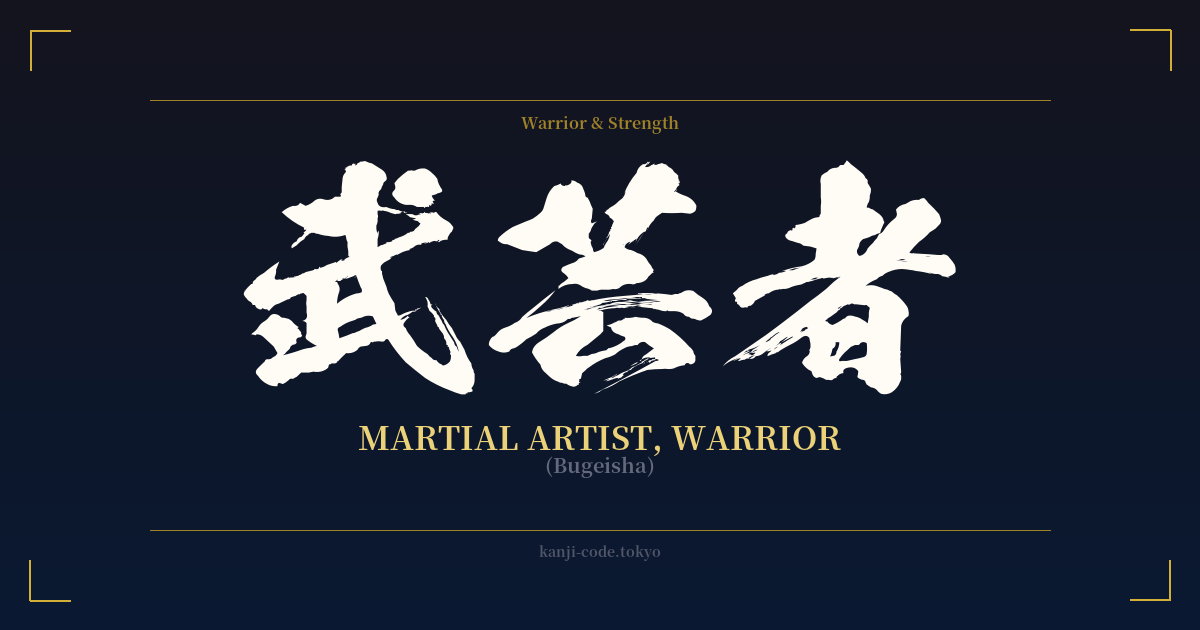
✍️ 武芸者 (Bugeisha) — Cultural Context
武芸者 (Bugeisha) is a Japanese word that translates to 'martial artist' or 'practitioner of martial arts'. It’s a term steeped in the rich history of Japan's warrior culture, but with a nuance that sets it apart from more common words like 'samurai' or 'warrior'.
To truly understand Bugeisha, we must look at its components. It is composed of three kanji: 武 (Bu), meaning 'martial' or 'military'; 芸 (Gei), meaning 'art', 'technique', or 'craft'; and 者 (Sha), a suffix denoting a 'person' or 'expert'. The inclusion of 芸 (Gei) is the key. It elevates the concept from mere combat to a disciplined art form. A Bugeisha is not just someone who fights, but someone who dedicates their life to the mastery and perfection of a martial discipline as an art.
This concept flourished during the Edo period (1603-1868), a long era of relative peace in Japan. With large-scale warfare becoming a thing of the past, the samurai class needed to redefine their purpose. The focus of martial training, or 'bujutsu' (武術), shifted from pure battlefield effectiveness to 'budō' (武道), the 'martial way'. This new emphasis was on self-cultivation, spiritual development, and the perfection of technique for its own sake. The Bugeisha embodies this transition. They were the masters who ran dojos, developed new styles (ryūha), and passed down techniques that were as much a spiritual practice as a physical one.
Unlike a 武士 (Bushi), which refers to a member of the historical warrior class, a Bugeisha can be anyone, from any social standing, who dedicates themselves to the martial arts. The term is not bound by lineage or social status, but by skill, dedication, and spirit. It speaks to the pursuit of mastery, where the body, mind, and spirit are forged together through relentless training.
In modern times, Bugeisha is used to describe a serious practitioner of arts like Kendo, Judo, Aikido, Karate, or Iaido. It implies a level of expertise and commitment that goes beyond a casual hobby. A Bugeisha is someone who lives the principles of their chosen art, embodying the discipline, respect, and profound philosophy that lie at the heart of the Japanese martial tradition.
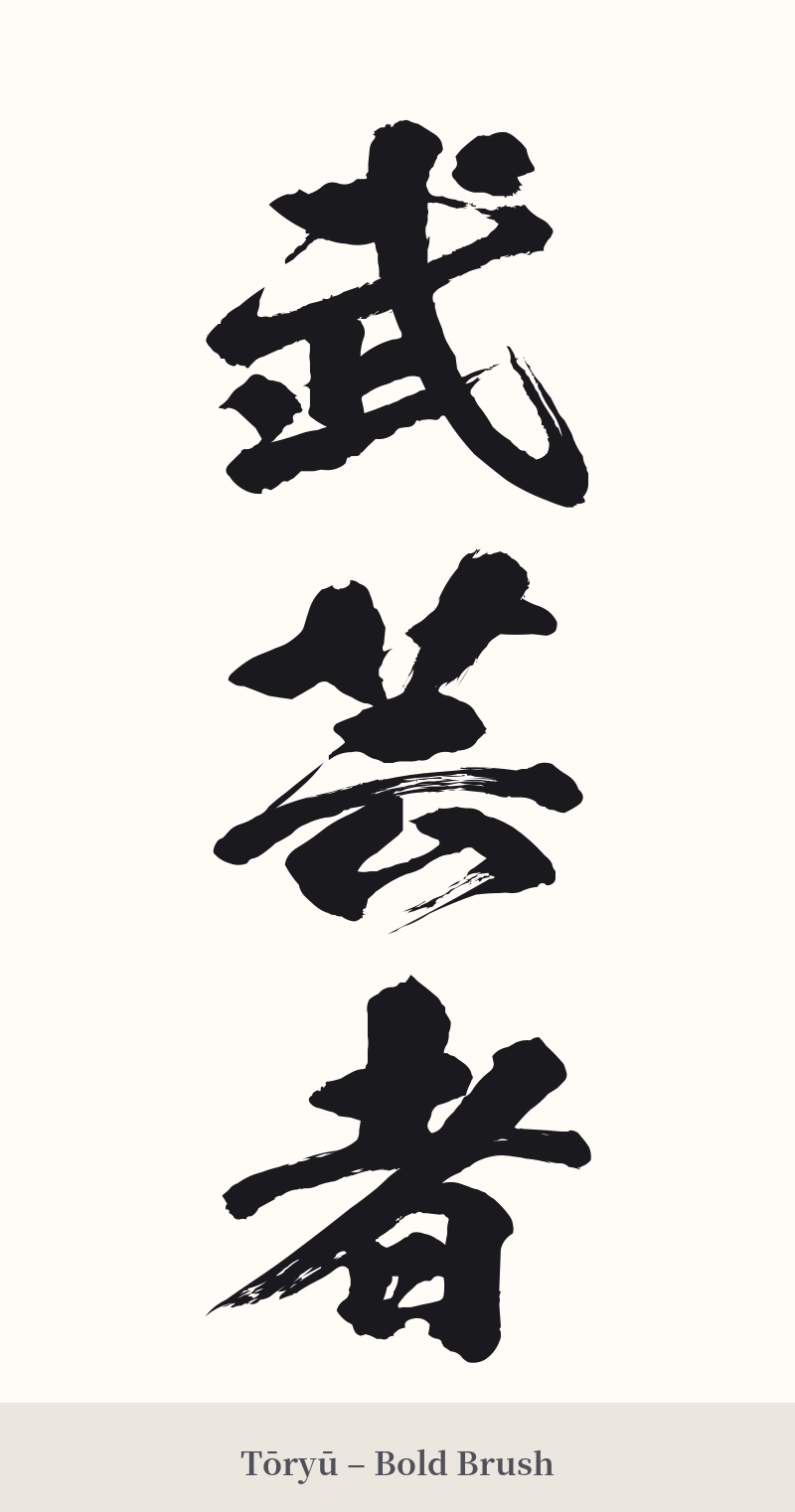
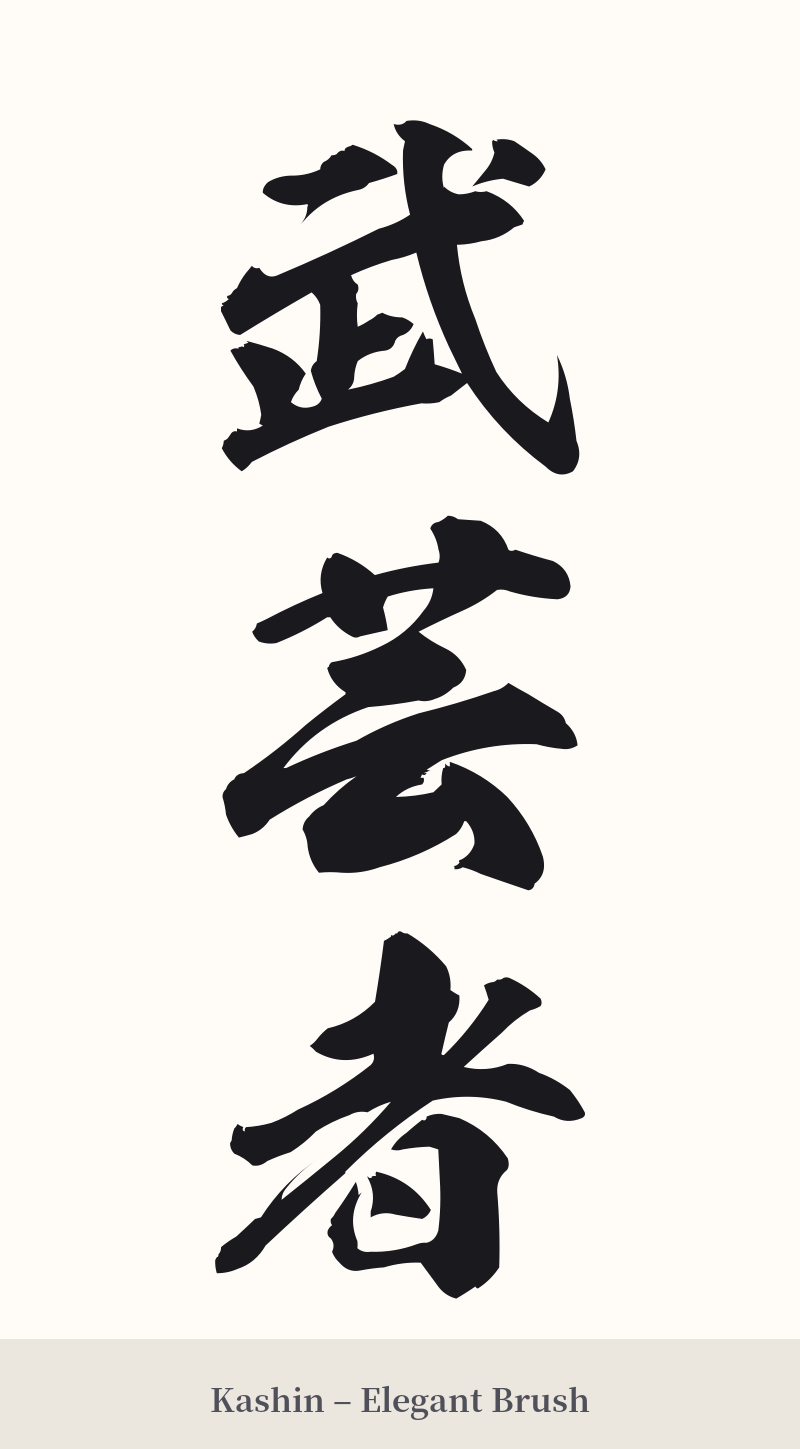
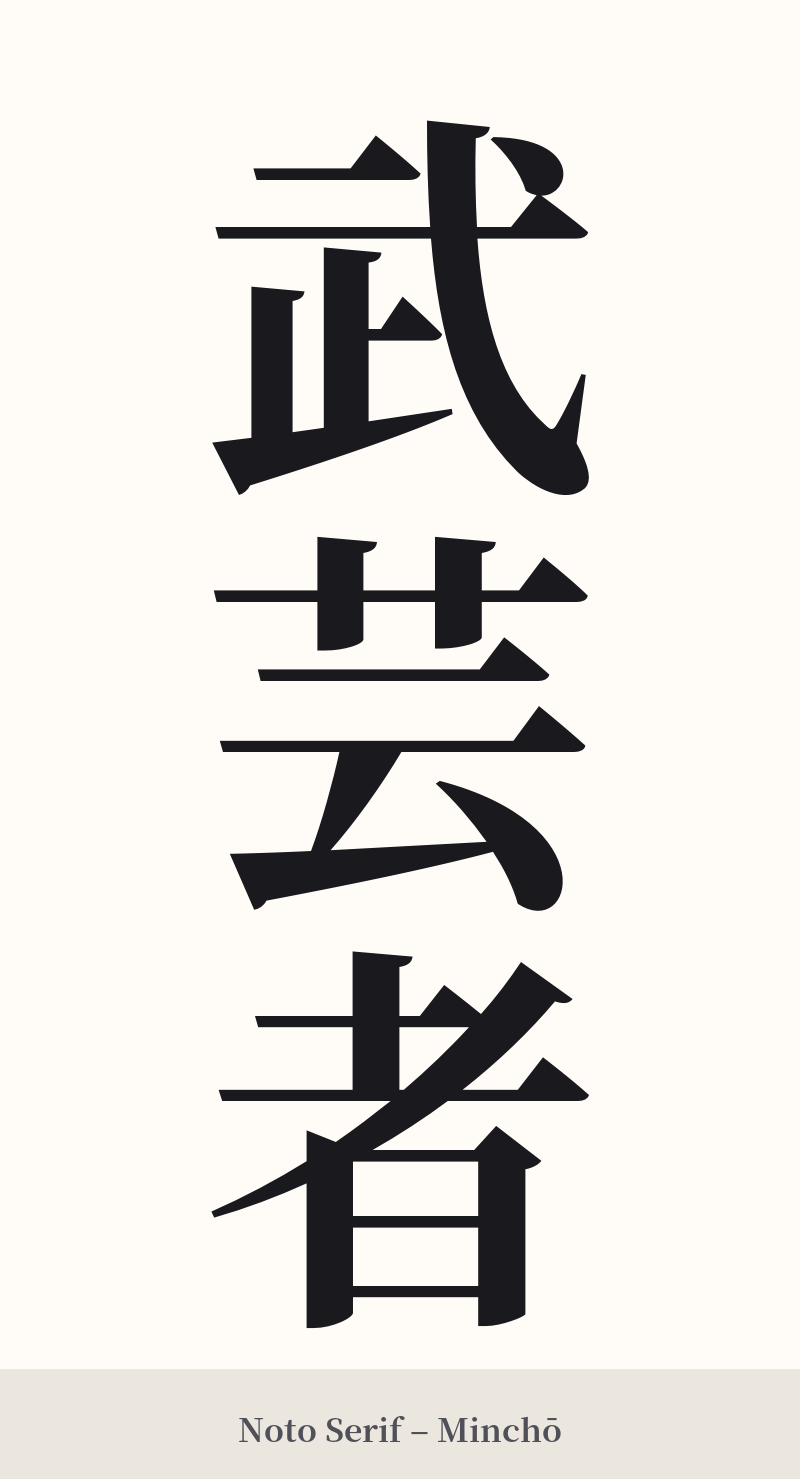
🖌️ Font Styles for 武芸者
The same kanji can look dramatically different depending on the calligraphy style. Choose a font that matches the mood you want for your tattoo or design.
🎨 Tattoo Suitability
📐 Tattoo Design Guide
A 武芸者 (Bugeisha) tattoo is a powerful statement of discipline and dedication. The three-character structure lends itself beautifully to specific designs and placements.
– Placement: Vertical alignment is highly recommended to honor the traditional Japanese writing style. The spine, forearm, or calf are excellent locations, providing a long, clean canvas for the three characters to flow downwards.
– Font Style: The choice of script can dramatically alter the feel. A bold, semi-cursive script like Gyōsho (行書) can convey the fluid motion and dynamic energy of martial arts. For a more formal and disciplined look, a crisp, blocky Kaisho (楷書) script emphasizes precision and strength.
– Visual Tips: Ensure your tattoo artist gives each kanji enough space to be read clearly, avoiding a cramped or crowded look. The three characters should feel like a unified whole, not three separate tattoos. Consider a simple design; the power of Bugeisha lies in the meaning of the words themselves, and adding too many other visual elements can dilute its impact.
Comments