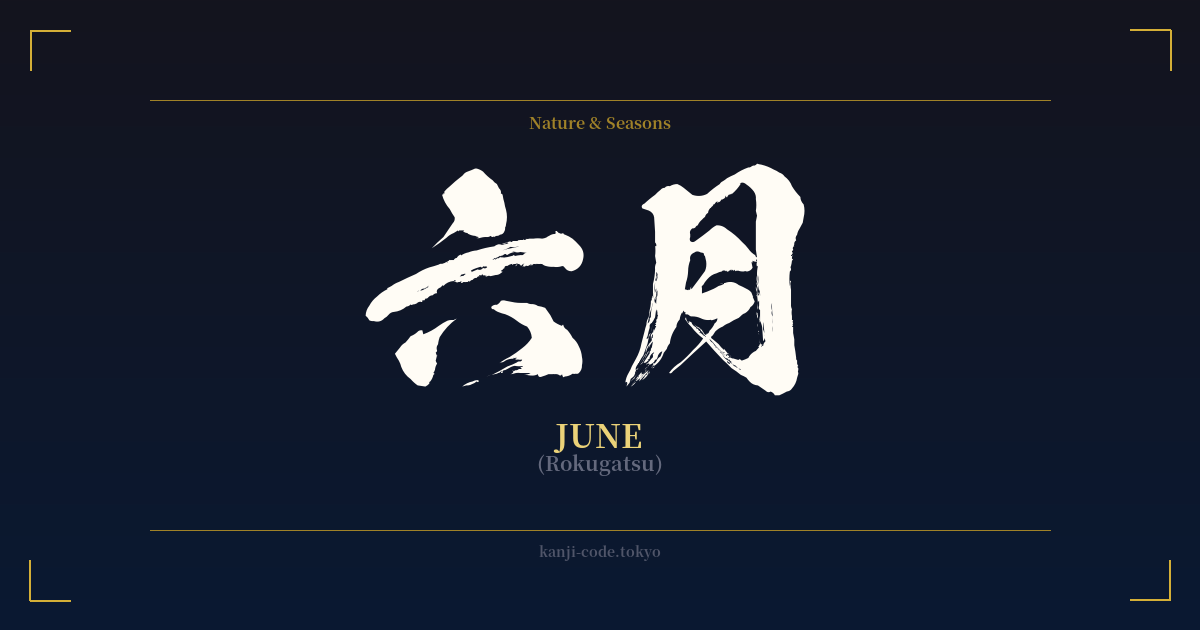
✍️ 六月 (Rokugatsu) — Cultural Context
六月 (Rokugatsu) is the modern Japanese word for June, constructed with straightforward logic: the character 六 (roku) for “six” and 月 (gatsu) for “month.” It literally translates to “the sixth month.” While this modern name is practical, the traditional name for June in the old Japanese lunar calendar offers a deeper cultural puzzle: 水無月 (Minazuki).
Intriguingly, Minazuki translates to “the month of no water.” This seems paradoxical, as June is famously the heart of Japan's rainy season, known as 梅雨 (Tsuyu). This is a period of persistent rain and humidity that blankets much of the country, coaxing vibrant green growth from the landscape. So why “no water”?
One popular theory suggests the name refers to the agricultural needs of the time. The rains were so crucial for flooding the rice paddies that all available water was directed to the fields, leaving canals and water sources for other uses 'empty.' Another linguistic theory proposes that the 無 (mu, 'no') in Minazuki is actually an archaic possessive particle, making the name mean “month of water” (水の月), which would align perfectly with the climate.
Today, the experience of Rokugatsu is defined by Tsuyu. The season is synonymous with the stunning bloom of the hydrangea, or 紫陽花 (ajisai). These flowers, with their large globes of blossoms that shift in color from blue to purple to pink depending on the soil's acidity, are the quintessential symbol of June in Japan. They thrive in the damp weather, their beauty offering a vibrant counterpoint to the gray, overcast skies.
June also marks a distinct seasonal transition. It's a time of 'koromogae' (衣替え), the official day on June 1st when schools and many companies switch from their winter to summer uniforms. It signals a collective preparation for the intense heat and humidity of the Japanese summer that lies just ahead. Rokugatsu, therefore, is not just a number on a calendar; it's a month of rain, hydrangeas, and the gentle shift from the coolness of spring to the full warmth of summer.
🖌️ Font Styles for 六月
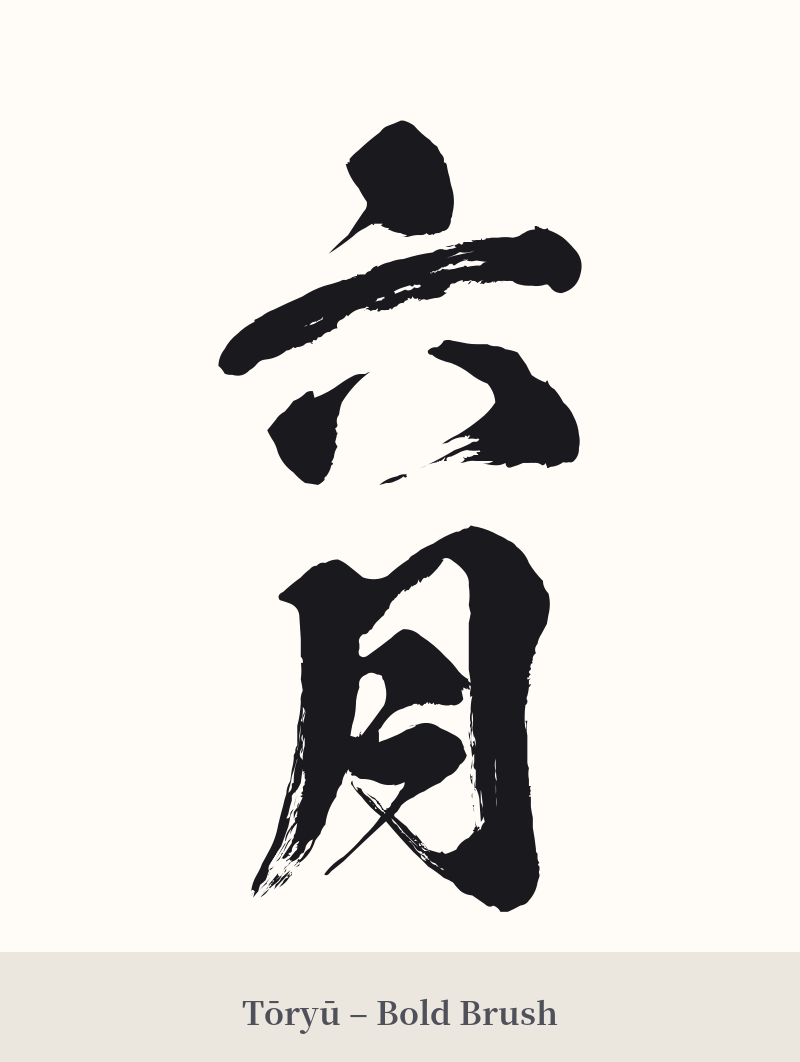
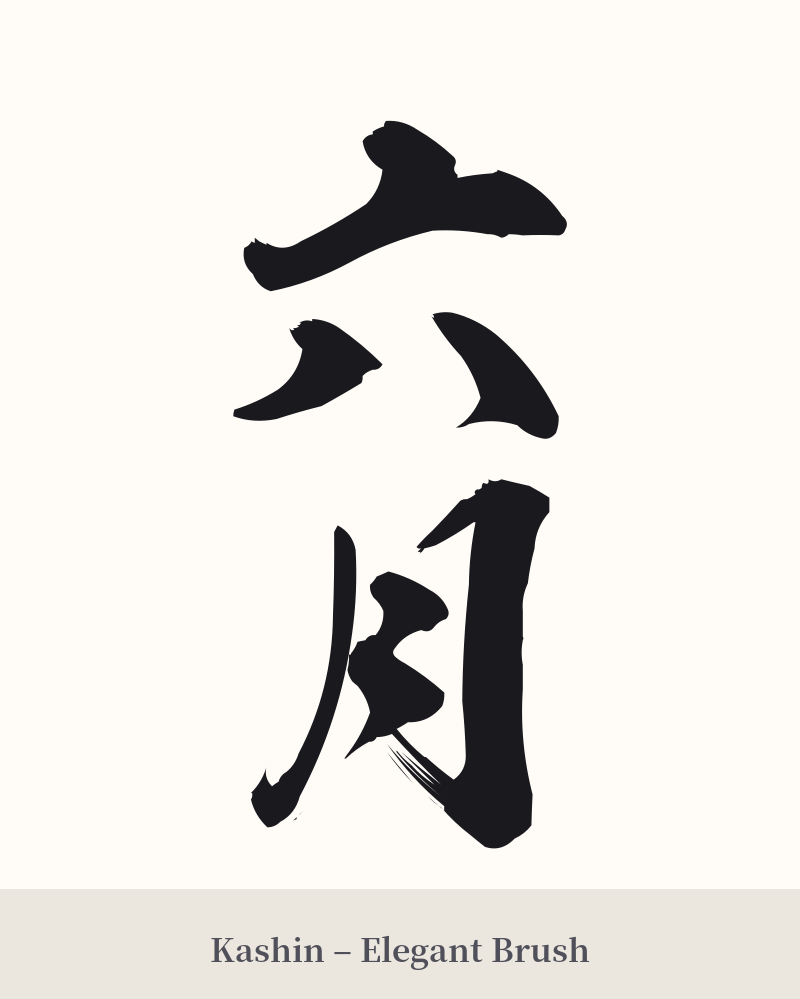
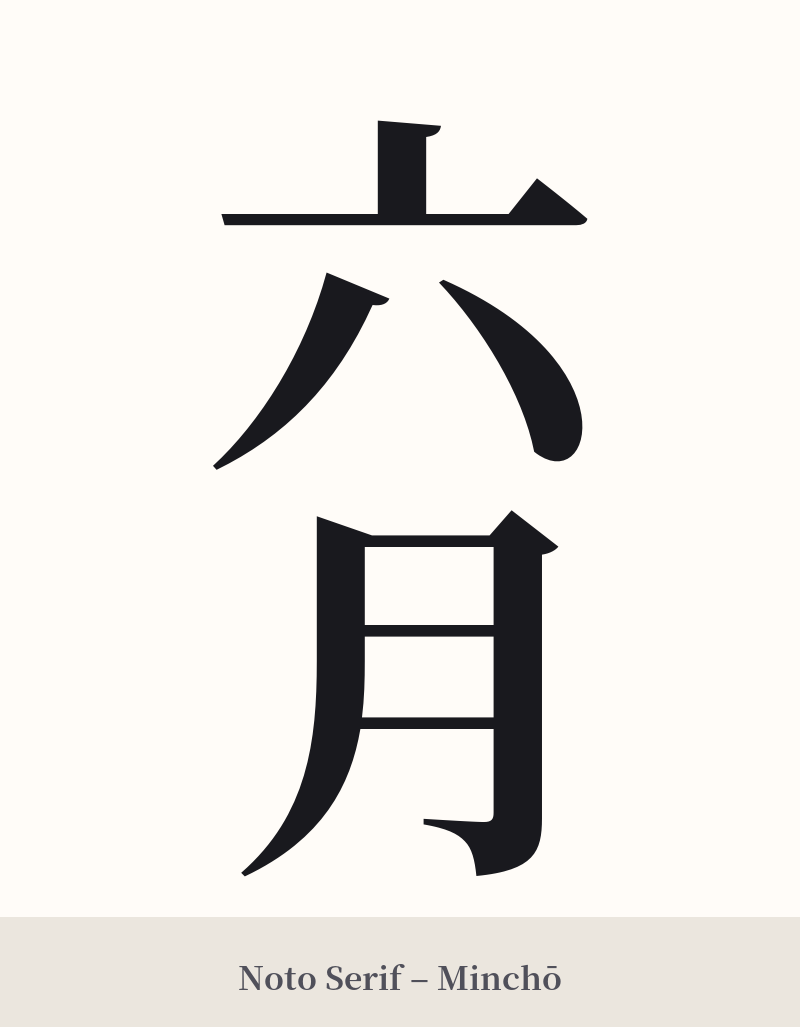
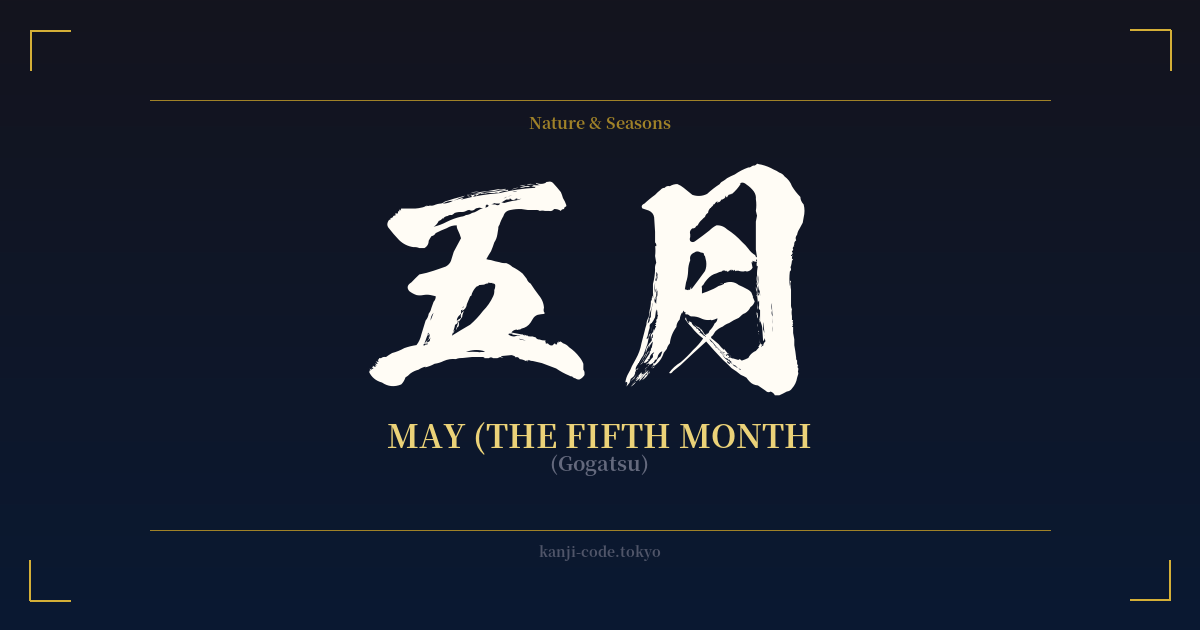
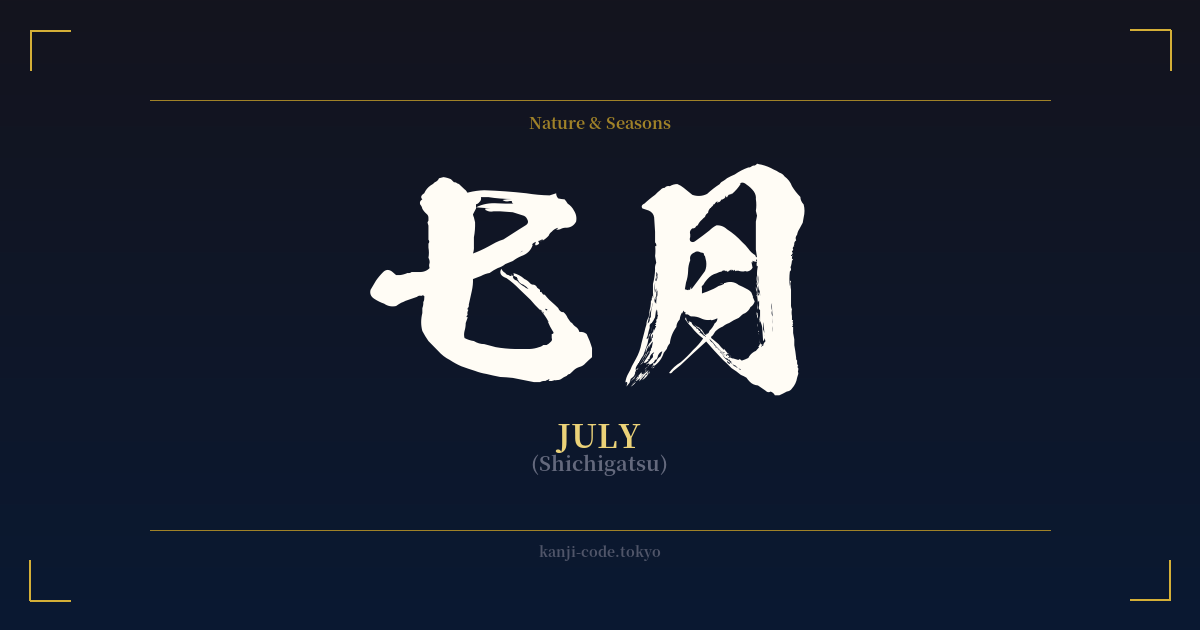
The same kanji can look dramatically different depending on the calligraphy style. Choose a font that matches the mood you want for your tattoo or design.
🎨 Tattoo Suitability
📐 Tattoo Design Guide
A tattoo of 六月 (Rokugatsu) works best when its simplicity is embraced. Due to the low stroke count and clean lines of both characters, it is well-suited for smaller, more discreet placements.
– Placement: Consider the inner wrist, ankle, behind the ear, or along the collarbone. For a larger piece, it's better to incorporate 六月 into a broader design, such as a scene with hydrangeas or stylized rain.
– Font Style: A bold, geometric Mincho or Gothic font would emphasize the structural quality of the kanji, especially 六. Conversely, a flowing, organic calligraphy style (shodo) could mimic the feeling of rain and contrast nicely with the characters' simple forms.
– Visual Tips: A vertical orientation is traditional and often more aesthetically pleasing. You could subtly integrate the imagery of the moon (from 月) or rain into the design to add more visual depth beyond the simple characters.
Comments